Industrial Internet of Things: Understanding the Basics of IIoT
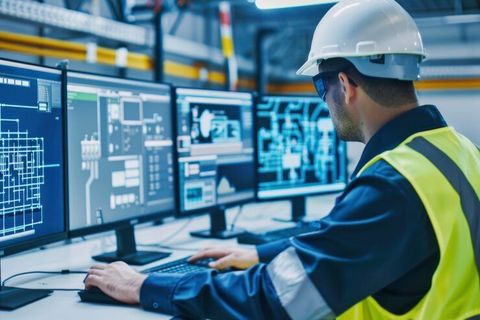
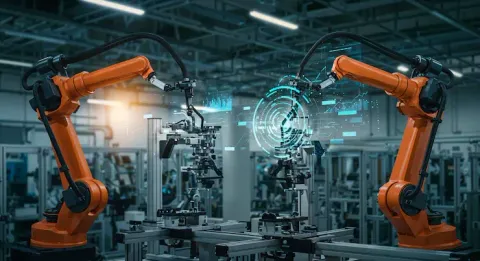
The Industrial Internet of Things (IIoT) connects industrial machines, sensors, software, and communication networks to improve how factories operate. It allows equipment to collect and exchange information, helping businesses monitor production and understand machine performance. As industries adopt digital technologies, many people want to know how IIoT works, where it is used, and how it differs from traditional industrial systems.
Key Takeaways
IIoT connects industrial equipment through sensors and digital communication networks.
Real-time data helps operators monitor machines and production activities.
Predictive maintenance uses equipment information to identify possible failures.
Cybersecurity and data management are important parts of IIoT systems.
Related Searches
What is the Industrial Internet of Things?
How does IIoT work in manufacturing?
Industrial IoT applications and examples
IIoT vs IoT: What is the difference?
Benefits and challenges of Industrial IoT
Industrial IoT technology in India
In This Guide
What Is the Industrial Internet of Things?
Why Is IIoT Important for Modern Industries?
How Does Industrial IoT Work?
Recent Developments in Industrial IoT
Industrial IoT Laws and Policies in India
Industrial IoT Technologies: A Comparison
Tools and Resources for Understanding IIoT
Frequently Asked Questions
Conclusion
What Is the Industrial Internet of Things?
Understanding the meaning of IIoT
The Industrial Internet of Things refers to a network of connected industrial devices that collect, exchange, and analyse operational data. These devices include machines, sensors, controllers, monitoring equipment, and computer systems used in factories, power plants, warehouses, and other industrial environments.
IIoT developed from earlier industrial automation technologies. Traditional factories already used programmable logic controllers (PLCs), supervisory control and data acquisition (SCADA) systems, and industrial communication networks. However, modern connectivity allows these technologies to exchange information with wider digital platforms.
How did industrial IoT develop?
The growth of internet connectivity, cloud computing, affordable sensors, and data processing technologies helped expand industrial connectivity. Manufacturers began connecting equipment to systems that could analyse production information across different departments and locations.
Unlike basic automation, which follows programmed instructions, IIoT can provide information about changing operating conditions. This allows workers to understand equipment behaviour, identify unusual patterns, and make informed operational decisions.
Why Is IIoT Important for Modern Industries?
Improving production visibility
Industrial facilities often operate many machines simultaneously. Without connected monitoring, workers may need to inspect individual machines or collect information manually. IIoT brings equipment data into shared monitoring platforms, making production conditions easier to understand.
For example, sensors can measure temperature, vibration, pressure, and energy consumption. Operators can review this information to identify unusual changes that may affect production.
Supporting equipment maintenance
Unexpected machine failures can interrupt manufacturing activities. IIoT supports predictive maintenance by collecting information about equipment condition and identifying patterns associated with wear or possible faults.
Maintenance teams can use these insights to plan inspections and repairs. However, predictions depend on accurate data, suitable analytical models, and regular equipment monitoring.
Reducing operational uncertainty
IIoT can help industries understand how resources are being used. Connected meters and sensors provide information about electricity, water, raw materials, and production output.
This information can support several activities:
Monitoring energy consumption across production areas.
Identifying equipment operating outside normal conditions.
Tracking production performance and machine availability.
Improving coordination between manufacturing departments.
How Does Industrial IoT Work?
Sensors and connected devices
The process begins with sensors installed on machines or industrial equipment. These sensors measure physical conditions such as temperature, pressure, humidity, vibration, and speed.
The collected information is transferred through communication technologies such as Ethernet, Wi-Fi, cellular networks, or industrial protocols. Controllers and gateways can help organise information before it reaches monitoring platforms.
Data processing and analysis
After collection, information is processed using local computers, edge devices, or cloud platforms. Analytical software examines the data and presents useful findings through dashboards, reports, and alerts.
Some systems use artificial intelligence and machine learning to identify patterns. These technologies can support fault detection, production planning, and equipment monitoring.
Taking operational decisions
Workers and managers use the information to understand industrial conditions. Depending on the system design, some actions may happen automatically, while others require human approval.
A typical IIoT process includes four stages: data collection, communication, analysis, and operational response.
Recent Developments in Industrial IoT
Industrial IoT continues to develop through improvements in connectivity, artificial intelligence, automation, and computing technologies. Recent developments from 2024 to 2026 show greater interest in connecting industrial systems with digital platforms.
Edge computing is receiving attention because it processes information closer to the equipment. This can reduce communication delays and limit the amount of information sent to distant computing platforms.
Artificial intelligence is also becoming more common in industrial monitoring. AI-based systems can analyse equipment patterns, identify unusual activity, and support maintenance planning.
Other developments include:
Private 5G networks for industrial communication.
Digital twins for virtual equipment and process monitoring.
Improved integration between operational and information technology.
Greater attention to industrial cybersecurity and data protection.
Energy monitoring through connected industrial devices.
These developments do not remove the need for human supervision. Equipment compatibility, network reliability, data quality, and employee training remain important considerations.
Industrial IoT Laws and Policies in India
India has several laws and regulatory frameworks relevant to connected industrial technologies. Their application depends on the type of equipment, information collected, network involved, and industry.
Important Indian regulations
Information Technology Act, 2000: Provides a legal framework addressing electronic records, computer-related offences, and certain cybersecurity matters.
CERT-In Directions: Require specified organisations to report certain cybersecurity incidents and follow applicable information security requirements.
Digital Personal Data Protection Act, 2023: Establishes rules for processing digital personal data and protecting individual privacy. The Digital Personal Data Protection Rules, 2025 provide further implementation details.
Telecommunications Act, 2023: Establishes a framework for regulating telecommunications networks and related equipment.
National Digital Communications Policy, 2018: Supports digital connectivity and the development of communication infrastructure.
The Telecommunications (Telecom Cyber Security) Rules, 2024 also address security obligations for telecommunications entities. These requirements should not automatically be treated as applying equally to every industrial IoT installation.
Industrial IoT Technologies: A Comparison
Different technologies contribute to industrial connectivity. Understanding their functions helps explain how IIoT differs from traditional industrial automation and consumer IoT.
Technology | Main purpose | Common application |
|---|---|---|
Industrial sensors | Collect equipment information | Temperature and vibration monitoring |
PLC systems | Control industrial machinery | Automated production |
SCADA | Supervise industrial processes | Plant monitoring |
Edge computing | Process information locally | Real-time equipment analysis |
Cloud computing | Store and analyse information remotely | Production data management |
AI and machine learning | Identify patterns in data | Predictive maintenance |
IIoT vs traditional IoT
Traditional IoT commonly connects household devices, wearable technology, and personal electronics. Industrial IoT focuses on machinery, production equipment, industrial networks, and operational systems.
Industrial environments also have different requirements. Reliability, safety, equipment compatibility, and uninterrupted production are important considerations when designing connected industrial systems.
Tools and Resources for Understanding IIoT
Several software platforms, technical standards, and learning resources help people understand industrial connectivity.
Node-RED: A visual programming platform used to connect devices, applications, and data sources.
ThingsBoard: An IoT platform used for device management, data collection, and monitoring dashboards.
Microsoft Azure IoT Operations: Provides capabilities for managing industrial data and connected equipment.
AWS IoT SiteWise: Supports industrial equipment data collection, organisation, and analysis.
OPC UA: An industrial communication standard that supports information exchange between different equipment and applications.
MQTT: A lightweight messaging protocol commonly used in connected device networks.
ISA/IEC 62443: A collection of standards addressing cybersecurity in industrial automation and control systems.
Other useful learning resources include CERT-In cybersecurity publications, NIST cybersecurity frameworks, and technical documents from India's Telecommunications Engineering Centre.
Frequently Asked Questions
1. What is the Industrial Internet of Things?
IIoT connects industrial equipment, sensors, and software to collect and analyse operational information.
2. How does Industrial IoT work in manufacturing?
Sensors collect machine data, communication networks transfer it, and software analyses the information for monitoring and decision-making.
3. What are the main benefits of Industrial IoT?
IIoT supports equipment monitoring, predictive maintenance, production visibility, energy management, and operational planning.
4. What is the difference between IoT and IIoT?
IoT covers connected devices across everyday environments, while IIoT focuses on industrial equipment and production processes.
5. Is Industrial IoT secure?
Security depends on network design, device protection, access controls, software updates, and continuous monitoring. No connected system is completely risk-free.
Conclusion
The Industrial Internet of Things connects machines, sensors, communication networks, and software to support data-driven industrial operations. It plays an important role in equipment monitoring, predictive maintenance, production management, and energy tracking. However, cybersecurity, data quality, system compatibility, and regulatory requirements remain important considerations. Understanding these elements provides a foundation for learning about modern industrial technology.

Related Post...
Understanding Industrial Research Energy Systems: A Detailed Overview
Updated: November 28, 2026
Read More
Industrial Internet of Things: Understanding the Basics of IIoT
Updated: November 28, 2026
Read More
Automotive Sensors Overview: Essential Components Behind Modern Vehicle Technology
Updated: November 27, 2026
Read More