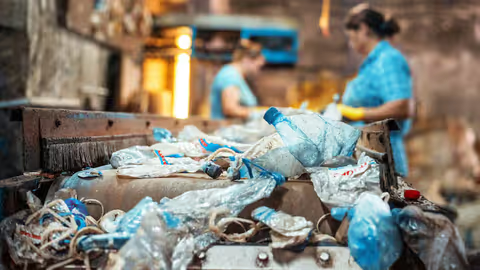
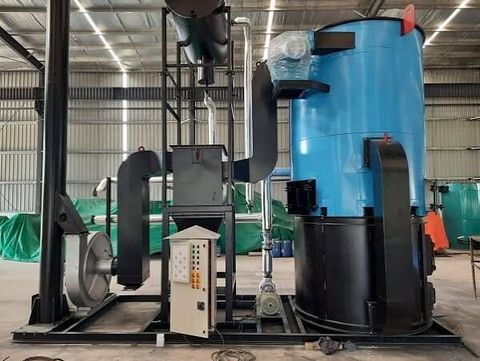
Industrial Incinerators: Insights Into Waste Treatment, Emissions, Safety, and Operation
Industrial incinerators are engineered thermal systems used to treat certain types of waste through controlled combustion at elevated temperatures. They are used in industrial facilities, healthcare environments, municipal waste operations, laboratories, and other settings where specific waste streams require thermal treatment.
An industrial incinerator normally includes a combustion chamber, fuel or energy source, air-control system, exhaust arrangement, and equipment for managing combustion gases and residues.
The concept of waste combustion has existed for centuries, but modern incineration developed as cities and industries needed more controlled ways to handle increasing quantities of waste. Early combustion systems were relatively simple and could produce substantial smoke and incomplete combustion. Modern systems use controlled temperatures, airflow, residence time, and exhaust-gas treatment to manage the combustion process.
Industrial incinerators are designed for particular waste characteristics. The moisture content, heating value, particle size, chemical composition, and quantity of waste can all influence combustion behavior. Some systems are intended for solid waste, while others are configured for liquid, gaseous, hazardous, biomedical, or specialized industrial waste streams.
How Industrial Incinerators Work
The basic process involves introducing suitable waste into a combustion chamber and supplying controlled amounts of air. Heat causes combustible components to break down and oxidize, producing combustion gases and a remaining solid residue known as ash.
Many systems use more than one combustion chamber. A primary chamber initiates combustion, while a secondary chamber can provide additional temperature and residence time for further oxidation of combustible gases.
A typical process includes:
- Waste preparation and controlled feeding
- Primary combustion
- Secondary combustion or gas oxidation
- Heat transfer or recovery where applicable
- Exhaust-gas treatment
- Emission monitoring
- Collection and handling of ash and other residues
The exact arrangement varies according to the waste type and regulatory requirements.
Main Types of Industrial Incinerators
Different incinerator designs are used for different waste streams. Fixed-hearth systems use stationary combustion areas and can be suitable for certain solid waste applications. Rotary kiln systems use a rotating cylindrical chamber and are used for a range of industrial and hazardous waste streams.
Other designs include fluidized-bed incinerators, multiple-hearth systems, liquid-injection systems, and specialized systems for particular waste categories.
| Incinerator Type | General Operating Principle | Common Application |
|---|---|---|
| Fixed hearth | Waste burns on a stationary hearth | Selected solid waste |
| Rotary kiln | Rotating chamber moves and mixes waste | Industrial and hazardous waste |
| Fluidized bed | Air suspends granular material during combustion | Certain processed waste streams |
| Liquid injection | Liquid waste enters a combustion chamber | Suitable liquid waste |
| Multiple hearth | Material moves through several combustion zones | Sludge and specific solids |
Importance
Industrial incinerators can play a role in waste management where controlled thermal treatment is appropriate. Some waste materials are difficult to manage through conventional methods because of their physical properties, contamination, or potential to contain biological or chemical hazards.
Thermal treatment can reduce the volume of certain combustible waste streams and transform organic materials into combustion gases and ash. However, incineration does not eliminate the need for waste classification, emissions control, residue management, and regulatory oversight.
Industrial Applications
Industrial incinerators are found in several sectors where specific waste streams require controlled thermal treatment. Their applications can include industrial production residues, certain healthcare wastes, sewage sludge, contaminated materials, and selected chemical waste streams.
Common application areas include:
- Chemical manufacturing
- Pharmaceutical production
- Healthcare facilities
- Food processing
- Municipal waste management
- Petroleum-related industries
- Laboratory operations
- Sewage and wastewater treatment
- Manufacturing facilities
- Certain hazardous-waste treatment operations
The suitability of incineration depends on the characteristics of the waste. Materials containing significant moisture may require additional energy for evaporation, while some inorganic materials do not combust and instead remain in the ash.
Key Operating Factors
Several variables determine combustion performance. Temperature influences how rapidly materials oxidize, while residence time determines how long combustion gases remain in the required conditions. Air supply affects the availability of oxygen and can influence combustion stability.
Important operating parameters include:
- Combustion temperature
- Gas residence time
- Air-to-waste ratio
- Waste feed rate
- Waste moisture content
- Waste composition
- Chamber pressure
- Oxygen concentration
- Exhaust-gas temperature
- Emission-control conditions
Operators generally monitor these factors through sensors, control systems, laboratory analysis, and established operating procedures.
Emissions and Residues
Incineration produces exhaust gases that may contain particulate matter and other combustion-related pollutants. Depending on the waste composition and combustion conditions, additional compounds may also require control.
For this reason, industrial incinerators can include equipment such as cyclones, scrubbers, fabric filters, electrostatic precipitators, activated-carbon systems, selective reduction systems, or other treatment technologies. The appropriate configuration depends on the waste, combustion process, and applicable environmental requirements.
Ash and other residues must also be characterized and handled appropriately. Their composition determines whether they require specialized containment, treatment, transportation, or disposal.
Recent Updates
Recent developments in industrial incinerators have focused on improved combustion control, emissions monitoring, heat recovery, automation, and digital data management. These developments reflect greater attention to environmental performance and process transparency.
Automated Combustion Control
Modern systems can use temperature sensors, oxygen sensors, pressure instruments, flow meters, and programmable controllers to regulate combustion conditions. Automated control can adjust fuel input or airflow in response to changing operating conditions.
Continuous measurement can also help identify unusual combustion behavior. Data records provide information for operational analysis and regulatory documentation where required.
Advanced Emission Monitoring
Industrial facilities are increasingly using continuous or periodic measurement systems to monitor relevant exhaust-gas parameters. Depending on the installation, monitoring may include particulate matter, oxygen, carbon monoxide, nitrogen oxides, sulfur compounds, acid gases, temperature, pressure, and other regulated parameters.
The exact monitoring requirements depend on the waste category, incinerator type, facility authorization, and applicable environmental rules.
Heat Recovery
Some industrial incinerators recover heat generated during combustion. Heat exchangers, boilers, or other thermal recovery equipment can transfer heat to water, steam, or another process medium.
Heat recovery must be designed around the combustion characteristics and exhaust-gas conditions. Fouling, corrosion, ash deposition, and gas composition can influence the design of heat-transfer equipment.
Digital Monitoring and Data Management
Industrial control systems can connect incinerators with supervisory control and data acquisition platforms. These systems can display operating conditions, record historical information, generate alarms, and organize process data.
Digital records can also help correlate waste feed conditions with combustion behavior and emissions measurements. Cybersecurity becomes relevant when control equipment is connected to plant networks or remote monitoring platforms.
Laws or Policies
In India, industrial incinerators are regulated through environmental, waste-management, occupational safety, and pollution-control frameworks. The specific requirements depend on the type of waste, facility, combustion technology, and location.
Environmental Regulation
The Ministry of Environment, Forest and Climate Change, Central Pollution Control Board, and State Pollution Control Boards play important roles in India's environmental regulatory framework.
The Environment (Protection) Act, 1986 provides a broad legal framework for environmental protection. Rules made under this framework address different categories of waste and environmental emissions.
Facilities handling hazardous waste may fall under the Hazardous and Other Wastes (Management and Transboundary Movement) Rules, 2016, as amended. Biomedical waste treatment is addressed through the Bio-Medical Waste Management Rules, 2016, where applicable.
Emission and Waste Controls
Incineration facilities may be subject to emission limits, monitoring requirements, authorization conditions, and operational requirements established by the relevant regulatory authorities. Facilities may also need arrangements for handling bottom ash, fly ash, spent treatment materials, and other residues.
The applicable requirements should be determined from the current rules and authorization conditions for the particular installation. State-level pollution-control authorities may impose additional conditions within the applicable legal framework.
Workplace Safety
The Occupational Safety, Health and Working Conditions Code, 2020 provides a broad framework for workplace health and safety. Incinerator facilities may involve high temperatures, combustion equipment, moving machinery, chemicals, electrical systems, and pressurized equipment, making appropriate workplace controls important.
Tools and Resources
Several tools are used to design, monitor, test, and maintain industrial incinerators.
Engineering and Design Tools
Computer-aided design software can be used for chamber layouts, ducting, structural components, refractory arrangements, and equipment placement. Computational fluid dynamics can also be used to study airflow, temperature distribution, mixing, and gas movement inside combustion chambers.
Thermal calculations can help evaluate heat transfer, combustion requirements, and heat recovery arrangements. Material-selection references are also important because combustion environments can expose components to high temperatures and corrosive gases.
Monitoring Instruments
Typical measurement equipment includes:
- Thermocouples and infrared temperature instruments
- Oxygen and combustion-gas analyzers
- Differential-pressure instruments
- Flow meters
- Gas sampling equipment
- Particulate monitoring instruments
- Stack monitoring equipment
- Electrical measurement instruments
- Vibration monitoring equipment
Calibration records are important when measurement results are used for process control or regulatory reporting.
Reference Resources
Useful technical and regulatory resources include CPCB publications, State Pollution Control Board guidance, Ministry of Environment, Forest and Climate Change documents, Bureau of Indian Standards publications, equipment manuals, combustion engineering references, waste-classification documents, and environmental monitoring procedures.
These resources help laboratories, engineers, operators, and facility managers understand applicable requirements and technical principles.
FAQs
What are industrial incinerators used for?
Industrial incinerators are used to thermally treat selected waste streams through controlled combustion. Applications can include certain industrial residues, healthcare waste, sludge, contaminated materials, and specialized waste categories.
How do industrial incinerators work?
Industrial incinerators introduce suitable waste into a controlled combustion chamber with a regulated supply of air. Heat converts combustible materials into gases, while non-combustible material remains as ash or other residue.
What types of industrial incinerators are available?
Common types include fixed-hearth, rotary kiln, fluidized-bed, liquid-injection, and multiple-hearth systems. Each design has different operating characteristics and is selected according to the waste properties and treatment requirements.
How are emissions from industrial incinerators controlled?
Emission-control systems can include particulate filters, scrubbers, electrostatic precipitators, activated-carbon systems, and other gas-treatment technologies. The appropriate system depends on the waste composition, combustion process, and applicable environmental requirements.
What regulations apply to industrial incinerators in India?
Industrial incinerators may be governed by the Environment (Protection) Act, applicable waste-management rules, CPCB and State Pollution Control Board requirements, and workplace safety legislation. Requirements vary according to the waste category and facility.
Conclusion
Industrial incinerators are controlled thermal systems used to treat specific waste streams through combustion and related gas-treatment processes. Their design depends on waste composition, combustion conditions, emission requirements, residue characteristics, and facility needs. Recent developments have emphasized automated combustion control, digital monitoring, emission measurement, and heat recovery. In India, environmental regulations, waste-management rules, pollution-control requirements, and workplace safety legislation influence how these systems are designed and operated.

Related Post...

Global Supplier Audit Management: A Guide to Audit Planning, Compliance, Risk and Quality Control
Updated: October 03, 2026
Read More
MALDI-TOF Mass Spectrometry: Insights Into Ionization, Mass Analysis and Molecular Identification
Updated: October 05, 2026
Read More