Industrial Boilers Explore Guide for Modern Industrial Heating Technology
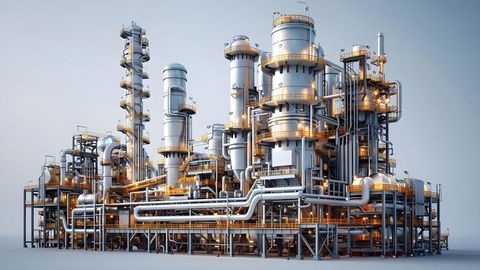
Industrial boilers play an important role in modern industrial heating technology. They generate steam or hot water for manufacturing, food processing, chemical production, healthcare facilities, and many other applications.
Understanding industrial boiler systems helps readers learn how heat is produced, distributed, controlled, and managed in different industrial environments.
This industrial boilers explore guide explains the basic principles, major components, operational importance, recent technological developments, and relevant regulations. It also introduces practical tools and resources that help engineers, facility managers, students, and industrial operators understand boiler systems and their role in efficient industrial operations.
Context
An industrial boiler is a closed vessel that transfers heat to water to produce steam or hot water. The heat usually comes from burning fuels, electrical heating elements, or other suitable energy sources. The resulting thermal energy supports industrial processes that require controlled and consistent heating.
Industrial boilers have developed significantly since the early stages of industrialization. Earlier systems often relied on basic combustion and manual controls. Modern equipment can include automated burners, digital monitoring systems, advanced heat exchangers, and safety devices that help regulate temperature, pressure, and water levels.
Boilers are commonly classified according to their design, fuel source, operating pressure, and intended application. Fire-tube boilers carry hot combustion gases through tubes surrounded by water, while water-tube boilers circulate water through tubes exposed to hot gases. The appropriate design depends on factors such as steam demand, operating conditions, and facility requirements.
Common industrial boiler types include:
Fire-tube boilers for various low- and medium-pressure applications.
Water-tube boilers for applications that require higher pressures or substantial steam output.
Electric boilers that use electricity to generate heat.
Biomass boilers that use suitable organic materials as fuel.
Waste-heat recovery boilers that capture heat from industrial exhaust streams.
Importance
Industrial boilers matter because many production processes depend on reliable thermal energy. Steam can transfer heat efficiently, support cleaning and sterilization, and provide energy for specific mechanical or chemical operations. Hot-water systems also support process heating and facility requirements.
Industries that commonly use boilers include food and beverage processing, pharmaceuticals, textiles, paper manufacturing, chemicals, refineries, and hospitals. Each application has different requirements for temperature, pressure, water quality, and operating schedules.
A well-managed boiler system can help facilities maintain process consistency, improve energy utilization, and reduce avoidable downtime. Proper combustion control and heat recovery can also reduce fuel consumption and associated emissions.
However, boilers operate under pressure and at high temperatures, creating risks if equipment is incorrectly installed, maintained, or operated. Potential hazards include pressure-related failures, burns, fires, combustion problems, and exposure to harmful gases.
Important factors in boiler management include:
Maintaining appropriate water chemistry to limit scale and corrosion.
Inspecting pressure vessels, safety valves, burners, and control systems.
Monitoring fuel use, exhaust temperature, and combustion conditions.
Training operators to recognize abnormal readings and unsafe conditions.
Following manufacturer instructions and applicable inspection requirements.
Recent Updates
Modern industrial heating technology increasingly combines energy efficiency, automation, and emissions management. Developments vary by region and application, but several trends are influencing industrial boiler design and operation.
Digital monitoring is becoming more common. Sensors can track pressure, temperature, water levels, oxygen concentrations, and other operating parameters. Connected monitoring systems can help operators identify unusual patterns and investigate problems before they interrupt production.
Predictive maintenance is another important development. Instead of relying exclusively on fixed inspection intervals, facilities can analyze operating data to identify signs of equipment deterioration. Such systems support maintenance planning but do not replace mandatory inspections or qualified technical assessments.
Industrial facilities are also examining alternative energy sources. Electric boilers can reduce direct combustion emissions at the point of use, while their overall environmental impact depends partly on how electricity is generated. Biomass systems may be appropriate in some settings, provided fuel quality, emissions, and sustainability are carefully assessed.
Waste-heat recovery can capture energy from exhaust gases or other hot process streams. This approach may improve overall system efficiency when the available heat matches a useful heating demand.
Other developments include improved burner controls, variable-speed equipment, automatic blowdown management, and integration with broader energy-management systems.
These technologies do not produce identical results in every facility. Performance depends on boiler condition, operating patterns, fuel characteristics, installation quality, and the effectiveness of ongoing monitoring.
Laws or Policies
Industrial boiler regulations aim to protect workers, equipment, nearby communities, and the environment. Requirements differ by country, state, boiler classification, operating pressure, and industrial activity.
In the United States, the Occupational Safety and Health Administration (OSHA) establishes workplace safety requirements relevant to industrial operations. Applicable rules depend on the equipment and work being performed. Boiler inspection and pressure-vessel requirements may also arise under state or local laws and recognized technical codes.
The American Society of Mechanical Engineers (ASME) publishes codes covering areas such as boiler construction and pressure-vessel design. Whether a particular code is legally required depends on the applicable jurisdiction and regulatory framework.
Environmental requirements can govern emissions of nitrogen oxides, particulate matter, sulfur dioxide, and other pollutants. The US Environmental Protection Agency (EPA) administers federal air-quality programs, while state and local authorities may impose additional requirements.
In India, the Boilers Act, 2025, and the applicable rules and notifications establish a modern statutory framework for boiler regulation. Implementation details, commencement provisions, and applicable requirements should be checked through official government publications and the relevant state boiler authority. Environmental requirements may also apply through the Central Pollution Control Board and State Pollution Control Boards.
Facilities should verify the rules that apply to their specific equipment rather than assuming that one standard covers every boiler.
Tools and Resources
Reliable technical resources help readers understand boiler operation, maintenance, energy performance, and compliance obligations.
Useful resources include:
The US Department of Energy's industrial energy resources for guidance on steam systems, energy assessments, and efficiency improvements.
The US Environmental Protection Agency for air-emissions regulations and environmental compliance information.
OSHA publications for applicable workplace safety requirements.
ASME publications for boiler and pressure-vessel codes and related technical guidance.
India's official government publications and the relevant state boiler authority for domestic regulatory information.
Several practical tools also support routine evaluation. Boiler efficiency calculators estimate how effectively fuel energy is converted into useful heat or steam. Steam tables help determine the properties of water and steam at different pressures and temperatures. Combustion analyzers measure exhaust-gas conditions, while water-testing instruments help operators monitor parameters associated with scale and corrosion.
A basic boiler monitoring table can organize important operating information.
| Parameter | Purpose | Typical monitoring approach |
|---|---|---|
| Steam pressure | Maintains process requirements | Pressure gauge or sensor |
| Water level | Supports safe operation | Level indicator and alarms |
| Exhaust temperature | Helps assess heat transfer | Temperature sensor |
| Fuel consumption | Tracks energy use | Fuel meter and operating records |
| Water chemistry | Helps limit scale and corrosion | Routine water analysis |
| Combustion conditions | Supports efficient, controlled burning | Combustion analyzer |
Actual operating limits must come from the boiler's approved operating instructions, design specifications, and applicable regulations. General reference tables should not be used as substitutes for equipment-specific procedures.
FAQs
1. What is an industrial boiler used for?
An industrial boiler produces steam or hot water for applications such as manufacturing, process heating, cleaning, sterilization, and selected power-generation processes.
2. What is the difference between fire-tube and water-tube boilers?
Fire-tube boilers carry hot gases through tubes surrounded by water. Water-tube boilers circulate water through tubes heated by combustion gases. Their suitable applications depend on pressure, capacity, and operating requirements.
3. How can industrial boiler efficiency be improved?
Efficiency can be supported through appropriate combustion control, regular inspection, effective water treatment, insulation maintenance, and heat recovery where practical. Results should be verified through operating data.
4. What safety measures are important for industrial boilers?
Important measures include functioning safety valves, reliable water-level controls, pressure monitoring, suitable water chemistry, qualified operation, and inspections required by applicable regulations.
5. Are electric industrial boilers environmentally friendly?
Electric boilers produce no combustion emissions at the point of use. Their overall environmental impact depends on electricity generation, operating requirements, equipment efficiency, and the wider energy system.
Conclusion
Industrial boilers remain essential to modern industrial heating technology because they provide controlled thermal energy for numerous production and facility operations. Understanding boiler designs, operating principles, safety requirements, and efficiency measures helps readers assess how these systems function in different industrial settings.
Modern monitoring, heat recovery, and alternative energy technologies are expanding the available approaches to industrial heating. Their suitability depends on technical requirements, environmental conditions, regulatory obligations, and the characteristics of each facility.
A sound industrial boiler management approach combines accurate monitoring, appropriate maintenance, qualified operation, and compliance with applicable standards. These fundamentals help support reliable operation while reducing avoidable risks and improving the use of energy resources.

Related Post...
Medical Device Manufacturing Equipment Explore Guide for Modern Healthcare Technology
Updated: October 19, 2026
Read More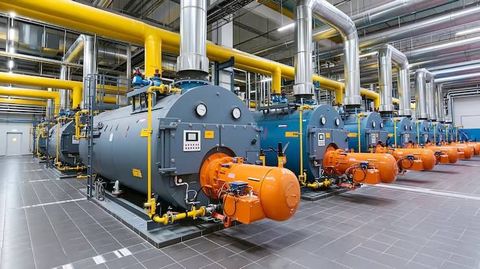
Industrial Boilers Explore Guide for Modern Industrial Heating Technology
Updated: October 19, 2026
Read More
Pharmaceutical Machinery Guide to Production Equipment, Systems and Processes
Updated: September 21, 2026
Read More