Packaging Machine Information: Types, Processes and Benefits
Packaging machines are industrial systems designed to prepare products for storage, transportation, distribution, and consumer use.
Packaging Machine Information covers different machine types, operating processes, materials, automation features, and the role these systems play across industries such as food, pharmaceuticals, cosmetics, chemicals, agriculture, and consumer goods.
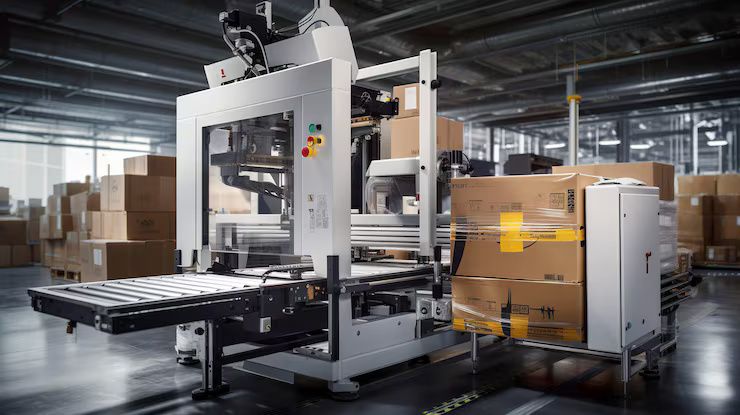
Modern packaging equipment can perform individual tasks or operate as part of an integrated production line. Depending on the product and package format, a packaging process may include feeding, filling, forming, sealing, labeling, coding, inspection, case packing, and palletizing. Understanding these stages helps manufacturers and students recognize how packaging systems function and why machine selection depends on product characteristics and packaging requirements.
Context
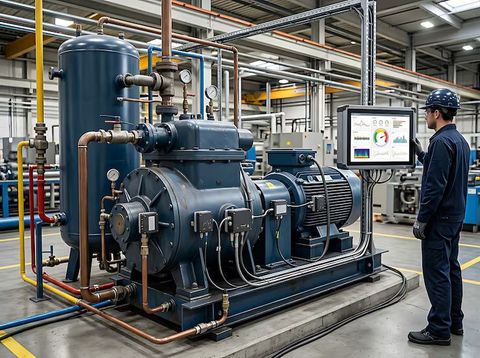
Packaging machines combine mechanical, electrical, pneumatic, and digital technologies to handle products and packaging materials in a controlled sequence. Earlier systems relied heavily on manual operations, while modern equipment increasingly uses sensors, programmable logic controllers, servo drives, robotics, machine vision, and data monitoring.
The main purpose of a packaging machine is to create consistent packages while protecting the product from contamination, damage, moisture, air, light, or physical handling. The exact machine configuration depends on factors such as product shape, viscosity, weight, package material, production volume, and required package dimensions.
Types of Packaging Machines
Different machines perform different packaging functions. Common categories include:
| Machine Type | Main Function | Typical Applications |
|---|---|---|
| Filling Machine | Measures and places products into containers | Food, beverages, chemicals |
| Form-Fill-Seal Machine | Forms packaging, fills products, and seals packs | Snacks, powders, liquids |
| Pouch Packing Machine | Fills and seals flexible pouches | Food, personal care products |
| Cartoning Machine | Places products into cartons | Pharmaceuticals, cosmetics |
| Labeling Machine | Applies labels to containers or packages | Bottles, jars, boxes |
| Capping Machine | Places and tightens closures | Bottles and containers |
| Wrapping Machine | Wraps products with film or other materials | Industrial and consumer products |
| Case Packer | Groups products into shipping cases | Food and consumer goods |
| Palletizing System | Arranges packages on pallets | Warehousing and logistics |
Packaging machines can also be classified as manual, semi-automatic, or fully automatic. Fully automated systems may connect several operations into one production line, reducing the need for repeated manual handling.
Packaging Processes
A typical packaging process begins with product feeding. The product is moved toward the packaging station through conveyors, hoppers, feeders, or robotic systems.
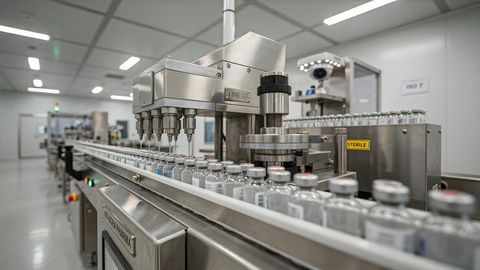
The next stage may involve forming or preparing the package. For example, a form-fill-seal system can create a pouch from a roll of flexible film before introducing the product. Filling equipment then measures the required quantity using systems such as augers, volumetric fillers, pumps, weigh fillers, or multihead scales.
Sealing follows filling in many applications. Heat sealing, ultrasonic sealing, induction sealing, adhesive bonding, and mechanical closure methods are used according to the packaging material and product requirements.
Labeling and coding may then identify information such as batch numbers, manufacturing dates, expiry dates, barcodes, or product details. Inspection systems can use cameras, sensors, or weighing equipment to detect selected packaging defects before products move to secondary packaging.
Importance
Packaging machines are important because packaging directly affects product protection, handling, identification, and distribution. A suitable machine can help maintain consistent filling levels, sealing conditions, package dimensions, and labeling accuracy.
These systems affect several groups, including manufacturers, packaging engineers, quality teams, logistics operators, regulators, retailers, and consumers. In regulated industries such as pharmaceuticals and food production, packaging processes can also be closely connected with traceability, hygiene, labeling, and quality-control requirements.
Key benefits of well-designed packaging systems include:
- Consistent packaging dimensions and processes
- Reduced repetitive manual handling
- Better control over filling and sealing
- Improved production-line coordination
- Easier monitoring and quality inspection
- Greater compatibility with standardized packaging formats
- Improved traceability through coding and data systems
However, automation does not eliminate the need for human oversight. Operators and engineers remain important for machine setup, material changes, quality checks, troubleshooting, cleaning, and process validation.
Recent Updates
From 2024 through 2026, packaging technology has increasingly focused on automation, digital monitoring, sustainability, flexible production, and intelligent inspection. Industry discussions have highlighted AI-supported inspection, predictive maintenance, serialization, smart packaging, and flexible packaging lines as important areas of development.
Machine vision is becoming more important for identifying packaging defects, incorrect labels, damaged seals, and product-positioning problems. AI-based systems can support inspection and process analysis, although their performance depends on suitable data, system design, validation, and human supervision.
Sustainability is another major development. Packaging equipment is increasingly being designed to handle lightweight materials, recycled content, recyclable structures, and material-efficient formats. The European Union's Packaging and Packaging Waste Regulation 2025/40 entered into force in February 2025 and generally applies from August 12, 2026, introducing requirements covering packaging composition, manufacturing, reuse, recovery, and waste management.
Digital connectivity is also changing packaging operations. Sensors and industrial networks can collect information about machine speed, temperature, pressure, production counts, downtime, and quality indicators. These data can support predictive maintenance and production analysis when properly integrated into industrial control systems.
Smart packaging research is also progressing. Recent research has explored battery-free packaging systems using sensors and wireless technologies to monitor food conditions, showing how packaging may increasingly combine physical protection with digital information and sensing capabilities.
Laws or Policies
Packaging machine operators must consider regulations applicable to the product, packaging material, market, and industry. Requirements vary between countries and product categories, so organizations should consult the relevant authorities and current regulations before designing or modifying a packaging process.
In India, the Legal Metrology Act and Legal Metrology (Packaged Commodities) Rules provide requirements related to declarations and packaged commodities. The Department of Consumer Affairs lists amendments to the Packaged Commodities Rules issued during 2025 and 2026.
India's Plastic Waste Management framework is also relevant when packaging uses plastic materials. The Central Pollution Control Board maintains an Extended Producer Responsibility portal and publishes updates concerning plastic packaging, registration, reporting, labeling, and related obligations.
For international operations, requirements may include food-contact rules, pharmaceutical packaging standards, environmental regulations, labeling provisions, electrical safety requirements, and machinery safety frameworks. The applicable rules should always be checked according to the destination market and product category.
Tools and Resources
Several resources can help readers understand packaging machines and evaluate packaging processes.
Useful resources include:
- Government regulatory portals for packaging and labeling requirements
- CPCB resources for plastic packaging and EPR information
- Packaging material specifications and technical datasheets
- Machine manuals and operating instructions
- Packaging line-layout templates
- Production-capacity and throughput calculators
- Material-usage calculation worksheets
- Quality-control checklists
- Machine vision and inspection documentation
- Industry standards and technical publications
When evaluating a packaging system, useful technical information includes package dimensions, product characteristics, filling range, machine speed, sealing method, material compatibility, electrical requirements, compressed-air requirements, cleaning procedures, and changeover requirements.
FAQs
What is a packaging machine?
A packaging machine is equipment that performs one or more packaging operations, such as filling, forming, sealing, labeling, wrapping, coding, inspection, case packing, or palletizing.
What are the main types of packaging machines?
Common types include filling machines, form-fill-seal machines, pouch packing machines, cartoning machines, labeling machines, capping machines, wrapping machines, case packers, and palletizing systems.
How does a packaging machine work?
The process depends on the machine. Generally, products are fed into the system, measured or positioned, placed into packaging, sealed or closed, labeled or coded, inspected, and transferred to the next stage.
What recent technologies are used in packaging machines?
Recent developments include machine vision, robotics, sensors, AI-supported inspection, predictive maintenance, digital monitoring, industrial connectivity, and systems designed to handle newer packaging materials.
Which regulations apply to packaging machines?
Requirements depend on the product, packaging material, country, and industry. In India, relevant areas include Legal Metrology requirements and plastic-waste regulations, while international markets may have additional packaging, labeling, environmental, and safety rules.
Conclusion
Packaging machines combine mechanical automation, material handling, measurement, sealing, labeling, inspection, and data technologies to create consistent and protected packages. Their design and operation depend on product characteristics, packaging formats, production requirements, quality controls, and applicable regulations.
From 2024 to 2026, automation, digital monitoring, AI-assisted inspection, flexible production, and sustainability have become important areas of packaging technology development. Understanding machine types and packaging processes provides a useful foundation for evaluating how modern packaging systems function.
Regulatory awareness is equally important because packaging requirements can change according to product type, material, and market. Government portals, technical documentation, industry standards, and packaging calculations can help users maintain accurate and current knowledge.
As packaging systems become more connected and adaptable, technical knowledge of machinery, materials, data, quality control, and environmental requirements will remain important for efficient and compliant packaging operations.

Related Post...
Discover Packaging Machines: Useful Information About Modern Systems and Industry Trends
Updated: October 02, 2026
Read More
Textile Machinery Discover Guide: Learn About Spinning, Weaving, Knitting, and Finishing Equipment
Updated: September 22, 2026
Read More
Confectionery Equipment Guide: Explore Types, Uses, Processes, and Modern Technology
Updated: September 22, 2026
Read More