Industrial 3D Printing Machines: Explore Technologies, Materials, Costs
Industrial 3D printing turns digital designs into objects.
Also known as additive manufacturing, this process builds physical parts by adding material layer by layer. Unlike traditional manufacturing methods that often remove material from a larger block, 3D printing creates objects according to digital models.
An industrial 3D printer is designed for professional production, prototyping, and specialised manufacturing tasks. These machines can process materials such as plastics, resins, metals, and composites. Businesses may also use 3D printed services or a 3D printing service when purchasing and maintaining their own equipment is not practical.
Understanding Industrial 3D Printing Technology
How the process works
Industrial 3D printing generally begins with a digital design created using computer-aided design (CAD) software. The design is converted into a file that slicing software divides into individual layers and translates into machine instructions.
The printer then deposits, melts, cures, or fuses material according to those instructions. Each layer connects with the previous one until the object is complete. Depending on the technology and material, the finished part may require cleaning, support removal, curing, machining, or surface finishing.
Industrial and desktop printers
Desktop 3D printers are commonly used for education, personal projects, and basic prototyping. Industrial machines are generally built for more demanding environments, with larger build areas, specialised materials, process controls, and production monitoring features.
However, industrial equipment is not automatically suitable for every project. The required dimensions, material properties, production volume, accuracy, and operating budget should guide machine selection.
Types of Industrial 3D Printers
Different printing technologies are designed for different materials and manufacturing requirements. Understanding their basic differences helps businesses identify suitable equipment.
Fused Deposition Modeling
Fused Deposition Modeling (FDM), also called fused filament fabrication, uses a heated nozzle to deposit thermoplastic filament in successive layers. It is widely used for functional prototypes, fixtures, housings, and certain end-use components.
Common materials include ABS, PLA, nylon, and specialised engineering thermoplastics. FDM systems are relatively straightforward to understand, although surface lines and layer bonding may affect the final part's appearance and strength.
Stereolithography
A SLA 3D printer uses a light source to cure liquid photosensitive resin into solid layers. This technology is known for producing detailed parts with relatively smooth surfaces.
SLA is often used for visual models, dental applications, design prototypes, and components requiring fine detail. Resin selection affects properties such as flexibility, durability, temperature resistance, and intended use. Printed parts may also require washing and additional curing.
Selective Laser Sintering
Selective Laser Sintering (SLS) uses a laser to fuse powdered material, commonly polymer powder, into a solid object. Unfused powder supports the part during printing, which can reduce the need for separate support structures.
SLS is used for complex geometries, functional prototypes, and small production batches. It can be useful when parts have internal channels, intricate shapes, or interconnected features.
Metal additive manufacturing
Metal 3D printing includes processes such as laser powder bed fusion and directed energy deposition. These systems use metal powder or wire to create components through controlled melting and deposition.
Applications include aerospace components, industrial tooling, medical devices, and specialised engineering parts. Metal printing usually requires careful process control and may involve heat treatment, machining, and inspection after production.
Materials Used in Industrial 3D Printing
Material selection influences strength, weight, flexibility, surface quality, temperature resistance, and production cost. Each printing technology supports particular material categories.
| Material category | Common examples | Typical uses |
|---|---|---|
| Thermoplastics | ABS, PLA, nylon | Prototypes and functional parts |
| Photopolymer resins | Standard, tough, flexible resins | Detailed models and prototypes |
| Metal powders | Stainless steel, titanium alloys | Engineering and specialised components |
| Composite materials | Carbon-fibre-filled polymers | Lightweight fixtures and structural prototypes |
Material suitability depends on the printer, design, operating environment, and required performance. Buyers should review technical data sheets and testing information instead of relying only on general material descriptions.
Applications Across Industries
Industrial 3D printing is used in different sectors because it supports complex designs, rapid design changes, and production of specialised components.
Automotive: Manufacturers use printed prototypes, assembly fixtures, custom tools, and selected vehicle components during development and production.
Aerospace: Additive manufacturing can produce complex, lightweight parts when materials and processes meet strict technical requirements.
Healthcare: Dental models, surgical planning models, prosthetic components, and selected medical devices can be produced using suitable technologies.
Consumer products: Designers create product prototypes, customised components, packaging models, and limited production items.
Industrial manufacturing: Businesses use printed jigs, fixtures, replacement components, and tooling aids to support production activities.
Not every printed component is suitable for immediate operational use. Testing, certification, material traceability, and quality inspection may be necessary, particularly in regulated or safety-critical industries.
3D Printing Services and Online Options
Businesses that do not own printing equipment can use external providers. A 3D printing service receives a digital design, reviews its requirements, produces the requested parts, and delivers them to the customer.
What service providers offer
3D printer services may include design review, file preparation, material selection, prototyping, production, finishing, and dimensional inspection. Some providers specialise in particular technologies, such as SLA resin printing or metal additive manufacturing.
Online 3D printing services allow customers to submit design files through websites. Depending on the provider, customers may receive automated quotations, select materials, review production options, and arrange delivery.
When outsourcing makes sense
Outsourcing can be practical when a business needs occasional prototypes, specialised materials, or access to equipment it does not own. It can also reduce the need to manage printer maintenance, software, material storage, and technical staff.
Before placing an order, confirm file compatibility, material specifications, tolerances, production time, finishing requirements, shipping costs, and quality-check procedures. Requesting a sample or small initial batch can help assess whether the service meets project requirements.
Costs and Factors to Consider
The cost of industrial 3D printing depends on the machine, material, production volume, design complexity, and finishing requirements. Purchasing equipment involves more than the initial machine price.
Important cost factors include:
Machine investment: Industrial systems can require substantial initial spending, depending on technology and production capacity.
Materials: Metal powders, engineering polymers, and specialised resins may have different prices and storage requirements.
Operating expenses: Electricity, maintenance, replacement parts, software, and trained operators contribute to ongoing costs.
Post-processing: Cleaning, curing, machining, polishing, and inspection can increase the total production cost.
Production efficiency: Build time, failed prints, material waste, and machine utilisation influence the cost per part.
Businesses should compare the total cost of ownership with outsourcing expenses. The right approach depends on production frequency, expected demand, technical expertise, and the value of maintaining direct control over manufacturing.
How to Choose an Industrial 3D Printer
Selecting equipment requires matching machine capabilities with the intended application. Buyers should consider several practical factors before making a decision.
Build volume: Check whether the machine can produce the required part dimensions or multiple components in one build.
Technology: Select FDM, SLA, SLS, or metal printing according to material and design requirements.
Accuracy: Review documented tolerances, repeatability, and surface-finish capabilities.
Material compatibility: Confirm that supported materials meet the product's mechanical and environmental requirements.
Maintenance and support: Consider spare parts, training, service availability, and manufacturer documentation.
Operating costs: Evaluate materials, labour, energy use, maintenance, and post-processing.
A demonstration print or sample component can provide useful evidence of machine performance. Buyers should also review technical specifications and discuss realistic production expectations with equipment providers.
Frequently Asked Questions
What is an industrial 3D printer used for?
It is used for prototyping, tooling, specialised components, product development, and selected production applications across industries.
What is the difference between SLA and FDM printing?
FDM deposits melted thermoplastic filament, while SLA uses light to cure liquid resin. They differ in materials, surface finish, applications, and post-processing requirements.
Are online 3D printing services suitable for businesses?
Yes. They can provide access to different printing technologies without requiring businesses to purchase and operate their own machines.
Can 3D printing produce metal parts?
Yes. Specialised metal additive manufacturing systems can produce metal components, although post-processing and quality inspection may be required.
Conclusion
Industrial 3D printing combines digital design with layer-based manufacturing to produce prototypes, tools, and specialised components. Different technologies, including FDM, SLA, SLS, and metal additive manufacturing, serve different production requirements. Businesses can purchase an industrial 3D printer or use external 3D printing services depending on their budgets, technical needs, and production volumes. Careful evaluation of materials, costs, machine capabilities, and quality requirements supports informed manufacturing decisions.

Related Post...
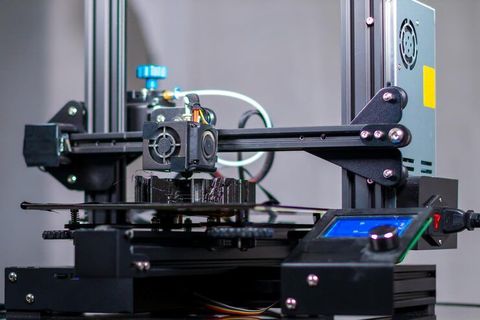
Industrial 3D Printing Machines: Explore Technologies, Materials, Costs
Updated: November 27, 2026
Read More