GPU Servers for AI Training and Deep Learning: Explore Key Features
Artificial intelligence workloads have changed the demands placed on computing infrastructure. Model training, computer vision, generative AI, scientific computing, and other deep learning applications can require enormous amounts of parallel computation, making conventional processor-focused servers less suitable for many intensive workloads.
GPU servers for AI training and deep learning address this challenge by combining powerful graphics processing units with high-speed processors, large memory pools, fast storage, and specialized networking. Their architecture allows many calculations to run simultaneously, which is particularly useful for matrix operations that appear throughout modern machine learning workloads.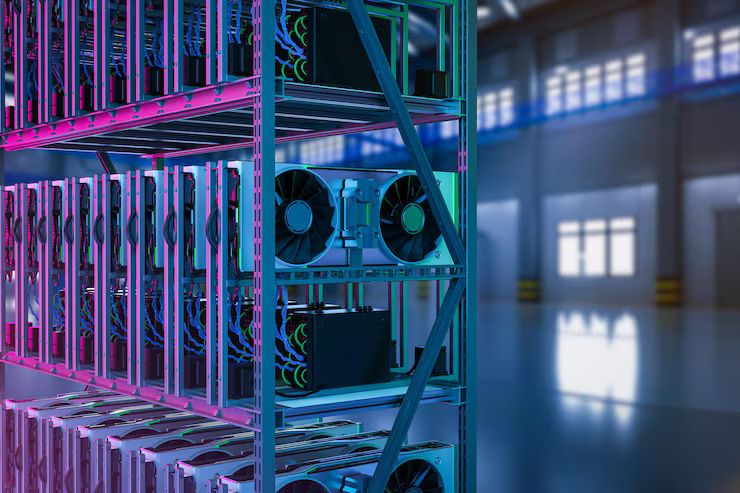
Understanding the key features of these systems makes it easier to evaluate how they support model development, training, experimentation, and deployment. GPU architecture, memory, interconnects, storage, cooling, and software compatibility all influence how efficiently a server can handle demanding AI workloads.
Why GPUs Are Important for Deep Learning
Deep learning relies heavily on mathematical operations that can be executed in parallel. Neural networks repeatedly perform operations involving large matrices and vectors, and GPUs are designed to process many such calculations simultaneously.
A conventional CPU typically contains a smaller number of powerful cores optimized for a broad range of tasks. GPUs use many processing cores to execute large numbers of relatively similar calculations at the same time, making them well suited to highly parallel workloads.
During AI training, this parallelism can accelerate operations such as tensor calculations, convolution, and other numerical workloads. The actual performance advantage depends on model architecture, software optimization, memory access patterns, and the specific hardware configuration.
GPU Architecture and Accelerator Selection
The GPU is the defining component of an AI server, but not every accelerator is designed for exactly the same workload.
Modern data-center GPUs may include specialized hardware for tensor operations, mixed-precision arithmetic, and other machine learning tasks. These capabilities can improve performance for frameworks that are optimized to use them.
GPU selection should therefore consider more than raw compute specifications. Factors such as supported precision formats, software ecosystem compatibility, memory capacity, interconnect technology, and multi-GPU scaling can have a major impact on real-world results.
For training larger models, the ability to coordinate multiple GPUs efficiently can be just as important as the performance of an individual accelerator.
GPU Memory Can Determine Workload Size
GPU memory, often called VRAM or HBM depending on the architecture, is one of the most important specifications for AI workloads.
Training models requires memory for parameters, gradients, activations, optimizer states, and input data. Large language models and other complex architectures can require substantial memory capacity, especially during training rather than inference.
Memory bandwidth also matters. A GPU may have strong computational capability, but performance can be constrained when data cannot move between memory and processing units quickly enough.
This creates two separate considerations: how much data can fit in GPU memory and how quickly that data can be accessed. Both influence workload efficiency.
Multi-GPU Scaling and High-Speed Interconnects
Many modern AI training workloads require multiple GPUs working together. Connecting those accelerators efficiently is essential because distributed training involves frequent communication between devices.
Technologies such as NVLink and other high-speed interconnects are designed to provide faster GPU-to-GPU communication than conventional paths in certain server architectures. The exact capabilities depend on the GPU generation and platform design.
At larger scales, servers may also rely on high-performance networking technologies such as InfiniBand or high-speed Ethernet. These connections allow multiple servers to participate in distributed training while moving gradients, parameters, and other data between systems.
Efficient scaling requires a balance between computation and communication. Adding more GPUs does not automatically produce proportional performance improvements if communication becomes a bottleneck.
CPU, RAM, and Storage Still Matter
Although GPUs handle much of the computational workload, the rest of the server architecture remains important.
The CPU manages system operations, data preparation, orchestration, and tasks that are not efficiently executed on the GPU. Sufficient system memory allows the server to stage datasets, manage processes, and support multiple workloads without excessive data movement.
Storage performance also affects overall productivity. Large AI datasets can contain millions of images, video files, text records, audio samples, or scientific measurements. Fast NVMe storage can reduce data-loading delays and help keep accelerators supplied with information.
A balanced system avoids situations where powerful GPUs spend significant time waiting for CPUs, storage, or network resources.
Networking for Distributed AI Workloads
For organizations training models across several servers, networking becomes a core component of the architecture.
Distributed training frameworks divide computational work among multiple accelerators and exchange information between them during training. This communication can occur thousands or millions of times throughout a workload, depending on the application.
High bandwidth and low latency are therefore important characteristics. Network design should also account for topology, switch capabilities, congestion, and the number of GPUs participating in the workload.
A well-designed network can allow additional servers to contribute meaningful computational capacity without creating excessive communication overhead.
Cooling and Power Requirements
High-performance GPUs generate significant heat, particularly when multiple accelerators operate continuously during model training.
GPU servers therefore require carefully engineered cooling systems. Air cooling remains common, but high-density configurations may use advanced approaches such as direct liquid cooling or other forms of liquid-assisted thermal management.
Power delivery is equally important. Multiple high-end GPUs can significantly increase the electrical requirements of a server, requiring appropriate power supplies, electrical infrastructure, and rack-level planning.
Thermal and power constraints influence how many accelerators can be installed in a chassis and how consistently they can operate under sustained workloads.
Software and Framework Compatibility
Hardware performance depends heavily on software support. AI researchers and engineering teams commonly work with frameworks such as PyTorch and TensorFlow, along with GPU-accelerated libraries and platform-specific development tools.
Driver support, runtime compatibility, compiler optimization, and distributed computing libraries all affect how effectively applications can use available hardware.
Container technologies can also simplify software deployment by packaging dependencies into repeatable environments. This becomes especially useful when teams share GPU servers or move workloads between development, testing, and production environments.
A technically powerful server can deliver disappointing results if software is poorly optimized or incompatible with the intended workload.
Security and Manageability Features
AI infrastructure also requires practical management and security capabilities. Servers may support remote management controllers, hardware monitoring, role-based access controls, secure boot mechanisms, and other infrastructure protections.
Centralized monitoring helps administrators track GPU utilization, temperatures, memory usage, power consumption, storage health, and system errors. This information is valuable for identifying underused resources or emerging hardware problems.
In shared environments, workload isolation and access controls become particularly important. Multiple teams may need to use the same GPU cluster without interfering with one another.
Choosing a GPU Server Configuration
The right configuration depends on the workload rather than simply selecting the largest available GPU.
| Requirement | Important Consideration |
|---|---|
| Model training | GPU compute capability and memory capacity |
| Large models | High-memory accelerators and efficient interconnects |
| Distributed training | Low-latency, high-bandwidth networking |
| Large datasets | Fast storage and sufficient system memory |
| Long training runs | Cooling, power delivery, and reliability |
| Shared environments | Management, monitoring, and workload isolation |
A smaller system may be appropriate for experimentation, while larger multi-GPU configurations may be necessary for substantial model training. The goal is to create a balanced architecture that matches actual computational, memory, storage, and networking requirements.
Frequently Asked Questions
What makes a GPU server different from a standard server?
A GPU server is specifically designed to integrate one or more high-performance accelerators with CPUs, memory, storage, networking, cooling, and power infrastructure suited to parallel computing workloads.
How much GPU memory is needed for AI training?
There is no universal requirement. Memory needs depend on model size, batch size, precision, optimizer configuration, sequence length, and training strategy. Larger models generally require more memory or techniques such as distributed training.
Can multiple GPUs improve AI training performance?
Yes, multiple GPUs can substantially increase available computational capacity. However, scaling depends on efficient GPU-to-GPU and server-to-server communication, as well as software support for distributed training.
Why is networking important in AI servers?
Networking becomes critical when workloads span multiple GPUs or servers. Training processes need to exchange information frequently, so bandwidth and latency can affect scaling efficiency.
Are cooling and power really important for GPU servers?
Yes. AI training can place sustained loads on multiple accelerators, generating considerable heat and consuming substantial power. Adequate thermal management and power infrastructure help maintain consistent operation.
Conclusion
GPU servers for AI training and deep learning combine specialized accelerators with the supporting infrastructure required to process demanding computational workloads. GPU compute capability, memory capacity, interconnects, networking, CPUs, storage, cooling, and software compatibility all contribute to the overall performance of an AI system.
The most effective configuration is not necessarily the one with the largest number of GPUs. It is the architecture that provides the right balance of compute, memory, communication, storage, power, and software support for the intended workload. As AI models continue to grow in complexity, carefully designed GPU server infrastructure will remain an important foundation for efficient training and deep learning development.

Related Post...
Turnkey PCB Assembly Guide to Components, Testing, and Production Steps
Updated: September 15, 2026
Read More
Retail Inventory Management Tools Insights for Smarter Stock Control
Updated: September 17, 2026
Read More