AI-Powered Business Phone System: Explore How Intelligent Calling Works
Business phone systems are no longer limited to connecting one caller with another.
An AI-powered business phone system can combine voice communication with speech recognition, conversational AI, call routing, transcription, analytics, and workflow automation to make business conversations more structured and easier to manage.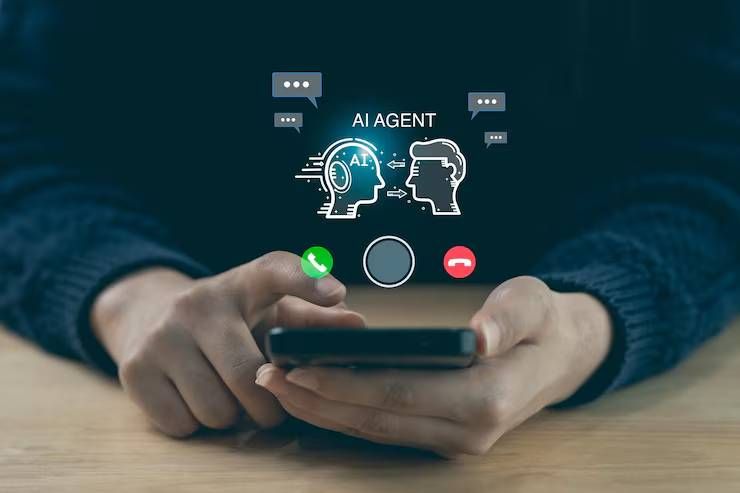
The growing use of artificial intelligence in communications is changing how organizations handle incoming calls, outbound conversations, appointment requests, customer questions, and internal coordination. Instead of treating every call as a simple voice connection, intelligent calling systems can interpret conversational context and respond according to predefined business rules.
Understanding how these systems work requires looking beyond the AI label. The practical value comes from how voice data is captured, interpreted, routed, documented, and connected with other business processes.
How Intelligent Calling Works
An AI-powered business phone system typically combines several technologies that operate during different stages of a call. When someone speaks, the system first needs to convert their voice into information that software can process.
Automatic speech recognition (ASR) converts spoken language into text or another machine-readable representation. The AI can then analyze the meaning of the conversation using natural language processing and related machine-learning techniques.
The system may identify the caller's intent, recognize specific information, determine whether the request matches an available workflow, and decide what should happen next. A conversational AI component can then generate or select an appropriate response.
For example, a caller might explain that they need to change an appointment. The system can recognize the intent, collect relevant details, check the connected scheduling workflow, and either complete an authorized action or transfer the conversation to an employee.
The exact capabilities depend on the system's architecture, integrations, permissions, and AI models. AI does not independently make every business decision; organizations generally define the rules that determine what the system can and cannot do.
The Technology Behind an AI Phone System
Intelligent calling depends on several components working together rather than on a single AI feature.
A typical architecture may include:
- Telephony infrastructure for connecting calls through conventional or internet-based voice networks.
- Speech recognition for interpreting spoken language.
- Natural language processing for identifying meaning, intent, and relevant entities.
- Conversational AI for generating or selecting responses.
- Call routing logic for directing conversations to appropriate people or workflows.
- Voice synthesis for producing natural spoken responses.
- Transcription and analytics for documenting and analyzing conversations.
- Business integrations for connecting calls with calendars, customer records, ticketing systems, or other software.
These components create a communication pipeline. Voice enters the system, speech is interpreted, context is evaluated, an action or response is selected, and the resulting information can be stored or passed into another workflow.
The quality of the overall experience therefore depends on more than the language model. Network reliability, microphone quality, speech recognition accuracy, integration design, response latency, and business rules can all influence performance.
Where AI Adds Intelligence to Business Calls
Traditional automated phone systems generally rely on predefined menus. Callers may hear instructions such as pressing a number for a particular department or selecting another number for a different function.
AI-based calling can make interactions more conversational. Instead of forcing a caller through a rigid sequence, the system can interpret natural language and determine what the person is trying to accomplish.
For example, a caller could say that they are having difficulty accessing an account and need assistance. Rather than requiring the caller to identify a category from a menu, an intelligent system may recognize the request and route it according to the organization's workflow.
AI can also use conversational context. If a caller provides information in one sentence and clarifies it later, the system can potentially use both pieces of information when determining the next action.
This contextual capability is one of the main differences between conventional interactive voice response systems and more sophisticated conversational systems.
Call Routing Becomes More Context-Aware
Call routing is another area where artificial intelligence can change the communication workflow.
A conventional routing system may direct calls according to a fixed menu, phone number, department, or business hours. An AI-enabled system can incorporate additional information such as caller intent, conversation content, language, urgency, or available staff.
For instance, a system could distinguish between a general information request and a technical issue based on what the caller says. It could then route each conversation according to different rules.
Routing can also work alongside human representatives. AI may handle straightforward requests while transferring complex or sensitive situations to an appropriate employee.
A well-designed handoff is particularly important. The employee should ideally receive relevant context rather than forcing the caller to repeat everything they already explained.
Transcription and Conversation Intelligence
One of the most practical capabilities of AI-powered calling is automatic transcription.
A system can convert conversations into searchable text, making it easier to review what was discussed. Depending on the platform and configuration, AI can also identify topics, summarize conversations, detect action items, or organize recurring issues.
This creates a useful layer of conversation intelligence. Instead of relying entirely on memory or manually reviewing every recording, organizations can use structured information extracted from calls.
For example, repeated conversations may reveal that callers frequently struggle with the same process. That information can help teams identify operational friction and improve documentation, workflows, or training.
However, transcription and analysis should be treated as decision-support tools. Speech recognition can misunderstand accents, background noise, specialized terminology, or ambiguous statements, so important conclusions may require human verification.
Connecting Calls With Business Workflows
An AI phone system becomes more useful when it can interact with other business software.
A phone conversation may need to trigger an action in a scheduling platform, customer relationship system, help desk, notification system, or internal database. Application programming interfaces and software integrations can connect the voice environment with these systems.
Consider a scheduling workflow. A caller provides a preferred appointment time, the system identifies the request, checks the relevant scheduling information, and follows the organization's authorization rules before confirming or escalating the request.
This type of integration turns a phone call into a workflow rather than an isolated conversation.
The same principle can apply to information retrieval, ticket creation, status updates, notifications, and internal task routing. The system's permissions should determine which actions can be performed automatically.
Where Human Oversight Still Matters
AI can automate parts of a phone interaction, but organizations still need clear boundaries around automated decision-making.
Some conversations involve sensitive information, unusual circumstances, complaints, complex technical issues, or decisions requiring professional judgment. These situations may be better handled by a human representative.
A practical system should therefore have escalation mechanisms. The AI needs to recognize when it lacks sufficient information, when a request falls outside its permitted workflow, or when a human should take over.
Security is equally important. Voice conversations can contain personal, financial, operational, or confidential information. Organizations need appropriate controls for authentication, access permissions, data retention, recording, and information handling.
Privacy and regulatory requirements can also vary by location and industry. Call recording, transcription, and automated processing should therefore be configured according to applicable requirements rather than treated as purely technical features.
Measuring Intelligent Calling Performance
AI calling systems can generate substantial operational data, but measuring the right indicators is more useful than collecting everything available.
Organizations may examine metrics such as:
- Call answer and abandonment patterns
- Transfer and escalation rates
- Average interaction duration
- Transcription accuracy
- Automated resolution rates
- Repeated caller intents
- Response latency
- Workflow completion rates
- Human intervention frequency
These measurements help distinguish between automation that genuinely improves a workflow and automation that simply adds another layer of technology.
For example, a high automated-resolution rate may appear positive, but it needs to be considered alongside customer outcomes and escalation patterns. If callers repeatedly request human assistance after interacting with the AI, the workflow may need refinement.
What Intelligent Calling Means for Business Communication
An AI-powered business phone system is best understood as a combination of telephony, conversational intelligence, automation, and workflow integration. Its role can range from interpreting incoming requests to documenting conversations and connecting voice interactions with business applications.
The technology does not make every call autonomous. Its effectiveness depends on accurate speech recognition, appropriate AI behavior, reliable integrations, clear permissions, strong security practices, and well-designed human escalation.
As these systems become more capable, the important shift is not simply from human calls to AI calls. It is from isolated voice conversations toward communication workflows where calls can be understood, documented, routed, and connected to the processes that follow.
Frequently Asked Questions
What is an AI-powered business phone system?
It is a business communication system that uses artificial intelligence to interpret spoken conversations and support functions such as call routing, transcription, automated responses, conversation analysis, and workflow integration.
Can AI answer business calls without a human?
Yes, some systems can handle defined conversations without immediate human involvement. However, organizations typically establish boundaries and escalation rules for situations that require human judgment or fall outside the automated workflow.
How does AI understand what a caller wants?
Speech recognition converts spoken language into machine-readable information, while natural language processing and conversational AI analyze the meaning, intent, and context of the request.
Can AI phone systems connect with other business software?
Yes. Depending on the system, integrations and APIs can connect calling workflows with calendars, customer databases, help desks, ticketing platforms, and other business applications.
Does an AI phone system eliminate human representatives?
Not necessarily. In many workflows, AI handles routine interactions while human representatives manage complex, sensitive, or exceptional situations. The two approaches can operate as complementary parts of the same communication system.
Conclusion
AI-powered business phone systems extend traditional telephony by adding speech recognition, conversational intelligence, contextual routing, transcription, analytics, and workflow automation. These capabilities allow organizations to treat voice communication as structured business data rather than only as a live conversation.
The most effective implementations balance automation with human oversight. Clear workflows, reliable integrations, appropriate security controls, and well-designed escalation paths are essential for making intelligent calling useful in real operational environments.

Related Post...

Smart Office Automation Controller Systems: Explore How Centralized Control Works
Updated: October 02, 2026
Read More
Corporate Server Room Cooling Systems: Explore Precision Temperature Control
Updated: October 02, 2026
Read More
Commercial Indoor Air Quality Monitoring Systems: What Data Do They Track?
Updated: October 02, 2026
Read More