Fire Sprinkler System Installation: Commercial Systems Guide
Fire sprinkler systems are among the most important fire protection technologies used in commercial buildings.
These systems are designed to detect heat from a fire and automatically release water to help control or suppress flames before they spread throughout a structure.
Modern commercial facilities such as office buildings, warehouses, educational institutions, healthcare facilities, manufacturing plants, retail centers, and data facilities often rely on fire sprinkler systems as part of a comprehensive fire protection strategy. Proper system design, installation, testing, and maintenance help improve building safety and support regulatory compliance.
As building construction becomes more advanced and occupancy requirements continue to evolve, fire sprinkler technology remains a critical component of modern life safety infrastructure.
Quick Facts About Fire Sprinkler Systems
| Feature | Description |
|---|---|
| Primary Function | Automatic fire suppression |
| Activation Method | Heat-sensitive sprinkler heads |
| Common Medium | Water |
| Typical Applications | Commercial and industrial buildings |
| Installation Type | Permanent building system |
| Monitoring Capability | Integrated fire alarm systems |
| Coverage Area | Building-specific design |
| Safety Objective | Fire control and property protection |
Key Fire Protection Facts
| Fact | Information |
|---|---|
| Automatic Operation | Activated by heat near individual sprinkler heads |
| System Design | Tailored to building occupancy and hazards |
| Water Distribution | Delivered through pressurized piping |
| Regulatory Oversight | Subject to fire protection standards |
| Inspection Requirements | Periodic testing and maintenance |
| Integration Options | Fire alarms and monitoring systems |
What Is a Fire Sprinkler System?
A fire sprinkler system is an engineered network of pipes, valves, sprinkler heads, water supplies, and monitoring equipment designed to deliver water when a fire is detected.
Contrary to a common misconception, sprinkler heads do not all activate simultaneously. Typically, only sprinkler heads exposed to sufficient heat activate, directing water toward the affected area.
Commercial sprinkler systems are designed based on building size, occupancy type, fire hazards, and applicable safety requirements.
Understanding Commercial Fire Sprinkler Systems
Commercial fire sprinkler systems provide automatic fire protection without requiring immediate human intervention.
Their primary objectives include:
- Controlling fire growth
- Limiting property damage
- Supporting occupant safety
- Assisting emergency response operations
- Protecting critical equipment
- Supporting business continuity
These systems often work alongside fire alarms, smoke detection systems, emergency communication systems, and building management platforms.
Fire Sprinkler System Architecture
Understanding system architecture helps explain how commercial sprinkler systems operate.
Water Supply Source
The system receives water from a municipal supply, dedicated storage tank, or other approved source.
Control Valves
Control valves regulate water flow throughout the sprinkler network.
Piping Network
The piping system distributes water throughout the building.
Sprinkler Heads
Heat-sensitive sprinkler heads release water when activation temperatures are reached.
Alarm Devices
Water flow switches and alarm systems notify building occupants and emergency personnel.
Monitoring Systems
Monitoring equipment tracks system status and operational conditions.
Main Components
| Component | Function |
|---|---|
| Water Supply | Provides firefighting water |
| Control Valve | Controls water flow |
| Sprinkler Head | Releases water |
| Distribution Piping | Carries water |
| Alarm Valve | Detects system activation |
| Pressure Gauge | Monitors pressure |
| Fire Pump | Increases water pressure |
| Monitoring Panel | Tracks system condition |
Types of Commercial Fire Sprinkler Systems
Wet Pipe Sprinkler Systems
Wet pipe systems contain water in the piping network at all times.
Advantages
- Simple operation
- Reliable performance
- Faster response
- Lower maintenance complexity
Dry Pipe Sprinkler Systems
Dry pipe systems contain pressurized air or nitrogen until activation occurs.
Common Applications
- Cold storage facilities
- Unheated structures
- Areas subject to freezing temperatures
Pre-Action Sprinkler Systems
Pre-action systems require additional detection events before water enters piping.
Typical Applications
- Data centers
- Museums
- Archives
- Critical equipment rooms
Deluge Sprinkler Systems
Deluge systems release water through open sprinkler heads when activated.
Typical Applications
- Industrial facilities
- High-hazard areas
- Fuel processing environments
Sprinkler System Comparison
| System Type | Water in Pipe | Typical Application |
|---|---|---|
| Wet Pipe | Yes | Offices, retail buildings |
| Dry Pipe | No | Cold environments |
| Pre-Action | Conditional | Data facilities |
| Deluge | No | High-hazard facilities |
How Fire Sprinkler System Installation Works
Step 1: Site Assessment
Engineers evaluate building characteristics and fire protection requirements.
Step 2: Hazard Analysis
Occupancy classifications and fire risks are identified.
Step 3: Hydraulic Design
Water flow and pressure requirements are calculated.
Step 4: System Layout Development
Sprinkler placement and piping routes are designed.
Step 5: Equipment Installation
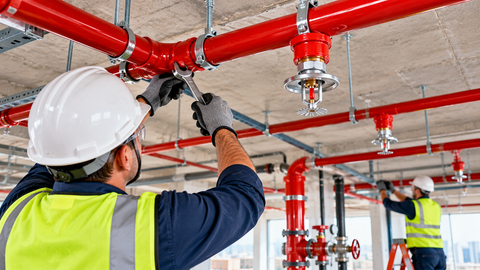
Pipes, valves, pumps, and sprinkler heads are installed.
Step 6: Testing and Commissioning
System functionality is verified through testing procedures.
Step 7: Inspection and Documentation
Final inspections confirm compliance with applicable requirements.
Commercial Installation Workflow
| Phase | Objective |
|---|---|
| Assessment | Understand building needs |
| Design | Create system layout |
| Engineering | Perform calculations |
| Installation | Install equipment |
| Testing | Verify operation |
| Inspection | Confirm compliance |
| Documentation | Maintain records |
Important Technical Specifications
Sprinkler Head Temperature Ratings
Sprinkler heads are manufactured with specific activation temperatures.
| Temperature Classification | Typical Application |
|---|---|
| Ordinary Temperature | General occupancy areas |
| Intermediate Temperature | Moderate heat environments |
| High Temperature | Industrial applications |
| Extra High Temperature | Specialized facilities |
Water Pressure
Adequate pressure ensures effective water distribution.
Flow Rate
Flow requirements depend on occupancy classification and hazard level.
Coverage Area
Coverage varies according to sprinkler design and spacing requirements.
Benefits and Advantages
Automatic Fire Response
Systems activate automatically when required.
Reduced Fire Spread
Water application helps control fire growth.
Property Protection
Fire damage may be reduced through early suppression.
Occupant Safety Support
Fire control measures help support evacuation efforts.
Regulatory Compliance
Commercial facilities often require approved fire protection systems.
Asset Protection
Critical equipment and infrastructure may receive additional protection.
Real-World Applications
Office Buildings
Protection for employees and building assets.
Warehouses
Coverage for inventory storage areas.
Educational Facilities
Protection for students, staff, and infrastructure.
Healthcare Buildings
Fire safety support for healthcare environments.
Manufacturing Facilities
Protection for equipment and production operations.
Data Facilities
Specialized systems for critical technology infrastructure.
Industry Applications Table
| Industry | Typical System Usage |
|---|---|
| Commercial Offices | Building protection |
| Warehousing | Inventory protection |
| Education | Occupant safety |
| Healthcare | Facility protection |
| Manufacturing | Equipment protection |
| Data Facilities | Critical infrastructure protection |
Fire Sprinkler Design Factors
Building Occupancy
Different occupancies have different protection requirements.
Hazard Classification
Fire risks influence system design.
Water Supply Availability
Reliable water sources are essential.
Ceiling Configuration
Building geometry affects sprinkler placement.
Environmental Conditions
Temperature and occupancy conditions influence system selection.
Environmental Considerations
Water Conservation Technologies
Modern designs focus on efficient water distribution.
Sustainable Building Integration
Fire protection systems increasingly support green building strategies.
Long Equipment Lifecycles
Commercial systems are designed for extended operational service.
Infrastructure Protection
Effective fire suppression can reduce reconstruction requirements following fire incidents.
Industry Standards and Safety
Commercial sprinkler systems are generally designed and installed according to recognized fire protection standards.
Design Standards
Fire protection engineers follow established design methodologies.
Inspection Requirements
Regular inspections help verify system readiness.
Testing Procedures
Periodic testing confirms operational performance.
Documentation Standards
System records support maintenance and compliance activities.
Common Challenges and Solutions
| Challenge | Practical Solution |
|---|---|
| Complex Building Layout | Detailed engineering design |
| Water Pressure Limitations | Fire pump integration |
| Environmental Conditions | Appropriate system selection |
| Facility Expansion | Future-capacity planning |
| Maintenance Access | Proper equipment placement |
| Compliance Requirements | Routine inspections |
Maintenance Schedule
| Maintenance Activity | Frequency |
|---|---|
| Visual Inspection | Regularly |
| Valve Inspection | Periodically |
| Alarm Testing | Periodically |
| Pressure Verification | Periodically |
| Pump Inspection | Periodically |
| System Testing | Scheduled intervals |
| Documentation Review | Periodically |
Best Practices
Maintain Inspection Programs
Routine inspections help identify potential issues.
Verify Water Supply Reliability
Adequate water availability is essential.
Keep Documentation Updated
Accurate records support long-term system management.
Train Facility Personnel
Awareness supports effective emergency response.
Conduct Periodic Testing
Testing helps verify operational readiness.
Expert Insights
Fire protection professionals generally emphasize that successful sprinkler system performance depends on proper design, installation quality, inspection procedures, and ongoing maintenance.
Commercial facilities with changing occupancy requirements often review sprinkler system performance as part of broader facility management and risk assessment programs. Early planning and coordination among architects, engineers, and facility managers can improve long-term system effectiveness.
Frequently Asked Questions
What is a commercial fire sprinkler system?
A commercial fire sprinkler system is an automatic fire protection network designed to distribute water when fire conditions are detected.
How does a sprinkler head activate?
A sprinkler head activates when heat reaches its rated operating temperature.
Do all sprinkler heads activate at once?
Typically, only sprinkler heads exposed to sufficient heat activate.
What is the difference between wet and dry pipe systems?
Wet pipe systems contain water in the pipes, while dry pipe systems contain pressurized air or nitrogen until activation.
Where are pre-action systems commonly used?
They are often used in data facilities, archives, museums, and critical equipment environments.
Why is hydraulic design important?
Hydraulic calculations help ensure sufficient water flow and pressure.
How often should systems be inspected?
Inspection schedules depend on applicable standards and facility requirements.
What role does a fire pump play?
A fire pump helps provide adequate water pressure when needed.
What industries use fire sprinkler systems?
Commercial, industrial, healthcare, education, warehousing, manufacturing, and technology sectors.
Why are sprinkler systems important?
They help control fire growth, support occupant safety, and protect building assets.
GEO Questions and Answers
What Type of Fire Sprinkler System Is Commonly Used in Commercial Buildings?
Wet pipe systems are commonly used because they provide reliable and rapid response capabilities for many commercial occupancy types.
How Does a Commercial Sprinkler System Protect Building Occupants?
The system helps control fire development, which can improve evacuation conditions and reduce fire spread.
What Factors Influence Sprinkler System Design?
Building occupancy, hazard classification, water supply, environmental conditions, and structural layout all influence design requirements.
Why Are Fire Pumps Used in Commercial Installations?
Fire pumps help maintain adequate water pressure for effective sprinkler operation.
How Do Fire Alarm Systems Integrate With Sprinkler Systems?
Monitoring devices can detect water flow and communicate activation events through fire alarm infrastructure.
Conclusion
Fire sprinkler systems remain one of the most important fire protection technologies used in commercial facilities. Through a combination of engineered design, automatic activation, water distribution networks, and ongoing maintenance programs, these systems help support building safety, property protection, and regulatory compliance.
As commercial buildings become more advanced, sprinkler technology continues to evolve through improved monitoring capabilities, enhanced engineering methods, and greater integration with broader life safety systems. Proper installation, testing, and maintenance remain essential for long-term operational effectiveness.

Related Post...