Industrial IoT Sensors: Smart Plant Automation Guide
Industrial IoT (IIoT) sensors have become a fundamental part of modern manufacturing, smart factories, and industrial automation systems.
These intelligent sensing devices collect real-time data from machines, equipment, production lines, and industrial environments, helping organizations improve operational visibility and process efficiency.
As industries continue to adopt digital transformation strategies, Industrial IoT sensors are playing a crucial role in connecting physical assets with data-driven decision-making systems. From monitoring temperature and vibration to measuring pressure, flow, humidity, and energy consumption, these sensors provide continuous insights that support smarter operations.
Industrial IoT technology is widely used across manufacturing facilities, power generation plants, food processing facilities, oil and gas operations, pharmaceutical production environments, and logistics networks.
Quick Facts About Industrial IoT Sensors
| Feature | Details |
|---|---|
| Technology Type | Industrial Internet of Things (IIoT) |
| Primary Function | Real-Time Data Collection |
| Connectivity | Wired and Wireless Networks |
| Common Measurements | Temperature, Pressure, Vibration, Flow |
| Applications | Smart Factories and Industrial Automation |
| Data Usage | Monitoring, Analytics, Automation |
| Industry Adoption | Manufacturing, Energy, Logistics |
| Key Advantage | Continuous Equipment Visibility |
What Are Industrial IoT Sensors?
Industrial IoT sensors are electronic devices that detect, measure, and transmit information about physical conditions within industrial environments. These sensors gather data and communicate it to monitoring platforms, industrial controllers, cloud systems, or analytics tools.
Unlike traditional sensors that only provide local readings, Industrial IoT sensors can transmit information continuously, allowing operators and engineers to monitor equipment and processes remotely.
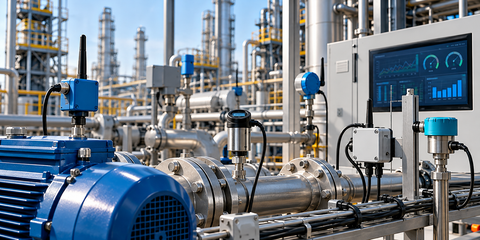
For example, a vibration sensor installed on an industrial motor can continuously monitor machine behavior. If unusual vibration patterns occur, maintenance teams can investigate the issue before it affects production operations.
Key Statistics and Industry Facts
| Industry Insight | Value |
|---|---|
| Data Collection Frequency | Real-Time Monitoring |
| Sensor Deployment Areas | Manufacturing, Energy, Utilities |
| Connectivity Options | Ethernet, Wi-Fi, Wireless Networks |
| Common Industrial Measurements | Temperature, Pressure, Flow, Vibration |
| Monitoring Capability | Continuous Asset Observation |
| Automation Integration | High Compatibility |
Important Facts
- Industrial IoT sensors support predictive maintenance strategies.
- Real-time monitoring improves operational awareness.
- Smart factories depend heavily on sensor-generated data.
- Modern industrial automation systems use thousands of sensors across production facilities.
- Sensor networks support process optimization and asset management initiatives.
Understanding Industrial IoT Technology
Industrial IoT combines sensing technology, communication networks, industrial control systems, and data analytics platforms.
The goal is to create connected environments where equipment can communicate operational information automatically.
Core Functions
- Data collection
- Condition monitoring
- Process visibility
- Asset tracking
- Equipment diagnostics
- Operational analytics
How Industrial IoT Sensors Work
Industrial IoT sensors follow a structured process to collect and transmit information.
Step 1: Detect Physical Conditions
The sensor measures a specific variable such as temperature, pressure, vibration, humidity, or flow.
Step 2: Convert Signals
The measured condition is converted into digital information.
Step 3: Process Data
Internal electronics prepare the data for transmission.
Step 4: Send Information
The sensor communicates data through industrial communication networks.
Step 5: Analyze Data
Monitoring platforms evaluate the information.
Step 6: Support Decision Making
Operators and automation systems use insights to improve operations.
Industrial IoT Architecture
Industrial IoT sensor networks operate within a multi-layer architecture.
Sensor Layer
The sensor layer captures physical measurements from industrial assets.
Examples include:
- Temperature sensors
- Pressure sensors
- Flow sensors
- Vibration sensors
- Humidity sensors
Edge Layer
Edge devices collect data from multiple sensors and perform local processing.
Network Layer
Industrial communication systems transfer information throughout the facility.
Data Platform Layer
Collected data is stored and organized for analysis.
Analytics Layer
Software platforms identify trends, anomalies, and operational patterns.
Automation Layer
Industrial control systems use sensor information to automate actions.
Industrial IoT Architecture Overview
| Layer | Function |
|---|---|
| Sensor Layer | Data Collection |
| Edge Layer | Local Processing |
| Network Layer | Data Transmission |
| Data Platform | Storage and Organization |
| Analytics Layer | Insights Generation |
| Automation Layer | Process Control |
Main Types of Industrial IoT Sensors
Temperature Sensors
Temperature sensors monitor equipment and process temperatures.
Applications include:
- Manufacturing equipment
- Boilers
- Industrial ovens
- Energy systems
Pressure Sensors
Pressure sensors measure fluid and gas pressure levels.
Applications include:
- Hydraulic systems
- Pneumatic systems
- Chemical processing
Vibration Sensors
Vibration monitoring is essential for rotating equipment.
Applications include:
- Motors
- Pumps
- Compressors
- Turbines
Flow Sensors
Flow sensors measure liquid and gas movement.
Applications include:
- Water treatment facilities
- Process industries
- Energy systems
Humidity Sensors
Humidity sensors monitor moisture levels.
Applications include:
- Food processing
- Warehousing
- Pharmaceutical production
Proximity Sensors
These sensors detect the presence or position of objects.
Applications include:
- Automated assembly systems
- Conveyor systems
- Robotics
Sensor Type Comparison
| Sensor Type | Measures | Common Applications |
|---|---|---|
| Temperature | Heat Levels | Manufacturing |
| Pressure | Fluid Pressure | Process Industries |
| Vibration | Mechanical Movement | Predictive Maintenance |
| Flow | Liquid or Gas Movement | Utilities |
| Humidity | Moisture Levels | Controlled Environments |
| Proximity | Object Detection | Automation Systems |
Industrial Communication Technologies
Reliable communication is critical in Industrial IoT environments.
Ethernet Networks
Widely used for industrial communications.
Wireless Networks
Provide flexible deployment options.
Industrial Fieldbus Systems
Support communication between automation devices.
Low-Power Sensor Networks
Suitable for large-scale sensor deployments.
Technical Specifications Explained
Measurement Range
Defines the minimum and maximum values the sensor can measure.
Accuracy
Indicates measurement precision.
Response Time
Measures how quickly the sensor reacts to changes.
Environmental Rating
Determines suitability for industrial environments.
Communication Protocol
Specifies how data is transmitted.
Industrial Sensor Specification Comparison
| Specification | Importance |
|---|---|
| Accuracy | Measurement Quality |
| Response Time | Operational Performance |
| Measurement Range | Application Compatibility |
| Environmental Rating | Durability |
| Connectivity | Integration Capability |
Benefits of Industrial IoT Sensors
Real-Time Visibility
Operators can monitor assets continuously.
Improved Equipment Reliability
Continuous monitoring supports early issue detection.
Enhanced Process Control
Sensors provide precise operational data.
Better Resource Utilization
Data-driven decisions improve efficiency.
Automation Support
Sensors provide essential information for automated systems.
Operational Transparency
Decision-makers gain greater visibility into production processes.
Real-World Applications
Smart Manufacturing
Connected factories use sensors to optimize production.
Energy Generation
Power plants monitor equipment and operational conditions.
Oil and Gas Operations
Sensors track pressure, flow, and equipment status.
Food Processing
Monitoring supports process consistency.
Pharmaceutical Production
Environmental monitoring supports controlled conditions.
Logistics and Warehousing
Sensors assist with asset tracking and environmental monitoring.
Industry Applications Table
| Industry | Common Sensor Usage |
|---|---|
| Manufacturing | Equipment Monitoring |
| Energy | Asset Management |
| Oil and Gas | Process Monitoring |
| Food Processing | Environmental Control |
| Pharmaceuticals | Condition Monitoring |
| Logistics | Asset Tracking |
Predictive Maintenance and Industrial IoT
One of the most valuable applications of Industrial IoT sensors is predictive maintenance.
How It Works
Sensors monitor equipment continuously and identify unusual operating patterns.
Examples include:
- Increased vibration
- Rising temperatures
- Pressure fluctuations
- Flow irregularities
Maintenance teams can investigate conditions before equipment failures occur.
Common Challenges and Solutions
| Challenge | Practical Solution |
|---|---|
| Large Data Volumes | Use Analytics Platforms |
| Connectivity Issues | Network Optimization |
| Sensor Calibration | Scheduled Verification |
| Environmental Exposure | Industrial-Grade Designs |
| System Integration | Standardized Protocols |
| Data Security | Access Controls |
Environmental Considerations
Industrial IoT sensors contribute to more efficient resource management.
Energy Monitoring
Sensors help identify energy usage patterns.
Resource Optimization
Real-time monitoring supports efficient resource utilization.
Emissions Monitoring
Environmental measurements support compliance programs.
Waste Reduction
Process visibility helps identify inefficiencies.
Industry Standards and Safety
Industrial IoT deployments often follow established industrial communication and automation standards.
Functional Safety
Safety systems monitor critical operations.
Industrial Network Standards
Standardized protocols improve interoperability.
Cybersecurity Practices
Connected environments require strong security measures.
Environmental Protection Ratings
Industrial sensors are designed for challenging operating environments.
Maintenance Schedule
| Maintenance Activity | Recommended Frequency |
|---|---|
| Visual Inspection | Monthly |
| Calibration Verification | Periodically |
| Connectivity Testing | Monthly |
| Firmware Review | Periodically |
| Environmental Inspection | Monthly |
| Data Quality Review | Ongoing |
Best Practices
- Select sensors appropriate for operating conditions.
- Verify calibration schedules.
- Monitor network performance regularly.
- Maintain secure communication practices.
- Review collected data consistently.
- Implement structured maintenance programs.
Expert Insights
Industrial automation specialists increasingly view sensor networks as the foundation of smart factory operations. While automation systems execute control actions, sensors provide the information required for those decisions.
Organizations implementing Industrial IoT strategies often begin with critical equipment monitoring and gradually expand toward facility-wide sensor deployments. This phased approach helps improve operational visibility while supporting long-term digital transformation goals.
Future Trends and Industry Insights
Artificial Intelligence Integration
AI platforms increasingly analyze sensor-generated data.
Edge Computing Expansion
More processing is moving closer to industrial assets.
Digital Twins
Virtual asset models use real-time sensor information.
Autonomous Operations
Sensor networks support advanced automation initiatives.
Advanced Wireless Connectivity
Industrial communication technologies continue to evolve.
Smart Factory Development
Future factories will rely heavily on connected sensor ecosystems.
Frequently Asked Questions
What are Industrial IoT sensors?
Industrial IoT sensors are devices that collect and transmit operational data from industrial equipment and environments.
What do Industrial IoT sensors measure?
They commonly measure temperature, pressure, vibration, flow, humidity, and equipment conditions.
How do Industrial IoT sensors support automation?
They provide real-time information that helps automation systems make operational decisions.
What industries use Industrial IoT sensors?
Manufacturing, energy, logistics, pharmaceuticals, food processing, and oil and gas industries.
Why is real-time monitoring important?
It improves visibility into equipment performance and operational conditions.
What is predictive maintenance?
A maintenance strategy that uses sensor data to identify potential issues before failures occur.
What communication methods do Industrial IoT sensors use?
Industrial networks may use wired or wireless communication technologies.
What is edge computing?
Edge computing processes data closer to the equipment generating it.
How do Industrial IoT sensors improve efficiency?
They provide accurate operational data that supports optimization initiatives.
What future technologies will influence Industrial IoT?
Artificial intelligence, digital twins, advanced analytics, and smart factory technologies.
Conclusion
Industrial IoT sensors are transforming industrial automation by providing continuous visibility into equipment, processes, and operational environments. Their ability to collect, transmit, and analyze real-time information supports smarter decision-making, improved asset management, and more efficient production operations.
As technologies such as artificial intelligence, edge computing, digital twins, and smart manufacturing continue to advance, Industrial IoT sensors will remain at the center of modern industrial transformation. Their role in enabling connected, data-driven operations ensures their growing importance across manufacturing, energy, logistics, and other industrial sectors.

Related Post...