Directly connecting rotating shafts without a coupling can lead to alignment problems, excessive vibration, and premature wear. Industrial couplings are designed to accommodate small misalignments, absorb shock loads, and protect connected equipment from stress. This makes them a foundational element in mechanical power transmission systems.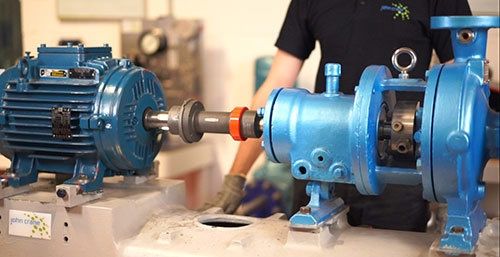
Industrial couplings are used across manufacturing, energy, processing, and transportation environments. Understanding why they exist helps explain how modern machinery achieves durability, flexibility, and operational stability.
Why Industrial Couplings Matter
Industrial couplings matter because they directly affect machine performance, reliability, and safety. Even well-designed equipment can experience failure if shaft connections are not properly managed.
This topic affects:
-
Manufacturing plants and production lines
-
Maintenance and reliability teams
-
Engineers designing rotating machinery
-
Operators working with mechanical systems
Key problems that industrial couplings help address include:
-
Shaft misalignment due to installation or thermal expansion
-
Vibration transmission between components
-
Sudden torque spikes during startup or load changes
-
Wear and damage to bearings and seals
By managing these issues, couplings help extend equipment life and maintain smoother operation. Their role is often unnoticed until failure occurs, which highlights their importance in everyday industrial environments.
Basic Functions of Industrial Couplings
Industrial couplings perform several essential mechanical functions beyond simple shaft connection.
Core functions include:
-
Transmitting torque from a driving shaft to a driven shaft
-
Compensating for angular, parallel, or axial misalignment
-
Damping vibration and shock loads
-
Allowing controlled movement between connected components
The table below summarizes these functions.
| Function | Mechanical Purpose |
|---|---|
| Torque Transmission | Power transfer |
| Misalignment Compensation | Stress reduction |
| Vibration Damping | Smoother operation |
| Shock Absorption | Equipment protection |
These functions explain why couplings are selected based on application conditions rather than size alone.
Common Types of Industrial Couplings
Industrial couplings are categorized by how they transmit torque and handle misalignment. Each type is suited to specific operating conditions.
Rigid couplings
Rigid couplings connect shafts with no flexibility. They require precise alignment and are used where shaft movement is minimal.
Flexible couplings
Flexible couplings allow limited movement between shafts. They help reduce stress caused by misalignment and vibration.
Elastomeric couplings
These use elastic elements to absorb shock and vibration while transmitting torque.
Gear couplings
Gear couplings use interlocking teeth to transmit high torque and accommodate misalignment.
Fluid couplings
Fluid couplings transmit torque hydraulically, allowing smooth startup and load control.
The table below provides an overview.
| Coupling Type | Key Characteristic | Typical Use |
|---|---|---|
| Rigid | No flexibility | Precise alignment |
| Flexible | Misalignment tolerance | General machinery |
| Elastomeric | Shock absorption | Variable loads |
| Gear | High torque | Heavy equipment |
| Fluid | Smooth torque transfer | Controlled startups |
Typical Applications of Industrial Couplings
Industrial couplings are used wherever rotating equipment must operate reliably under varying conditions.
Common application areas include:
-
Pumps and compressors
-
Electric motors and generators
-
Conveyors and material handling systems
-
Fans and blowers
-
Industrial mixers and crushers
Each application places different demands on couplings, such as speed, torque, environment, and alignment tolerance. This diversity explains why no single coupling type fits all use cases.
Developments and Design Trends in Couplings
Industrial coupling design continues to evolve in response to changing machinery demands. One noticeable trend is improved vibration control, with designs focusing on smoother torque transmission and reduced noise.
Another shift involves material advancements. Modern couplings increasingly use engineered polymers, advanced elastomers, and specialized alloys to balance strength, flexibility, and durability.
There is also greater emphasis on maintenance-friendly designs. Many couplings are now designed for easier inspection, replacement, and alignment verification, supporting improved equipment uptime.
Mechanical Alignment and Its Relationship to Couplings
Alignment plays a critical role in coupling performance. Misalignment occurs when shafts are not perfectly aligned due to installation errors, thermal expansion, or structural movement.
Common alignment types include:
-
Angular misalignment
-
Parallel misalignment
-
Axial displacement
Couplings are selected based on how much misalignment they can accommodate without excessive stress. Proper alignment combined with the right coupling type reduces wear on bearings, seals, and shafts.
Laws, Standards, and Policy Influence
Industrial couplings are influenced by mechanical standards and industrial safety regulations. These frameworks help ensure reliability, interchangeability, and safe operation.
Key regulatory and standard considerations include:
-
Mechanical design and tolerance standards
-
Workplace machinery safety guidelines
-
Rotating equipment guarding requirements
-
Material and manufacturing quality standards
Industry standards bodies define performance criteria such as torque ratings, misalignment limits, and testing methods. Compliance helps ensure consistent performance across industrial environments.
Environmental and Operating Considerations
The operating environment plays a major role in coupling selection and performance.
Important environmental factors include:
-
Temperature variations
-
Exposure to dust, moisture, or chemicals
-
Operating speed and load fluctuations
-
Continuous versus intermittent operation
Couplings designed for harsh environments often use sealed designs or specialized materials to maintain performance under demanding conditions.
Tools and Resources for Understanding Industrial Couplings
Several tools and resources support proper understanding and application of industrial couplings. These tools focus on analysis, selection, and maintenance awareness.
Common tools and resources include:
-
Torque calculation worksheets
-
Shaft alignment measurement tools
-
Misalignment tolerance charts
-
Vibration monitoring dashboards
-
Equipment maintenance checklists
The table below shows how these tools support effective use.
| Tool Category | Purpose | Practical Benefit |
|---|---|---|
| Torque Calculators | Load estimation | Proper sizing |
| Alignment Tools | Shaft positioning | Reduced wear |
| Tolerance Charts | Selection guidance | Compatibility |
| Vibration Monitors | Condition awareness | Early detection |
Maintenance and Inspection Considerations
Regular inspection helps ensure coupling reliability. While couplings are often durable, they are subject to wear due to motion and load cycles.
Key inspection focus areas include:
-
Element wear or deformation
-
Fastener integrity
-
Signs of misalignment or vibration
-
Lubrication condition where applicable
Preventive inspection supports consistent operation and reduces the risk of unexpected downtime.
Common Misunderstandings About Industrial Couplings
Several misconceptions exist regarding couplings.
-
Misconception: Couplings eliminate the need for alignment
Clarification: They accommodate misalignment but do not replace proper alignment. -
Misconception: Higher torque capacity is always better
Clarification: Oversizing can introduce stiffness and reduce damping. -
Misconception: All flexible couplings behave the same
Clarification: Flexibility varies significantly by design and material.
Understanding these points helps promote correct application.
Frequently Asked Questions
What is the primary purpose of an industrial coupling?
It connects rotating shafts to transmit torque while managing misalignment and vibration.
Are flexible couplings always better than rigid ones?
Not necessarily. The choice depends on alignment accuracy and application requirements.
Do industrial couplings reduce vibration?
Many coupling types help damp vibration, depending on their design.
How often should couplings be inspected?
Inspection frequency depends on operating conditions and equipment criticality.
Can one coupling type be used for all machines?
No. Different machines require couplings suited to their speed, load, and environment.
Concluding Overview
Industrial couplings are essential mechanical components that support reliable power transmission across a wide range of machinery. They exist to manage alignment challenges, absorb vibration, and protect connected equipment from stress.
By understanding their context, importance, types, applications, regulatory influence, tools, and common questions, readers gain a clear and practical view of how industrial couplings function within modern mechanical systems. This knowledge supports informed discussion, better equipment understanding, and realistic expectations around mechanical performance without relying on promotional claims or sales-driven language.