The need for consistent yarn quality, scalable textile production, and reduced material waste led to the development of mechanical carding systems. Over time, these machines evolved from simple drum mechanisms to highly automated systems with precision controls, electronic monitoring, and integrated safety layers.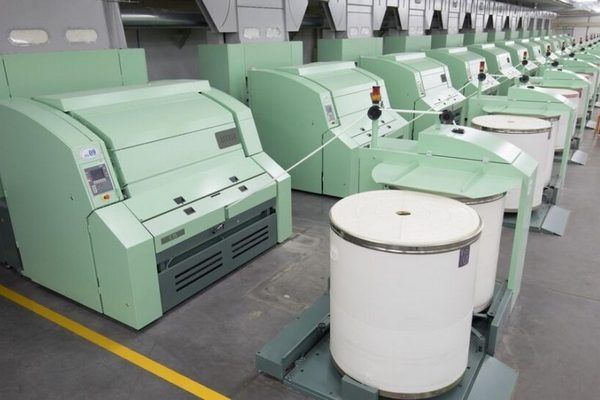
Today, carding machines are applied in cotton processing, synthetic fiber preparation, recycled fiber recovery, and specialty textile manufacturing. They serve as a critical link between raw fiber input and downstream spinning or fabric formation processes.
Why Carding Machines Matter in Modern Manufacturing
Textile manufacturing depends on uniform fiber structure. If fibers are not aligned properly or contain contaminants, yarn strength, fabric appearance, and durability can degrade. Carding machines address these challenges by delivering consistent fiber quality at scale.
Key reasons carding machines remain important today
-
Improve fiber alignment for stronger and smoother yarn output
-
Remove dust, seed particles, short fibers, and impurities
-
Enhance blending accuracy when multiple fiber types are mixed
-
Stabilize production consistency across large batch volumes
-
Reduce downstream mechanical strain on spinning systems
-
Improve overall material utilization efficiency
Industries influenced by carding technology include apparel manufacturing, technical textiles, home furnishings, automotive textiles, medical textiles, and filtration materials. Engineers, production planners, quality inspectors, automation specialists, and sustainability analysts all depend on accurate fiber preparation data generated at the carding stage.
In high-volume textile environments, digital monitoring and automated calibration further enhance production stability and traceability.
How Carding Machines Function in Practice
A carding machine uses rotating cylinders covered with fine wire teeth to open fiber clusters and align them into parallel orientation. The process gradually transforms loose fiber into a continuous web or sliver.
Basic operational flow
-
Raw fiber enters through the feed system.
-
Opening rollers loosen compact fiber bundles.
-
Main cylinders comb fibers using precise tooth spacing.
-
Flats or worker rollers assist in fiber straightening.
-
Impurities are separated through mechanical filtration zones.
-
The aligned web is condensed into sliver form.
Modern carding machines use sensors to monitor fiber density, speed variation, temperature stability, and vibration patterns. This data improves predictive maintenance and process consistency.
Common Types of Carding Machines and Applications
| Machine Type | Fiber Range | Typical Application |
|---|---|---|
| Cotton Card | Natural fibers | Yarn preparation, apparel textiles |
| Synthetic Fiber Card | Polyester, nylon | Technical textiles, composites |
| Wool Card | Animal fibers | Knitwear, insulation materials |
| Recycled Fiber Card | Blended fibers | Sustainability-driven manufacturing |
| High-Speed Industrial Card | Multi-fiber | Large-scale automated lines |
Each type adjusts wire geometry, drum speed, and feed mechanisms according to fiber length, elasticity, and contamination levels.
Recent Developments and Industry Trends
The last year has shown steady modernization of textile machinery driven by automation, sustainability, and digital transformation.
Notable developments during 2024–2025
-
Increased adoption of sensor-based condition monitoring for bearing vibration and wire wear
-
Integration of AI-driven fiber quality analytics in automated production lines
-
Expansion of energy-efficient motor systems reducing power fluctuation losses
-
Higher use of recycled fiber processing due to circular manufacturing policies
-
Enhanced dust-control filtration improving indoor environmental stability
-
Remote diagnostic dashboards supporting centralized monitoring of multiple production units
-
Modular machine architecture enabling faster configuration updates
These trends reflect broader industrial priorities focused on reliability, traceability, environmental responsibility, and workforce safety.
Regulatory Environment and Policy Considerations
In India and similar manufacturing regions, carding machines operate within established industrial safety, electrical compliance, and environmental governance frameworks.
Key regulatory aspects influencing carding machinery
-
Occupational safety standards under the Occupational Safety, Health and Working Conditions Code guide machine guarding, emergency controls, and operator safety.
-
Bureau of Indian Standards (BIS) provides mechanical and electrical compliance benchmarks for industrial machinery components.
-
Electrical safety regulations govern insulation, grounding, and overload protection for motors and control panels.
-
Dust control norms address air quality management inside textile facilities.
-
Environmental guidelines regulate fiber waste handling and recycling practices.
-
Factory inspection protocols ensure operational documentation and maintenance traceability.
Compliance supports worker safety, equipment reliability, and long-term plant sustainability.
Tools, Digital Resources, and Reference Materials
Several tools assist engineers, analysts, and production planners in understanding and optimizing carding operations.
Helpful resources
-
Fiber length and fineness measurement instruments
-
Digital tachometers for cylinder speed verification
-
Vibration monitoring systems for bearing diagnostics
-
Industrial PLC dashboards for parameter tracking
-
Predictive maintenance software platforms
-
Material flow calculators for production planning
-
Environmental air-quality monitoring tools
-
Equipment manuals and process simulation models
These resources support data-driven manufacturing optimization and quality control.
Operational Knowledge and Practical Insights
Consistent carding performance depends on disciplined monitoring and preventive practices.
Best-practice observations
-
Maintain accurate wire alignment to avoid fiber damage
-
Track temperature variation to prevent lubricant degradation
-
Monitor feed consistency to reduce web irregularity
-
Inspect flat cleaning intervals to preserve fiber purity
-
Maintain dust extraction balance for airflow stability
-
Review vibration trends for early mechanical imbalance
-
Record parameter changes for long-term process learning
-
Coordinate calibration schedules with production cycles
Small adjustments at the carding stage can significantly improve yarn uniformity and downstream stability.
Performance Comparison Table
| Parameter | Manual Adjustment Lines | Automated Digital Lines |
|---|---|---|
| Speed Stability | Medium | High |
| Fiber Consistency | Variable | Consistent |
| Data Traceability | Limited | Comprehensive |
| Maintenance Visibility | Reactive | Predictive |
| Scalability | Moderate | High |
FAQs
What is the primary function of a carding machine?
It separates, cleans, aligns, and blends fibers into a uniform web or sliver for further textile processing.
Which fibers can be processed using carding systems?
Natural fibers such as cotton and wool, synthetic fibers such as polyester and nylon, and recycled blended fibers can be processed depending on machine configuration.
Why is fiber alignment important?
Aligned fibers improve yarn strength, surface smoothness, dimensional stability, and spinning consistency.
How does automation improve carding accuracy?
Digital sensors and control systems monitor speed, density, vibration, and temperature, reducing variability and supporting predictive maintenance.
What maintenance areas require regular monitoring?
Wire condition, bearing vibration, airflow balance, feed consistency, and lubrication stability are key monitoring zones.
Conclusion
Carding machines remain foundational in textile manufacturing because they determine the quality of fiber preparation that directly influences yarn strength, appearance, and production stability. From early mechanical designs to today’s digitally monitored systems, carding technology continues to evolve in alignment with automation, sustainability, and data-driven manufacturing goals.
Understanding how carding machines function, why they matter, how regulations guide their operation, and which tools support performance optimization enables more informed technical planning and operational decision-making. As manufacturing environments increasingly adopt intelligent monitoring and predictive analytics, carding systems will continue to play a central role in delivering consistent fiber quality and operational reliability across modern textile production ecosystems.