Earthmoving Equipment: Types and Working Guide
Earthmoving equipment plays a vital role in construction, mining, road development, agriculture, and infrastructure projects.
These powerful machines are designed to move soil, rocks, sand, gravel, and other materials efficiently across work sites.
From preparing land for new buildings to creating highways and excavation projects, earthmoving equipment helps complete large-scale tasks that would otherwise require significant manual effort. Modern projects increasingly combine these machines with Industrial Automation Equipment, Smart Factory Automation principles, and Industrial IoT Solutions to improve operational efficiency and equipment monitoring.
This guide explains earthmoving equipment, its major types, working principles, applications, benefits, challenges, and future developments.
What Is Earthmoving Equipment?
Earthmoving equipment refers to heavy machinery used to excavate, transport, grade, load, and move earth and other materials.
These machines are commonly found on construction sites, mining operations, infrastructure projects, and agricultural developments. They are designed to handle large volumes of material quickly and safely.
Why Is Earthmoving Equipment Important?
Large projects often involve moving thousands of tons of material. Earthmoving equipment helps:
- Increase productivity
- Improve project efficiency
- Reduce manual labor requirements
- Support large-scale excavation work
- Enhance workplace safety
How Earthmoving Equipment Works
Earthmoving machines use hydraulic systems, engines, transmissions, and specialized attachments to perform different tasks.
The general working process includes:
- Excavating or collecting material
- Lifting or transporting material
- Moving material to a designated location
- Grading or leveling the surface
Modern equipment often integrates Industrial Control Systems and Industrial Equipment Monitoring Systems to improve performance tracking and maintenance planning.
Types of Earthmoving Equipment
Different projects require different types of machinery. Each machine is designed for specific tasks.
Excavators
Excavators are among the most widely used earthmoving machines.
Main Features
- Rotating cab
- Hydraulic arm
- Bucket attachment
- Track or wheel-based movement
Common Applications
- Excavation
- Trenching
- Demolition
- Material handling
Bulldozers
Bulldozers use a large front blade to push soil and debris.
Main Features
- Powerful engine
- Wide metal blade
- High traction tracks
Common Applications
- Land clearing
- Site preparation
- Road construction
- Grading operations
Loaders
Loaders are designed to pick up and transport loose materials.
Main Features
- Front-mounted bucket
- Fast loading capability
- Flexible maneuverability
Common Applications
- Material loading
- Stockpile management
- Construction projects
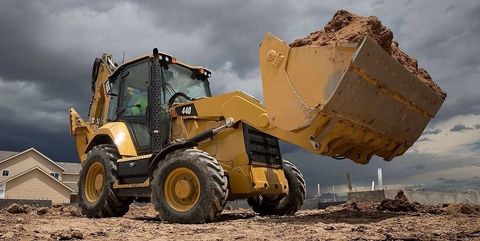
Backhoe Loaders
Backhoe loaders combine excavation and loading capabilities in one machine.
Main Features
- Front loader bucket
- Rear digging arm
- Multi-purpose functionality
Common Applications
- Utility projects
- Small construction sites
- Landscaping work
Motor Graders
Motor graders create smooth and level surfaces.
Main Features
- Long adjustable blade
- Precision grading capability
- High maneuverability
Common Applications
- Road construction
- Surface leveling
- Drainage preparation
Dump Trucks
Dump trucks transport excavated materials from one location to another.
Main Features
- Large carrying capacity
- Hydraulic dumping mechanism
- Efficient material transport
Common Applications
- Construction projects
- Mining operations
- Earth transportation
Comparison of Major Earthmoving Equipment
| Equipment Type | Primary Function | Common Application | Key Advantage |
|---|---|---|---|
| Excavator | Digging | Excavation Projects | Versatility |
| Bulldozer | Pushing Materials | Land Clearing | High Power |
| Loader | Loading Materials | Material Handling | Fast Loading |
| Backhoe Loader | Digging and Loading | Utility Work | Multi-Purpose |
| Motor Grader | Surface Leveling | Road Construction | Precision |
| Dump Truck | Material Transport | Mining and Construction | High Capacity |
Key Components of Earthmoving Equipment
Understanding the major components helps explain how these machines operate.
Engine
The engine generates power for machine operation.
Hydraulic System
Hydraulic systems control lifting, digging, and movement functions.
Transmission System
The transmission transfers engine power to wheels or tracks.
Attachments
Attachments allow machines to perform specialized tasks.
Common attachments include:
- Buckets
- Blades
- Rippers
- Hydraulic breakers
- Grapples
Operator Cabin
The cabin houses controls and monitoring systems used by the operator.
Benefits of Earthmoving Equipment
Earthmoving equipment provides several advantages across industries.
Improved Productivity
Large volumes of material can be moved quickly and efficiently.
Enhanced Precision
Modern systems allow accurate excavation and grading.
Reduced Physical Labor
Machines perform heavy tasks that would otherwise require significant manual effort.
Better Project Efficiency
Projects can be completed within shorter timelines.
Support for Automation
Many machines now integrate Manufacturing Automation Systems and Industrial IoT Solutions for performance monitoring and operational improvements.
Applications of Earthmoving Equipment
Earthmoving machinery supports a wide range of industries.
Construction
Used for excavation, grading, and site preparation.
Mining
Supports extraction and transportation of minerals and raw materials.
Infrastructure Development
Helps build roads, bridges, railways, and airports.
Agriculture
Assists with land development and drainage projects.
Landscaping
Used for terrain shaping and site improvement.
Challenges and Limitations
Despite their benefits, earthmoving machines face several challenges.
Maintenance Requirements
Heavy equipment requires regular inspections and servicing.
Fuel Consumption
Large machines often consume significant amounts of fuel.
Operator Training
Proper operation requires skill and experience.
Equipment Wear
Continuous operation in harsh conditions can increase component wear.
Best Practices for Equipment Operation
Following proper practices improves performance and safety.
Conduct Regular Inspections
Routine inspections help identify potential issues early.
Monitor Hydraulic Systems
Proper hydraulic performance is essential for machine efficiency.
Schedule Preventive Maintenance
Predictive Maintenance Technology helps reduce unexpected downtime.
Train Operators Properly
Well-trained operators improve productivity and equipment lifespan.
Use Equipment for Intended Tasks
Selecting the right machine improves operational efficiency.
Future Trends in Earthmoving Equipment
Technology continues to transform the heavy equipment industry.
Industrial IoT Solutions
Connected equipment provides real-time performance data.
Predictive Maintenance Technology
Advanced monitoring helps detect issues before failures occur.
Automation and Smart Controls
Manufacturing Automation Systems are influencing equipment operation and workflow management.
Equipment Monitoring Systems
Industrial Equipment Monitoring Systems improve fleet management and maintenance planning.
Sustainable Equipment Development
Manufacturers continue to focus on reducing emissions and improving energy efficiency.
FAQs About Earthmoving Equipment
What is earthmoving equipment?
Earthmoving equipment refers to heavy machinery used for excavation, grading, loading, and transporting materials during construction and infrastructure projects.
What are the most common types of earthmoving equipment?
Common types include excavators, bulldozers, loaders, backhoe loaders, motor graders, and dump trucks.
How do hydraulic systems help earthmoving equipment?
Hydraulic systems provide the force needed for lifting, digging, pushing, and moving materials.
Why is preventive maintenance important?
Preventive maintenance helps improve reliability, reduce downtime, and extend equipment lifespan.
What industries use earthmoving equipment?
Construction, mining, agriculture, landscaping, and infrastructure development commonly use earthmoving machinery.
How is technology improving earthmoving equipment?
Industrial IoT Solutions, Predictive Maintenance Technology, and Industrial Control Systems are helping improve monitoring, efficiency, and operational performance.
Conclusion
Earthmoving equipment is essential for modern construction, mining, infrastructure, and land development projects. These machines improve productivity, support large-scale operations, and make complex excavation and material handling tasks more efficient.
From excavators and bulldozers to loaders and dump trucks, each type of equipment serves a specific purpose. As Industrial Automation Equipment, Industrial IoT Solutions, and Predictive Maintenance Technology continue to advance, earthmoving equipment will become even more efficient, intelligent, and capable of supporting future development projects.

Related Post...
Industrial Ultrasonic Welding Machines Guide: Process and Tooling
Updated: October 27, 2026
Read More