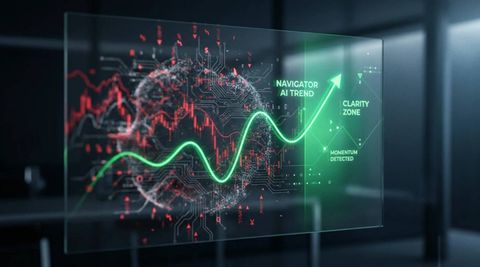
Discover How Trend Analysis AI Supports Data-Driven Decisions
Businesses, researchers, and individuals regularly examine information to understand what is changing and what may happen next. Sales records, customer feedback, website activity, and market reports can reveal useful patterns, but reviewing large amounts of information manually can take considerable time.
Artificial intelligence is changing how people organize and interpret this data.
Trend Analysis AI uses artificial intelligence techniques to identify patterns, compare historical information, and highlight changes across datasets. Depending on the system, it can help users recognize rising interests, detect unusual activity, examine seasonal behavior, and develop forecasts based on previous observations.
These insights can support more informed decisions in areas such as marketing, retail, finance, manufacturing, and business planning. However, identifying a pattern does not automatically explain its cause or predict the future accurately. Understanding how AI-based trend analysis works, where it can be applied, and what limitations it has helps people use the technology responsibly.
What Is Trend Analysis AI?
Trend analysis is the process of studying information over time to identify recurring patterns, changes, and possible relationships. When artificial intelligence is applied to this process, software can examine large datasets, compare different variables, and identify patterns that might be difficult to notice through manual review.
For example, a retailer may examine several years of transaction records to understand seasonal demand. An AI system could identify products that regularly experience increased interest during particular periods and highlight recent changes in purchasing behavior.
Some systems use machine learning to recognize patterns, while others combine statistical methods, language processing, and forecasting models. The specific approach depends on the type of data and the question being investigated.
Trend analysis tools can support human decision-making, but they do not remove the need for context. A sudden increase in website visits, for instance, may result from a news event, a marketing campaign, or automated traffic. Users must investigate the surrounding circumstances before drawing conclusions.
How Trend Analysis AI Works
1. Collecting and Organizing Data
The process begins with gathering relevant information from sources such as spreadsheets, databases, website analytics, transaction records, surveys, and public reports.
AI systems need data that matches the question being examined. A company investigating seasonal demand may require historical sales figures, product categories, dates, and information about major promotional periods.
The data must then be organized into a consistent format. Missing values, duplicate entries, incorrect dates, and inconsistent categories can affect the analysis. Preparing the information carefully helps reduce errors in the results.
2. Identifying Patterns and Changes
After data preparation, analytical models examine the information for recurring movements, relationships, and unusual changes.
A system might identify a gradual increase in customer interest, a repeated decline during certain months, or an unexpected change in production activity. Some tools can also analyze written information, such as reviews and public discussions, to identify commonly mentioned subjects.
These patterns provide a starting point for investigation. A detected relationship does not necessarily mean that one factor caused another, so additional evidence may be needed.
3. Comparing Historical and Current Information
Trend analysis becomes more useful when current observations are compared with earlier periods. This comparison can show whether a recent change is part of a longer pattern or represents something unusual.
For example, an increase in online activity may appear significant when viewed over one week but may be normal during the same period each year. Comparing equivalent periods helps provide a clearer picture.
AI systems can automate many comparisons, allowing users to examine more information without reviewing every record individually.
4. Producing Insights and Forecasts
Some AI tools generate summaries, charts, alerts, or forecasts from the patterns they identify. A forecasting model may estimate future demand based on historical behavior and selected variables.
These outputs help users explore possible outcomes and plan their next steps. However, forecasts are estimates rather than certain predictions. Unexpected events, changing customer preferences, and incomplete data can reduce their accuracy.
Practical Applications of Trend Analysis AI
Business Planning and Market Research
Organizations can use AI to examine changes in customer interests, market activity, and industry discussions. These insights may help managers understand emerging topics, compare business performance, and identify areas that require further research.
For example, a company studying customer feedback might discover that questions about product durability have increased over several months. This finding could encourage the team to investigate product performance and communication materials.
Market trends should be checked against reliable evidence because online discussions may not represent the wider population.
Marketing and Content Planning
Marketing teams can analyze search behavior, website activity, engagement figures, and customer responses to understand which topics attract attention.
A content team might use trend analysis to compare interest in different subjects and identify changes in reader preferences. The findings can help organize editorial calendars and guide future research.
However, a rise in online interest does not always translate into meaningful engagement or business results. Teams should compare trend information with relevant performance measures and audience needs.
Retail and Inventory Management
Retailers need to understand how demand changes across products and periods. AI-supported analysis can examine historical transactions, seasonal patterns, stock levels, and other relevant variables.
These findings may help teams anticipate periods of higher demand or identify products that are moving more slowly than expected.
Forecasts should be reviewed alongside supplier conditions, local events, and current inventory records. Relying only on historical patterns may lead to poor decisions when market conditions change unexpectedly.
Finance and Risk Monitoring
Financial teams can use trend analysis to examine expenses, transaction patterns, cash flow, and changes in selected economic indicators.
An AI system might flag unusual transaction activity or identify recurring changes in spending. Analysts can investigate these findings to determine whether they reflect normal activity, data errors, or potential risks.
Financial trends require careful interpretation. Historical performance does not guarantee future outcomes, and automated alerts should not replace established review procedures or qualified professional judgment.
Manufacturing and Equipment Monitoring
Manufacturing organizations can analyze production records, equipment readings, inspection results, and maintenance histories to identify recurring problems.
For example, an increase in temperature readings or repeated equipment interruptions may indicate a developing issue. Trend analysis can help maintenance teams investigate the pattern before it causes further disruption.
The reliability of these findings depends on sensor quality, accurate records, and appropriate thresholds. Important safety-related decisions require suitable technical checks and human oversight.
Benefits of Using AI for Trend Analysis
One important advantage is the ability to examine large amounts of information efficiently. AI tools can process datasets that would take considerable time to review manually and highlight areas that deserve attention.
Another benefit is consistency. When configured appropriately, automated systems can apply the same analytical process across different periods or datasets. This makes comparisons easier and can help teams identify changes that might otherwise go unnoticed.
AI can also support timely monitoring. Some applications update their analysis as new information becomes available and notify users when selected patterns change.
Visualization features can make results easier to understand. Charts, summaries, and dashboards help users communicate findings to colleagues who may not have technical backgrounds.
Despite these advantages, the usefulness of trend analysis depends on the quality of the data, the suitability of the model, and the way results are interpreted. Automation can improve the analytical process, but it cannot guarantee that every conclusion will be correct.
How to Choose a Trend Analysis AI Tool
Start by defining the question you want to answer. For example, you may want to understand changes in customer feedback, monitor website traffic, or estimate product demand. A specific objective makes it easier to identify suitable capabilities.
Next, examine the types of data the tool supports. Check whether it can work with your spreadsheets, databases, reports, or other relevant sources. Consider whether the system provides understandable charts, explanations, alerts, and export options.
Data privacy should also be reviewed. Understand where information is processed, who can access it, and whether sensitive data is retained or used for other purposes.
Finally, test the tool using a small dataset with known patterns. Compare its results with manual calculations or established reports. This helps reveal errors and shows whether the tool provides useful insights for your particular situation.
Limitations and Responsible Use
Trend Analysis AI can produce misleading results when data is incomplete, biased, outdated, or poorly organized. A model may also confuse coincidence with meaningful relationships or interpret short-term changes as lasting trends.
Another limitation is that models may perform differently when conditions change. A forecasting system trained on historical behavior may struggle during an unexpected economic event or a major shift in customer preferences.
Users should verify important findings, examine alternative explanations, and avoid making significant decisions from a single indicator. Privacy, fairness, and transparency also matter when the analysis involves personal information or decisions that affect individuals.
Conclusion
Trend Analysis AI helps users examine data, identify patterns, monitor changes, and explore possible future outcomes. Its applications range from market research and content planning to inventory management, financial monitoring, and manufacturing.
The technology can make analysis more organized and help people focus their attention on meaningful changes. However, reliable decisions still depend on accurate information, suitable analytical methods, and a clear understanding of the situation.
By defining specific questions, checking data quality, reviewing AI-generated findings, and combining analytical results with human judgment, organizations can use trend analysis more effectively to support informed decisions.

Related Post...
AI Algo Trading Platform Guide for Smarter Market Analysis and Automation
Updated: October 07, 2026
Read More

AI Learning Platform Guide: Discover Smarter Ways to Build New Skills
Updated: October 09, 2026
Read More