Discover How Color Calibration Systems Improve Color Accuracy
Color calibration systems are technologies and processes used to ensure that colors appear consistent and accurate across different devices. They help maintain reliable color reproduction on computer monitors, televisions, printers, cameras, scanners, and other digital imaging equipment.
Every electronic display produces color differently. Factors such as screen brightness, contrast, panel technology, temperature, and aging can affect how colors appear. A shade of blue displayed on one monitor may look slightly different on another, even when both devices show the same digital image.
Color calibration addresses these differences by measuring a device's color output and adjusting its settings to match a defined reference standard. The process helps professionals and general users achieve predictable visual results.
What Is Color Calibration?
Color calibration is the process of adjusting a display or imaging device so that its colors follow established technical specifications.
A calibration system generally uses three elements:
Measurement hardware: A colorimeter or spectrophotometer measures the colors produced by a device.
Calibration software: Software compares measured results with target values and calculates necessary adjustments.
Color profiles: ICC profiles describe how a particular device reproduces color, helping compatible applications interpret and translate color information.
The process may involve adjusting white balance, gamma, brightness, contrast, and color temperature. These adjustments help reduce differences between the intended and displayed colors.
How Color Calibration Systems Work
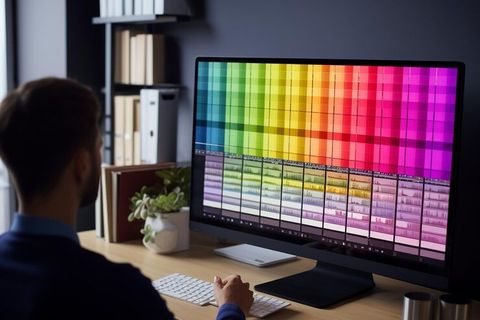
A typical display calibration process begins by measuring a series of standardized color patches. The software evaluates the measurements against a selected color space or reference target.
It then creates corrections that can be applied through the display settings, graphics system, or an associated color profile.
Common color spaces include:
sRGB for general digital content.
Adobe RGB for wider-gamut photography and imaging.
Display P3 for compatible displays and digital media.
Rec. 709 for high-definition television production.
Rec. 2020 for ultra-high-definition video applications.
The selected standard depends on the device, content type, and intended viewing environment.
Why Color Calibration Matters in Modern Industries
Color accuracy plays an important role in industries where visual consistency affects product quality, communication, and professional results. As digital content moves between different devices and production environments, calibration helps reduce unwanted color variations.
Importance for Photography and Graphic Design
Photographers and graphic designers depend on accurate color reproduction when editing photographs, preparing illustrations, and creating digital artwork.
An incorrectly calibrated monitor can make an image appear warmer, cooler, brighter, or darker than its actual color values. This may lead to unexpected results when images are viewed on other screens or converted into printed materials.
Calibration supports:
Consistent skin tones and natural colors in photographs.
Accurate color grading and image editing.
Reliable digital artwork preparation.
Better screen-to-print color matching.
Consistent visual identity across creative projects.
Importance for Printing and Manufacturing
Printing companies use color management systems to maintain consistent results across paper types, printing machines, inks, and production batches.
Manufacturers also depend on color measurement when producing textiles, plastics, paints, packaging materials, and automotive components.
For example, a textile manufacturer may need to reproduce the same fabric shade across multiple production batches. Spectrophotometers and standardized color measurements help identify differences before products move to the next production stage.
Importance in Healthcare and Digital Imaging
Medical imaging systems use calibrated displays to help professionals interpret diagnostic images consistently. Differences in brightness and grayscale reproduction can affect the visibility of important image details.
Color management also supports scientific imaging, laboratory documentation, and digital microscopy, where accurate visual representation is important.
Common Industries Using Color Calibration
Industry | Main application | Primary objective |
|---|---|---|
Photography | Image editing | Accurate image colors |
Printing | Color proofing | Consistent printed output |
Healthcare | Medical imaging | Reliable image interpretation |
Textile manufacturing | Fabric inspection | Consistent fabric shades |
Automotive | Paint inspection | Repeatable surface colors |
Film production | Color grading | Consistent video appearance |
Electronics | Display testing | Measured screen performance |
Common Color Calibration Technologies
Different technologies are used depending on the required measurement accuracy and application.
Colorimeters: These instruments measure color by analyzing light through filters designed to approximate human visual response. They are commonly used for monitor calibration.
Spectrophotometers: These devices measure the spectral characteristics of reflected or transmitted light. They are widely used in printing, textile manufacturing, paint production, and quality control.
Spectroradiometers: These instruments measure the spectral distribution of light emitted by displays and other light sources. They are useful for advanced display characterization and research.
Software-based calibration: Calibration applications analyze measurements and create device-specific correction profiles. Some systems also support automated recalibration and quality monitoring.
Recent Developments in Color Calibration Technology
Color calibration is evolving alongside high-dynamic-range displays, wider color gamuts, advanced imaging systems, and automated production technologies. Developments during 2025 and 2026 have placed greater attention on interoperability, HDR color information, and more consistent measurement methods.
Updated International Color Management Standards
In October 2025, ISO published ISO 15076-1:2025, the third edition of its image technology color management standard. It is based on the ICC.1:2022 specification and describes the architecture, profile format, and data structures used to exchange color management information.
This development supports consistent communication of color information between compatible imaging devices and software environments.
Improvements in HDR Color Management
High Dynamic Range (HDR) technology allows compatible displays to reproduce a wider range of brightness levels and visual detail.
During 2025, the International Color Consortium continued developing amendments related to HDR metadata and Adaptive Gain Curve information. These developments aim to improve how color management systems interpret and process HDR image content.
HDR workflows require attention to more than traditional RGB color values. Display brightness, transfer functions, color primaries, and metadata can all influence the final appearance.
More Attention to Display Measurement Accuracy
Display testing has increasingly focused on measurable color performance rather than relying only on manufacturer specifications.
IEC 62977-3-5:2023 provides evaluation methods for color accuracy, color gamut volume, and the relationship between display capabilities and reference color spaces. Its 2024 corrigendum is included in the current published version.
These measurement methods are relevant to manufacturers, laboratories, and display-testing professionals.
Better Understanding of Human Color Perception
In March 2025, IEC published a corrigendum to IEC TS 61966-13:2023. The technical specification addresses observer metamerism, which occurs when displays with different spectral characteristics can produce colors that appear different to individual observers.
This area is important because two displays may produce similar measured color values but still appear different to some viewers.
Emerging Technology Trends
Several developments are influencing modern color calibration systems:
Automated display calibration and scheduled measurement.
HDR and wide-gamut color management.
Cloud-based sharing of color profiles and production data.
AI-assisted image analysis and color inspection.
Improved spectral measurement technologies.
Integration of calibration workflows into manufacturing quality control.
These technologies are expanding the role of color calibration from individual screen adjustments to complete digital production workflows.
Laws, Regulations, and Industry Standards
Color calibration systems are influenced by international technical standards, national quality frameworks, and industry-specific requirements. However, there is no single worldwide law requiring every computer monitor, printer, or camera to undergo routine color calibration.
Requirements depend on the country, industry, equipment type, and purpose of the measurement.
International Color Management Standards
Several international standards provide technical guidance for color reproduction and measurement.
Standard | Main area | Purpose |
|---|---|---|
ISO 15076-1:2025 | Color management | ICC profile architecture and data exchange |
ISO 20677:2019 | Advanced color management | Extended color profile capabilities |
IEC 62977-3-5:2023 | Electronic displays | Evaluation of display color capabilities |
IEC 61966 series | Color measurement | Color reproduction and management methods |
ISO 3664 | Graphic technology | Viewing conditions for graphic arts and photography |
These standards help organizations establish repeatable measurement procedures and communicate technical requirements across different production environments.
United States
In the United States, color calibration requirements can arise through industry specifications, laboratory procedures, customer agreements, and quality management systems.
Healthcare organizations may follow medical imaging recommendations and display performance guidelines. Manufacturers and printing companies may also use international ISO and IEC standards when developing internal quality control procedures.
There is no general federal requirement that all consumer displays must be calibrated to one specific color standard.
European Union
European businesses may use ISO and IEC color management standards as part of their manufacturing, printing, and quality assurance processes.
The EU's broader product compliance framework can apply to electronic equipment, but it should not be confused with a universal legal requirement for color calibration. Specific technical requirements depend on the product category and applicable legislation.
India
In India, the Bureau of Indian Standards (BIS) provides national standardization frameworks covering electronics, manufacturing, testing, and related technical areas.
Businesses operating in printing, textiles, electronics, and industrial production may use applicable Indian or internationally recognized standards to establish measurement procedures and product consistency.
Organizations should verify the latest applicable BIS standards and any sector-specific regulatory requirements before defining their compliance procedures.
Healthcare and Medical Imaging Requirements
Medical imaging environments require particular attention to display consistency because image interpretation depends on reliable visual presentation.
The DICOM standard provides a framework for exchanging medical imaging information, including relevant ICC color profile information for color images.
Medical imaging facilities may also use the DICOM Grayscale Standard Display Function (GSDF) to support consistent grayscale presentation.
These technical frameworks help healthcare organizations establish appropriate imaging workflows, although their implementation requirements depend on the applicable healthcare regulations and institutional policies.
Tools and Resources for Color Calibration
Color calibration involves hardware, software, reference standards, and measurement procedures. Selecting the appropriate resources depends on the display technology, production environment, and accuracy requirements.
Hardware Calibration Instruments
1. Display Colorimeters
Colorimeters measure the light emitted by a display and help determine whether its color output matches selected reference values. They are commonly used by photographers, designers, and video editors.
2. Spectrophotometers
Spectrophotometers measure reflected or transmitted light across different wavelengths. They are useful for evaluating printed materials, textiles, coatings, and industrial products.
3. Spectroradiometers
These instruments measure the spectral characteristics of emitted light. They are commonly used in advanced display research, television testing, and professional imaging laboratories.
Color Calibration Software
Several applications support display profiling, color correction, and measurement workflows.
Software or resource | Main functionality | Common application |
|---|---|---|
DisplayCAL | Display calibration and profiling | Photography and design |
Calibrite PROFILER | Display measurement and profiling | Professional imaging |
Datacolor Spyder software | Monitor calibration | Digital content creation |
basICColor | Color management workflows | Printing and imaging |
ArgyllCMS | Open-source color management | Technical calibration |
Adobe Color | Color harmony and palette exploration | Graphic design |
Additional Learning and Reference Resources
Users can also explore these resources to understand color science and measurement practices:
International Color Consortium (ICC): Information about color profiles, color management architecture, and interoperability.
International Organization for Standardization (ISO): Technical standards related to image technology and graphic production.
International Electrotechnical Commission (IEC): Display measurement and electronic color management standards.
CIE (International Commission on Illumination): Scientific resources covering colorimetry, light, and visual perception.
DICOM: Medical imaging standards and technical documentation.
Recommended Calibration Workflow
A consistent calibration process generally includes the following activities:
Allow the display to warm up before measurement.
Set the display brightness and contrast to suitable working levels.
Select the appropriate color space and white point.
Measure color patches using a compatible instrument.
Apply calibration adjustments through the software.
Generate and install the appropriate ICC profile.
Verify the results using additional color measurements.
Repeat calibration periodically or after significant display changes.
The calibration interval depends on display technology, usage conditions, and required accuracy. Professional environments may need more frequent verification than general-purpose home systems.
Frequently Asked Questions About Color Calibration Systems
1. What is the main purpose of a color calibration system?
The main purpose is to ensure that devices reproduce colors as accurately and consistently as possible. It reduces differences between monitors, printers, cameras, and other imaging equipment by using measurement instruments, calibration software, and standardized color profiles.
2. What is the difference between a colorimeter and a spectrophotometer?
A colorimeter measures color using filters that approximate human vision. It is commonly used for display calibration. A spectrophotometer measures light across multiple wavelengths and provides more detailed spectral information, making it useful for printing, textiles, paints, and manufacturing applications.
3. How often should a monitor undergo color calibration?
The recommended frequency depends on the monitor, usage conditions, and accuracy requirements. General users may calibrate occasionally, while professional photography, printing, and video production environments may require monthly or quarterly verification. Display characteristics can change over time.
4. What is an ICC profile in color management?
An ICC profile is a standardized data file that describes the color characteristics of a particular device or color space. Compatible operating systems and applications use these profiles to translate colors between devices and improve consistency throughout digital imaging workflows.
5. Why is color calibration important for printing?
Color calibration helps printing professionals maintain consistent colors between digital designs, proofing displays, and printed materials. It helps reduce unwanted differences caused by ink characteristics, paper surfaces, printing equipment, and environmental conditions.
Conclusion
Color calibration systems play an important role in modern digital imaging, manufacturing, printing, healthcare, and creative production. They help maintain consistent color reproduction by combining measurement instruments, calibration software, standardized color spaces, and ICC profiles.
Developments in HDR technology, advanced color management specifications, and automated measurement processes are expanding the capabilities of modern calibration workflows. International standards from organizations such as ISO, IEC, ICC, and CIE provide important technical foundations for these applications.
Understanding color calibration methods, display measurement technologies, and industry standards can help individuals and organizations make informed decisions about image quality and production consistency. As digital displays and imaging technologies continue to evolve, reliable color management will remain an important part of professional and everyday visual communication.

Related Post...


Beginner’s Guide to Inverter Welding Machines and Their Working Principles
Updated: November 02, 2026
Read More
Beginner’s Guide to pH Testing Methods and Measurement Techniques
Updated: October 31, 2026
Read More