Digital Printing Machines Guide: Technology, Uses, and Industry Trends
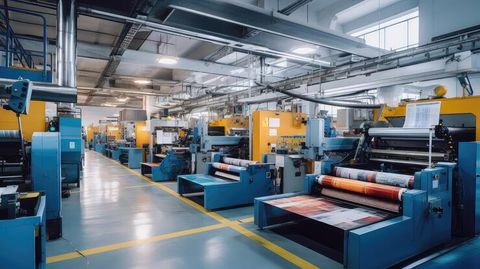
Digital printing machines are advanced devices that transfer digital images, text, and graphics directly onto materials such as paper, fabric, plastic, cardboard, labels, and other printable surfaces. Unlike traditional printing methods that often require physical plates, digital printing uses electronic files to produce printed output through specialized printing technologies.
These machines are widely used in commercial printing, packaging, publishing, advertising, textile production, and industrial manufacturing. Their development has changed how businesses and printing facilities handle short production runs, customized designs, and rapidly changing printing requirements.
Digital printing generally works by converting information from a computer file into instructions that control the printing process. The machine then places ink, toner, or another suitable printing substance onto the selected material.
How Digital Printing Technology Works
The process usually begins with a digital design created through graphic design or publishing software. The file is prepared and transferred to the printing machine through a computer or connected production system.
The main steps include:
File preparation: Images and documents are arranged using design software.
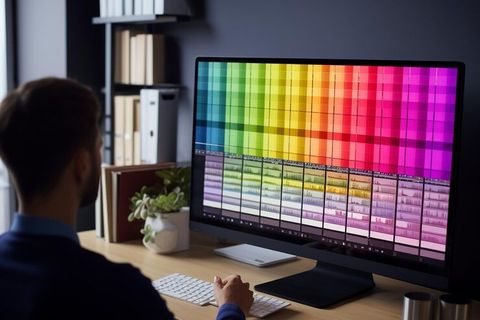
Color management: Digital color profiles help maintain consistent output.
Material preparation: Paper, fabric, labels, or other substrates are positioned.
Image transfer: The machine applies ink or toner according to the digital instructions.
Finishing: Printed materials may undergo cutting, folding, coating, laminating, or binding.
Digital printing systems can support different materials, production volumes, resolutions, and finishing requirements.
Main Types of Digital Printing Machines
Different technologies are used depending on the material, printing purpose, and required output.
Printing technology | Main characteristics | Common applications |
|---|---|---|
Inkjet printing | Sprays small ink droplets onto surfaces | Posters, photographs, textiles |
Laser printing | Uses toner and electrostatic processes | Documents, brochures, labels |
UV printing | Uses ultraviolet light to cure specialized inks | Acrylic, glass, wood, promotional graphics |
Sublimation printing | Transfers dye using heat | Polyester fabrics, sportswear |
Direct-to-garment (DTG) | Prints designs directly onto garments | Clothing and textile graphics |
Digital label printing | Produces digitally printed labels | Product packaging and identification |
Each technology has different material compatibility, operating requirements, production speeds, and image-quality characteristics.
Why Digital Printing Machines Matter Today
Digital printing has become important because industries increasingly require flexible production, customized designs, and shorter turnaround periods. Traditional printing methods remain useful for large-volume production, but digital technology provides additional options when designs, quantities, or specifications change frequently.
Importance for Different Industries
Several industries depend on digital printing equipment for everyday production activities.
Commercial printing: Produces brochures, catalogues, business documents, posters, and promotional materials.
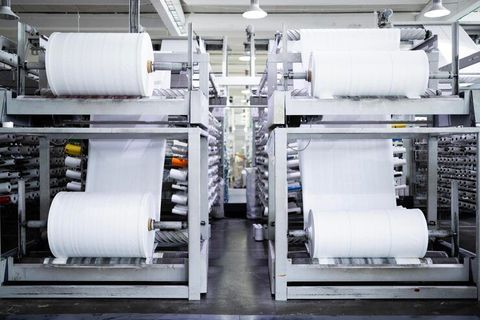
Textile manufacturing: Supports fabric patterns, customized clothing, home furnishings, and fashion designs.
Packaging manufacturing: Produces cartons, labels, product packaging, and variable designs.
Advertising: Creates banners, display graphics, signage, and large-format visual materials.
Publishing: Supports short-run books, educational materials, and print-on-demand publications.
Industrial manufacturing: Prints product identification, technical markings, decorative graphics, and specialized labels.
Key Benefits of Digital Printing Technology
Digital printing machines offer several operational advantages.
1. Flexible production
Digital files can be modified without preparing new physical printing plates. This makes it easier to produce different versions of a design.
2. Personalization
Variable-data printing allows individual names, codes, images, and other information to appear on different copies within the same production run.
3. Shorter preparation time
Many digital printing processes require fewer setup stages than conventional printing methods, particularly for short production runs.
4. Consistent image quality
Modern digital systems use advanced printheads, colour management, and automated calibration to maintain image consistency.
5. Reduced material waste
For suitable applications, digital printing can reduce setup sheets and unnecessary production quantities by allowing printing according to actual requirements.
Factors to Consider When Evaluating Digital Printing Machines
Selecting appropriate equipment requires understanding the intended application and production environment.
Evaluation factor | What to examine |
|---|---|
Printing resolution | Image sharpness and fine-detail reproduction |
Printing speed | Output capacity over a specified period |
Substrate compatibility | Supported paper, fabric, plastic, and other materials |
Ink technology | Water-based, solvent, UV-curable, or dye-based systems |
Colour management | Colour accuracy and repeatability |
Automation | File handling, monitoring, and production controls |
Maintenance | Cleaning cycles, printhead care, and replacement requirements |
Environmental performance | Energy consumption, emissions, and waste management |
A machine suitable for commercial documents may not be appropriate for industrial textile production. Technical specifications should therefore be compared against the intended application.
Recent Updates and Developments in Digital Printing
During 2025 and 2026, digital printing technology continued developing through improvements in inkjet systems, artificial intelligence, automation, packaging applications, and environmentally conscious materials.
Artificial Intelligence and Automated Printing Workflows
Artificial intelligence is increasingly influencing digital printing operations. Modern production environments are adopting software that helps organize print files, monitor production processes, identify quality variations, and improve workflow coordination.
AI-assisted systems can support:
Automated image and file preparation.
Print defect detection.
Predictive maintenance monitoring.
Production scheduling and job management.
Colour consistency monitoring.
Workflow optimization.
These developments are particularly relevant to larger printing facilities that handle multiple machines and different production requirements.
Growth in Digital Packaging Printing
Packaging is becoming an important application area for digital printing. On February 19, 2026, Packaging Dive reported that the technology was entering a more mature stage of adoption, with packaging converters increasingly considering digital systems as part of integrated manufacturing environments rather than isolated printing equipment.
Important developments include:
Short-run packaging production.
Variable product information.
Customized labels and cartons.
Faster design changes.
Digital integration with finishing equipment.
Digital systems are also being evaluated alongside traditional flexographic and offset printing technologies.
Developments in Digital Textile Printing
Textile printing continues to benefit from improvements in printhead technology, ink formulations, and automated fabric handling.
Developments reported during 2025 included:
April 2025: Epson introduced the Monna Lisa ML-32000 industrial textile printer, with reported throughput improvements compared with its predecessor.
June 2025: HP announced a PFAS-free latex pigment ink development for its textile printing portfolio.
November 2025: Kornit Digital introduced a firmware and ink upgrade for its Atlas Max Poly Plus platform, targeting improved printing performance on recycled polyester.
These developments illustrate the growing relationship between textile production, digital workflows, and material sustainability.
Sustainability and Recyclable Printing Materials
Environmental considerations are becoming more important in printing technology decisions. During 2025, industry discussions increasingly highlighted recyclable substrates, lower-impact inks, waste reduction, and simplified packaging materials.
Printing facilities are also examining:
Energy-efficient printing systems.
Reduced ink consumption.
Water-based ink technologies.
Recyclable paper and packaging substrates.
Better management of printing chemicals.
Responsible disposal of electronic components.
These approaches can help reduce the environmental impact of suitable printing operations, although actual results depend on the equipment, materials, and production process.
Digital Printing Industry Trends for 2026
Development | Industry application | Potential impact |
|---|---|---|
AI-assisted workflows | Commercial printing | Improved production coordination |
Industrial inkjet | Packaging and manufacturing | Higher-volume digital applications |
UV printing | Signage and product decoration | Printing on diverse surfaces |
Variable-data printing | Labels and marketing | Greater personalization |
Automated quality control | Printing facilities | Better output consistency |
Sustainable inks | Textile and packaging | Improved environmental management |
These developments suggest that future digital printing systems will increasingly combine hardware, software, materials, and automated production management.
Laws and Policies Affecting Digital Printing Machines in India
Digital printing operations in India may be affected by environmental regulations, workplace safety requirements, electronic waste management rules, and standards relating to printing materials.
The applicable requirements depend on the type of printing process, chemicals used, production capacity, and location of the facility.
Environmental Protection Regulations
The Environment (Protection) Act, 1986 provides a framework for environmental protection in India. Printing facilities may need to consider applicable requirements concerning emissions, waste disposal, and the handling of industrial chemicals.
The Air (Prevention and Control of Pollution) Act, 1981 and Water (Prevention and Control of Pollution) Act, 1974 are also relevant to certain industrial printing operations. State Pollution Control Boards oversee applicable environmental requirements.
Electronic Waste Management
Digital printing machines contain electronic components, circuit boards, displays, and other equipment that may become electronic waste.
India's E-Waste (Management) Rules, 2022, together with subsequent amendments, establish requirements for relevant producers and other regulated entities.
Printing facilities should consider:
Appropriate disposal of electronic components.
Responsible handling of outdated equipment.
Authorized electronic waste recycling channels.
Applicable producer responsibility requirements.
Workplace Safety
Printing facilities should maintain appropriate workplace safety procedures, particularly where industrial equipment, heat, chemicals, and moving mechanical components are involved.
Relevant considerations include:
Proper machine guarding.
Electrical safety procedures.
Ventilation and chemical handling.
Operator training.
Fire prevention measures.
Appropriate personal protective equipment.
Businesses should check applicable central and state regulations before establishing or expanding a printing facility.
Tools and Resources for Digital Printing
Digital printing depends on several software applications and technical resources. These tools support design preparation, colour accuracy, file management, and production monitoring.
Tool or resource | Main purpose |
|---|---|
Adobe Illustrator | Vector graphics and print design |
Adobe Photoshop | Image editing and colour preparation |
CorelDRAW | Signage and commercial graphic design |
Caldera RIP | Large-format printing workflow management |
ONYX Graphics | Print production and colour management |
Fiery Digital Front Ends | Digital print workflow and colour control |
Pantone Colour Systems | Standardized colour references |
ICC Profiles | Colour consistency between devices |
PDF/X Standards | Preparing print-ready PDF documents |
Important Technical Resources
Colour management tools: ICC profiles and calibrated monitors help maintain consistent colours between digital artwork and printed output.
Raster Image Processor (RIP) software: RIP applications convert digital designs into instructions that printing equipment can understand.
Print resolution calculators: These tools help determine suitable image resolution based on print dimensions and viewing distance.
Maintenance monitoring systems: Equipment monitoring applications can help track machine usage, cleaning schedules, printhead condition, and maintenance requirements.
Material compatibility guides: Manufacturer documentation helps identify appropriate substrates, inks, coatings, and printing settings.
Frequently Asked Questions
1. What are digital printing machines used for?
Digital printing machines produce documents, photographs, labels, packaging, textile designs, banners, signage, and industrial graphics. Their applications vary depending on the printing technology and supported materials.
2. What is the difference between digital printing and offset printing?
Digital printing transfers images directly from digital files onto materials without requiring conventional printing plates. Offset printing uses plates to transfer ink through an intermediate surface. Digital printing is generally suitable for customized and shorter runs, while offset printing remains widely used for large-volume production.
3. Which materials can digital printing machines print on?
Depending on the machine, digital printing can support paper, cardboard, fabric, plastic, vinyl, glass, wood, acrylic, and certain metal surfaces. Material compatibility depends on the ink system, printing technology, and substrate preparation.
4. What is the role of AI in digital printing?
AI can support automated file preparation, print defect detection, production scheduling, predictive maintenance, and colour monitoring. These capabilities help printing facilities improve workflow coordination and identify potential production problems.
5. Are digital printing machines environmentally friendly?
Digital printing can reduce certain types of production waste, particularly during short runs and customized printing. However, its environmental impact depends on electricity consumption, ink composition, substrate selection, chemical handling, and waste disposal practices.
Conclusion
Digital printing machines have become an important part of modern commercial printing, textile manufacturing, packaging, advertising, publishing, and industrial production. Their ability to process digital files directly, support customized designs, and handle different materials makes them useful across a wide range of applications.
Recent developments in artificial intelligence, industrial inkjet technology, automated workflows, and sustainable printing materials are continuing to influence the industry. At the same time, environmental regulations, workplace safety, and electronic waste management remain important considerations.
Understanding printing technologies, equipment specifications, material compatibility, and production requirements helps businesses and industry professionals evaluate digital printing systems more effectively. As technology continues to develop, digital printing is expected to remain an important component of modern manufacturing and visual communication.

Related Post...
Essential Tips for Understanding Road Milling Machines and Their Functions
Updated: November 02, 2026
Read More
Coffee Filling Machines: Key Insights Into Efficiency and Production
Updated: November 02, 2026
Read More
Industrial 3D Printers: A Complete Guide to Modern Manufacturing
Updated: November 03, 2026
Read More