In modern electronic systems, different parts of a circuit often operate at different voltage levels or ground references. Without isolation, these differences can cause malfunction, data corruption, or permanent damage. Digital isolators exist to solve this problem by providing reliable signal communication without creating a direct electrical connection.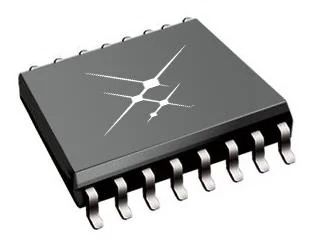
Unlike traditional optocouplers, digital isolators typically use capacitive, magnetic, or giant magnetoresistive coupling to transmit data. This approach enables faster switching speeds, improved reliability, and consistent performance across a wide range of operating conditions. Today, digital isolators are widely used in industrial automation, medical devices, power electronics, and communication systems.
Importance: Why Digital Isolators Matter in Modern Electronics
Digital isolators play a critical role wherever safety, signal integrity, and system reliability are priorities. They affect engineers, equipment designers, manufacturing teams, and maintenance professionals working with complex electronic systems.
Key reasons digital isolators are important include:
-
Electrical protection: They prevent high voltages from reaching low-voltage control circuits.
-
Noise reduction: Isolation minimizes interference caused by ground potential differences.
-
Data integrity: Clean signal transmission improves system accuracy.
-
System reliability: Isolated interfaces reduce the risk of component failure.
-
Design flexibility: Engineers can safely connect subsystems operating at different voltage levels.
Applications such as motor drives, power supplies, renewable energy inverters, and factory automation rely heavily on digital isolation technology to maintain stable communication between control and power stages.
As systems become more compact and interconnected, the need for dependable isolation continues to grow. This makes industrial digital isolators a foundational element in many modern electronic architectures.
Recent Updates: Trends in Digital Isolation Technology
Recent developments in digital isolators focus on higher performance, integration, and efficiency. Rather than basic signal transfer, manufacturers now emphasize system-level optimization.
Key trends observed in recent periods include:
-
Higher data rates: Advanced digital isolator ICs now support faster communication protocols.
-
Lower power consumption: Improved internal architectures reduce operating power.
-
Integrated protection features: Some devices combine isolation with surge or transient protection.
-
Smaller package sizes: Compact designs support high-density circuit layouts.
-
Multi-channel integration: Single components now handle multiple isolated signal paths.
These improvements help designers build smaller, more efficient systems while maintaining strong electrical separation. As power electronics and automation platforms evolve, digital isolator ICs continue to adapt to higher performance expectations.
Laws or Policies: Safety Standards Influencing Digital Isolators
Digital isolators are shaped by safety and compliance standards that govern electrical equipment across industries. While exact regulations vary by region, several common frameworks influence how isolation components are designed and deployed.
Typical regulatory considerations include:
-
Electrical safety standards: Requirements defining minimum isolation voltages and creepage distances.
-
Medical device regulations: Strict isolation rules to protect patients and operators.
-
Industrial equipment guidelines: Standards covering insulation, surge immunity, and electromagnetic compatibility.
-
Energy system compliance: Rules for isolation in power conversion and grid-connected equipment.
These policies ensure that high voltage digital isolators meet defined performance thresholds and operate safely in demanding environments.
Tools and Resources: References for Evaluating Digital Isolators
Engineers and system designers rely on several tools and technical resources when working with digital isolators.
Common references include:
-
Isolation voltage calculators for estimating required barrier strength
-
Signal integrity analysis tools to evaluate timing and jitter
-
Thermal modeling utilities for power dissipation planning
-
Component datasheets detailing propagation delay and channel configuration
-
Application notes explaining layout and grounding best practices
These resources help teams compare specifications and integrate digital isolation technology effectively into larger systems.
Types of Digital Isolators: Common Technologies Used in Practice
Digital isolators are classified based on how signals cross the isolation barrier.
| Isolation Method | Core Principle | Typical Use Case |
|---|---|---|
| Capacitive isolation | Electric field coupling | High-speed interfaces |
| Magnetic isolation | Micro-transformers | Industrial control systems |
| GMR isolation | Magnetoresistive sensing | Precision signal transfer |
Each method offers different advantages in terms of speed, noise immunity, and integration density. Selection depends on application requirements and environmental conditions.
Performance Factors: What Defines Digital Isolator Capability
Beyond isolation method, several parameters determine how well a digital isolator performs.
| Parameter | Why It Matters |
|---|---|
| Isolation voltage | Defines maximum safe separation |
| Data rate | Limits communication speed |
| Propagation delay | Affects timing accuracy |
| Common-mode transient immunity | Measures noise resistance |
| Channel count | Determines signal capacity |
Understanding these factors helps designers choose appropriate digital isolator ICs for specific systems.
FAQs: Common Questions About Digital Isolators
What are digital isolators used for?
Digital isolators transfer digital signals between electrically separated circuits to protect equipment and maintain signal integrity.
How do digital isolators differ from optocouplers?
Digital isolators use capacitive or magnetic coupling rather than light-based transmission, enabling faster operation and longer lifespan.
Where are industrial digital isolators commonly applied?
They are widely used in automation systems, motor drives, power converters, and communication interfaces.
Do high voltage digital isolators support fast data rates?
Yes. Many modern devices combine strong isolation with high-speed digital communication.
Why is isolation important in electronic systems?
Isolation prevents electrical faults from spreading, reduces noise, and improves overall system reliability.
Conclusion: The Role of Digital Isolators in Connected Systems
Digital isolators have become essential building blocks in modern electronics. By enabling safe, reliable communication across electrically separated domains, they protect sensitive components and preserve data accuracy. Advances in digital isolation technology continue to improve speed, efficiency, and integration, supporting increasingly complex system designs.
From industrial automation to power electronics, digital isolators help bridge control and power domains while maintaining safety and performance. Understanding their basics, operating principles, and selection factors provides valuable insight into how today’s connected systems achieve dependable operation.