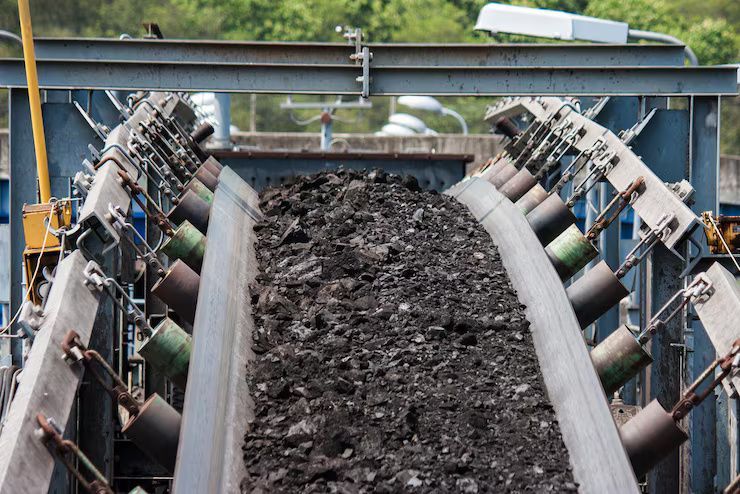
The process of crushing helps improve coal handling efficiency, ease of transport, and preparation for further processing, such as washing or combustion in power plants. Coal crushers can vary in type, design, and capacity, but their primary function remains the same — to break down material into consistent, usable sizes.
Coal remains a key energy resource in many parts of the world, and efficient crushing systems contribute to better fuel utilization and reduced operational challenges.
Importance
Coal crushing machines play a vital role in industrial operations, especially in sectors that rely heavily on coal-based energy or products. Their importance can be summarized through several key points:
-
Efficiency: Properly crushed coal ensures uniform combustion, improving energy output in thermal power plants.
-
Safety: Reducing coal size minimizes dust and explosion risks during handling and storage.
-
Process optimization: Smaller coal particles enhance washing efficiency and impurity removal.
-
Transport convenience: Crushed coal is easier to convey and store, lowering maintenance demands on transportation systems.
The machines are used by mining companies, power generation facilities, and material processing plants. By solving the problem of inconsistent coal sizes, they help industries operate more safely, economically, and sustainably.
Recent Updates
Between 2024 and 2025, several innovations and trends have shaped the development of coal crushing machines:
-
Automation and control systems (2024): Modern crushers now integrate automated control panels that monitor temperature, pressure, and throughput, reducing manual intervention.
-
Energy-efficient designs (2025): Engineers are developing crushers that consume less power while maintaining high output, supporting global sustainability goals.
-
Dust suppression technology (2024): Improved dust collection systems have been introduced to comply with stricter workplace safety and environmental standards.
-
Smart maintenance (2025): Internet of Things (IoT) sensors enable predictive maintenance by analyzing vibration and wear data in real time.
-
Hybrid and electric drive systems (2025): New crushers feature electric drives to lower emissions and improve energy efficiency.
These developments highlight how technology and environmental awareness are reshaping the future of material handling and coal preparation.
Laws or Policies
Coal crushing operations are influenced by several international and national laws that address safety, environmental protection, and worker welfare. Key regulatory aspects include:
-
Occupational Health and Safety Regulations: Agencies such as OSHA (U.S.) and HSE (U.K.) require strict safety measures for machinery operation, dust control, and worker protection.
-
Environmental Emission Standards: Governments enforce air quality standards to reduce particulate emissions from coal handling and crushing activities.
-
Mining Regulations: National mining laws specify equipment safety, operational permits, and maintenance guidelines for crushing plants.
-
Noise and Dust Control Laws: Many countries now require noise reduction systems and dust filtration in industrial sites to protect nearby communities.
-
Energy Efficiency Programs: Some governments promote the use of energy-efficient crushing systems through incentives and certification schemes.
Compliance with these policies ensures responsible and sustainable coal processing, protecting both workers and the environment.
Tools and Resources
Several resources help engineers, technicians, and operators work efficiently with coal crushing systems. These include:
-
Design and simulation software: Programs like AutoCAD, SolidWorks, and ANSYS assist in designing and analyzing crusher performance.
-
Maintenance tracking tools: Digital platforms such as CMMS (Computerized Maintenance Management Systems) schedule inspections and record maintenance activities.
-
Dust control calculators: Online tools estimate air filtration requirements and dust emission rates for crushing plants.
-
Safety and compliance databases: Websites like OSHA and ISO provide updated standards and compliance checklists.
-
Training modules: Educational platforms and mining institutions offer training courses on safe equipment handling and process optimization.
These tools contribute to efficiency, accuracy, and long-term sustainability in industrial operations.
Example Table: Comparison of Common Coal Crusher Types
| Crusher Type | Function | Suitable Coal Type | Key Advantage |
|---|---|---|---|
| Jaw Crusher | Primary crushing of large chunks | Hard or abrasive coal | Strong and durable |
| Hammer Crusher | Crushing and sizing via impact | Soft to medium coal | Simple structure, high speed |
| Roll Crusher | Compression and shear crushing | Low to medium hardness | Uniform output, low fines |
| Impact Crusher | High-speed impact fragmentation | Medium to hard coal | High reduction ratio |
| Cone Crusher | Secondary or fine crushing | Varying hardness coal | Precise control of particle size |
FAQs
What is the primary purpose of a coal crushing machine?
A coal crusher reduces large pieces of coal into smaller, uniform sizes to improve handling, combustion, and processing efficiency.
What types of crushers are most commonly used for coal?
The most common types include jaw crushers, hammer crushers, roll crushers, and impact crushers. The selection depends on coal hardness and processing requirements.
Are coal crushing machines energy-efficient?
Modern designs are increasingly energy-efficient, featuring advanced drive systems and optimized crushing chambers to minimize power consumption.
How are safety standards applied to coal crushing operations?
Operators must follow strict guidelines for machine guarding, dust suppression, and emergency shutdown systems to ensure worker safety and compliance.
What are the environmental concerns related to coal crushing?
The main concerns involve dust generation, noise pollution, and emissions. Effective dust suppression systems and enclosed crushing setups help reduce environmental impact.
Example Graph: Typical Coal Particle Size Distribution Before and After Crushing
| Particle Size (mm) | Before Crushing (%) | After Crushing (%) |
|---|---|---|
| >50 | 70 | 5 |
| 25–50 | 20 | 15 |
| 10–25 | 8 | 40 |
| <10 | 2 | 40 |
Conclusion
Coal crushing machines remain indispensable in industries that depend on consistent and efficient coal handling. Their fundamental role — reducing large raw material into manageable sizes — supports energy generation, industrial processing, and safe material transport.
Recent technological improvements such as automation, energy-efficient designs, and smart maintenance systems demonstrate how the industry is evolving toward sustainability and precision. Compliance with safety and environmental laws ensures that crushing operations remain responsible and secure.