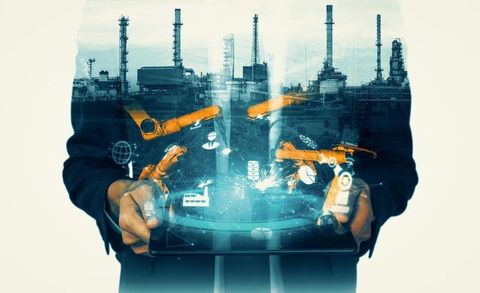
CNC Machine Market Guide: Global Industry Growth and Emerging Innovations
Computer Numerical Control (CNC) machines are automated manufacturing systems that use computer-based instructions to control machining operations. These machines perform activities such as cutting, drilling, milling, turning, grinding, and shaping materials with a high level of precision.
The global CNC machine market includes equipment, software, control systems, automation technologies, and supporting components used across manufacturing industries. CNC technology has become an important part of modern production because manufacturers need consistent quality, accurate dimensions, and efficient manufacturing processes.
CNC machines operate through programmed instructions that guide tools and workpieces during production. Depending on the machine configuration, they can process metals, plastics, wood, composites, and other industrial materials.
Common CNC machine categories include:
CNC Milling Machines: Used to create complex shapes, slots, surfaces, and components.
CNC Turning Machines: Designed to produce cylindrical parts through controlled rotation and cutting.
CNC Drilling Machines: Used to create accurate holes in different materials.
CNC Grinding Machines: Support precise surface finishing and dimensional accuracy.
Multi-Axis CNC Machines: Perform complex machining operations using several movement axes.
CNC Laser Cutting Machines: Use focused laser energy to process sheet materials.
Why Does the Market Continue to Develop?
Manufacturing industries are adopting advanced machinery to improve production accuracy and respond to changing industrial requirements. Traditional machining methods often require more manual intervention, while modern CNC systems support repeatable operations through digital programming.
Several factors influence market development:
Increasing demand for precision-engineered components.
Greater adoption of industrial automation.
Expansion of aerospace and automotive manufacturing.
Growing use of advanced materials.
Integration of artificial intelligence into production systems.
Development of smart factories and connected manufacturing environments.
These developments are changing how industrial facilities plan, monitor, and manage machining operations.
Importance of CNC Technology in Modern Manufacturing
Supporting Industrial Productivity
CNC technology plays an important role in manufacturing environments where accuracy, repeatability, and production consistency are essential. Automated machining allows manufacturers to produce multiple components using the same programmed instructions.
This approach can reduce variations between components and support standardized production processes.
Industries that commonly depend on CNC machinery include:
Automotive and electric vehicle manufacturing.
Aerospace and aviation engineering.
Medical equipment manufacturing.
Electronics and semiconductor production.
Industrial machinery manufacturing.
Construction equipment production.
Energy and power generation.
Improving Precision and Product Quality
Precision machining is particularly important when components must meet strict dimensional requirements. Small manufacturing variations can affect the performance, reliability, or compatibility of industrial equipment.
Advanced CNC control systems help operators manage cutting speeds, tool movements, feed rates, and machining paths.
For example, aerospace components may require complex geometries and close dimensional tolerances. CNC milling and multi-axis machining help manufacturers produce these parts with greater consistency.
Supporting Workforce and Operational Planning
Modern CNC systems can automate repetitive machining activities, allowing technical personnel to focus on programming, inspection, maintenance, and production planning.
However, effective operation still requires trained professionals who understand machining processes, tooling, material properties, and computer-aided manufacturing software.
Major Industries Influenced by CNC Machine Technology
Industry | Common CNC applications |
|---|---|
Automotive | Engine components, transmission parts and EV components |
Aerospace | Turbine parts, aircraft structures and precision components |
Medical | Surgical instruments and medical equipment components |
Electronics | Enclosures, connectors and precision components |
Energy | Turbine components and industrial equipment |
Defence | Precision-engineered mechanical components |
The expansion of electric vehicles, renewable energy infrastructure, and advanced electronics is also creating new requirements for precision machining and flexible manufacturing systems.
Latest Technologies and Developments in the CNC Machine Market
Artificial Intelligence in CNC Machining
Artificial intelligence is becoming an important development in smart manufacturing. AI-powered CNC systems can analyse machine data, identify unusual operating conditions, and support production optimization.
Potential applications include:
Predictive maintenance based on machine performance data.
Automatic identification of machining irregularities.
Tool-wear monitoring and replacement planning.
Adaptive machining based on material and operating conditions.
Production scheduling and machine utilization analysis.
AI-assisted manufacturing can help identify operational problems earlier. However, its effectiveness depends on data quality, machine compatibility, and proper system configuration.
Industrial IoT and Connected CNC Machines
Industrial Internet of Things (IIoT) technology connects CNC machines with sensors, software platforms, and production management systems.
Connected equipment can provide information about:
Machine operating hours.
Spindle speed and temperature.
Tool condition and vibration.
Production cycle duration.
Equipment downtime.
Energy consumption.
This information helps manufacturing teams understand machine performance and identify areas requiring attention.
Multi-Axis CNC Machining
Multi-axis CNC technology is another important development in precision manufacturing. Traditional three-axis machines move along three primary directions, while four-axis and five-axis systems introduce additional rotational movements.
Five-axis CNC machining can produce complex geometries with fewer repositioning operations. It is particularly relevant to aerospace engineering, automotive manufacturing, medical components, and specialized industrial equipment.
Digital Twin Technology
A digital twin is a virtual representation of a physical machine, production process, or manufacturing environment.
In CNC machining, digital twin technology can help engineers simulate machining operations before applying them to physical equipment.
Its applications include:
Testing machining programs virtually.
Identifying potential tool-path collisions.
Monitoring machine conditions.
Evaluating production performance.
Supporting maintenance planning.
Digital twins can also help manufacturers compare simulated results with actual machine performance.
Robotics and Automated Production
Industrial robots are increasingly integrated with CNC machines to support material handling and repetitive production activities.
Common applications include:
Loading and unloading workpieces.
Moving components between machining stations.
Automatic pallet changing.
Part inspection and sorting.
Coordinating multiple machines.
Collaborative robots, also known as cobots, are designed to work alongside people under appropriate safety conditions. Their integration requires suitable risk assessment, protective systems, and workplace procedures.
Hybrid Manufacturing Technology
Hybrid manufacturing combines traditional CNC machining with other production methods, particularly additive manufacturing.
For example, a metal component may first be created through metal additive manufacturing and then finished through CNC milling or turning.
This combination can support complex geometries, material efficiency, and accurate surface finishing. It is especially relevant to aerospace, energy, and specialized engineering applications.
Recent Market Developments
Developments reported during 2025 and 2026 indicate a stronger connection between CNC machining, artificial intelligence, industrial data, and flexible manufacturing.
Development | Period | Manufacturing relevance |
|---|---|---|
Greater integration of AI in machining | 2025–2026 | Predictive analysis and process optimization |
Growth of connected manufacturing systems | 2025–2026 | Real-time equipment monitoring |
Hybrid manufacturing development | 2025–2026 | Combination of additive and subtractive processes |
Advanced digital twin applications | 2026 | Virtual testing and predictive maintenance |
Increased interest in flexible automation | 2025–2026 | Production of varied component designs |
An industry analysis published on 30 January 2026 highlighted AI-assisted machining, automation, hybrid technology, and data-driven manufacturing as important developments shaping CNC operations.
India's Ministry of Heavy Industries also described the integration of CNC systems with robotics, additive manufacturing, advanced materials processing, and indigenous control systems in its 2024–25 annual report.
These developments indicate that the future CNC machine market will involve more than mechanical equipment. Software, sensors, connectivity, and automation are becoming increasingly important parts of modern machining environments.
Laws, Regulations, and Government Policies
International Machinery Safety Requirements
CNC machines operate with high-speed rotating components, cutting tools, electrical systems, and automated movements. Therefore, manufacturers and industrial operators must consider machinery safety, electrical protection, workplace conditions, and equipment maintenance.
Regulatory requirements differ between countries and markets.
European Union Machinery Regulation
The European Union's Machinery Regulation (EU) 2023/1230 establishes health and safety requirements for machinery placed on the European market.
Important areas include:
Machinery design and construction.
Risk assessment and safety protection.
Technical documentation.
Conformity assessment.
CE marking requirements.
Safety-related software and cybersecurity considerations.
The regulation is scheduled to apply from 20 January 2027, replacing the Machinery Directive 2006/42/EC. Manufacturers supplying CNC machinery to the European market should prepare for the updated requirements.
United States Machinery Safety
In the United States, the Occupational Safety and Health Administration (OSHA) establishes workplace safety requirements.
Manufacturing facilities using CNC equipment need to consider:
Machine guarding.
Electrical safety.
Emergency stopping arrangements.
Employee training.
Lockout/tagout procedures during hazardous maintenance.
Safe handling of materials and machining tools.
Applicable requirements depend on the equipment, workplace, and specific industrial activity.
Indian Manufacturing Policies
India's manufacturing development initiatives support industrial modernization, domestic production capabilities, and technology adoption.
Relevant policy areas include:
Make in India manufacturing initiatives.
Production Linked Incentive (PLI) programmes for eligible industrial sectors.
Capital goods and advanced manufacturing development.
Research and development in machine tools.
Industrial skill development and technical training.
The Ministry of Heavy Industries has also highlighted developments in domestic CNC control systems, robotics integration, and smart manufacturing. Eligibility for individual programmes depends on their specific guidelines and applicable conditions.
International Standards
Manufacturers and operators can also refer to international standards when planning CNC machine safety and performance.
Examples include:
ISO 12100: Machinery safety and risk assessment principles.
ISO 13849: Safety-related parts of control systems.
ISO 16090: Safety requirements for machine tools.
IEC 60204-1: Electrical equipment of machines.
Following a standard does not automatically establish compliance with every national regulation. Applicable requirements should be checked for the relevant market.
Tools and Resources for CNC Manufacturing
CNC Programming and Design Software
Computer-aided design (CAD) and computer-aided manufacturing (CAM) applications are essential resources for CNC machining.
Some widely used software platforms include:
Autodesk Fusion: Supports 3D design, CAD, CAM, and machining simulations.
Mastercam: Provides CNC programming and tool-path development capabilities.
Siemens NX: Supports advanced product engineering and manufacturing workflows.
SolidCAM: Integrates machining programming with CAD environments.
SolidWorks: Supports mechanical design and engineering documentation.
CNC Machine Monitoring Tools
Machine monitoring applications help manufacturing teams evaluate equipment performance and production conditions.
Useful monitoring features include:
Machine utilization dashboards.
Predictive maintenance analysis.
Production performance reports.
Tool-life monitoring.
Energy consumption tracking.
Educational and Technical Resources
Professionals and students can explore the following resources to develop their understanding of CNC technology:
Resource | Main purpose |
|---|---|
ISO Standards | International technical and safety standards |
NIST Manufacturing Resources | Manufacturing research and technical guidance |
Autodesk Learning | CAD and CAM educational materials |
Siemens Learning | Industrial automation and manufacturing education |
OSHA Publications | Workplace machinery safety information |
FANUC Training | CNC controls and industrial robotics education |
These resources can help engineers, students, manufacturers, and production managers understand modern CNC machining practices.
Frequently Asked Questions
What Is the Global CNC Machine Market?
The global CNC machine market includes computer-controlled manufacturing equipment, machining systems, software, and related technologies. It supports industries such as automotive, aerospace, electronics, medical equipment, and industrial machinery.
Which Technologies Are Transforming the CNC Machine Industry?
Artificial intelligence, industrial IoT, five-axis machining, robotics, digital twins, and hybrid manufacturing are among the important technologies influencing the industry.
How Does AI Improve CNC Machining?
AI can analyse equipment data, monitor tool conditions, identify unusual machine behaviour, and support predictive maintenance. These capabilities help manufacturing teams make more informed operational decisions.
Which Industries Use Advanced CNC Machines?
Automotive, aerospace, electronics, medical equipment, energy, defence, and industrial machinery manufacturers commonly use CNC technology for precision component production.
What Are the Future Developments in CNC Manufacturing?
Future developments are expected to include more intelligent machine controls, connected production systems, automated material handling, advanced machining simulations, and greater integration of robotics and additive manufacturing.
Conclusion
The global CNC machine market is evolving through technological developments in artificial intelligence, industrial automation, digital twins, robotics, and multi-axis machining. These innovations are changing how manufacturers design components, manage production activities, and maintain equipment.
Demand from automotive, aerospace, electronics, energy, and medical manufacturing continues to make precision machining an important part of industrial development.
Looking ahead, the combination of connected machinery, intelligent software, advanced materials, and flexible production systems is likely to influence the next generation of CNC manufacturing. Companies that understand these developments, technical requirements, and machinery safety standards will be better prepared to respond to changing industrial needs.

Related Post...
Warehouse Automation Basics: Understanding Its Role in Modern Global Logistics
Updated: November 26, 2026
Read More
Beginner’s Guide to Collaborative Robots and Industrial Automation Differences
Updated: November 26, 2026
Read More
Discover How Smart Technologies Are Transforming Commercial Refrigeration
Updated: November 26, 2026
Read More