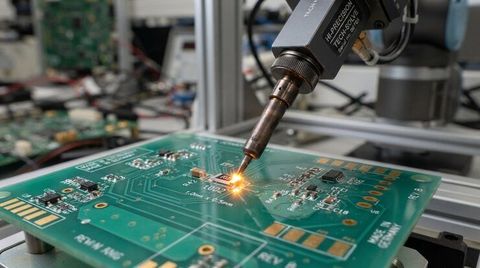
CNC Cutting Tables Tips for Understanding Precision, Speed, and Cutting Efficiency
Computer Numerical Control (CNC) cutting tables are automated manufacturing systems that cut materials according to programmed instructions. They use computer-controlled movements to guide cutting tools across a flat work surface, helping manufacturers produce accurate shapes, components, and patterns. Depending on the machine design, cutting methods may include plasma, laser, waterjet, router-based cutting, or knife cutting.
CNC cutting tables are used in industries that process metal sheets, plastics, wood, textiles, composites, and other materials. Their ability to follow digital designs makes them useful for producing both simple geometric shapes and complex components.
How CNC Cutting Tables Work
A typical CNC cutting process begins with a digital drawing created using computer-aided design (CAD) software. The drawing is converted into machine instructions, often through computer-aided manufacturing (CAM) software. These instructions determine the cutting path, movement speed, tool operation, and other parameters.
The machine controller interprets the instructions and moves the cutting head or workpiece along the required path. Sensors, motors, and control systems help maintain the intended movement and cutting sequence.
A standard workflow includes:
Creating a two-dimensional or three-dimensional design.
Preparing the geometry in CAD software.
Generating toolpaths through CAM software.
Selecting suitable material and cutting parameters.
Securing the material on the cutting table.
Running the cutting program and inspecting the finished components.
The final result depends on material properties, machine condition, tool selection, programming accuracy, and operator knowledge.
Common Types of CNC Cutting Tables
Different cutting technologies are designed for different materials and production requirements.
CNC plasma cutting tables: Use an electrically conductive plasma arc to cut metals such as mild steel, stainless steel, and aluminum within the machine's specified capabilities.
CNC laser cutting tables: Use a focused laser beam to cut or engrave suitable materials with a narrow cutting path.
CNC waterjet cutting tables: Use a high-pressure water stream, sometimes mixed with abrasive particles, to cut materials without the heat associated with conventional thermal cutting.
CNC router tables: Use rotating cutting tools to shape materials such as wood, plastics, composites, and certain nonferrous metals.
CNC digital knife cutting tables: Use controlled blades to cut materials such as textiles, foam, cardboard, leather, and selected flexible composites.
Each type has different operating requirements, cutting capabilities, and limitations. Choosing the appropriate technology begins with understanding the material, thickness, required precision, and production environment.
Importance of CNC Cutting Tables in Modern Manufacturing
CNC cutting tables help manufacturers produce repeatable components with consistent dimensions and controlled cutting paths. They are particularly useful when products require accurate shapes, repeated patterns, or complex outlines that are difficult to produce consistently through manual cutting.
Key Industrial Applications
CNC cutting technology supports a wide range of manufacturing activities.
Automotive manufacturing: Cutting metal panels, brackets, interior components, and selected structural parts.
Aerospace manufacturing: Processing specified metals and composite materials under strict quality requirements.
Construction and architecture: Producing metal profiles, decorative panels, signage, and building components.
Furniture production: Cutting wooden panels, decorative shapes, and cabinet components.
Textile manufacturing: Cutting fabric layers, upholstery patterns, and technical textiles.
Industrial equipment production: Preparing sheet metal enclosures, machine panels, and fabricated parts.
Benefits and Limitations
The main advantages of CNC cutting tables include repeatability, efficient material processing, digital design integration, and reduced dependence on manual cutting movements.
However, results are not determined by automation alone. Poorly prepared drawings, unsuitable cutting parameters, worn tools, and incorrect material positioning can lead to dimensional errors or material waste.
Operators must also consider equipment maintenance, electricity consumption, extraction systems, tooling requirements, and the skills needed to program and operate the machine.
Recent Developments in CNC Cutting Technology
During 2025 and 2026, advanced manufacturing continued to emphasize digital integration, automation, machine monitoring, and more connected production processes. These developments affect CNC cutting tables as manufacturers explore ways to improve consistency and coordinate equipment with wider factory operations.
Artificial Intelligence and Smart Manufacturing
Artificial intelligence (AI) and data analytics are increasingly being explored for manufacturing tasks such as process monitoring, fault detection, and production planning.
In CNC cutting operations, these technologies may help identify unusual machine behavior, analyze production data, and support predictive maintenance. Their effectiveness depends on the quality of available data, the machine's capabilities, and the reliability of the software.
Automation and Robotic Integration
CNC cutting tables can be integrated with robotic arms, automated loading equipment, conveyors, and material-handling systems. These combinations can reduce repetitive manual handling and support more continuous production.
Automated systems still require appropriate safeguards, correct programming, and coordination between machines. Human supervision remains important for setup, inspection, maintenance, and unexpected operating conditions.
Digital Design and Material Optimization
CAD and CAM software continue to play an important role in precision manufacturing. Nesting software arranges multiple components on a sheet to use available material efficiently while respecting cutting clearances and manufacturing constraints.
Common developments include:
Automatic nesting of parts on sheet materials.
Simulation of cutting paths before production.
Digital production records and machine performance dashboards.
Improved integration between design files and machine controllers.
Monitoring of cutting quality and equipment condition.
In India, a stakeholder consultation held on February 23, 2026, considered an advanced manufacturing strategy that included CNC machine tools, controllers, robotics, and metrology infrastructure. This reflects continued policy attention to advanced manufacturing capabilities.
Laws, Safety Standards, and Manufacturing Policies
CNC cutting tables must be operated according to applicable machinery safety, electrical safety, workplace health, and environmental requirements. The precise obligations depend on the machine type, materials processed, facility location, and relevant national or regional rules.
Machinery Safety in India
The Factories Act, 1948, historically established provisions relating to machinery guarding, worker safety, dust and fumes, and workplace conditions. Industrial operators should determine which current central and state laws apply to their facility, including any applicable replacement legislation and transitional provisions.
The Bureau of Indian Standards (BIS) publishes Indian Standards relating to machinery safety, machine tools, and testing. ISO 12100 provides general principles for machinery risk assessment and risk reduction.
In 2025, India issued amendments concerning the Machinery and Electrical Equipment Safety (Omnibus Technical Regulation) Order, 2024. The government subsequently withdrew that order on January 16, 2026. Consequently, manufacturers and equipment operators should not assume that the earlier implementation schedule remains in force. They should verify the current requirements for the specific machine category before making compliance decisions.
Workplace Safety Considerations
Important safety practices for CNC cutting operations include:
Installing appropriate guards, enclosures, and emergency-stop controls.
Using suitable eye, hearing, and respiratory protection where required.
Providing effective extraction for dust, fumes, and other airborne contaminants.
Maintaining electrical systems and machine components.
Following safe procedures for tool changes, cleaning, and maintenance.
Training operators in machine programming and emergency response.
Laser cutting systems may require specialized laser protection, while plasma cutting can produce intense light, fumes, and sparks. Waterjet systems present high-pressure hazards. Safety procedures must match the specific cutting technology.
Tools and Resources for CNC Cutting Tables
Digital tools help engineers prepare designs, generate cutting instructions, evaluate material use, and maintain equipment.
Essential Software and Technical Tools
CAD software: Used to create and modify engineering drawings and component geometry.
CAM software: Converts design information into machine-specific cutting instructions.
Nesting software: Arranges parts on sheets to improve material utilization.
CNC simulation software: Helps identify toolpath problems and potential collisions before machining.
Machine calibration tools: Support checks of positioning accuracy, alignment, and repeatability.
Maintenance tracking templates: Record inspections, faults, tool changes, and preventive maintenance activities.
Performance Measurements
Manufacturers can assess CNC cutting performance using measurable indicators.
Measurement | What it indicates |
|---|---|
Positional accuracy | How closely the machine reaches a programmed position |
Repeatability | How consistently it returns to the same position |
Cutting speed | The rate at which the material is processed |
Kerf width | The width of material removed during cutting |
Material utilization | The proportion of sheet material incorporated into finished parts |
Downtime | Time when the equipment is unavailable for production |
Defect rate | The proportion of components that fail inspection |
These measurements help production teams identify problems and compare performance over time. Results should be interpreted in relation to material type, thickness, machine configuration, and required tolerances.
Frequently Asked Questions
What is a CNC cutting table used for?
A CNC cutting table produces components from programmed digital designs. It is used to cut metals, wood, plastics, textiles, composites, and other suitable materials, depending on the cutting technology.
What is the difference between CNC laser and plasma cutting?
Laser cutting uses a focused beam of light and is suitable for many applications requiring precise cuts. Plasma cutting uses an electrically conductive plasma arc and is commonly used for conductive metals. The appropriate choice depends on material thickness, edge quality, precision, and production requirements.
Which software is needed to operate a CNC cutting table?
Many operations use CAD software for design and CAM software to generate machine instructions. Some machines include integrated software for preparing designs, nesting parts, and controlling cutting operations. Compatibility with the machine controller is an important consideration.
How can cutting accuracy be improved?
Accuracy can be improved through proper machine calibration, correct material positioning, suitable cutting parameters, well-maintained tools, and accurate digital drawings. Regular inspection helps identify deviations before they affect larger production batches.
What safety precautions are necessary for CNC cutting?
Operators should follow machine-specific safety instructions, use suitable protective equipment, maintain guards and emergency stops, and provide appropriate ventilation or fume extraction. Laser, plasma, router, and waterjet systems each require precautions suited to their particular hazards.
Conclusion
CNC cutting tables are important tools in modern precision manufacturing. They combine digital design, automated movement, and specialized cutting technologies to produce components across industries ranging from automotive production to furniture and construction.
Developments in AI, robotic integration, nesting software, and machine monitoring are expanding the possibilities for connected manufacturing. At the same time, effective results depend on appropriate equipment selection, operator training, regular maintenance, and compliance with applicable safety standards.
Understanding cutting technologies, performance measurements, software requirements, and regulatory responsibilities helps manufacturers make informed decisions and maintain consistent production quality.

Related Post...
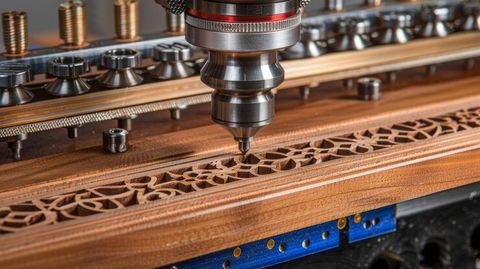
CNC Cutting Tables Tips for Understanding Precision, Speed, and Cutting Efficiency
Updated: October 27, 2026
Read More
Plastic Welding Machines: Tips for Understanding Methods and Equipment
Updated: October 26, 2026
Read More
Why Assembly Equipment Systems Are Essential for Modern Production Lines
Updated: October 27, 2026
Read More