The concept of centrifugal pumps dates back to the 17th century, but their widespread industrial adoption began during the 19th and 20th centuries with the growth of factories, water distribution networks, and oil refineries. Today, they are essential in water treatment, agriculture, chemical processing, HVAC systems, energy production, and countless other fields.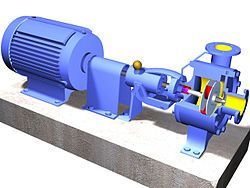
Centrifugal pumps exist because industries and households need a reliable, efficient, and scalable method of moving fluids. Unlike positive displacement pumps, which push fixed volumes of liquid, centrifugal pumps provide smooth, continuous flow with relatively low maintenance needs.
Importance of Centrifugal Pumps
Centrifugal pumps play a vital role in modern life and industry.
Key Areas of Importance
- Water Supply and Treatment: Used for distributing drinking water and managing wastewater
- Energy and Oil Industries: Circulate cooling water and handle petroleum products
- Agriculture and Irrigation: Move water from sources to farmland
- HVAC Systems: Enable circulation of heating and cooling fluids
- Chemical Processing: Handle acids, solvents, and industrial fluids
Who It Affects
- Engineers and plant operators managing fluid systems
- Municipal authorities handling water and sewage
- Manufacturers requiring fluid handling
- Farmers relying on irrigation systems
- Households using water supply pumps
Problems It Solves
- Eliminates manual water transport
- Ensures consistent flow in industrial systems
- Supports large-scale infrastructure
- Improves operational efficiency and reduces downtime
Recent Updates and Trends (2024–2025)
Centrifugal pump technology continues to evolve with innovation in efficiency, monitoring, and sustainability.
Key Developments
- Energy-Efficient Designs: Reduced power consumption aligned with global energy goals
- Smart Monitoring Systems: IoT-enabled pumps providing real-time data and predictive maintenance
- Advanced Materials: Use of corrosion-resistant composites for durability
- Hydrogen Applications: Pumps designed for cryogenic and high-pressure hydrogen systems
- Sustainability Focus: Supporting renewable energy and reducing carbon footprints
Laws and Policies
Centrifugal pumps are subject to various regulations across industries and regions.
Key Regulatory Areas
- Energy Efficiency Standards: EU EcoDesign regulations and U.S. DOE guidelines
- Environmental Compliance: EPA rules for chemical and wastewater applications
- Occupational Safety: OSHA standards for safe installation and operation
- Water Management Policies: Regulations on irrigation and water usage
- International Standards: ISO and ANSI guidelines for performance and testing
These policies ensure safe, efficient, and environmentally responsible use of pumps.
Tools and Resources
Several tools help engineers and users optimize centrifugal pump selection and performance.
Key Resources
- Pump Selection Software (Grundfos Product Center, KSB EasySelect)
- Energy Calculators for power and efficiency estimation
- Maintenance Platforms (ABB Ability) for predictive monitoring
- Engineering Databases (Pump Handbook Online)
- Training Programs from organizations like the Hydraulic Institute
Table: Types of Centrifugal Pumps
| Pump Type | Key Feature | Common Application |
|---|---|---|
| Single-stage pump | One impeller, simple design | Water supply, HVAC |
| Multi-stage pump | Multiple impellers | High-pressure systems |
| End-suction pump | Fluid enters from one side | Industrial use |
| Vertical pump | Vertical shaft design | Wells and irrigation |
| Submersible pump | Operates underwater | Sewage and drainage |
| Magnetic drive pump | Seal-less, corrosion-resistant | Chemicals and hazardous fluids |
Frequently Asked Questions
What is a centrifugal pump?
It is a machine that uses a rotating impeller to convert mechanical energy into fluid flow.
What are its main advantages?
Simple design, continuous flow, ability to handle large volumes, and low maintenance.
Which industries use centrifugal pumps most?
Water supply, oil and gas, power generation, chemical processing, HVAC, and agriculture.
How are centrifugal pumps regulated?
Through energy efficiency, safety, and environmental standards like DOE and EcoDesign.
How do they differ from positive displacement pumps?
Centrifugal pumps provide variable flow, while positive displacement pumps deliver a fixed volume.
Conclusion
Centrifugal pumps remain one of the most essential technologies in engineering and industry. From municipal water systems to advanced energy applications, they ensure reliable and efficient fluid movement.
With advancements in smart monitoring, energy efficiency, and materials, centrifugal pumps continue to evolve to meet modern industrial and environmental demands. Understanding their applications, standards, and tools helps professionals make informed decisions in fluid system design and management.