Home Jewellery Machine Business Auto Blog Furniture Education Fashion Tech Finance Health Software Real Estate Travel

Automated Document Workflows Explained: Explore AI Automation, Digital Documents & Smart Suggestions

Documents remain at the center of nearly every business operation. Organizations create, receive, review, approve, store, and archive thousands of documents every day, including invoices, contracts, purchase orders, employee records, financial reports, customer forms, compliance documents, insurance claims, and technical documentation. As businesses continue their digital transformation, manually processing these documents can become increasingly time-consuming, repetitive, and difficult to manage.

Automated document workflows help organizations digitize and streamline document-related activities by replacing manual processes with structured, technology-driven workflows. Using workflow automation, artificial intelligence (AI), machine learning, optical character recognition (OCR), intelligent document processing (IDP), and cloud-based collaboration tools, businesses can organize documents more efficiently while improving consistency, visibility, and operational accuracy.

Modern document workflow systems support organizations throughout the entire document lifecycle—from document creation and data capture to approval, collaboration, storage, retrieval, and long-term archiving. These technologies also help improve accessibility, reduce repetitive administrative tasks, strengthen compliance practices, and enhance collaboration across distributed teams.

This guide provides an educational overview of automated document workflows, explaining document automation concepts, workflow technologies, AI applications, digital document management, implementation considerations, and emerging industry trends.

What Are Automated Document Workflows?

An automated document workflow is a structured digital process that manages how documents move through various stages of an organization using predefined rules and automation technologies.

Instead of manually routing documents between departments, automated systems perform actions based on configured workflow logic.

Typical workflow stages include:

  • Document creation
  • Data capture
  • Classification
  • Review
  • Approval
  • Distribution
  • Storage
  • Retrieval
  • Archiving
  • Audit tracking

Automation improves process consistency while reducing repetitive manual activities.

Understanding Document Workflows

A document workflow defines how information moves from one person, department, or system to another.

Workflows often include:

  • Sequential tasks
  • Decision points
  • Notifications
  • Approval chains
  • Document routing
  • Version control
  • Access permissions
  • Record retention

Clearly defined workflows help organizations manage documents more efficiently.

How Automated Document Workflows Operate

Most automated workflows follow a series of structured stages.

Step 1: Document Creation

Documents may originate from:

  • Digital forms
  • Email attachments
  • Business applications
  • Mobile devices
  • Online submissions
  • Internal templates

Step 2: Document Capture

Information enters the workflow through:

  • File uploads
  • Document scanning
  • Mobile capture
  • Email import
  • API integrations
  • Cloud synchronization

Step 3: Data Extraction

Intelligent technologies identify relevant information from documents.

Examples include:

  • Names
  • Dates
  • Invoice numbers
  • Addresses
  • Purchase order references
  • Identification numbers

Step 4: Validation

Workflow rules verify document completeness before further processing.

Validation may include:

  • Required fields
  • Format verification
  • Duplicate detection
  • Business rule checks

Step 5: Routing

Documents are automatically directed to appropriate users or departments based on predefined workflow conditions.

Step 6: Approval

Authorized users review and approve documents using digital approval systems.

Step 7: Storage

Approved documents are securely stored in centralized repositories for future access.

Step 8: Archiving

Completed documents are archived according to organizational policies and regulatory requirements.

Core Components

Automated document workflow platforms commonly include several integrated technologies.

Workflow Engine

The workflow engine coordinates document movement throughout the process.

Responsibilities include:

  • Task sequencing
  • Routing logic
  • Decision rules
  • Notifications
  • Status monitoring

Document Repository

Repositories provide centralized storage for digital documents.

Common capabilities include:

  • Secure storage
  • Search functionality
  • Metadata management
  • Version history
  • Access control

Rules Engine

Business rules determine how workflows operate.

Examples include:

  • Approval conditions
  • Escalation rules
  • Deadline management
  • User assignments
  • Notification triggers

Dashboard

Management dashboards display:

  • Workflow progress
  • Pending approvals
  • Processing statistics
  • Operational reports
  • Performance metrics

Artificial Intelligence in Document Workflows

Artificial Intelligence increasingly enhances document automation.

Common AI capabilities include:

  • Intelligent document classification
  • Data extraction
  • Natural language processing
  • Entity recognition
  • Automated summarization
  • Language translation
  • Predictive routing
  • Document recommendations

AI continues improving document processing efficiency.

Intelligent Document Processing (IDP)

Intelligent Document Processing combines several technologies.

These include:

  • Artificial Intelligence
  • Machine Learning
  • OCR
  • Computer Vision
  • Natural Language Processing

IDP enables software to understand both structured and unstructured documents.

Optical Character Recognition (OCR)

OCR converts printed or handwritten text into machine-readable digital information.

Common applications include:

  • Invoice processing
  • Form digitization
  • Historical record preservation
  • Medical documentation
  • Legal document digitization

OCR is frequently integrated into automated workflows.

Workflow Automation Features

Modern platforms often include:

  • Drag-and-drop workflow builders
  • Automated notifications
  • Digital approvals
  • Electronic signatures
  • Version control
  • Role-based permissions
  • Document templates
  • Workflow analytics
  • Audit logs
  • Cloud synchronization

Feature availability varies across platforms.

Collaboration Tools

Document workflows frequently support collaborative work through:

  • Shared editing
  • Comments
  • Document reviews
  • Approval tracking
  • Activity history
  • File sharing
  • Team notifications
  • Task assignments

Collaboration improves coordination between departments.

Security Features

Document management systems generally include security controls.

Examples include:

  • User authentication
  • Multi-factor authentication
  • Data encryption
  • Access permissions
  • Activity logging
  • Audit trails
  • Secure backups
  • Compliance reporting

Security implementation varies by organization.

Business Applications

Automated document workflows support many business functions.

Human Resources

Common HR workflows include:

  • Employee onboarding
  • Leave applications
  • Performance documentation
  • Training records

Finance

Financial document workflows may include:

  • Invoice approvals
  • Expense reports
  • Budget documentation
  • Purchase orders

Healthcare

Healthcare organizations often automate:

  • Patient documentation
  • Clinical records
  • Insurance forms
  • Medical reports

Legal

Legal teams may manage:

  • Contracts
  • Case documentation
  • Regulatory records
  • Compliance documents

Procurement

Procurement workflows often include:

  • Vendor documentation
  • Purchase approvals
  • Contract reviews
  • Delivery records

Benefits

Organizations may experience several operational advantages.

Examples include:

  • Reduced manual processing
  • Improved document visibility
  • Faster approvals
  • Consistent workflows
  • Better collaboration
  • Enhanced compliance
  • Centralized documentation
  • Improved reporting
  • Easier document retrieval
  • Digital record management

Actual results depend on workflow design and implementation.

Implementation Considerations

Organizations planning document automation often evaluate:

  • Existing document processes
  • Integration requirements
  • Security policies
  • User training
  • Data migration
  • Regulatory obligations
  • Workflow complexity
  • Long-term scalability

Careful planning contributes to successful implementation.

Emerging Trends

Document workflow technologies continue evolving through innovations such as:

  • Generative AI
  • Intelligent assistants
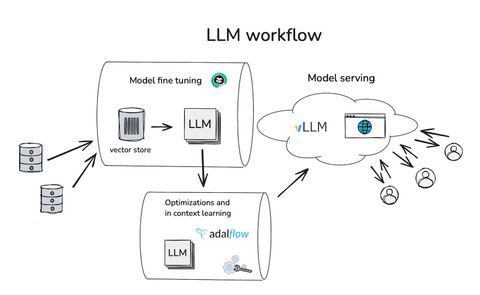
  • Large Language Models (LLMs)
  • Hyperautomation
  • Predictive analytics
  • AI-powered search
  • Digital twins for processes
  • Blockchain document verification
  • Cloud-native automation
  • Conversational workflow interfaces

These technologies continue shaping modern document management.

Helpful Learning Resources

Readers interested in document automation may explore:

  • Business process management publications
  • Enterprise content management resources
  • AI documentation guides
  • Workflow automation textbooks
  • Digital transformation research
  • Information governance references
  • Intelligent document processing studies

These resources provide valuable educational information about automated document technologies.

Frequently Asked Questions

What is an automated document workflow?

It is a structured digital process that automates document creation, routing, review, approval, storage, and archival using predefined workflow rules.

How does AI improve document workflows?

AI assists with document classification, information extraction, intelligent routing, summarization, and predictive processing.

What is Intelligent Document Processing?

Intelligent Document Processing combines AI, OCR, machine learning, computer vision, and natural language processing to understand and process documents.

What types of documents can be automated?

Organizations commonly automate invoices, contracts, employee records, financial reports, procurement documents, healthcare records, legal documents, and compliance forms.

Why is version control important?

Version control helps track document revisions, supports collaboration, maintains historical records, and reduces confusion when multiple users edit documents.

What industries use document workflow automation?

Healthcare, finance, manufacturing, education, legal services, government, insurance, logistics, retail, and technology organizations commonly implement document workflow automation.

Conclusion

Automated document workflows have become an essential part of modern digital operations by transforming how organizations create, process, review, approve, and manage documents throughout their lifecycle. By integrating workflow automation, artificial intelligence, intelligent document processing, cloud technologies, and secure document repositories, businesses can improve operational consistency, collaboration, and document accessibility while reducing repetitive manual tasks.

As AI, machine learning, and intelligent automation continue advancing, document workflow systems are expected to become increasingly capable of supporting complex business processes, predictive decision-making, and highly efficient digital document ecosystems. Understanding these technologies provides valuable insight into one of the foundational components of modern enterprise digital transformation.

Disclaimer

This article is intended solely for educational and informational purposes. It provides a general overview of automated document workflows, AI-powered document processing, workflow automation technologies, and digital document management concepts. It does not constitute legal, financial, regulatory, technology implementation, cybersecurity, or business consulting advice, nor does it recommend or endorse any specific software platform, automation provider, or document management solution. Features, capabilities, integrations, and implementation approaches vary between organizations and technology providers.

author-image

Lavit

Our content is designed to attract, persuade, and convert your audience. We help brands grow through strategic, audience-first writing.

July 23, 2026 . 9 min read

Business

Complete Guide to Fire Monitoring Systems

Complete Guide to Fire Monitoring Systems

By: Alen

Updated: July 21, 2026

Read More