Alloy Steel Manufacturing: Process, Types, Applications, and Benefits
Alloy steel manufacturing is an important part of the modern metal and engineering industry.
Alloy steel is produced by combining carbon steel with selected alloying elements to improve mechanical properties such as strength, hardness, toughness, wear resistance, and corrosion resistance.
These specialized steels are widely used in automotive components, construction machinery, industrial equipment, oil and gas infrastructure, power generation systems, and heavy engineering applications.
Unlike ordinary carbon steel, alloy steel can be engineered to meet specific performance requirements by adjusting its chemical composition and applying suitable heat treatment processes.
As industries demand stronger, more durable, and more reliable materials, alloy steel manufacturing continues to play an important role in supporting advanced engineering and industrial production.
What Is Alloy Steel Manufacturing?
Alloy steel manufacturing is the process of producing steel by combining iron and carbon with additional alloying elements in controlled proportions.
These elements modify the properties of steel and make it suitable for different industrial applications.
Common alloying elements include:
Chromium
Nickel
Molybdenum
Manganese
Vanadium
Silicon
Tungsten
Cobalt
The selection and concentration of these elements depend on the required mechanical properties, operating environment, and intended application.
Alloy steel manufacturing involves several stages, including raw material preparation, melting, refining, alloy addition, casting, forming, heat treatment, and quality inspection.
Important Alloying Elements Used in Steel Manufacturing
Different alloying elements provide specific characteristics to steel.
1. Chromium
Chromium improves hardness, wear resistance, and hardenability. It is also an important element in stainless and other corrosion-resistant steel grades.
2. Nickel
Nickel improves toughness, strength, and impact resistance. It is particularly useful in applications that require reliable performance under demanding temperature conditions.
3. Molybdenum
Molybdenum improves high-temperature strength, hardenability, and resistance to certain forms of wear and corrosion.
4. Manganese
Manganese improves strength and hardenability while helping control the effects of sulfur during steel production.
5. Vanadium
Vanadium helps refine grain structure and improve strength and wear resistance. It is commonly used in specialized engineering and tool steels.
6. Silicon
Silicon is used as a deoxidizing element during steelmaking and can improve strength and certain magnetic properties.
7. Tungsten
Tungsten improves hardness and high-temperature performance. It is particularly important in certain tool steels used for cutting and machining applications.
Alloy Steel Manufacturing Process
Alloy steel production involves carefully controlled metallurgical operations to achieve the required chemical composition and material properties.
1. Raw Material Selection
The manufacturing process begins with selecting suitable raw materials, including iron, steel scrap, and alloying elements.
The quality and composition of these materials influence the final properties of the steel.
Manufacturers evaluate raw materials to ensure they meet the required chemical and production specifications.
2. Melting
Selected materials are melted using suitable steelmaking equipment.
Common melting technologies include:
Electric arc furnaces
Induction furnaces
Basic oxygen furnaces
Electric arc furnaces are widely used for producing various alloy steel grades because they allow flexible processing of metallic raw materials.
3. Refining and Chemical Composition Control
After melting, the molten steel undergoes refining to adjust its chemical composition and remove unwanted impurities.
Manufacturers control elements such as carbon, sulfur, phosphorus, and other constituents according to the required steel grade.
Alloying elements are added in controlled quantities to achieve the specified composition.
4. Secondary Metallurgy
Secondary metallurgy involves additional treatment of molten steel to improve cleanliness, composition control, and metallurgical quality.
Common operations include:
Ladle refining
Deoxidation
Alloy composition adjustment
Vacuum degassing
Inclusion control
These processes help produce steel with consistent quality and suitable performance characteristics.
5. Casting
After refining, molten alloy steel is transferred into casting equipment.
Continuous casting is commonly used to produce semi-finished steel products such as billets, blooms, and slabs.
These products are subsequently processed into different shapes and dimensions.
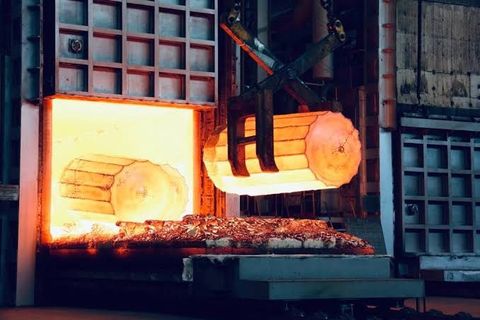
6. Hot Rolling and Forming
The cast steel is heated and passed through rolling equipment to produce the required shapes.
Common rolled products include:
Round bars
Flat bars
Steel plates
Structural sections
Rods
Billets
Hot rolling helps achieve the desired dimensions and modifies the steel's microstructure.
7. Heat Treatment
Heat treatment is an important stage in alloy steel manufacturing because it helps develop the required mechanical properties.
Common heat treatment processes include:
Annealing: Softens steel, improves machinability, and reduces internal stresses.
Normalizing: Refines grain structure and helps produce more uniform mechanical properties.
Quenching: Rapidly cools heated steel to develop increased hardness and strength.
Tempering: Reheats quenched steel at a controlled temperature to improve toughness and reduce brittleness.
Case Hardening: Creates a hard outer surface while maintaining a comparatively tough interior in suitable steel grades.
8. Machining and Finishing
Depending on the final application, alloy steel products may undergo machining, grinding, straightening, surface treatment, or dimensional finishing.
These operations help achieve the required shape, tolerance, and surface quality.
9. Quality Inspection and Testing
The final products undergo inspection to verify that they meet specified quality and performance requirements.
Testing may include chemical composition analysis, hardness testing, tensile testing, impact testing, dimensional inspection, and non-destructive examination.
Approved products are then prepared for storage and distribution.
Types of Alloy Steel
Alloy steels are generally classified according to their alloying element content and intended applications.
1. Low-Alloy Steel
Low-alloy steel contains relatively small amounts of alloying elements.
It offers improved strength, toughness, hardenability, or wear resistance compared with many conventional carbon steels.
Applications:
Automotive components
Industrial machinery
Construction equipment
Pressure vessels
Structural engineering
2. High-Alloy Steel
High-alloy steel contains higher concentrations of alloying elements designed to provide specialized properties.
Depending on composition, these steels may offer improved corrosion resistance, heat resistance, hardness, or wear performance.
Applications:
Chemical processing equipment
High-temperature industrial systems
Specialized machinery
Power generation equipment
Industrial tooling
3. Nickel Alloy Steel
Nickel alloy steel contains nickel as an important alloying element.
It is selected for applications requiring toughness, strength, and performance under demanding environmental or temperature conditions.
Applications:
Automotive engineering
Pressure vessels
Heavy machinery
Oil and gas equipment
Industrial components
4. Chromium-Molybdenum Steel
Chromium-molybdenum steel, commonly known as chrome-moly steel, combines chromium and molybdenum to improve hardenability, strength, and temperature-related performance.
Applications:
Industrial pressure equipment
Automotive components
Power generation systems
Oil and gas infrastructure
Heavy engineering machinery
5. Manganese Alloy Steel
Manganese alloy steel includes grades designed to provide improved strength and wear characteristics.
High-manganese steel is particularly known for its ability to develop strong work-hardening behavior under suitable service conditions.
Applications:
Mining equipment
Crushing machinery
Railway components
Material-handling equipment
Industrial wear parts
Benefits of Alloy Steel Manufacturing
Alloy steel manufacturing provides several advantages for industries that require specialized mechanical and performance characteristics.
1. High Strength
Selected alloying elements and heat treatment processes can improve the strength of steel, making it suitable for heavy-duty components and demanding mechanical applications.
2. Improved Wear Resistance
Certain alloy steel grades offer improved resistance to abrasion and surface wear.
This makes them useful in machinery components exposed to repeated friction and mechanical contact.
3. Better Toughness
Nickel, molybdenum, and other alloying elements can improve toughness in appropriately designed steel grades.
This helps components withstand impact and mechanical loading.
4. Enhanced Hardenability
Alloying elements can improve the ability of steel to develop hardness through heat treatment.
This is particularly useful for components with specific surface and internal property requirements.
5. Temperature Performance
Selected alloy steel grades are designed to maintain useful mechanical properties under elevated or demanding temperature conditions.
6. Application Flexibility
By adjusting chemical composition and processing conditions, manufacturers can produce alloy steel grades for different industrial applications.
7. Longer Component Service Life
Choosing a suitable alloy steel grade can improve resistance to wear, fatigue, and mechanical damage, potentially reducing replacement and maintenance requirements.
Industrial Applications of Alloy Steel
Alloy steel is used across industries that require durable and reliable metal components.
Automotive Industry
Automotive manufacturers use alloy steel for gears, shafts, crankshafts, axles, transmission components, and other mechanical parts.
These applications require suitable strength, fatigue resistance, and wear performance.
Oil and Gas Industry
The oil and gas sector uses alloy steel in pipelines, drilling equipment, pressure-containing components, valves, and specialized machinery.
Material selection depends on pressure, temperature, mechanical loading, and environmental conditions.
Construction and Infrastructure
Alloy steel is used in heavy machinery, structural components, industrial equipment, and engineering applications where specific strength and durability requirements exist.
Power Generation Industry
Power plants use specialized alloy steels in turbines, boilers, pressure systems, and other equipment exposed to demanding operating conditions.
Mining Industry
Mining operations use wear-resistant alloy steel components in crushers, excavators, conveyor systems, and material-handling equipment.
Aerospace Industry
Selected high-performance alloy steels are used in specialized aerospace components where strength, fatigue performance, and dimensional reliability are important.
Industrial Machinery
Manufacturers use alloy steel for gears, bearings, shafts, machine tools, rollers, and other components that experience mechanical stress.
Quality Control in Alloy Steel Manufacturing
Quality control is essential for ensuring that alloy steel products meet their required chemical, mechanical, and dimensional specifications.
Chemical Composition Testing
Spectrometers and other analytical equipment are used to verify the concentrations of carbon and alloying elements.
Hardness Testing
Hardness testing evaluates resistance to indentation and helps verify the results of heat treatment and material processing.
Tensile Testing
Tensile testing measures properties such as tensile strength, yield strength, and elongation.
Impact Testing
Impact testing evaluates the ability of steel to absorb energy under sudden loading conditions.
Microstructure Analysis
Metallographic examination helps evaluate grain structure, phase distribution, inclusions, and other microstructural characteristics.
Non-Destructive Testing
Ultrasonic testing, magnetic particle inspection, dye penetrant testing, and radiographic testing may be used to identify defects without damaging the product.
Dimensional Inspection
Finished steel products are measured to verify dimensions, tolerances, straightness, and surface condition.
Factors to Consider When Choosing an Alloy Steel Manufacturer
Selecting the right alloy steel manufacturer is important for maintaining product quality and supply reliability.
Manufacturing Capabilities
Evaluate whether the manufacturer has suitable melting, refining, casting, rolling, heat treatment, and finishing facilities.
Product Range
Check whether the manufacturer produces the required alloy steel grades, shapes, dimensions, and specifications.
Quality Certifications
Review applicable quality management certifications, testing capabilities, and material traceability procedures.
Technical Expertise
Choose a manufacturer with metallurgical knowledge and experience in producing materials for your intended application.
Testing and Inspection Facilities
Reliable manufacturers should have appropriate testing equipment and documented quality control procedures.
Production Capacity
Evaluate whether the manufacturer can meet your order quantities, delivery schedules, and future supply requirements.
Customization Options
Some applications require specific chemical compositions, heat treatment conditions, or mechanical properties. Confirm whether the manufacturer can support these requirements.
Future Trends in Alloy Steel Manufacturing
Alloy steel production continues to evolve through improvements in metallurgical technology, automation, and sustainable manufacturing practices.
Advanced Steelmaking Technologies
Modern melting and refining technologies help manufacturers improve composition control, material cleanliness, and production consistency.
Automation and Digital Monitoring
Automated production equipment and digital monitoring systems help manufacturers control processing conditions and improve operational efficiency.
Advanced Heat Treatment
Improved furnace controls and process monitoring support more consistent heat treatment results and better control over material properties.
Sustainable Steel Production
Steel manufacturers are increasingly focusing on energy efficiency, scrap recycling, emissions reduction, and optimized resource utilization.
Advanced Material Development
Research into new alloy compositions and processing techniques continues to support specialized applications requiring improved strength, toughness, corrosion resistance, and temperature performance.
Conclusion
Alloy steel manufacturing is a specialized industrial process that combines controlled chemical composition, advanced steelmaking, forming, heat treatment, and quality inspection to produce materials with specific performance characteristics.
From automotive components and industrial machinery to oil and gas equipment and power generation systems, alloy steel supports applications that demand strength, toughness, wear resistance, and reliability.
Choosing the right alloy steel manufacturer requires evaluating production capabilities, material specifications, quality control procedures, testing facilities, and technical expertise.

Related Post...
Automated Optical Inspection Insights: Discover Trends You Should Know Now
Updated: October 26, 2026
Read More
Conveyor Sorting Systems: Types, Benefits, Applications, and Working Principles
Updated: November 02, 2026
Read More