AI Killer Robots: An Overview of Global Efforts to Agree on Restrictions
AI killer robots, also known as lethal autonomous weapons systems, are raising questions about how artificial intelligence should be used in warfare. These technologies can identify, select, and potentially attack targets with limited human involvement. Countries are discussing whether international restrictions are necessary and how human control should be maintained. Understanding the debate helps explain the legal, ethical, and security concerns surrounding autonomous weapons.
Key Takeaways
AI killer robots can select and attack targets using autonomous technology.
Countries disagree about how much human control weapons should require.
International discussions focus on humanitarian law, accountability, and civilian protection.
India participates in discussions about autonomous weapons and international security.
Related Searches
How do AI killer robots work?
Why are countries debating autonomous weapons?
Should autonomous weapons be banned internationally?
AI killer robots vs remotely controlled weapons
What are the laws governing lethal autonomous weapons?
Can AI weapons operate without human control?
In This Guide
What Are AI Killer Robots and How Do They Work?
Why Are AI Killer Robots a Global Concern?
Recent Developments in Autonomous Weapons Discussions
What Laws and Policies Govern AI Killer Robots in India?
Autonomous Weapons vs Human-Controlled Weapons: Key Differences
Tools and Resources for Understanding Autonomous Weapons
Frequently Asked Questions About AI Killer Robots
Conclusion
What Are AI Killer Robots and How Do They Work?
Understanding Autonomous Weapons
AI killer robots are weapons systems that use artificial intelligence, sensors, and computer-based decision-making to identify, select, and engage targets. The formal term commonly used in international discussions is lethal autonomous weapons systems (LAWS). These systems may operate on land, in the air, at sea, or underwater.
Unlike conventional weapons, which generally require direct human control during important operational decisions, autonomous weapons can perform certain functions independently after activation. Their level of independence varies depending on their design, programming, operating environment, and human supervision.
How Does an Autonomous Weapon Work?
An autonomous weapon may use several technologies to perform its functions:
Sensors: Cameras, radar, and other detection equipment collect information about the surroundings.
Artificial intelligence: Algorithms analyse information and identify objects or potential targets.
Decision-making software: Programmed rules determine whether identified objects meet specific engagement conditions.
Navigation systems: Software and positioning technologies help the platform move through its operating environment.
Human supervision: Depending on the system, operators may monitor activities, approve decisions, or intervene.
Not every AI-enabled military system is an autonomous weapon. Some systems use AI to analyse information or assist human operators while leaving the final decision to a person.
Why Are AI Killer Robots a Global Concern?
Why Are Countries Worried About Autonomous Weapons?
The debate matters because autonomous weapons could change how military operations are conducted. Their ability to process information and respond quickly creates questions about human responsibility, civilian safety, and the limits of automated decision-making.
One major concern is whether a machine can reliably distinguish combatants from civilians. Real-world environments often contain complicated situations, including injured people, surrendering soldiers, civilians near military locations, and changing battlefield conditions.
Who Could Be Affected?
The consequences extend beyond military personnel. Civilians living in conflict areas may face risks if automated systems incorrectly identify people or objects. Governments, military organisations, humanitarian groups, and technology developers also have responsibilities in discussions about these weapons.
Important concerns include:
Civilian protection: Incorrect identification could result in unintended harm.
Accountability: Determining responsibility after an unlawful attack may become complicated.
Human control: Questions remain about how much decision-making authority should remain with people.
Military competition: Countries may feel pressure to develop similar technologies when other states introduce them.
Escalation risks: Automated responses could contribute to rapid military escalation if systems interact unpredictably.
The central question is not simply whether machines can perform military tasks. It is whether decisions involving human life should be delegated to systems that cannot understand human circumstances in the same way people do.
Recent Developments in Autonomous Weapons Discussions
What Is Happening With AI Killer Robots Between 2024 and 2026?
International discussions have become more focused on developing rules for autonomous weapons. Governments are considering how existing humanitarian laws apply to systems that can identify and engage targets without direct human decisions at the moment of attack.
The United Nations Convention on Certain Conventional Weapons (CCW) remains the main international forum for these discussions. Its Group of Governmental Experts (GGE) has examined possible elements of a framework covering human responsibility, legal compliance, and restrictions on autonomous weapons.
During 2026, the discussions reached an important stage. The seventh CCW Review Conference took place in Geneva in November, where countries considered how negotiations on international rules could progress.
However, countries did not reach agreement on a comprehensive binding treaty. On 21 November 2026, states agreed to continue discussions and develop possible rules by 2028. Disagreements remained over whether future restrictions should be legally binding and how much autonomy military systems should be allowed to have.
Why Is International Agreement Difficult?
Countries have different military priorities, technological capabilities, and interpretations of acceptable human control. Some governments support a legally binding international agreement, while others prefer existing international humanitarian law and continued discussions through the CCW.
The main areas of disagreement include:
Whether fully autonomous weapons should be prohibited.
Whether restrictions should apply to weapons targeting people or all categories of targets.
How human supervision should be defined and measured.
Who should be held accountable when an autonomous system causes unlawful harm.
Whether new rules could affect legitimate military operations.
These differences make international agreement complicated, particularly when decisions require consensus among participating countries.
What Laws and Policies Govern AI Killer Robots in India?
India's Position on Autonomous Weapons
India participates in international discussions on lethal autonomous weapons through the Convention on Certain Conventional Weapons. Its position considers both military requirements and humanitarian responsibilities.
India has emphasised that emerging technologies raise legal and ethical questions but should not automatically be treated as unlawful. It supports examining how these systems are used and what effects they produce rather than restricting every technology associated with artificial intelligence.
India has also supported retaining the CCW as the appropriate forum for discussing these matters. In its November 2025 explanation of vote at the United Nations General Assembly, India voted in favour of a resolution on lethal autonomous weapons while maintaining its preference for discussions through the CCW framework.
Which International Laws Apply?
There is currently no comprehensive international treaty specifically regulating every category of autonomous weapon system. However, existing international humanitarian law applies to their development and use during armed conflicts.
Important legal principles include:
Distinction: Military forces must distinguish between civilians and combatants.
Proportionality: Expected civilian harm must not be excessive compared with the anticipated military advantage.
Precaution: Parties must take feasible measures to reduce civilian harm during attacks.
Accountability: Individuals and states remain subject to applicable legal responsibilities.
India's participation in the CCW discussions reflects the importance of considering these principles when assessing autonomous military technologies.
Autonomous Weapons vs Human-Controlled Weapons: Key Differences
The distinction between autonomous and human-controlled weapons is important when examining how artificial intelligence affects military decisions. Not every automated military system independently decides when to use force.
Feature | Autonomous Weapons | Human-Controlled Weapons |
|---|---|---|
Target identification | Software identifies potential targets | Human operators identify targets |
Decision-making | System may select targets independently | Human makes the engagement decision |
Human involvement | May be limited after activation | Direct involvement in key decisions |
Response speed | Can process information rapidly | Depends on human assessment |
Accountability | Responsibility may be complicated to establish | Human decision-makers have identifiable roles |
Main concern | Predictability and loss of human control | Human error and operational limitations |
Autonomous vs Automated: What Is the Difference?
Automation means a machine performs a task according to predefined instructions. Autonomy goes further by allowing a system to select and perform certain actions without additional human instructions.
For example, a defensive system that automatically intercepts an incoming projectile is not necessarily equivalent to a weapon that independently identifies and attacks people. The target, operating environment, level of human control, and intended function all matter when assessing the system.
Tools and Resources for Understanding Autonomous Weapons
Several international organisations and research platforms provide information about artificial intelligence in military applications, international law, and weapons regulation.
Useful resources include:
United Nations Office for Disarmament Affairs (UNODA): Information about international disarmament discussions and autonomous weapons.
International Committee of the Red Cross (ICRC): Educational material about humanitarian law and the risks of autonomous weapons.
United Nations CCW: Documents, meeting reports, and government discussions concerning conventional weapons.
SIPRI: Research covering military technology, international security, and arms control.
United Nations Digital Library: Government statements, resolutions, and official documents concerning lethal autonomous weapons.
These resources help readers understand the technical, legal, and international dimensions of the debate.
Frequently Asked Questions About AI Killer Robots
1. What are AI killer robots?
AI killer robots are weapons that can identify, select, and attack targets without further human intervention after activation. They are also known as lethal autonomous weapons systems.
2. Do AI killer robots already exist?
Certain autonomous weapon systems already exist, particularly in defensive applications such as detecting and intercepting incoming projectiles. However, their capabilities and levels of human involvement vary.
3. Why do countries disagree about AI killer robots?
Countries disagree about military requirements, human control, legal responsibility, and whether international restrictions should be legally binding.
4. Can AI killer robots be banned internationally?
Countries could negotiate a legally binding agreement to prohibit or restrict particular systems. However, reaching international agreement remains difficult because governments have different security priorities.
5. What is India's position on AI killer robots?
India supports discussions through the CCW framework and emphasises balancing military requirements with humanitarian considerations and applicable international law.
Conclusion
AI killer robots represent an important challenge at the intersection of artificial intelligence, military technology, and international law. Countries continue to debate human control, civilian protection, accountability, and possible restrictions. Although international discussions have progressed, a comprehensive binding agreement remains unresolved. The issue continues to require international attention as military technologies develop.

Related Post...
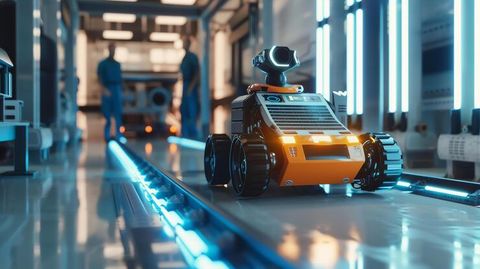
Overview of Sensor-Driven Autonomous Robotics, Applications, and Smart Systems
Updated: November 24, 2026
Read More
AI Marketing Automation Basics: Key Strategies, Trends, and Applications
Updated: November 24, 2026
Read More
Industrial IoT Security Insights: Understanding Threats and Risk Management
Updated: November 04, 2026
Read More