A Guide to AI, Medical Robotics and Digital Healthcare Innovation
Healthcare technology is changing how medical professionals understand diseases, monitor patients, and deliver treatment. Artificial intelligence, medical robotics, digital health platforms, and connected medical devices are becoming important parts of modern healthcare systems. These developments are helping healthcare professionals manage information, support clinical decisions, and improve communication between patients and medical facilities.
The development of healthcare technology comes from the growing need to make medical processes more accurate, organized, and accessible. Traditional healthcare systems often depend on manual recordkeeping, physical appointments, and time-consuming diagnostic procedures. As populations grow and healthcare requirements become more complex, digital tools are increasingly being integrated into medical environments.
Artificial intelligence (AI) is one of the major developments influencing this transformation. AI systems can examine large amounts of medical information, recognize patterns, and assist with tasks such as reviewing medical images and identifying potential health risks. These systems are designed to support qualified professionals rather than independently replace medical judgment.
Medical robotics represents another important development. Robotic technologies are used in selected surgical procedures, rehabilitation programs, laboratory activities, and patient assistance. They combine mechanical equipment, computer systems, and precise controls to support specific medical tasks.
Digital health includes technologies such as electronic health records, remote patient monitoring, telemedicine platforms, and mobile health applications. Together, these technologies are creating a more connected healthcare environment in which information can be collected, managed, and shared through digital systems.
Importance
Improving Medical Assessment and Diagnosis
Healthcare professionals regularly examine medical images, laboratory results, patient histories, and other clinical information. AI-based systems can help organize and analyze these records, allowing professionals to identify patterns that may require further examination.
For example, certain AI applications can assist in reviewing X-rays, CT scans, and other medical images. They may highlight unusual areas for a qualified specialist to assess. However, the final interpretation must consider the patient's medical history, symptoms, and other relevant information.
Supporting Surgical Procedures
Medical robotics has introduced additional capabilities in selected surgical environments. Robotic-assisted systems allow surgeons to control specialized instruments through computer-guided equipment.
These systems may provide magnified views, controlled instrument movements, and greater precision in particular procedures. Their suitability depends on the operation, available equipment, medical team experience, and individual patient circumstances.
Expanding Remote Patient Monitoring
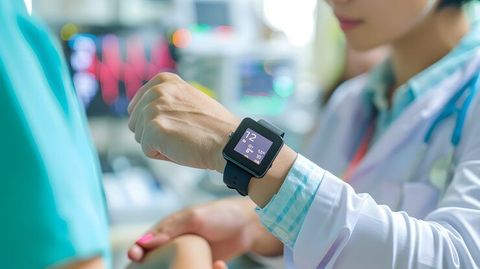
Digital health technologies allow certain health measurements to be collected outside traditional medical facilities. Connected devices can record information such as heart rate, blood pressure, blood glucose levels, and physical activity, depending on the equipment used.
Remote monitoring can help healthcare professionals follow changes between appointments. It may also support people who live far from medical facilities or require regular monitoring of long-term health conditions.
Reducing Administrative Complexity
Medical facilities manage large volumes of records, appointment information, test results, and clinical documentation. Digital systems can organize these activities and reduce some repetitive administrative tasks.
Common applications include:
Electronic health records for maintaining patient information.
Digital appointment systems for coordinating consultations.
Automated documentation tools for organizing clinical notes.
Hospital management platforms for coordinating departments.
Digital prescription records for maintaining medication information.
These applications can improve information management, although staff training, accurate data entry, and appropriate oversight remain necessary.
Addressing Healthcare Access Challenges
Healthcare technology can support communities where medical professionals and facilities are limited. Telemedicine allows patients to communicate with qualified healthcare professionals remotely when appropriate.
However, digital access is not equally available everywhere. Internet connectivity, language differences, device availability, digital literacy, and privacy concerns can affect how people benefit from these developments.
Recent Updates
Growing Use of Artificial Intelligence in Healthcare
Between 2024 and 2026, AI adoption has continued to expand across medical research, clinical administration, diagnostic support, and healthcare data management. Hospitals and research institutions are examining how AI can support medical image analysis, clinical documentation, patient communication, and the organization of complex records.
Generative AI has also attracted attention because it can process and summarize written information. In healthcare environments, potential applications include preparing draft clinical notes, organizing medical documentation, and helping professionals locate relevant information.
However, AI-generated information can contain errors or incomplete interpretations. Human review, testing, and clinical accountability remain important whenever these systems are used in medical settings.
Developments in Medical Robotics
Medical robotics is expanding beyond traditional surgical applications. Researchers and healthcare institutions are exploring robotic assistance in rehabilitation, physical therapy, laboratory automation, and selected hospital activities.
Some rehabilitation systems use robotic equipment to support controlled movements during physical recovery. Other robotic technologies are being developed to assist with repetitive laboratory procedures and the transportation of materials within medical facilities.
The use of these systems depends on clinical suitability, technical reliability, staff training, and appropriate safety procedures.
Expansion of Digital Health Platforms
Digital health platforms are increasingly connecting electronic records, remote consultations, wearable devices, and patient monitoring systems. This creates opportunities for medical professionals to review relevant information from different stages of a patient's healthcare journey.
Wearable technology has also developed beyond basic activity tracking. Some devices can measure selected physiological indicators and identify changes that may require additional attention. Their readings are not necessarily equivalent to measurements from approved medical equipment.
Key Healthcare Technology Developments
Technology | Main application | Potential contribution |
|---|---|---|
Artificial intelligence | Medical data analysis | Supports clinical assessment |
Medical robotics | Selected surgical procedures | Assists controlled movements |
Telemedicine | Remote consultations | Supports geographical access |
Wearable devices | Health monitoring | Records selected measurements |
Electronic health records | Medical documentation | Organizes patient information |
Rehabilitation robotics | Physical recovery | Supports guided movement |
Healthcare cybersecurity | Information protection | Helps protect digital records |
Greater Attention to Data Security
As healthcare organizations collect more digital information, cybersecurity has become an important operational priority. Medical records contain personal and sensitive details that require appropriate protection.
Healthcare institutions are increasingly examining access controls, encryption, system monitoring, secure data sharing, and incident response procedures. Protecting digital health information is essential for maintaining patient privacy and public confidence.
Laws or Policies
Healthcare technology operates within a regulatory environment designed to protect patients, maintain information security, and establish requirements for medical equipment. The specific rules differ between countries, but several common regulatory areas influence the development and use of digital healthcare systems.
Artificial Intelligence and Medical Device Regulation
AI applications used for medical purposes may fall under medical device regulations, depending on their intended function and the jurisdiction. Regulators generally examine factors such as safety, performance, intended use, clinical evidence, and risk management.
In the United States, the Food and Drug Administration (FDA) oversees medical devices, including certain software-based medical technologies. AI-enabled medical applications may require regulatory review depending on their classification and intended purpose.
In the European Union, the Medical Device Regulation and In Vitro Diagnostic Medical Device Regulation establish requirements for relevant medical technologies. The EU Artificial Intelligence Act also introduces requirements for certain high-risk AI applications, including applicable healthcare-related systems.
Patient Data Protection
Digital health platforms must follow applicable privacy and data protection requirements when collecting, storing, processing, or sharing patient information.
Important regulatory frameworks include:
HIPAA in the United States: Establishes privacy and security requirements for protected health information handled by covered entities and relevant business associates.
GDPR in the European Union: Establishes requirements for processing personal data, including sensitive health information.
India's Digital Personal Data Protection framework: Provides a legal framework for processing digital personal data, subject to applicable provisions and implementation requirements.
Healthcare organizations must also consider consent, data access, retention, security, and the responsibilities of technology providers.
Medical Robotics and Equipment Safety
Robotic surgical equipment and other medical devices must meet applicable safety and regulatory requirements before being used in clinical environments. These requirements can involve technical testing, clinical evidence, manufacturing controls, maintenance, and monitoring after deployment.
Healthcare professionals also require appropriate training to operate specialized equipment safely. Regulatory approval does not mean that every device is suitable for every patient or medical procedure.
International Healthcare Guidelines
The World Health Organization (WHO) has published guidance addressing the responsible use of AI in healthcare. Its recommendations emphasize transparency, human oversight, privacy, accountability, and the protection of individual rights.
These international guidelines help inform discussions about responsible digital health development, although national laws and regulatory requirements remain the primary legal framework in each jurisdiction.
Tools and Resources
Healthcare technology involves several categories of digital tools that support patients, medical professionals, researchers, and healthcare administrators. Their functions vary depending on the intended application and applicable regulations.
Electronic Health Record Systems
Electronic health record platforms organize patient information, including medical histories, laboratory results, treatment records, and clinical notes. They can help authorized healthcare professionals review relevant information during consultations.
Examples of widely used platforms include:
Epic: Electronic health record and hospital information systems.
Oracle Health: Digital healthcare records and clinical information management.
MEDITECH: Healthcare information and hospital management systems.
Telemedicine and Remote Monitoring Platforms
Telemedicine platforms support remote communication between patients and healthcare professionals. Depending on local regulations and clinical requirements, they may support video consultations, follow-up discussions, and the exchange of relevant medical information.
Remote monitoring tools can collect selected measurements through connected medical devices. Healthcare professionals can review these readings when the technology and monitoring arrangements are appropriate.
Medical Research and Information Resources
Several established organizations provide information about medical technology, clinical research, and healthcare regulations.
World Health Organization: Publishes international healthcare guidance and digital health research.
National Institutes of Health: Provides information about biomedical research and healthcare innovation.
U.S. Food and Drug Administration: Publishes medical device regulatory information and guidance.
European Medicines Agency: Provides information about medicines regulation and related healthcare developments.
National Health Authority, India: Publishes information about India's digital health initiatives and healthcare infrastructure.
These resources help readers understand how medical technology is evaluated, regulated, and incorporated into healthcare systems.
FAQs
How is AI in healthcare changing patient care?
AI in healthcare supports medical image analysis, clinical documentation, research, and the organization of patient information. It can assist qualified professionals in evaluating information, but it does not replace clinical judgment.
What is the role of medical robotics in modern hospitals?
Medical robotics supports selected surgical procedures, rehabilitation activities, laboratory processes, and certain hospital operations. Its use depends on the medical task, equipment, professional training, and patient requirements.
What does digital health mean?
Digital health refers to the use of digital technologies in healthcare. It includes telemedicine, electronic health records, wearable devices, remote monitoring, and mobile health applications.
Can healthcare technology improve access to medical professionals?
Healthcare technology can support access through remote consultations and digital communication. However, internet availability, infrastructure, regulations, and the need for physical examinations can limit its suitability in certain situations.
What are the main risks of AI in healthcare?
Important risks include inaccurate outputs, biased data, privacy breaches, cybersecurity threats, and insufficient human oversight. Appropriate testing, regulatory compliance, and professional review are necessary to manage these concerns.
Conclusion
Healthcare technology is reshaping medical environments through artificial intelligence, medical robotics, and digital health platforms. These developments support medical assessment, surgical procedures, patient monitoring, and healthcare information management. However, data protection, regulatory compliance, technical reliability, and human oversight remain essential considerations. The future of healthcare will depend on integrating digital innovation with responsible medical practices and patient-focused decision-making.
Disclaimer: The information provided in this article is for informational purposes only. We do not make any claims or guarantees regarding the accuracy, reliability, or completeness of the information presented. The content is not intended as professional advice and should not be relied upon as such. Readers are encouraged to conduct their own research and consult with appropriate professionals before making any decisions based on the information provided in this article.

Related Post...

Anti-Aging Skincare Innovations: Insights Into Ingredients and Formulations
Updated: November 25, 2026
Read More
A Complete Guide to Nutritional Support for Seniors and Healthy Aging
Updated: November 04, 2026
Read More
A Guide to AI, Medical Robotics and Digital Healthcare Innovation
Updated: November 28, 2026
Read More