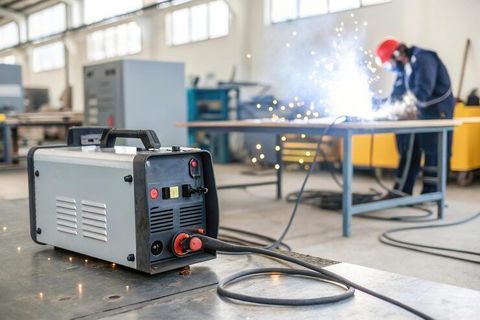
Why Assembly Equipment Systems Are Essential for Modern Production Lines
In today’s competitive manufacturing environment, the performance of a production line hinges on the reliability and sophistication of its assembly equipment systems. From automotive plants to electronics factories, these systems dictate throughput, product quality, and worker safety. Whether you’re expanding an existing line or launching a new product, understanding the role of assembly machinery industrial use can be the key to unlocking greater efficiency. In this article, we’ll explore the core functions of assembly equipment, the advantages of automation, and how to choose the right tools for your operation.
Defining Assembly Equipment Systems
Assembly equipment encompasses a broad range of tools and machines designed to join components into finished products. At the most basic level, manual screwdrivers, wrenches, and soldering irons still play a role in low-volume or intricate work. However, as demand scales, manufacturers turn to industrial assembly equipment systems that integrate conveyors, part feeders, and automated presses to maintain consistency.
These systems often include programmable logic controllers (PLCs) that coordinate each step, ensuring that every unit meets exact specifications. By minimizing human error, assembly equipment helps reduce waste and rework—a critical factor as global competition intensifies. According to the National Institute of Standards and Technology (NIST), modern manufacturing relies heavily on interoperable machinery to achieve lean production goals.
The Impact of Automated Assembly Equipment Solutions
Automation has revolutionized manufacturing assembly line equipment, offering levels of speed and precision unattainable with manual labor alone. Automated assembly equipment solutions—such as six-axis robots, vision-guided placement systems, and collaborative cobots—perform repetitive tasks with micron-level accuracy. This consistency directly translates to higher product quality and fewer defects.
Moreover, these systems can operate 24/7, dramatically increasing output without sacrificing safety. For example, a study from the International Federation of Robotics (IFR) found that factories adopting advanced robotics experienced up to a 30% boost in productivity.
Here are some key benefits of automation:
Enhanced throughput: Machines can assemble components faster than human workers, often in hazardous or ergonomically challenging environments.
Improved quality control: Integrated sensors and cameras inspect parts in real-time, catching flaws before they become costly recalls.
Lower long-term costs: While initial investment can be high, reduced labor expenses and scrap often yield a rapid return on investment.
Greater flexibility: Programmable systems allow quick changeovers between product variants, enabling mass customization.
By integrating these solutions, companies can also better comply with traceability requirements, which are increasingly mandated by regulators.
Selecting the Right Manufacturing Assembly Line Equipment
Choosing the optimal assembly machinery industrial use requires a thorough analysis of your production goals and constraints. Start by evaluating your product’s design—highly complex items with many parts may benefit from modular assembly cells. Next, consider volume: high-mix, low-volume scenarios might favor flexible automated assembly equipment solutions, while dedicated, high-speed lines suit mass production.
It’s also crucial to assess integration with existing systems. The Manufacturing Extension Partnership (MEP) advises manufacturers to conduct a workflow audit before investing in new equipment, ensuring that every station aligns with lean principles. Additionally, factor in maintenance and training needs; even the most advanced machinery is only as effective as the team operating it.
By carefully matching equipment capabilities to production demands, you can avoid costly over-engineering and maximize uptime.
Conclusion
In summary, assembly equipment systems are the engine of any modern production line, transforming raw components into finished goods with efficiency and precision. From basic hand tools to fully integrated automated assembly equipment solutions, the right choices can elevate product quality, reduce costs, and keep your operations competitive.
As technology evolves, staying informed about industrial assembly equipment systems will be crucial for long-term success. If you’re considering an upgrade, exploring the latest manufacturing assembly line equipment options could be your first step toward a smarter, more agile factory.

Related Post...
Insights Into PCB Drilling Machines, Automation, and Modern Manufacturing Trends
Updated: October 26, 2026
Read More
Why Assembly Equipment Systems Are Essential for Modern Production Lines
Updated: October 27, 2026
Read More
Plastic Welding Machines: Tips for Understanding Methods and Equipment
Updated: October 26, 2026
Read More