Water Testing Equipment: Lab & Field Systems Overview
Selecting water testing equipment requires balancing analytical precision against operational speed.
Laboratory benchtop analyzers and portable field testing systems serve distinct compliance, process control, and environmental monitoring requirements.
Evaluating sample throughput, parameter complexity, and ongoing reagent expenses helps procurement teams invest in the right instrumentation without overspending.
Core Categories of Water Quality Testing Systems
Water analysis hardware falls into distinct operational tiers based on where samples are processed and the regulatory rigor required for reporting. Choosing between stationary laboratory instruments and mobile field kits determines both upfront capital allocation and daily workflow efficiency.
Benchtop Laboratory Analyzers
Benchtop laboratory systems deliver high-precision measurements for complex chemical, biological, and trace metal parameters. These instruments operate in controlled environments where temperature stability, purified water supplies, and stable power protect sensitive optical and electrochemical sensors.
Facilities running high daily sample volumes rely on benchtop spectrophotometers, multiparameter meters, and automated titrators to generate defensible compliance data. While initial purchase costs and technician training requirements are higher, laboratory systems offer superior detection limits and automated data logging for regulatory audits.
Portable Field Testing Equipment
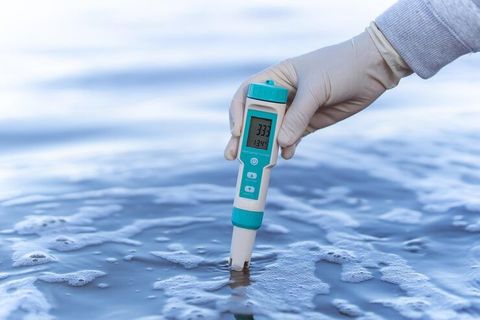
Portable field testing instruments prioritize durability, battery life, and rapid on-site readings over ultra-low trace detection. Ruggedized handheld meters, waterproof multiparameter probes, and portable colorimeters allow technicians to measure pH, dissolved oxygen, conductivity, and turbidity directly at the source.
Immediate field verification prevents sample degradation during transport and enables real-time operational adjustments at remote wells, discharge points, or distribution networks. Field units typically feature simplified calibration routines and protective housings rated against dust and water immersion.
Online Process Monitoring Systems
Continuous online analyzers sit directly within treatment pipelines or open basins to provide uninterrupted water quality tracking. Unlike grab-sample laboratory or handheld tools, online systems automate reagent dosing, sensor cleaning, and telemetry alerts for municipal utilities and industrial plants.
Laboratory vs Field Water Testing Comparison
Procurement teams often weigh portability against analytical sensitivity when standardizing monitoring programs across multiple sites.
| Feature | Benchtop Lab Systems | Portable Field Kits | Online Analyzers |
| Measurement Accuracy | Very high precision | Moderate to high | High continuous |
| Sample Turnaround | Hours to days | Immediate on-site | Real-time automated |
| Upfront Hardware Cost | Moderate to high | Low to moderate | High installation |
| Ideal Application | Regulatory compliance | Spot checks | Process control |
Essential Parameters and Sensor Technologies
Different water contaminants require specialized detection methods, making parameter selection the primary driver of hardware compatibility. Buyers should match sensor chemistry to their specific water matrix to avoid interference from high salinity, suspended solids, or extreme temperatures.
Electrochemical sensors measure pH, oxidation-reduction potential, conductivity, and ion-selective concentrations using replaceable glass or solid-state probes.
Optical and colorimetric instruments determine chlorine, ammonia, nitrates, phosphates, and chemical oxygen demand by measuring light absorbance through reagent-treated samples.
Optical luminescence probes track dissolved oxygen without consuming oxygen during measurement, reducing drift and membrane maintenance in biological treatment basins.
Nephelometric turbidity sensors quantify suspended particulate matter by measuring scattered light at ninety-degree angles, a critical metric for drinking water filtration verification.
Microbiological testing systems combine portable incubators, membrane filtration manifolds, and enzyme-substrate reagents to detect coliforms and E. coli within standardized incubation windows.
Cost Factors and Total Ownership Considerations
The initial purchase price of a meter or spectrophotometer represents only a fraction of its multi-year operating budget. Commercial buyers evaluating water testing equipment prices must calculate recurring consumable expenses alongside hardware durability.
Reagent packets, liquid chemical refills, and single-use test vials create predictable per-test costs that scale directly with sampling frequency. High-throughput facilities often lower per-sample costs by choosing benchtop systems that accept bulk reagents rather than pre-measured field ampoules.
Sensor replacement schedules also impact long-term budgets, as pH electrodes and dissolved oxygen caps degrade over twelve to twenty-four months of regular use. Calibration buffers, conductivity standards, cuvette replacements, and factory recertification services add further annual maintenance expenses that must be factored into procurement approvals.
How to Choose Water Testing Equipment Suppliers
Selecting reliable water testing equipment suppliers requires verifying both technical support capabilities and regulatory alignment before issuing a purchase order. Equipment specifications mean little if replacement probes or calibration standards face extended backorders.
Verify regulatory method alignment by confirming whether instruments meet EPA, ISO, or Standard Methods protocols required by local environmental authorities.
Evaluate data management and connectivity features, including USB export, Bluetooth transfer, and LIMS compatibility, to eliminate manual transcription errors during audits.
Assess environmental durability ratings such as IP67 waterproof housings and drop resistance for equipment deployed in harsh industrial or outdoor environments.
Confirm regional availability of consumables, replacement sensors, and factory calibration services to prevent costly monitoring downtime.
Request matrix-specific application support to ensure chosen sensors handle high turbidity, chemical interference, or extreme pH ranges present in your facility.
Common Buyer Mistakes in Water Analysis Procurement
Organizations frequently over-specify or under-specify instrumentation when upgrading aging testing workflows. Purchasing laboratory-grade spectrophotometers for routine cooling tower checks wastes capital on unnecessary precision and slows down field operators.
Conversely, relying solely on basic test strips or low-cost pocket testers for wastewater discharge reporting exposes facilities to compliance violations and inaccurate dosing adjustments. Ignoring sample matrix interference such as high chloride levels skewing chemical oxygen demand readings also leads to unreliable data and premature sensor failure.
Frequently Asked Questions
When should a facility choose portable field testing equipment over a benchtop lab analyzer?
Facilities should select portable field equipment when immediate operational decisions are required on-site or when sample transport alters parameters like dissolved oxygen, temperature, and residual chlorine. Benchtop lab analyzers remain the better choice for trace contaminant detection, complex multi-step digestions, and strict regulatory compliance reporting.
What ongoing costs affect the total price of water testing systems?
Ongoing expenses include chemical reagents, calibration buffer solutions, replacement electrochemical probes, optical cuvettes, and periodic factory sensor recertification. High-frequency testing programs often spend more on consumables over three years than on the initial meter or photometer purchase.
How do buyers verify if water testing equipment meets regulatory compliance standards?
Buyers should check manufacturer specification sheets for explicit references to approved analytical methods from organizations such as the EPA, ISO, or ASTM. Confirming that the instrument supports audit-ready data logging, user access controls, and traceable calibration records further ensures compliance readiness.
Can one multiparameter meter measure all commercial water quality indicators?
No single meter measures every physical, chemical, and microbiological parameter due to fundamental differences in detection physics and chemistry. Multiparameter probes effectively combine electrochemical and optical sensors for physical indicators, while nutrients, heavy metals, and bacteria require dedicated photometers, spectrometers, or incubation systems.
Conclusion
Matching water testing equipment to specific operational environments prevents both compliance gaps and unnecessary capital expenditure. Portable field kits streamline rapid on-site verification, whereas benchtop laboratory analyzers and online systems deliver the precision and documentation required for regulated reporting.
By evaluating parameter compatibility, recurring reagent budgets, and supplier support alongside initial hardware costs, procurement teams can build reliable monitoring programs that scale smoothly with facility demands.

Related Post...

Corporate Server Room Cooling Systems: Explore Precision Temperature Control
Updated: October 02, 2026
Read More
Cloud Server Hosting and VPS Deployments Explore Server Configuration Options
Updated: October 19, 2026
Read More