Warehouse Automation Robotics Systems: Discover Smarter Picking Methods
A shipment rarely moves directly from a manufacturer to a customer. It passes through suppliers, production facilities, warehouses, transport providers, distribution centers, and sometimes multiple countries.
Supply chain management systems help coordinate these connected activities so that materials, information, and finished goods move with greater visibility and control.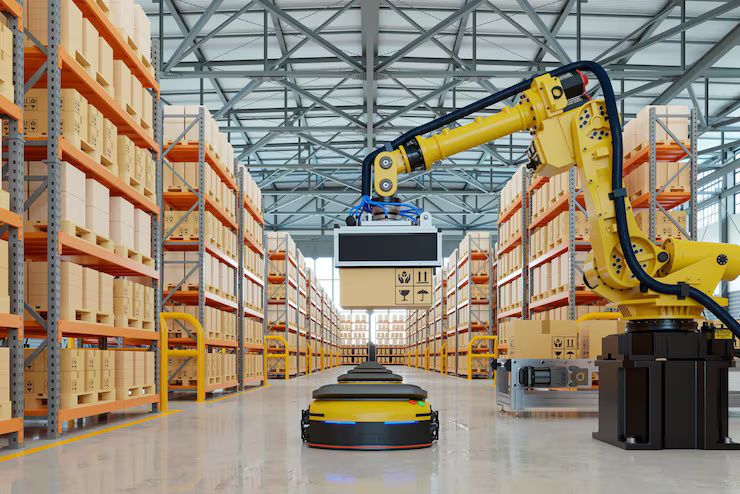
Modern supply networks are more complex than traditional linear supply chains. Companies may source components from several regions, manufacture in different locations, and serve customers through multiple distribution channels. Disruptions, changing demand, and tighter delivery expectations make coordination a central operational concern.
Understanding how these systems connect planning, procurement, inventory, logistics, and fulfillment helps explain how organizations manage this complexity. It also reveals why integration, accurate data, and collaboration increasingly matter as much as individual operational capabilities.
From Linear Supply Chains to Connected Networks
A traditional supply chain is often represented as a sequence: supplier, manufacturer, distributor, retailer, and customer. Modern networks are less predictable. A single company may have several suppliers, contract manufacturers, regional warehouses, and delivery channels operating simultaneously.
Supply chain management systems connect these participants through shared information and coordinated workflows. Instead of treating procurement, production, and transportation as isolated functions, they help organizations understand how one decision affects the rest of the network.
For example, a change in customer demand may influence purchasing schedules, production capacity, warehouse replenishment, and transportation requirements. When these functions share current information, planners can respond more consistently. When they operate independently, the same change may create shortages in one location and excess inventory in another.
The objective is not simply to move products faster. It is to coordinate the flow of materials, information, and financial transactions across the network while balancing availability, efficiency, resilience, and operational constraints.
The Core Systems That Connect the Network
Supply chain management is not usually handled by one application alone. It involves a group of systems, each supporting a different part of the operating model. Their value increases when information can move between them without repeated manual entry.
Enterprise Resource Planning
An Enterprise Resource Planning (ERP) system commonly provides a central record for purchasing, production, inventory, orders, finance, and other business activities. It helps establish a consistent view of transactions and organizational resources.
ERP platforms often connect with specialized supply chain applications. For example, a purchase order created in an ERP may become an input for supplier collaboration, warehouse receiving, and accounts payable.
Supply Chain Planning Systems
Planning applications help organizations estimate demand, assess supply availability, and coordinate future requirements. They may support demand planning, supply planning, production scheduling, and sales and operations planning.
These systems use historical information, current orders, inventory positions, and operational constraints to develop planning scenarios. Their purpose is to help decision-makers evaluate trade-offs before changes reach the physical network.
Warehouse Management Systems
A Warehouse Management System (WMS) coordinates activities inside distribution and storage facilities. It can manage receiving, put-away, inventory locations, picking, packing, and shipping.
A WMS becomes more useful when connected to purchasing, order management, and transportation systems. A confirmed inbound shipment can prepare the warehouse for receiving, while an outbound order can trigger picking and dispatch activities.
Transportation Management Systems
A Transportation Management System (TMS) supports the planning and execution of freight movement. Depending on the organization, it may coordinate carrier selection, shipment planning, routing, tracking, and transportation documentation.
When transportation data is connected to inventory and order systems, companies gain better visibility into expected arrivals and potential delays. This can help warehouses and customer-facing teams adjust their plans before a disruption becomes a larger operational problem.
Supplier and Customer Collaboration Platforms
Supplier relationship and collaboration systems help organizations exchange forecasts, purchase orders, shipment updates, quality information, and other operational data with external partners.
Customer-facing systems, including order management and fulfillment platforms, connect demand signals to inventory and distribution activities. Together, these connections reduce the gap between what customers request and what the network can actually deliver.
How Information Moves Across the Supply Chain
The physical movement of goods is only one part of supply chain coordination. Information must travel in the opposite direction and often move continuously between participants.
Consider a manufacturer preparing a production run. A customer order may enter an order management system, while inventory availability is checked through an ERP. Planning software may assess whether additional components are required. Procurement then communicates with suppliers, and logistics systems track the movement of inbound materials.
When the materials arrive, the WMS records the receipt and updates inventory availability. Production systems can use that information to support scheduling, while transportation and fulfillment teams receive updated expectations for outbound movement.
This connected workflow creates a digital thread across multiple operational stages. The thread does not necessarily mean every system is identical. It means important information can be exchanged, interpreted, and used by the next participant.
Common integration methods include:
Application programming interfaces (APIs): Allow systems to exchange data through defined interfaces.
Electronic Data Interchange (EDI): Supports structured business document exchange between trading partners.
Cloud-based platforms: Provide shared access to applications and information across locations.
Event-driven integration: Sends updates when a meaningful operational event occurs, such as a shipment departure or inventory receipt.
Master data management: Helps maintain consistent records for products, suppliers, locations, and other shared entities.
The quality of these connections depends on more than technology. Data definitions, ownership, security, and process discipline also determine whether information can be trusted.
Visibility, Analytics, and Decision-Making
Connected systems create a foundation for supply chain visibility. Visibility means more than knowing where a shipment is. It includes understanding inventory positions, order status, supplier performance, production progress, and potential constraints across the network.
Analytics tools can combine data from multiple systems to identify patterns and support operational decisions. For example, a planner may compare demand forecasts with available inventory and supplier lead times. A logistics manager may examine delivery performance and identify recurring delays on particular routes.
Some organizations use control towers to bring these signals into a shared monitoring environment. A control tower can display exceptions, risks, and key performance indicators across different supply chain functions. It is most useful when it supports action rather than simply presenting a large volume of data.
Common measures include:
Metric | What it helps assess |
|---|---|
Inventory turnover | How efficiently inventory moves through the network |
Order fulfillment rate | Whether customer demand is fulfilled as expected |
On-time delivery | Reliability of delivery performance |
Supplier lead time | Time required for materials or components to arrive |
Forecast accuracy | How closely planned demand matches actual demand |
Perfect order rate | Whether orders meet defined fulfillment requirements |
Advanced analytics may also support demand sensing, predictive maintenance, inventory optimization, and scenario planning. These capabilities depend on reliable data and appropriate operating assumptions. A sophisticated dashboard cannot compensate for inaccurate inventory records or inconsistent processes.
The Role of Automation and Emerging Technologies
Automation is increasingly used to reduce repetitive work and improve the speed of operational decisions. In warehouses, it may support barcode scanning, automated storage and retrieval, robotics, and task assignment. In planning, it can help generate forecasts, identify exceptions, or compare supply scenarios.
Internet of Things (IoT) devices can provide information from vehicles, equipment, storage environments, and production assets. Sensors may monitor location, temperature, vibration, or operating conditions, depending on the application.
Artificial intelligence and machine learning are also being applied to demand forecasting, anomaly detection, route planning, and predictive maintenance. Their usefulness depends on the quality and relevance of the data available to them.
Blockchain is sometimes discussed in supply chain technology because it can support shared records and traceability in selected use cases. However, it is not a universal replacement for established databases or integration methods. The appropriate technology depends on the process, participants, and information requirements.
Integration Challenges and Practical Considerations
Connecting systems can improve coordination, but integration is not automatically successful. Organizations often operate with legacy applications, different data formats, and inconsistent definitions of products or locations.
A supplier may identify a product using one code while a manufacturer uses another. A warehouse may record inventory at a different level of detail than the planning system. These differences can create errors even when the systems themselves are functioning correctly.
Other challenges include cybersecurity, access controls, system reliability, implementation complexity, and employee adoption. External partners may also have different technical capabilities or data-sharing policies.
A practical approach begins with the most important operational flows. Organizations can identify which information must move between systems, define ownership for critical data, and establish clear rules for exceptions. Integration should support measurable business processes rather than become a technology project without an operational purpose.
Why Connected Supply Chain Systems Matter
The central value of connected systems is coordination across boundaries. A purchasing decision affects inventory. Inventory affects production and fulfillment. Transportation affects delivery commitments. Customer demand influences the entire network.
When these relationships are visible, organizations can make decisions with better context. They can identify bottlenecks earlier, reduce avoidable information gaps, and coordinate responses across departments and partners.
Connected systems do not eliminate uncertainty. Demand can still change, suppliers can still experience disruptions, and transportation networks can still face constraints. Their role is to help organizations detect changes, understand their effects, and respond using more consistent information.
Conclusion
Supply chain management systems connect the many activities required to move materials and products through modern networks. ERP, planning, warehouse, transportation, and collaboration platforms each support different functions, while integration allows information to move between them.
The strongest results come from combining reliable data, clear processes, appropriate technology, and coordinated decision-making. As supply networks become more distributed, understanding these connections becomes essential for managing visibility, resilience, and operational performance.

Related Post...

Video Advertising Platforms Discover Smarter Ways to Reach Your Target Audience
Updated: October 24, 2026
Read More
Corporate Server Room Cooling Systems: Explore Precision Temperature Control
Updated: October 02, 2026
Read More