Stainless Steel Food Conveyor Information: Components, Functions and Uses
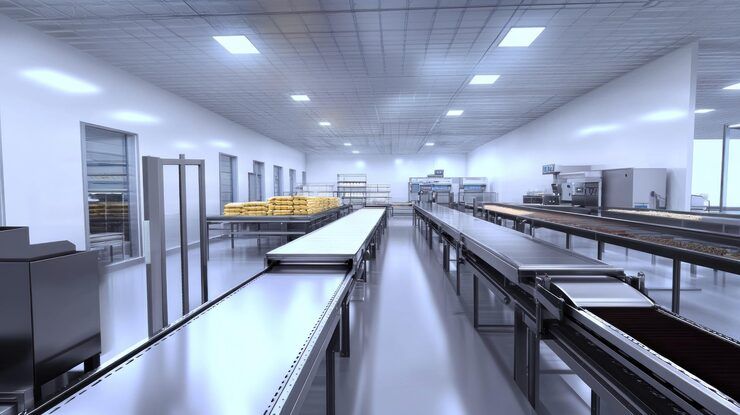
Stainless steel food conveyors are material-handling systems designed to move food products and ingredients through different stages of processing, preparation, inspection, packaging, or storage.
Their smooth surfaces, corrosion resistance, and compatibility with hygienic cleaning practices make them widely used in food-processing environments.
Stainless steel food conveyor systems can be configured in different lengths, widths, belt styles, and layouts. Understanding their components, functions, applications, maintenance requirements, and regulatory considerations helps food businesses select and operate conveyor equipment appropriately.
Context
A stainless steel food conveyor is a mechanical system that transports food products from one location to another. It normally consists of a conveyor frame, food-contact or product-carrying surface, drive system, rollers or sprockets, bearings, guides, and control components.
Stainless steel is commonly used because many grades provide good resistance to corrosion, moisture, detergents, and temperature changes. Grade 304 stainless steel is frequently used in general food-processing environments, while 316 stainless steel may be selected where greater resistance to certain corrosive substances is required.
The main purpose of a food conveyor is to create a controlled and continuous movement of materials. Instead of manually transferring products between processing stages, conveyor systems can maintain a defined flow through an organized production layout.
Common conveyor designs include:
- Belt conveyors for packaged or loose products
- Roller conveyors for suitable containers and packages
- Modular plastic belt conveyors for various food-processing applications
- Screw conveyors for selected powders, granules, or semi-solid materials
- Cleated conveyors for products that need elevation
- Incline and decline conveyors for changes in production height
A typical system may connect washing, sorting, cutting, cooking, cooling, inspection, weighing, packaging, and storage areas.
Importance
Stainless steel food conveyors are important because material movement is a major part of food processing. A properly designed conveyor can help maintain consistent product flow while reducing unnecessary manual handling.
Hygiene is another important consideration. Conveyor surfaces can come into contact with food, water, oils, cleaning chemicals, and organic residues. Designs with smooth surfaces, suitable joints, accessible components, and appropriate drainage can make routine sanitation easier.
The people and organizations affected by conveyor design include food manufacturers, processing personnel, sanitation teams, maintenance technicians, quality teams, and equipment designers.
Key factors include:
| Factor | Why It Matters |
|---|---|
| Material grade | Influences corrosion resistance and durability |
| Belt material | Determines suitability for the product and environment |
| Conveyor speed | Affects product flow and processing time |
| Frame design | Influences cleaning and accessibility |
| Belt width | Determines available product-carrying area |
| Load capacity | Helps prevent mechanical overload |
| Conveyor height | Supports ergonomic and process requirements |
| Drainage | Helps manage water during cleaning |
| Guarding | Helps reduce contact with moving components |
Food characteristics also influence conveyor selection. Wet, sticky, fragile, frozen, hot, or irregularly shaped products may require different belt surfaces and conveyor configurations.
Recent Updates
Recent developments in food conveyor technology have focused on hygiene, automation, energy efficiency, monitoring, and easier maintenance.
Hygienic conveyor design increasingly emphasizes reduced contamination risks. Manufacturers are paying attention to open-frame construction, rounded surfaces, accessible belt areas, improved drainage, and components that can be inspected without extensive disassembly.
Automation is another significant development. Conveyor systems can be connected with sensors, programmable logic controllers, vision systems, weighing equipment, and other automated equipment. These connections allow products to be detected, counted, positioned, diverted, or tracked during processing.
Variable-speed drives are also commonly incorporated into modern systems. Adjusting conveyor speed can help coordinate movement between different processing stages.
Some newer systems use sensors to monitor belt movement, motor conditions, temperature, vibration, or other operating parameters. Data from these systems can support preventive maintenance and help identify unusual operating conditions.
Energy efficiency is receiving greater attention as well. Efficient motors, variable-frequency drives, appropriate conveyor sizing, and improved mechanical components can reduce unnecessary energy consumption during operation.
Laws or Policies
Food conveyor requirements depend on the country, food type, equipment design, and intended application. Regulations generally focus on food-contact materials, hygienic design, contamination prevention, worker safety, and equipment construction.
In the United States, food-processing equipment and food-contact materials may fall under requirements administered by the U.S. Food and Drug Administration. Relevant provisions can include parts of Title 21 of the Code of Federal Regulations concerning materials and substances that come into contact with food.
In the European Union, food-contact materials are subject to Regulation (EC) No 1935/2004, which establishes general requirements for materials intended to come into contact with food. Machinery used in industrial environments may also need to satisfy applicable machinery and workplace safety requirements.
In India, food businesses are regulated under the Food Safety and Standards framework administered by the Food Safety and Standards Authority of India. Hygienic design and appropriate food-contact materials are important considerations for equipment used in food-processing environments.
Workplace safety requirements can also apply to conveyor systems. Moving belts, rollers, chains, sprockets, and drive assemblies may create mechanical hazards. Appropriate guarding, emergency stopping arrangements, warning systems, inspection procedures, and operator training should therefore be considered.
Because regulations can change and requirements vary by application, organizations should consult the current rules applicable to their location and food-processing activity.
Tools and Resources
Several resources can help users understand stainless steel food conveyors and related requirements.
Useful resources include:
- U.S. Food and Drug Administration regulations for food-contact materials
- Food Safety and Standards Authority of India resources
- European Commission information on food-contact materials
- Occupational safety guidance for conveyor equipment
- Manufacturer technical manuals and equipment documentation
- Stainless steel material specifications and technical data sheets
- Conveyor capacity and belt-speed calculation methods
- Food-processing hygiene and sanitation guidelines
Basic conveyor calculations can help estimate belt speed, product throughput, load requirements, and motor capacity. However, calculations should account for actual product characteristics, conveyor geometry, incline angle, friction, environmental conditions, and operating cycles.
Technical documentation should also identify the stainless steel grade, belt material, drive arrangement, electrical specifications, maximum operating conditions, cleaning procedures, and safety features.
FAQs
What is a stainless steel food conveyor?
A stainless steel food conveyor is a mechanical transport system used to move food products or ingredients between different processing or handling stages. It commonly uses a stainless steel frame with a suitable belt or conveying surface.
Why is stainless steel used for food conveyors?
Stainless steel is widely used because suitable grades provide corrosion resistance, mechanical strength, and compatibility with hygienic food-processing environments. Its smooth surfaces can also support routine cleaning when the conveyor is appropriately designed.
What components are found in a food conveyor?
Common components include the frame, conveyor belt or carrying surface, drive motor, gearbox, rollers or sprockets, bearings, shafts, guides, sensors, controls, and safety guards. The exact configuration depends on the application.
How are stainless steel food conveyors cleaned?
Cleaning procedures depend on the conveyor design, food product, belt material, and sanitation requirements. Typical procedures may involve removing residues, applying an appropriate cleaning agent, rinsing, sanitizing when required, and allowing suitable areas to drain and dry.
Where are stainless steel food conveyors used?
They are used in areas such as food preparation, processing, sorting, washing, cooling, inspection, packaging, and material transfer. Applications can include bakery products, fruits and vegetables, meat and poultry processing, seafood, dairy products, and packaged foods.
Conclusion
Stainless steel food conveyors provide a controlled method for moving food products through different stages of processing and handling. Their design involves mechanical components, hygienic considerations, material selection, safety features, and operational requirements.
Understanding conveyor components and functions can help organizations evaluate whether a particular configuration is appropriate for its intended food-processing environment.
Proper maintenance, cleaning, inspection, and operator training are important for reliable operation. Regulatory requirements should also be reviewed according to the country, food application, and equipment configuration.
A well-planned conveyor layout should consider product characteristics, hygiene, accessibility, safety, throughput, and integration with surrounding equipment. These factors help create a practical material-flow system while supporting food-safety objectives.

Related Post...
Granulation Equipment Tips: Explore Efficient Processes and Important Equipment Features
Updated: September 17, 2026
Read More
EPS Recycling Machine Guide and Overview: Learn How Foam Waste Is Processed and Recovered
Updated: September 18, 2026
Read More
Paper Recycling Machines Help: Learn How Collection and Processing Systems Work
Updated: September 22, 2026
Read More