Smart security grew with advancements in home automation, IoT connectivity, and wireless communication. Many modern homes now include interconnected door sensors, smart cameras, and motion detection that collectively contribute to property protection and situational awareness. Technology has turned passive security into active, constant monitoring.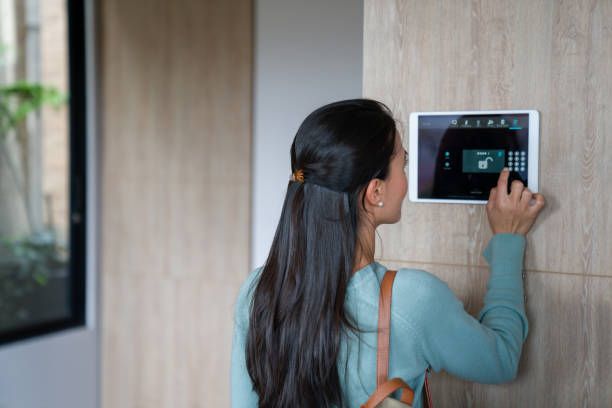
Why Smart Home Security Matters Today
Increasing urban density, frequent travel schedules, and modern lifestyle routines highlight the need for continuous residential oversight. Smart home security offers a way to maintain awareness even when occupants are away.
Key reasons smart systems matter:
-
Real-time monitoring from any location
-
Activity logs for doors, windows, and motion zones
-
Automated alerts for unusual movements or forced access
-
Indoor and outdoor awareness through integrated sensors
-
Remote control of alarm modes and device settings
-
Increased confidence for families with children or elders
The systems support awareness rather than physical confrontation. They act as early detection networks, allowing people to respond quickly to unexpected situations.
How Smart Home Security Systems Work
Smart home security relies on a network of connected components. Devices communicate through Wi-Fi, Zigbee, Bluetooth, Z-Wave, or ethernet-based protocols. Monitoring dashboards allow users to check device output in real time.
Typical security workflow:
-
Sensors detect motion, entry, vibration, temperature change, or audio signals.
-
The system collects and processes input through a central hub or controller.
-
Alerts or notifications are triggered if activity exceeds set thresholds.
-
Cameras may activate recording, night-vision, or live streaming.
-
The user receives alert updates on phones, tablets, or connected screens.
-
System modes (home, away, night) can adjust automation and sensitivity levels.
The function is preventive and awareness-focused helping households track events with accuracy.
Core Components of Smart Home Security
Most systems include modular devices that work independently or in coordination.
Common components:
-
Smart door and window sensors detecting opening/closing
-
Motion detectors placed inside rooms or halls
-
Indoor and outdoor IP cameras with live view capability
-
Video doorbell systems with two-way communication
-
Glass-break detectors sensing vibration or frequency
-
Smart locks allowing controlled access modes
-
Alarm sirens capable of high-audibility deterrence
-
Cloud-linked activity storage for documentation
-
Environmental sensors detecting smoke, gas, or water leakage
Combined, these elements form a multi-layered protection network.
Table: Types of Smart Security Devices and Their Use
| Device Type | Primary Function | Key Strength |
|---|---|---|
| Door/Window Sensor | Detects access entry | Helps identify intrusion attempts |
| Smart Camera | Streams and records footage | Enables visual verification |
| Motion Detector | Identifies movement zones | Ideal for hallways and corners |
| Smart Lock | Controlled digital access | Reduces manual key dependence |
| Doorbell Camera | Monitors visitor interactions | Useful for unattended entry |
Recent Trends and Developments
Smart home security technology continues to develop rapidly. The last one to two years reflect important shifts:
-
Growth of AI-powered motion classification separating pets from human movement
-
Expansion of encrypted cloud storage to protect digital footage
-
Multi-sensor integration for environmental incidents like water leakage
-
Use of solar-supported outdoor camera units for power independence
-
Introduction of edge-processing cameras reducing false alerts
-
Increased development of local-network data handling for privacy-focused users
-
Adoption of voice-assistants for arm/disarm operations
-
Growth in neighborhood-sharing alert communities improving vigilance
These trends demonstrate a move toward low-error detection, privacy-responsible data management, and sustainable device power options.
Regulatory Considerations & Privacy Awareness
Smart security intersects with digital rights, camera visibility guidelines, and ethical monitoring practices. While laws differ by region, the following principles are recognized widely:
-
Cameras should be positioned without invading non-consenting spaces
-
Recorded footage may require secure encrypted storage
-
Clear disclosure is necessary when devices monitor shared environments
-
Data handling must follow digital privacy regulations
-
Motion tracking sensors should avoid monitoring beyond property limits
-
Some regions regulate audio recording, especially in public-overlooking areas
Responsible usage protects both security integrity and community trust.
Helpful Tools, Knowledge Resources & Monitoring Utilities
Users often combine multiple digital resources to manage their security framework effectively.
Useful tools include:
-
Device-management dashboards with customizable zones
-
Cloud-based monitoring portals for footage access
-
Local-storage NAS systems for private recording
-
Home automation platforms integrating lighting and detection
-
AI-alert filtering systems for event prioritization
-
Incident-timeline playbacks for analysis and pattern spotting
-
Mobile apps enabling remote visibility and event notifications
-
Smart routines linking alarms with lighting and voice-assistants
These tools create a structured, Observable home environment.
Key Suggestions & Practical Usage Insights
Smart security performs best when combined with planning and routine observation. The following recommendations support reliability and long-term efficiency:
-
Place cameras at entry points, staircases, and outdoor approach zones
-
Maintain clean Wi-Fi coverage for uninterrupted device communication
-
Review sensor activity logs weekly to detect patterns
-
Update firmware to strengthen encryption and detection accuracy
-
Use layered detection rather than relying only on single-device alerts
-
Apply night-mode sensitivity separately from daytime settings
-
Install motion detectors above shoulder height to reduce false triggers
-
Keep outdoor cameras sheltered from direct weather exposure
-
Separate guest-access profiles from main control accounts
Strategic device placement and routine configuration improve system awareness.
Table: Indoor vs Outdoor Device Placement Guidance
| Location Type | Suitable Devices | Purpose |
|---|---|---|
| Indoor Entry Hall | Motion sensor + indoor camera | Early detection for access attempts |
| Living Room | Audio and motion detectors | Activity monitoring during away-mode |
| Balcony/Patio | Weather-proof outdoor camera | External approach visibility |
| Main Door | Smart lock + video doorbell | Visitor interaction with audio-visual confirmation |
| Backyard/Garden | Motion spotlight + wide-angle camera | Night surveillance and distance visibility |
FAQs
What is a smart home security system?
It is a connected security framework that uses sensors, cameras, alerts, and automation features to monitor and protect residential spaces.
Do smart cameras record continuously?
Some record only when motion is detected, while others offer continuous monitoring depending on storage preference and device setup.
Can smart systems work without internet?
Local sensors may function independently, but remote viewing, cloud logs, and notifications typically require connectivity.
How many devices does a basic setup need?
Most homes start with door sensors, one indoor camera, and a motion detector, later expanding based on layout and coverage preference.
Are smart locks effective for monitoring access?
Yes. Smart locks track entry timestamps and provide controlled access modes without depending solely on physical keys.
Conclusion
Smart home security systems have redefined residential protection by introducing connectivity, automation, and remote awareness. Through a network of sensors and monitoring tools, homes gain observational intelligence that traditional methods cannot provide. The objective is not confrontation but early detection, visibility, and prompt awareness.
With proper device placement, privacy-respectful configuration, and routine review, smart security setups deliver higher situational clarity. Technology continues to evolve toward intelligent detection, encrypted data handling, and environment-adaptive automation.
Smart home security represents a modern balance of safety, information, and digital convenience quietly securing living spaces through awareness rather than force.