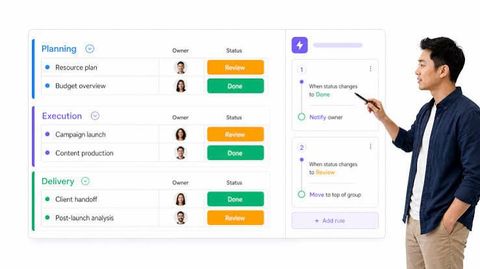
Sales and Service Management Software Explained: Explore Features, Automation & Customer Workflows
Sales and service management software brings sales activities and customer-service processes into a structured digital environment. It can help organizations manage customer information, sales opportunities, service requests, communications, tasks and performance data from connected workflows.
Modern platforms often combine CRM capabilities, sales automation, customer support tools, workflow management, analytics and business integrations. The objective is to create a consistent flow of information from the first customer interaction through sales, onboarding, support and ongoing relationship management.
This guide explains the major features, automation capabilities, customer workflows, integrations, analytics and implementation considerations associated with sales and service management software.
What Is Sales and Service Management Software?
Sales and service management software is a category of business software designed to coordinate activities related to selling, customer relationships and post-sales support.
Depending on the platform, it can help teams manage:
- Customer profiles
- Leads
- Sales opportunities
- Follow-ups
- Appointments
- Quotations and proposals
- Service requests
- Support tickets
- Customer communications
- Tasks
- Workflow automation
- Reports and dashboards
Rather than keeping customer information across spreadsheets, email threads and separate systems, organizations can use centralized software to create connected workflows.
Sales and Service Management Explained
Sales management focuses primarily on activities involved in converting prospects into customers.
Service management focuses on supporting customers after or during the customer relationship.
A connected system can create a workflow such as:
Lead → Qualification → Opportunity → Customer → Onboarding → Service → Follow-Up
This provides continuity between sales and customer-service teams.
Core Components
Customer Relationship Management
CRM functionality is often at the center of sales and service management platforms.
A CRM can store information such as:
- Customer names
- Contact details
- Company information
- Communication history
- Previous interactions
- Sales opportunities
- Service records
- Notes
- Tasks
A centralized customer profile gives authorized users a broader view of the relationship.
Lead Management
Lead management helps teams organize potential customers.
Typical stages may include:
New Lead → Contacted → Qualified → Opportunity → Converted
Lead records can contain:
- Contact information
- Lead source
- Industry
- Interest
- Communication history
- Assigned team member
- Follow-up status
Opportunity Management
Once a potential customer is qualified, the opportunity can be tracked through a sales pipeline.
Typical stages include:
- Qualification
- Requirement analysis
- Proposal
- Negotiation
- Decision
- Closed
Organizations can customize these stages according to their business processes.
Customer Service Management
Service-management functionality helps teams handle customer issues and requests.
Features may include:
- Ticket management
- Case tracking
- Service requests
- Priority assignment
- Status tracking
- Agent assignment
- Escalation
- Resolution tracking
Task Management
Sales and service activities often require follow-up tasks.
Examples include:
- Call a prospect
- Send information
- Schedule a meeting
- Follow up on a proposal
- Respond to a support request
- Review a customer case
Task management helps teams organize these activities.
Sales Management Features
Sales Pipeline
A sales pipeline provides a visual representation of opportunities at different stages.
For example:
New → Qualified → Proposal → Negotiation → Closed
Pipeline visibility can help managers understand:
- Number of active opportunities
- Stage distribution
- Expected activity
- Follow-up requirements
- Potential bottlenecks
Contact Management
Contact-management tools maintain information about customers and prospects.
Information can include:
- Name
- Role
- Organization
- Contact details
- Previous interactions
- Notes
- Preferences
Activity Tracking
Sales teams can record activities such as:
- Calls
- Emails
- Meetings
- Demonstrations
- Follow-ups
- Notes
This creates a chronological interaction history.
Lead Scoring
Some platforms provide lead-scoring functionality.
Lead scoring can assign values to prospects based on selected criteria such as:
- Engagement
- Profile characteristics
- Website activity
- Previous interactions
- Lead source
The exact scoring approach depends on the organization's workflow.
Service Management Features
Ticket Management
Customer issues can be converted into tickets.
A ticket may include:
- Customer information
- Issue description
- Priority
- Assigned representative
- Status
- Activity history
- Resolution information
Case Management
Case-management features can help teams coordinate more complex customer situations.
A case may involve:
Customer → Issue → Investigation → Communication → Resolution
Service-Level Tracking
Organizations can define service targets around response and resolution processes.
Tracking can help identify cases approaching defined thresholds.
Escalation Management
Some service workflows automatically escalate cases when:
- Response deadlines are approaching
- A problem remains unresolved
- A case requires specialized expertise
- Priority increases
Customer Workflow
A connected sales and service workflow may look like:
Lead Generation
↓
Lead Qualification
↓
Sales Opportunity
↓
Customer Conversion
↓
Onboarding
↓
Service Requests
↓
Issue Resolution
↓
Follow-Up
↓
Relationship Management
This creates a continuous customer lifecycle rather than treating sales and service as completely separate activities.
Sales Automation
Automation can reduce repetitive sales administration.
Examples include:
- Automatic task creation
- Follow-up reminders
- Lead assignment
- Email notifications
- Pipeline updates
- Data synchronization
- Activity tracking
For example:
New Lead → Automatic Assignment → Follow-Up Task → Notification
Service Automation
Service workflows can also automate repetitive activities.
Examples include:
- Ticket assignment
- Status notifications
- Escalation alerts
- Response templates
- Case categorization
- Follow-up reminders
A simplified workflow could be:
New Ticket → Classification → Assignment → Response → Resolution → Closure
Workflow Automation
Workflow automation uses predefined rules to trigger actions.
For example:
If a new lead is created → Assign representative → Create follow-up task → Send notification
Or:
If a high-priority ticket is created → Assign specialist → Notify manager → Start response timer
Automation rules should be designed around actual business processes rather than simply automating every available action.
Customer Communication
Sales and service platforms can centralize customer communication.
Depending on the software, communication channels may include:
- Phone
- Chat
- Web forms
- Messaging systems
- Customer portals
Centralized communication can make interaction history easier to access.
Customer Service Knowledge Base
A knowledge base can provide customers and service teams with reusable information.
It may contain:
- FAQs
- Troubleshooting guides
- Product documentation
- How-to articles
- Policies
- Service procedures
Knowledge bases can reduce repetitive questions and support self-service workflows.
Customer Portals
Some platforms provide customer portals through which customers can:
- Submit service requests
- Check ticket status
- Access documents
- Review communication
- Update selected information
The exact capabilities vary between platforms.
Sales and Service Analytics
Analytics can help organizations understand operational performance.
Common metrics include:
Sales Metrics
- Leads generated
- Qualified leads
- Conversion rates
- Opportunity stages
- Sales cycle duration
- Activity volume
Service Metrics
- Ticket volume
- Response time
- Resolution time
- Open cases
- Escalations
- Customer feedback
Combined Metrics
- Customer retention indicators
- Support activity after conversion
- Customer lifecycle activity
- Cross-team workload
Dashboards
Dashboards provide visual summaries of business activity.
A sales dashboard may show:
- Pipeline
- Opportunities
- Lead activity
- Follow-ups
A service dashboard may display:
- Open tickets
- Priority cases
- Response times
- Resolution trends
Managers can use dashboards to identify operational patterns.
Reporting
Reports can provide detailed information about:
- Customer activity
- Sales performance
- Service workload
- Team productivity
- Workflow efficiency
Reports can be scheduled or generated on demand depending on platform capabilities.
Mobile Access
Mobile functionality can allow authorized users to access customer and workflow information while away from their desks.
Potential mobile features include:
- Customer lookup
- Task updates
- Call logging
- Appointment management
- Ticket updates
- Notifications
Mobile capabilities vary significantly between platforms.
Integrations
Sales and service management software often integrates with other business systems.
Email Integration
Email integration can synchronize communication with customer records.
Calendar Integration
Calendar connections can help manage:
- Meetings
- Appointments
- Follow-ups
- Reminders
ERP Integration
Integration with enterprise resource planning systems can connect customer workflows with operational and financial information.
Marketing Integration
Marketing systems can provide lead information and campaign activity.
Communication Integration
Phone, chat and messaging systems can potentially be connected to customer records.
API Integration
APIs allow organizations to connect software with custom applications and internal systems.
Sales and Service Management Software Architecture
A modern platform may contain several layers:
User Interface
↓
CRM and Workflow Layer
↓
Automation Engine
↓
Data Layer
↓
Integration/API Layer
↓
Enterprise Applications
The architecture varies depending on whether the platform is cloud-based, on-premises or hybrid.
Cloud-Based Software
Cloud-based platforms run primarily through internet-accessible infrastructure.
Potential characteristics include:
- Remote accessibility
- Centralized updates
- Browser-based interfaces
- Scalable infrastructure
- Integration capabilities
Organizations should still evaluate security, data location, reliability and access requirements.
On-Premises Software
On-premises systems are deployed within an organization's own infrastructure.
They can provide greater control over the environment but may require additional responsibility for:
- Infrastructure
- Maintenance
- Updates
- Security
- Backup
AI in Sales and Service Management
AI is increasingly being incorporated into sales and service workflows.
Potential applications include:
- Lead classification
- Customer-message summarization
- Automated categorization
- Response suggestions
- Forecasting
- Sentiment analysis
- Knowledge retrieval
- Data extraction
AI features should be evaluated based on accuracy, transparency and the importance of the workflow.
AI-Powered Customer Service
An AI assistant can potentially help service teams by retrieving relevant knowledge and generating suggested responses.
A simplified workflow is:
Customer Query → Knowledge Retrieval → AI → Suggested Response → Human Review
This approach can help support representatives work with large knowledge bases.
AI-Powered Sales Workflows
AI can assist sales teams with:
- Lead prioritization
- Customer summaries
- Opportunity analysis
- Email drafting
- Follow-up suggestions
- Sales forecasting
AI outputs should be treated as decision-support information rather than automatically correct conclusions.
RAG in Sales and Service Software
Retrieval-Augmented Generation can connect an AI assistant with external organizational knowledge.
For example:
Customer Question → Retrieve Product Documentation → LLM → Response
RAG can help an AI system reference current information from approved knowledge sources rather than relying solely on model knowledge.
Data Management
Good data quality is essential for sales and service software.
Common data-quality issues include:
- Duplicate contacts
- Incorrect phone numbers
- Missing fields
- Outdated customer information
- Inconsistent company names
Data-cleaning and validation processes can improve the reliability of reports and workflows.
Customer Data Security
Sales and service systems can contain sensitive business and customer information.
Security controls can include:
- Authentication
- Role-based access
- Permission management
- Encryption
- Audit logs
- Data backups
- Session controls
Organizations should define access based on actual job responsibilities.
Role-Based Access
Different users may require different levels of access.
For example:
Sales Representative → Sales Records
Service Representative → Assigned Customer Cases
Manager → Team-Level Data
Administrator → System Configuration
Role-based permissions can help limit unnecessary access.
Data Privacy
Customer information may be subject to organizational and regulatory requirements.
Organizations should consider:
- Data collection
- Storage
- Access
- Retention
- Sharing
- Deletion
- Third-party integrations
Privacy requirements vary by jurisdiction and business context.
Sales and Service Workflow Examples
Example 1: New Lead
Lead Created → Qualification → Assignment → Follow-Up → Opportunity
Example 2: New Customer
Opportunity Closed → Customer Record → Onboarding Task → Welcome Communication → Service Setup
Example 3: Customer Issue
Ticket Created → Categorization → Assignment → Investigation → Resolution → Closure
Example 4: Escalated Case
High-Priority Ticket → Specialist Assignment → Manager Notification → Investigation → Resolution
Benefits of Sales and Service Management Software
Centralized Customer Information
Customer records can be organized within a shared system.
Improved Workflow Visibility
Teams can see the status of sales and service activities.
Reduced Manual Administration
Automation can handle repetitive tasks.
Better Collaboration
Sales and service teams can access relevant customer information.
Performance Measurement
Dashboards and reports can provide operational insights.
Consistent Customer Processes
Standardized workflows can reduce process variations.
Challenges and Limitations
Implementation Complexity
Integrating software with existing business systems can require careful planning.
Data Migration
Moving information from spreadsheets or legacy systems can introduce data-quality issues.
User Adoption
Teams need to understand how and why the system should be used.
Over-Automation
Automating poorly designed processes can make problems occur faster rather than solve them.
Data Quality
Incorrect or incomplete customer records can reduce system reliability.
Integration Dependencies
Connected workflows may depend on APIs and external systems remaining available.
Best Practices
Define the Customer Lifecycle
Map the complete journey from lead through service.
Standardize Data
Establish consistent fields, naming conventions and validation rules.
Automate Repetitive Activities
Prioritize tasks that are predictable and time-consuming.
Keep Workflows Simple
Avoid unnecessary workflow steps.
Establish Access Controls
Give users only the permissions required for their responsibilities.
Monitor Performance
Track sales and service metrics regularly.
Train Users
Provide practical guidance on how the system should be used.
Review Automation
Regularly evaluate whether automated workflows continue to support business requirements.
Choosing Sales and Service Management Software
Organizations evaluating software can consider the following factors.
Functional Requirements
Determine whether the system supports:
- Lead management
- Opportunity management
- Customer service
- Ticketing
- Workflow automation
- Reporting
- Customer communication
Integration Requirements
Evaluate compatibility with:
- Calendar
- ERP
- Marketing platforms
- Communication systems
- Databases
- Custom applications
Scalability
Consider whether the system can support changes in:
- Users
- Customers
- Data volume
- Business processes
- Geographic operations
Security
Review:
- Authentication
- Access controls
- Encryption
- Audit capabilities
- Backup processes
Usability
A feature-rich platform can still create operational problems if users find it difficult to navigate.
Implementation Roadmap
A structured implementation can follow these stages:
Stage 1: Process Mapping
Document current sales and service workflows.
Stage 2: Requirements Definition
Identify essential features and integrations.
Stage 3: Data Preparation
Clean and organize existing customer information.
Stage 4: Configuration
Set up fields, workflows, roles and dashboards.
Stage 5: Integration
Connect required business systems.
Stage 6: Testing
Test workflows using realistic scenarios.
Stage 7: User Training
Train relevant teams.
Stage 8: Monitoring
Track adoption, errors and workflow performance.
Stage 9: Optimization
Improve processes based on actual usage and performance data.
Key Metrics to Monitor
| Area | Example Metrics |
|---|---|
| Leads | New leads, qualification rate |
| Sales | Conversion rate, pipeline movement |
| Activities | Calls, meetings, follow-ups |
| Customers | Active customers, engagement |
| Service | Ticket volume, response time |
| Resolution | Resolution time, reopened cases |
| Automation | Workflow execution, failures |
| Data | Duplicate and incomplete records |
| User Adoption | Activity and system usage |
Future of Sales and Service Management
Sales and service software is increasingly moving toward connected, AI-assisted workflows.
Emerging capabilities may include:
- AI-powered customer assistants
- Predictive analytics
- Automated workflow orchestration
- Intelligent lead prioritization
- Conversational CRM interfaces
- RAG-based knowledge systems
- Automated case summarization
- Multichannel customer interaction
- Advanced workflow analytics
The direction is toward systems that connect customer data, business processes and AI capabilities in a unified environment.
Key Facts
- Sales and service management software connects sales and customer-support workflows.
- CRM functionality is often a central component.
- Lead and opportunity management support sales processes.
- Ticket and case management support customer service.
- Workflow automation can reduce repetitive administrative activities.
- Dashboards provide visibility into sales and service performance.
- APIs enable integration with other business applications.
- AI can assist with classification, summarization, forecasting and knowledge retrieval.
- RAG can connect AI assistants with approved organizational information.
- Data quality is essential for reliable workflows and reporting.
- Access controls help protect customer and business information.
- Effective implementation starts with clearly defined business processes.
Frequently Asked Questions
What is sales and service management software?
It is business software that helps organizations manage sales activities, customer relationships, service requests, communication and connected workflows.
What is the difference between sales management and service management?
Sales management focuses on prospects, leads, opportunities and customer acquisition, while service management focuses on customer support, requests, cases and ongoing relationship management.
Is sales and service management software the same as CRM?
CRM software often provides many sales and customer-management functions, while sales and service management software may extend those capabilities with dedicated service workflows, ticketing and automation.
What is workflow automation?
Workflow automation uses predefined rules and triggers to perform repetitive tasks or move records through business processes.
How can AI be used in sales management?
AI can support lead classification, customer summarization, opportunity analysis, forecasting, follow-up suggestions and other decision-support activities.
How can AI support customer service?
AI can help classify requests, retrieve knowledge, summarize cases and generate suggested responses.
What is RAG in customer service?
RAG allows an AI system to retrieve relevant information from approved knowledge sources and provide that information to an LLM when generating a response.
Why is data quality important?
Incomplete, duplicated or inaccurate customer data can affect reporting, automation, customer communication and decision-making.
What integrations are commonly used?
Common integrations can include email, calendars, ERP systems, marketing platforms, communication tools, databases and custom applications.
What should organizations consider when selecting software?
Important considerations include required features, workflow flexibility, integrations, scalability, security, usability, reporting and data-management capabilities.
Conclusion
Sales and service management software provides a structured environment for connecting customer acquisition, relationship management and ongoing support.
By combining CRM functionality, sales pipelines, service management, workflow automation, communication tools, analytics and integrations, organizations can create a connected customer lifecycle from initial contact through ongoing service.
Modern platforms are also incorporating AI, RAG, predictive analytics and intelligent automation to support information retrieval, customer communication, data analysis and workflow management.
However, technology alone does not create an effective sales or service operation. Successful implementation depends on well-designed processes, reliable data, appropriate automation, user adoption, security and continuous performance monitoring.
For organizations evaluating this category of software, the most useful starting point is to understand the existing customer journey, identify operational bottlenecks and then determine which technology capabilities can address those specific requirements.
Disclaimer: This article is intended for general educational and informational purposes only. Software capabilities, integrations, AI features and enterprise requirements vary between platforms and can change over time. Organizations should evaluate current documentation, security requirements and technical capabilities before implementing any software system.

Lavit
Our content is designed to attract, persuade, and convert your audience. We help brands grow through strategic, audience-first writing.
August 10, 2026 . 8 min read
Related Post...
AI Frameworks Explained: Explore How They Work, Types, Tools & Applications
By: Lavit
Updated: September 07, 2026
Read More
Distribution Management Software Guide: Explore Features, Inventory, Orders, Logistics & Key Insights
By: Lavit
Updated: September 16, 2026
Read More
Complete AI Framework Guide: Explore Development, Architecture, Libraries & Applications
By: Lavit
Updated: September 07, 2026
Read More