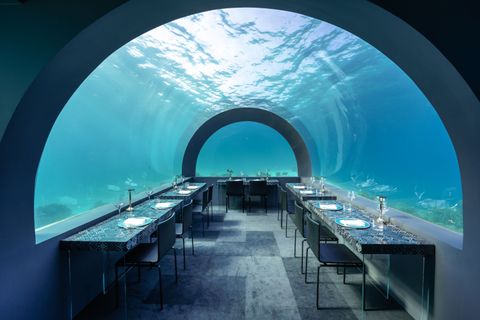
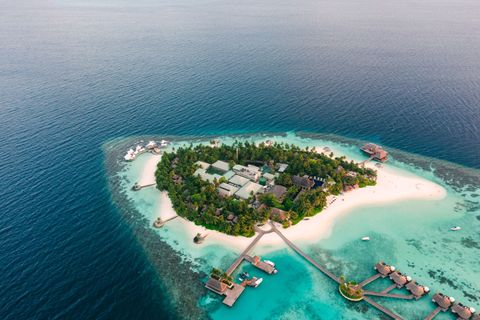
The concept exists because islands can create a distinct travel environment with fewer neighboring properties and greater separation from urban areas. Some islands operate as dedicated resort destinations, while others contain a combination of accommodation, local communities, conservation areas, or other activities.
A luxury private island resort may include features such as:
Individual villas or suites
Private beaches or designated beach areas
Overwater accommodation
Restaurants and dining spaces
Swimming pools
Water-sports facilities
Spa and wellness areas
Marine excursions
Nature trails
Children's activities
Airport or seaplane transfers
The term "private" does not always mean that the island itself is privately owned in the same legal sense as a residential property. In many destinations, an island may be leased, licensed, managed, or designated for tourism under national or local legislation.
This distinction is important when researching a private island for sale, because land ownership, tourism rights, environmental restrictions, and access rights can be separate legal questions.
Why Private Island Resorts Matter Today
Island tourism has become an important part of international travel because it combines accommodation with a concentrated destination experience.
For travelers, an island resort can simplify planning because accommodation, recreation, dining, transportation, and many activities may be located within the same destination.
The model can be particularly relevant for:
Couples seeking privacy
Families planning longer vacations
Travelers interested in marine environments
Honeymoon travelers
Small groups
Wellness-focused travelers
Visitors interested in nature and conservation
A private island family resort may prioritize children's activities, larger villas, shallow-water recreation, and family dining.
A private island resort for couples may instead emphasize quieter accommodation, private dining areas, wellness activities, and adult-oriented recreational spaces.
The island model also creates challenges. Remote locations can have limited medical facilities, weather-dependent transportation, restricted supplies, and environmental sensitivity.
Therefore, destination selection should consider practical factors in addition to accommodation quality.
Major Types of Private Island Resorts
Private island resorts vary significantly in size, design, and operating model.
| Type | Typical Characteristics | Suitable For |
|---|---|---|
| Luxury island resort | High-end villas, dining, wellness and recreation | Couples and leisure travelers |
| Family island resort | Larger rooms, children's activities and family spaces | Families |
| Eco-focused island resort | Conservation, low-impact design and environmental programs | Nature-oriented travelers |
| Boutique island resort | Smaller accommodation inventory and quieter atmosphere | Couples and small groups |
| Adventure island resort | Diving, snorkeling, boating and outdoor activities | Active travelers |
| Exclusive-use island | Entire island or resort reserved for one group | Private events and groups |
A resort's environmental setting is also important. Coral islands, volcanic islands, tropical forest islands, and coastal islands have different physical characteristics and environmental risks.
Understanding Private Island Resort Booking
Private island resort booking requires more planning than an ordinary city-hotel reservation because transportation may be part of the journey.
Travelers should check:
International and domestic flight connections
Airport transfer arrangements
Boat or seaplane schedules
Weather-related transfer limitations
Passport and visa requirements
Entry permits where applicable
Seasonal operating periods
Cancellation conditions
Medical and emergency arrangements
Included and excluded activities
A useful planning sequence is:
Destination → Island → Resort → Accommodation → Transfer → Activities → Documentation
Travelers should also verify whether transportation between the main airport and the island is included in the accommodation arrangement or handled separately.
Private Island Resort Prices and What Influences Them
Searches for private island resort prices can be difficult to compare because properties use different accommodation categories and inclusions.
The final amount can vary according to:
Island location
Travel season
Villa category
Number of travelers
Length of stay
Meal arrangement
Transfer method
Activities
Taxes and government charges
Special events
Cancellation conditions
A basic comparison framework is useful:
| Factor | What to Check |
|---|---|
| Accommodation | Room, villa, suite or residence |
| Meals | Breakfast, half-board, full-board or other arrangement |
| Transfers | Boat, seaplane, domestic flight or vehicle |
| Activities | Included activities and separately charged activities |
| Taxes | Local taxes and mandatory government charges |
| Season | Peak, shoulder or low season |
| Occupancy | Number of adults and children |
| Duration | Short stay versus extended stay |
Instead of comparing one headline amount, travelers should compare the complete itinerary and inclusions.
Private Island Resort Maldives
The private island resort Maldives category is particularly well known because the Maldivian tourism model includes many resort islands.
The Maldives Ministry of Tourism maintains a current registry of operational tourist facilities, including resorts, hotels, guesthouses, vessels, and marinas. Its registry includes properties located across multiple atolls.
As an example, the official registry lists resorts such as Velaa Private Island Maldives in Noonu Atoll, alongside numerous other island resorts.
The Maldives model demonstrates why travelers should distinguish between an independent island destination and a resort occupying a designated tourism island.
Key planning considerations include:
International arrival arrangements
Resort transfer distance
Seaplane or domestic-air travel
Seasonal weather
Marine activities
Reef and environmental rules
Dietary requirements
Medical accessibility
The Maldives Ministry of Tourism also publishes information about registered tourism facilities, which can be useful when verifying whether a property is officially recognized.
Private Island Resort Caribbean
The private island resort Caribbean category covers a large geographical area rather than one tourism system.
Caribbean islands have different governments, immigration rules, environmental policies, currencies, and tourism regulations.
Travelers should therefore identify the specific country or territory before researching:
Entry requirements
Airport connections
Local transportation
Environmental regulations
Hurricane-season considerations
Marine recreation rules
Accommodation requirements
Climate is particularly important. Tropical storms and hurricanes can affect transportation and resort operations during parts of the year, although the exact risk varies between islands.
Private Island Resort Packages
Private island resort packages can combine accommodation with meals, transfers, activities, or other components.
However, the word "package" can mean different things between properties.
Before selecting an arrangement, check whether it includes:
Accommodation
Meals
Airport transfers
Boat or seaplane transfers
Snorkeling
Diving
Guided excursions
Children's activities
Wellness activities
Taxes
Mandatory environmental or transportation charges
A clear inclusion list helps travelers understand what is actually covered and reduces confusion during itinerary planning.
Sustainability and Environmental Considerations
Island destinations are environmentally sensitive because freshwater, land area, waste-management capacity, coral ecosystems, and transportation infrastructure can be limited.
Important sustainability practices may include:
Desalination or careful freshwater management
Waste segregation
Wastewater treatment
Coral restoration
Renewable-energy integration
Plastic reduction
Reef monitoring
Responsible snorkeling and diving
Protection of nesting or breeding areas
Controlled coastal development
These issues are increasingly important because sea-level rise, coastal erosion, coral bleaching, storms, and changing marine conditions can affect island destinations.
For travelers, responsible behavior includes avoiding contact with coral, not removing marine organisms, following designated swimming or boating areas, and respecting local conservation rules.
Recent Developments in Island Tourism
Island tourism in India has received continued policy attention.
On 10 February 2026, the Government of India reported that tourism was being developed as a key economic sector in island Union Territories, alongside improvements in connectivity, infrastructure, digital access, and tourism activities. The Andaman and Nicobar Islands were reported to be promoting eco-tourism, cruise tourism, adventure tourism, cultural tourism, and other destination initiatives.
Lakshadweep has also seen several important developments in 2026.
The Lakshadweep Tourist Trade Guidelines, 2026 were issued to regulate tourist-trade establishments and water-sports activities in the Union Territory. The Administration published the guidelines in April 2026 and subsequently published related application forms.
The Lakshadweep Administration also brought the Lakshadweep Town and Country Planning and Development Regulation, 2026 into effect in July 2026.
These developments show that island tourism expansion is increasingly connected with planning, environmental management, infrastructure, and regulated tourism activity.
Laws and Policies Affecting Island Resorts in India
Private island tourism in India operates within a combination of tourism, land, environmental, coastal, and local administrative rules.
The Coastal Regulation Zone framework is particularly relevant to development near India's coast and islands. India's CRZ framework regulates activities in environmentally sensitive coastal areas and requires development to follow applicable coastal-management plans and permissions.
Andaman and Nicobar and Lakshadweep have also been subject to specialized island environmental-management provisions. The Island Protection Zone framework provides for Integrated Islands Management Plans and regulation of development and activities in island areas.
This means that an island's physical availability does not automatically mean that unrestricted tourism development is possible.
Environmental assessment, coastal permissions, local planning rules, protected-area restrictions, waste management, water management, and infrastructure approvals may all become relevant depending on the location and project.
Lakshadweep also has specific entry requirements. The Administration states that entry to the islands is restricted and visitors require an entry permit.
Anyone researching a private island for sale in India should therefore distinguish between ownership of land, development rights, tourism permissions, coastal permissions, and access rights. These are not necessarily equivalent.
Tools and Useful Resources
Several resources can help travelers and researchers investigate island resorts.
Official tourism registries: The Maldives Ministry of Tourism maintains a searchable registry of registered tourist facilities.
Indian tourism portals: Government tourism websites provide destination information and policy updates for Indian islands.
Lakshadweep Administration: Its official portal publishes tourism guidelines, entry information, notifications, planning regulations, and other island-related documents.
Travel document checklist: Record passport validity, visa requirements, permits, insurance documentation, transfers, and emergency contacts.
Trip comparison spreadsheet: Compare accommodation, transfers, meals, taxes, activities, travel dates, cancellation conditions, and accessibility.
Weather and marine forecasts: Important for islands where boat, seaplane, diving, and snorkeling activities can depend on conditions.
Practical Tips for Choosing an Island Resort
Before finalizing an itinerary, consider the whole destination rather than accommodation alone.
Check the island's geographic location.
Confirm airport-transfer arrangements.
Review seasonal weather patterns.
Check entry and visa requirements.
Confirm whether special permits are necessary.
Examine the complete accommodation inclusions.
Review medical and emergency arrangements.
Check accessibility for older travelers or children.
Understand environmental rules.
Review cancellation and change conditions.
Keep copies of important travel documents.
Consider travel insurance appropriate for the destination.
For families, check children's age policies and activity availability.
For couples, privacy and transportation arrangements may be more important than the number of available activities.
For environmentally conscious travelers, wastewater, energy, reef protection, and waste-management practices deserve particular attention.
Frequently Asked Questions
What is a private island resort?
A private island resort is a tourism property located on an island with controlled access and dedicated accommodation and recreational facilities. "Private" can refer to the resort's exclusive tourism environment rather than unrestricted private ownership of the entire island.
Are private island resorts only found in the Maldives?
No. They exist in many regions, including the Caribbean, Indian Ocean, Pacific, Southeast Asia, and other island destinations. The legal and tourism structure varies by country.
What should travelers check before private island resort booking?
They should check accommodation details, airport transfers, entry requirements, seasonal weather, meals, activities, taxes, cancellation conditions, medical access, and any special permits.
Why can private island resort prices vary so much?
Location, season, accommodation category, transfer method, occupancy, meal arrangements, activities, taxes, and length of stay can all influence the overall amount.
Can someone purchase a private island in India?
Island ownership and development are governed by land, environmental, coastal, planning, and local regulations. A property described as a private island is not automatically available for unrestricted private development. Specific legal due diligence is necessary before considering any transaction.
Conclusion
Private island resorts combine accommodation, recreation, transportation, and a distinctive island environment into one travel experience. They can appeal to couples, families, small groups, and travelers interested in marine and nature-based destinations.
The Maldives is a major example of the dedicated resort-island model, while the Caribbean contains many different island tourism systems under separate national and territorial rules. India is also developing its island tourism potential, particularly in Andaman and Nicobar and Lakshadweep.
Recent 2026 developments in Lakshadweep demonstrate the increasing role of formal tourism guidelines and planning regulations. India's broader coastal and island-management framework also means that environmental protection, development permissions, infrastructure, and local rules are important considerations.
For travelers researching luxury private island resorts, the most useful approach is to evaluate the complete destination: transportation, accommodation, activities, environmental conditions, entry requirements, safety arrangements, and local regulations.
A private island experience is ultimately shaped not only by the resort itself, but also by the island's geography, ecosystem, legal framework, infrastructure, and relationship with the surrounding community.