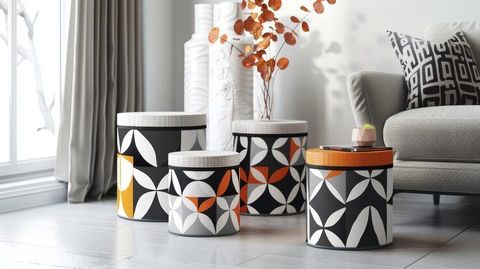
Living Room Nesting Stool Sets: A Complete Guide to Space-Saving Furniture Ideas
Living room nesting stool sets are furniture collections containing two or more stools designed to fit beneath or inside one another. This arrangement allows several seating or surface options to occupy a relatively small area when they are not in use. Nesting stools are commonly found in apartments, family homes, studio spaces, guest rooms, and contemporary living areas where flexible furniture arrangements are important.
Unlike traditional stools that remain in fixed positions, nesting designs support adaptable room layouts. A smaller stool can slide beneath a larger one, while individual pieces can be moved around a sofa, reading corner, or coffee table. Depending on their construction, the stools may function as temporary seats, side tables, decorative stands, or surfaces for everyday household objects.
Common Types of Nesting Stool Sets
Different nesting stool designs accommodate different interior styles and household needs.
Wooden nesting stools: Often feature natural grain patterns and complement traditional, Scandinavian, rustic, and contemporary interiors.
Metal nesting stools: Use steel, aluminium, or other metals to create streamlined structures, often suited to industrial or modern rooms.
Upholstered nesting stools: Include padded seats covered with fabric, leather, or synthetic materials, providing a softer appearance.
Storage nesting stools: Incorporate compartments or removable tops in selected designs, helping organise smaller household items.
Mixed-material nesting stools: Combine materials such as wood and metal or upholstered surfaces and timber frames.
The appropriate design depends on available floor space, expected use, maintenance requirements, and the overall furniture arrangement.
How Nesting Furniture Works
Nesting furniture relies on differences in dimensions and carefully planned shapes. The largest stool generally provides enough clearance beneath or around its frame to accommodate the smaller pieces. Some designs use circular tops and curved legs, while others use square surfaces, open frames, or stepped heights.
Design feature | Practical purpose |
|---|---|
Graduated dimensions | Allow stools to fit together |
Lightweight construction | Makes repositioning easier |
Stable legs or frames | Support everyday use |
Durable surface finishes | Help resist routine wear |
Coordinated materials | Maintain a consistent interior appearance |
The design must balance compact storage with stability. A set that nests neatly but becomes unstable when occupied may not be suitable for regular seating.
Why Nesting Stool Sets Matter in Modern Homes
Living spaces increasingly serve multiple purposes. A living room may function as a place to relax, entertain visitors, read, work temporarily, or accommodate additional family members. Nesting stool sets help support these changing activities without requiring several permanently separated furniture pieces.
Space Planning and Furniture Flexibility
In smaller homes, every piece of furniture affects circulation and usable floor area. Nesting stools can be grouped together when needed and returned to a compact arrangement afterward. This is particularly useful in studio apartments, compact urban homes, and rooms that serve more than one function.
For example, two stools can sit beside a sofa during ordinary use. When visitors arrive, they can be separated to provide additional seating, provided each stool is designed for that purpose and remains within its stated load capacity.
Interior Design and Visual Balance
Nesting stool sets can contribute to the visual balance of a room through their proportions, textures, and finishes. Wooden surfaces introduce natural warmth, metal frames create a more structured appearance, and upholstered tops can soften a room dominated by hard surfaces.
When coordinating furniture, consider:
The height of the sofa seat and nearby tables.
The relationship between stool dimensions and the available floor area.
Existing colours, flooring, curtains, and upholstery.
The amount of open space needed for walking.
Whether the stools should blend into the room or provide a contrasting accent.
Durability, Maintenance and Household Safety
Furniture performance depends on material quality, joint construction, surface treatment, and intended use. A well-designed stool should remain stable on an appropriate floor surface and should not develop loose joints under normal use.
Wood may require protection from prolonged moisture, while metal can need appropriate corrosion-resistant finishes. Upholstered surfaces may collect dust, crumbs, or stains and therefore require suitable cleaning methods.
Households with children or older adults should pay particular attention to tipping risks, sharp corners, slippery surfaces, and obstacles in walking paths. Nesting stools should not automatically be treated as steps or ladders unless the manufacturer explicitly identifies them for that purpose.
Recent Living Room Furniture Trends in 2025–2026
Furniture design in 2025 and 2026 has continued to emphasise flexible layouts, tactile materials, sculptural shapes, and interiors that reflect individual preferences. Nesting stool sets fit these developments because they combine compact storage with adaptable everyday use. However, trends vary by region, household needs, and interior design preferences.
Natural Materials and Textured Finishes
Natural wood tones, visible grain, woven textures, and mixed-material furniture remain prominent in contemporary interior design. These finishes can introduce warmth into rooms with neutral walls, simple sofas, and restrained decorative elements.
Common material choices include oak, walnut, bamboo, rattan accents, powder-coated metal, and textured upholstery. Each material has different durability and maintenance characteristics, so appearance should be considered alongside practical performance.
Curved Shapes and Sculptural Designs
Rounded stool tops, cylindrical bases, and softly curved frames contribute to a more organic interior appearance. In 2026, design coverage has highlighted sculptural furniture, darker wood finishes, and more personalised combinations of furniture styles.
A curved nesting stool can soften a room containing rectangular sofas, shelving, and cabinets. Geometric or angular designs, meanwhile, can complement interiors with clean lines and structured layouts.
Multifunctional Furniture and Compact Living
Multifunctional furniture remains relevant to homes where the same room supports relaxation, entertaining, and occasional work. Nesting furniture provides a practical way to adapt the arrangement without permanently dedicating additional floor space to separate pieces.
The following table summarises key design directions and their practical applications.
Design direction | Example for nesting stools | Main consideration |
|---|---|---|
Natural materials | Wood with visible grain | Moisture protection |
Sculptural shapes | Rounded or curved frames | Stability and clearance |
Mixed materials | Metal legs with wooden tops | Joint strength |
Textured upholstery | Fabric-covered stool tops | Cleaning requirements |
Compact functionality | Graduated stool sizes | Storage dimensions |
Personalised interiors | Contrasting finishes | Coordination with existing furniture |
These trends are design observations rather than guarantees of future popularity. A functional, durable design may remain useful even after particular colours or shapes become less fashionable.
Furniture Safety Standards and Relevant Regulations
The legal requirements for living room nesting stool sets depend on the country where they are manufactured, distributed, and used. There is no single worldwide regulation covering every type of household stool. General product safety requirements, chemical restrictions, labelling obligations, and specific furniture standards may apply in different markets.
European Union Product Safety Requirements
The European Union's General Product Safety Regulation, Regulation (EU) 2023/988, became applicable on 13 December 2024. It establishes a general framework for consumer product safety, including products sold online and through traditional retail channels. Its requirements can apply to nesting stool sets when they fall within the regulation's scope.
Relevant considerations include:
Product risks must be assessed under reasonably foreseeable conditions of use.
Applicable safety information and warnings must be provided.
Manufacturers, importers, and other economic operators have responsibilities determined by their roles.
Products covered by specific EU safety legislation must also comply with the relevant additional requirements.
The exact obligations depend on the product, its intended use, and the parties involved in placing it on the market.
United States Furniture Safety Considerations
In the United States, the Consumer Product Safety Commission (CPSC) oversees relevant consumer product safety requirements. Children's folding chairs and stools are subject to specific federal requirements under 16 CFR Part 1232, including applicable stability, strength, and labelling provisions. These rules should not be assumed to apply identically to every adult household nesting stool.
For general living room furniture, consumers should review product documentation, intended-use instructions, weight limits, and any applicable safety notices or recalls.
India and Other Markets
In India, furniture requirements depend on the product category and the standards or legal provisions applicable to that product. The Bureau of Indian Standards (BIS) publishes Indian Standards covering various materials, products, and testing methods. Whether a particular nesting stool requires compliance with a specific standard or certification must be verified for its precise category.
Other countries may apply their own consumer protection, chemical safety, product labelling, and furniture testing requirements. A general design guide cannot establish legal compliance for an individual product.
Tools and Resources for Choosing Nesting Stool Sets
Several practical tools can help households evaluate dimensions, room layouts, materials, and furniture durability before selecting a nesting stool arrangement.
Room Measurement and Layout Tools
Room-planning applications and digital floor-plan tools can help users position furniture virtually. Examples include SketchUp, Floorplanner, and other home-layout applications.
Useful measurements include:
Room length and width.
Sofa seat height and nearby table height.
Width of walking routes.
Diameter or width of each stool.
Height and clearance needed for nesting.
Available space beneath nearby furniture, if applicable.
A simple room sketch with measurements can be sufficient for a small living room. Digital models become more useful when the layout includes several furniture pieces or restricted circulation areas.
Furniture Material and Maintenance Guides
Material guides can help explain the differences between solid wood, engineered wood, metal, and upholstered furniture. Manufacturer care instructions should take priority over generic recommendations because finishes and construction methods vary.
For example, abrasive cleaning products may damage certain finishes, while excessive moisture can affect some wooden surfaces. Fabric care labels can identify suitable cleaning methods and restrictions.
Safety and Product Information Resources
Useful resources include:
The Bureau of Indian Standards for relevant Indian Standards and certification information.
The European Commission's product safety information for EU requirements.
The US Consumer Product Safety Commission for applicable safety rules and recall notices.
Product specification sheets for dimensions, materials, maximum supported load, and assembly instructions.
These resources help distinguish a furniture item's appearance from its documented performance and applicable safety obligations.
Frequently Asked Questions
What are living room nesting stool sets used for?
They provide flexible seating and, where the design permits, temporary surfaces for books, drinks, or decorative objects. Their nesting arrangement helps reduce the floor area occupied when the stools are not in use.
How many stools should a nesting set contain?
Two- and three-piece sets are common configurations, although other arrangements exist. The right number depends on the room's dimensions, the number of people who may use the stools, and how much storage space is available.
Which materials are suitable for nesting stools?
Wood, metal, engineered wood, and upholstered materials can all be suitable when appropriately designed and constructed. Consider frame strength, surface durability, maintenance needs, environmental conditions, and intended use rather than choosing by appearance alone.
How can nesting stools improve a small living room?
They allow additional seating or surfaces to be brought out when required and grouped together afterward. This flexibility can help preserve walking space, although the actual benefit depends on stool dimensions and the room layout.
What safety features should be checked before using nesting stools?
Check stability, construction quality, secure joints, appropriate weight limits, smooth edges, and any manufacturer warnings. Ensure that the stools sit properly on the floor and are intended for the activity in which they will be used. Keep them out of walking routes when not needed.
Conclusion
Living room nesting stool sets combine compact storage, flexible functionality, and a wide range of interior design possibilities. Their value comes from the way they adapt to different household activities while occupying relatively little space when nested together.
Choosing an appropriate set requires more than matching colours or following current furniture trends. Room measurements, material durability, construction quality, cleaning requirements, and safety documentation all influence long-term usefulness. Recent design directions favour natural finishes, curved forms, personalised interiors, and multifunctional furniture, but practical requirements should remain the priority.
By considering these factors together, households can identify nesting stool arrangements that complement their living rooms, support everyday activities, and maintain a balanced, functional interior.

Related Post...

Guide to Choosing Standing Desks for Home Offices With Better Stability and Height Range
Updated: October 28, 2026
Read More
Guide to Choosing Bold Color Dining Sets for Stylish Home Interiors
Updated: October 26, 2026
Read More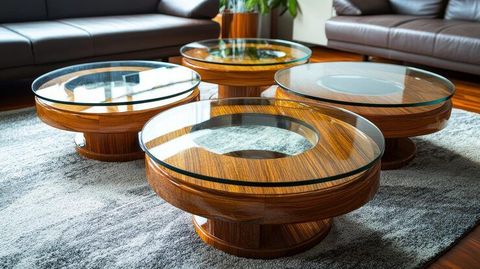
Discover Smart-Lift Coffee Table Designs That Blend Comfort and Convenience
Updated: October 26, 2026
Read More