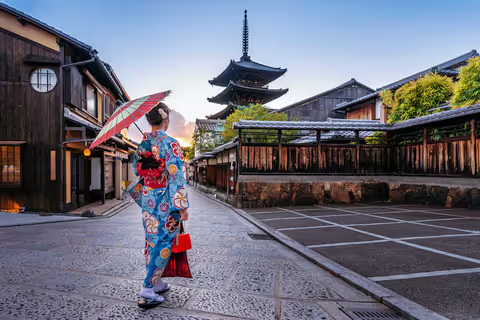
Kyoto Tour Overview: Seasons, Sights, and Cultural Highlights
A Kyoto tour introduces visitors to a city closely associated with Japanese history, traditional architecture, temples, gardens, festivals, and cultural practices.
Kyoto served as Japan's imperial capital for many centuries, shaping its role in politics, religion, arts, literature, and craftsmanship. Today, the city combines historic districts with modern transportation, accommodation, restaurants, universities, and businesses.
Kyoto tours can be arranged in several ways. Travelers may explore independently, join Kyoto guided tours, or choose Kyoto tour packages that combine accommodation, transportation, sightseeing, and planned activities. Kyoto travel packages and Kyoto vacation packages can also be structured around particular interests, including temples, Japanese gardens, food, traditional crafts, seasonal scenery, and cultural experiences.
The city is located in the Kansai region of Japan and has strong rail connections with Osaka, Tokyo, and other destinations. Kyoto Station is a major transportation hub, making the city accessible as either a primary destination or part of a broader Japan itinerary.
Understanding Kyoto's Main Areas
Kyoto has many districts with different historical and cultural characteristics. Higashiyama is known for traditional streets, temples, and historic buildings, while Gion is associated with traditional architecture and cultural entertainment. Arashiyama is known for its mountain scenery, temples, gardens, and bamboo landscape.
Central Kyoto contains shopping streets, markets, museums, restaurants, and major transportation connections. Northern areas include several significant temples and gardens, while the southern part of the city contains sites such as Fushimi Inari Taisha.
| Area | Main Features | Common Visitor Interest |
|---|---|---|
| Higashiyama | Temples, historic streets, traditional architecture | History and culture |
| Gion | Traditional streets and cultural districts | Heritage and photography |
| Arashiyama | Mountains, gardens, temples, bamboo landscape | Nature and sightseeing |
| Central Kyoto | Markets, shopping, museums, restaurants | Urban exploration |
| Fushimi | Shrines and sake-related heritage | Culture and local history |
| Northern Kyoto | Temples, gardens, wooded areas | Architecture and scenery |
Importance
Kyoto matters because many aspects of Japanese cultural history remain visible in its built environment and traditions. Visitors can encounter Buddhist temples, Shinto shrines, tea-related culture, traditional gardens, crafts, historic neighborhoods, and seasonal festivals within the city and surrounding area.
Tour planning is also important because Kyoto's attractions are distributed across different districts. A schedule that groups nearby locations together can reduce unnecessary travel between parts of the city and allow more time for individual sites.
Who Can Benefit From Different Travel Formats?
Different travel formats can accommodate different interests and schedules. Independent travelers may prefer flexibility, while Kyoto guided tours can provide historical explanations and structured sightseeing.
Common formats include:
- Kyoto guided tours for travelers interested in historical and cultural explanations.
- Private itineraries for visitors who prefer a personalized schedule.
- Kyoto Japan vacation packages combining Kyoto with other Japanese destinations.
- Kyoto luxury tours incorporating higher-category accommodation and personalized travel arrangements.
- Private luxury Kyoto tours designed around smaller groups or individualized sightseeing.
- Kyoto vacation packages combining accommodation and planned activities.
- Kyoto travel packages organized around specific themes or travel periods.
The appropriate format depends on travel duration, interests, group size, mobility needs, and preferred pace.
Cultural Experiences in Kyoto
Kyoto's cultural attractions extend beyond famous temples. Visitors can encounter traditional crafts, Japanese gardens, tea-related customs, seasonal celebrations, local cuisine, and historic neighborhoods.
Some activities require advance planning, particularly during busy travel periods. Visitors should also understand that temples, shrines, gardens, museums, and cultural venues may have different opening arrangements and visitor rules.
Recent Updates
Kyoto's tourism environment has continued to change as international travel has increased and local authorities have focused on managing visitor movement and protecting residential areas. Digital travel planning has also become an important part of visiting the city.
Travelers increasingly use digital maps, public transportation applications, online attraction information, and electronic reservation systems. These tools can help visitors understand routes, opening arrangements, and transportation schedules before arriving.
Managing Visitor Concentration
Popular locations can experience significant visitor activity during peak periods, particularly around major temples, historic streets, and seasonal attractions. Kyoto has therefore placed attention on visitor distribution, public transportation use, pedestrian movement, and respectful behavior in residential neighborhoods.
Travelers may encounter information encouraging visitors to avoid obstructing roads, respect private property, follow photography rules, and use designated walking routes. These measures are intended to reduce disruption in areas where tourism overlaps with everyday residential life.
Seasonal Travel Patterns
Kyoto experiences noticeable seasonal changes. Spring is associated with cherry blossoms, summer with festivals and warmer weather, autumn with colorful foliage, and winter with colder temperatures and occasional snowfall.
| Season | Typical Conditions | Common Interest |
|---|---|---|
| Spring | Mild weather and seasonal blossoms | Gardens and outdoor sightseeing |
| Summer | Warm and humid conditions | Festivals and cultural events |
| Autumn | Cooler weather and foliage | Temples, gardens, photography |
| Winter | Cold conditions | Quieter sightseeing and seasonal scenery |
Seasonal conditions can influence visitor numbers, transportation demand, and accommodation availability. Travelers planning around specific natural or cultural events should check current local information.
Laws or Policies
Tourism in Kyoto operates under Japanese national law as well as Kyoto Prefecture and Kyoto City regulations. International visitors must comply with applicable immigration, passport, visa, and entry requirements.
Japan's entry requirements depend on nationality, passport type, travel purpose, and other circumstances. Official Japanese government and immigration resources should be used to verify current requirements before travel.
Visitor Conduct and Local Rules
Visitors are expected to follow Japanese laws and local regulations while traveling. Kyoto also has local rules and guidance concerning littering, smoking, pedestrian behavior, photography, and conduct in historic or residential areas.
Some temples and shrines restrict photography in particular buildings or areas. Visitors should follow posted instructions and staff guidance, especially in religious spaces.
Transportation rules are also relevant. Public buses, trains, taxis, bicycles, and pedestrian routes operate under different regulations. Visitors should follow designated routes and avoid blocking sidewalks or entrances.
Accommodation providers may have their own requirements concerning identification, check-in, luggage storage, smoking, pets, and cancellation arrangements. These conditions vary by property.
Tools and Resources
Several resources can help with Kyoto travel planning. Digital maps can help visitors organize attractions by neighborhood, while public transportation applications can provide information about train and bus routes.
Official Japanese government resources are useful for checking immigration and entry requirements. Kyoto City and Kyoto tourism organizations also publish information about transportation, visitor etiquette, cultural attractions, events, and local travel conditions.
Useful Planning Resources
Travelers can use:
- Official Japanese immigration resources for entry requirements.
- Kyoto City resources for local regulations and visitor information.
- Kyoto tourism resources for attractions, events, and travel guidance.
- Railway and bus information for transportation planning.
- Digital maps for estimating routes between attractions.
- Weather resources for seasonal planning.
- Translation applications for everyday communication.
- Itinerary templates for organizing attractions by neighborhood.
- Currency conversion tools for understanding Japanese yen values.
When comparing Kyoto tour packages or Kyoto Japan vacation packages, travelers can review the exact components included. Accommodation, transportation, entrance tickets, meals, guides, and optional activities can vary between itineraries.
For Kyoto luxury vacation packages and luxury Kyoto travel packages, travelers should also examine accommodation categories, transportation arrangements, private activities, and the specific experiences included. The term “luxury” can describe different combinations of accommodation and travel arrangements, so the individual itinerary remains important.
FAQs
What is included in Kyoto tour packages?
Kyoto tour packages can include combinations of accommodation, transportation, sightseeing, entrance tickets, meals, and guided activities. The exact contents depend on the individual itinerary.
Are Kyoto guided tours available for first-time visitors?
Yes. Kyoto guided tours can cover major temples, shrines, historic districts, gardens, food areas, and cultural attractions. The duration and subject matter vary by tour format.
What are Kyoto luxury tour packages?
Kyoto luxury tour packages generally combine higher-category accommodation with private transportation, personalized sightseeing, or selected cultural experiences. The specific inclusions differ between travel arrangements.
What are Kyoto Japan vacation packages?
Kyoto Japan vacation packages are itineraries that include Kyoto as part of a broader trip within Japan. They may combine Kyoto with destinations such as Tokyo, Osaka, Nara, Hiroshima, or other cities.
What are private luxury Kyoto tours?
Private luxury Kyoto tours are personalized travel arrangements designed for individuals, couples, families, or small groups. They may include private guides, transportation, selected accommodation, and customized sightseeing.
Conclusion
A Kyoto tour provides access to historic temples, shrines, gardens, traditional neighborhoods, cultural activities, and seasonal landscapes. Travelers can choose independent sightseeing, guided tours, private arrangements, or broader Kyoto travel packages depending on their interests and schedule. Seasonal conditions, visitor concentration, local regulations, transportation, and cultural etiquette are important parts of planning a trip. Kyoto's historic role and continuing cultural traditions remain central to its identity as a Japanese travel destination.

Related Post...

Thailand Island Hopping Tours: A Guide to Islands, Activities and Trip Planning
Updated: September 19, 2026
Read More
Hotel Booking in New York: An Informative Guide to Planning Your Stay
Updated: September 01, 2026
Read More
Istanbul Tour: A Guide to History, Culture, Packages, and Travel Planning
Updated: September 28, 2026
Read More