Insulin & Biologics Manufacturing: Explore Basics, Components, and Production Stages
Insulin & Biologics Manufacturing involves the production of medicines and biological substances through controlled biological, chemical, and purification processes.
Unlike many conventional medicines that can be produced through relatively simple chemical reactions, biologics are generally made using living cells, microorganisms, or biological materials. Insulin is one example of a biologic product that requires carefully controlled manufacturing conditions.
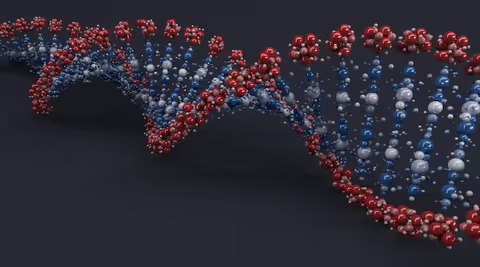
Insulin is a protein hormone that helps regulate blood glucose. Modern insulin manufacturing commonly uses recombinant DNA technology, in which microorganisms or cultured cells are genetically modified to produce a desired protein. The resulting material goes through multiple purification, formulation, filling, packaging, and quality-control stages.
Development of Biologic Manufacturing
Early insulin production involved extraction and purification from animal pancreatic tissue. Scientific advances in molecular biology later enabled recombinant production, allowing insulin to be produced using engineered microorganisms.
The development of recombinant technology changed the manufacturing approach for insulin and became part of the broader evolution of biotechnology. Similar biological production methods are now used for many therapeutic proteins, vaccines, antibodies, enzymes, and other biological products.
What Makes Biologics Different?
Biologics are generally more structurally complex than many small-molecule medicines. Their properties can be affected by cell lines, growth conditions, purification methods, temperature, storage, and other manufacturing variables.
Because biological materials can be sensitive to environmental conditions, manufacturing facilities use controlled processes and extensive quality testing. Production systems are designed to maintain consistency between batches while protecting the material from contamination and unwanted changes.
Importance
Insulin & Biologics Manufacturing is important because biological medicines are used in the treatment and management of numerous medical conditions. Manufacturing requires coordination between biotechnology, engineering, microbiology, analytical science, quality systems, and regulatory processes.
The manufacturing process also has implications for healthcare systems because biological products must meet defined quality, purity, identity, and safety requirements before they can be distributed for medical use.
Main Stages of Insulin Manufacturing
Although exact processes differ between manufacturers and products, insulin production can be described through several broad stages:
- Development and maintenance of a production cell or microorganism
- Controlled biological production
- Harvesting of the desired biological material
- Purification
- Protein processing and formulation
- Sterile filling
- Packaging and labeling
- Quality testing
- Controlled storage and distribution
Each stage is monitored through defined procedures and records. Manufacturing environments also use controls to reduce contamination and maintain appropriate operating conditions.
Upstream and Downstream Processing
Biologics manufacturing is commonly divided into upstream and downstream processing. Upstream processing covers activities associated with growing or maintaining the biological production system and generating the desired product.
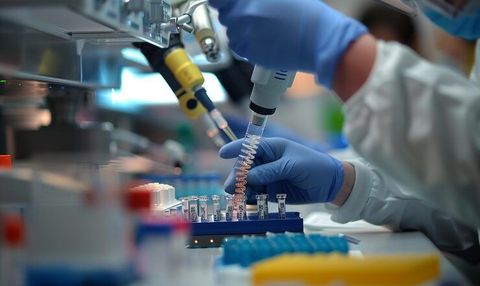
Downstream processing begins after production and focuses on recovering and purifying the target material. Depending on the product, this can involve filtration, chromatography, concentration, formulation, and other controlled processing steps.
| Manufacturing stage | Main purpose | Examples of controls |
|---|---|---|
| Cell or microorganism preparation | Establish production system | Identity and stability checks |
| Upstream processing | Produce biological material | Temperature, pH, nutrients |
| Harvesting | Recover production material | Separation and filtration |
| Purification | Remove unwanted materials | Chromatography, filtration |
| Formulation | Prepare defined product composition | Concentration and pH |
| Filling | Place product into containers | Sterility and environmental controls |
| Quality testing | Verify product characteristics | Identity, purity, potency |
| Packaging | Prepare labeled units | Container and label checks |
Quality Control
Quality control is a central part of Insulin & Biologics Manufacturing. Testing can examine the identity, purity, concentration, biological activity, sterility, and other characteristics of a finished product.
Manufacturers also monitor raw materials, production environments, equipment, process parameters, and intermediate materials. Records provide traceability throughout the manufacturing process.
Recent Updates
Recent developments in Insulin & Biologics Manufacturing are focused on process automation, improved analytical methods, continuous manufacturing concepts, advanced cell-culture systems, digital monitoring, and greater use of data for process control.
Process Automation
Automated systems are increasingly used to monitor variables such as temperature, pressure, pH, dissolved oxygen, flow, and other production parameters. Automated data collection can create detailed records of manufacturing conditions.
Automation can also reduce the need for manual intervention in selected stages. However, automated systems still require validation, maintenance, cybersecurity controls, and appropriate human oversight.
Single-Use Manufacturing Systems
Single-use equipment uses disposable or limited-use components such as bags, tubing, filters, and processing assemblies. These systems can be incorporated into selected stages of biological production.
Their use requires careful evaluation of material compatibility, extractables and leachables, integrity, waste management, and process requirements. They are particularly relevant to flexible manufacturing environments.
Continuous and Intensified Processing
Biotechnology research continues to examine continuous and intensified manufacturing approaches. Instead of treating every stage as a completely separate batch activity, selected processes can operate with more continuous material movement and integrated monitoring.
These approaches require appropriate process understanding and control strategies. They do not eliminate the need for quality testing or regulatory oversight.
Advanced Analytical Technology
Modern analytical systems can examine biological products using techniques such as chromatography, spectroscopy, mass spectrometry, electrophoresis, and other laboratory methods. These techniques can provide information about molecular characteristics, purity, concentration, and product-related variations.
Process analytical technology can also be used to monitor selected manufacturing parameters during production. This supports a more data-driven approach to process control.
Digital Manufacturing and Data Systems
Manufacturing facilities increasingly use electronic batch records, laboratory information management systems, manufacturing execution systems, and automated data collection. These systems can improve traceability and make large quantities of process information easier to review.
Artificial intelligence and machine learning are also being studied for applications such as process monitoring, anomaly detection, predictive analysis, and experimental development. Their use requires appropriate validation and controls when connected to regulated manufacturing activities.
Laws or Policies
Insulin & Biologics Manufacturing in India is regulated through a combination of pharmaceutical laws, biological-product requirements, quality standards, environmental rules, and manufacturing controls. The applicable framework depends on the product, manufacturing process, facility, and intended use.
Indian Regulatory Framework
The Central Drugs Standard Control Organisation is an important national regulatory authority for drugs and biological products in India. The Drugs and Cosmetics Act, 1940 and the Drugs and Cosmetics Rules, 1945 form part of the country's regulatory framework for pharmaceutical manufacturing.
The New Drugs and Clinical Trials Rules, 2019 also contain provisions relevant to new drugs and certain biological products. Requirements can include manufacturing controls, documentation, testing, and regulatory submissions.
Good Manufacturing Practices
Good Manufacturing Practices are central to regulated pharmaceutical production. In India, Schedule M of the Drugs and Cosmetics Rules provides requirements concerning pharmaceutical manufacturing facilities and practices.
GMP principles generally address areas such as:
- Personnel and training
- Facility design
- Equipment qualification
- Sanitation and hygiene
- Raw-material controls
- Production procedures
- Quality control
- Documentation
- Batch records
- Validation
- Handling of deviations and changes
Biological manufacturing requires additional attention to contamination control and process consistency because biological systems can be sensitive to environmental conditions.
Environmental and Biosafety Considerations
Biological manufacturing facilities may also be subject to environmental and biosafety requirements. Depending on the activity, relevant authorities can include the Ministry of Environment, Forest and Climate Change, Central Pollution Control Board, State Pollution Control Boards, and other designated regulatory bodies.
Facilities using genetically modified organisms or certain biological materials may have additional biosafety requirements under India's applicable framework. The specific rules depend on the organisms, materials, processes, and research or production activity involved.
Tools and Resources
Insulin & Biologics Manufacturing relies on specialized laboratory equipment, process systems, analytical instruments, software, and regulatory references.
Manufacturing and Laboratory Equipment
Common equipment can include:
- Bioreactors or fermentation systems
- Centrifuges
- Filtration systems
- Chromatography systems
- Mixing and formulation equipment
- Sterile filling equipment
- Refrigerated storage systems
- Environmental monitoring instruments
- Analytical balances
- Chromatography and spectroscopy instruments
The equipment used depends on the biological product and the manufacturing stage.
Digital and Analytical Resources
Electronic batch-record systems can organize manufacturing information and traceability. Laboratory information management systems can organize analytical results, sample information, and laboratory workflows.
Process-control software can collect information from production equipment, while data-analysis tools can help scientists and engineers examine process trends. Validation and data-integrity procedures are important when these systems are used in regulated environments.
Regulatory References
Useful sources for understanding biologics manufacturing include:
- Central Drugs Standard Control Organisation
- Ministry of Health and Family Welfare
- Bureau of Indian Standards
- World Health Organization
- International Council for Harmonisation
- United States Food and Drug Administration
- European Medicines Agency
- Department of Biotechnology, Government of India
Technical standards and regulatory documents should be interpreted according to the particular product and manufacturing activity because requirements can vary.
FAQs
What is Insulin & Biologics Manufacturing?
Insulin & Biologics Manufacturing is the controlled production of insulin and other biological medicines using systems such as engineered microorganisms or cultured cells. The process generally includes biological production, purification, formulation, sterile filling, and extensive quality testing.
How is insulin manufactured?
Modern insulin can be produced using recombinant DNA technology. A suitable production organism or cell system is engineered to produce the desired insulin-related protein, which is then recovered, purified, processed when required, formulated, and subjected to quality testing.
What equipment is used in Insulin & Biologics Manufacturing?
Equipment can include bioreactors or fermentation systems, filtration units, chromatography systems, mixing equipment, sterile filling systems, storage equipment, and analytical instruments. The exact equipment depends on the product and manufacturing process.
Why is quality control important in Insulin & Biologics Manufacturing?
Quality control helps verify that biological products meet defined requirements for identity, purity, concentration, biological activity, sterility, and other characteristics. Testing is performed at different stages rather than only on the final packaged product.
What regulations apply to biologics manufacturing in India?
Indian biologics manufacturing is governed through pharmaceutical regulations including the Drugs and Cosmetics Act, 1940, Drugs and Cosmetics Rules, 1945, applicable GMP requirements, and the New Drugs and Clinical Trials Rules, 2019. Additional requirements may apply depending on the biological materials and manufacturing activities involved.
Conclusion
Insulin & Biologics Manufacturing combines biotechnology, controlled production systems, purification, formulation, analytical testing, and regulated quality processes. Modern insulin production commonly relies on recombinant biological methods, while broader biologics manufacturing uses a range of cell-based and microbial production technologies. Recent developments include automation, single-use systems, advanced analytics, digital records, and process monitoring. In India, manufacturing is shaped by pharmaceutical regulations, GMP requirements, quality standards, and applicable environmental and biosafety frameworks.

Related Post...
BCBS Medicare: An Overview of Plan Types, Coverage Benefits, Eligibility and Enrollment Options
Updated: October 15, 2026
Read More
AI in Pharma Industry: The Companies Building the Future of Medicine Guide
Updated: August 03, 2026
Read More
Antibody Production in the Immune System: Overview, Basics, and Key Facts
Updated: August 31, 2026
Read More