Insights Into Data Center Equipment Rentals and Modern IT Infrastructure Trends
Data center equipment rentals involve using computing hardware, networking devices, power infrastructure, and related technology for a defined period under a rental agreement. This approach allows businesses to support temporary or changing IT requirements without relying entirely on permanently owned equipment.
Data centers are facilities that house servers, storage systems, networking hardware, and supporting infrastructure. They enable cloud computing, business applications, websites, artificial intelligence (AI), data processing, and digital communication. As organizations expand their digital operations, their computing requirements can change rapidly.
Equipment rental arrangements can help organizations manage short-term projects, technology upgrades, disaster recovery preparations, testing environments, and periods of increased computing demand. Available equipment may include rack servers, graphics processing units (GPUs), network switches, routers, storage arrays, uninterruptible power supplies (UPS), and cooling equipment.
Common Types of Rental Equipment
Different projects require different combinations of data center hardware.
Rack servers: Support applications, databases, virtualization, and enterprise computing workloads.
GPU servers: Handle AI model training, scientific computing, simulation, and other parallel processing tasks.
Network switches and routers: Connect servers, storage devices, and external networks.
Storage systems: Provide block, file, or object storage for business data, backups, and application workloads.
Power infrastructure: Includes UPS equipment, power distribution units, and selected backup power components.
Cooling equipment: Helps manage heat generated by computing hardware, particularly in high-density installations.
Racks and accessories: Include server cabinets, rails, cabling, and related installation components.
The appropriate equipment depends on processing requirements, memory capacity, storage performance, network bandwidth, power availability, and physical space.
How Rental Arrangements Work
A typical arrangement begins with a technical assessment that identifies the required hardware, configuration, deployment location, and intended duration. The agreement then defines equipment specifications, delivery and installation responsibilities, maintenance arrangements, security expectations, and return procedures.
Equipment may be deployed in an existing data center, a temporary computing facility, a laboratory, or another suitable technical environment. Organizations should confirm compatibility with their existing infrastructure before installation.
Rental periods can vary according to project requirements. A short-term deployment may support a temporary event or performance test, while a longer arrangement may provide computing capacity during a planned infrastructure transition.
Why Data Center Equipment Rentals Matter Today
Organizations increasingly depend on reliable computing infrastructure to operate digital platforms, analyze information, and support distributed teams. However, purchasing and maintaining enough hardware for every possible workload can create planning challenges, particularly when demand changes over time.
Data center equipment rentals provide an alternative for organizations that need additional computing capacity for a specific period. They can also support testing, temporary expansion, hardware replacement, and technology migration.
Who Uses Rental Data Center Hardware?
Several types of organizations use temporary or rented IT infrastructure:
Cloud computing providers: Manage temporary increases in computing demand or capacity during infrastructure transitions.
AI and machine learning teams: Run specialized workloads on GPU-equipped servers.
Software developers: Test applications across different hardware configurations.
Small and medium-sized businesses: Expand computing capacity without immediately committing to a permanent hardware configuration.
Universities and research institutions: Support simulations, scientific analysis, and temporary research projects.
Disaster recovery teams: Prepare backup infrastructure for business continuity and recovery exercises.
Event organizers and media companies: Support temporary data processing, content delivery, and network requirements.
Main Advantages and Limitations
Equipment rentals can provide flexibility, simplify temporary capacity planning, and reduce the need to maintain hardware that is rarely used. They may also help organizations evaluate newer equipment before deciding on a long-term infrastructure strategy.
However, rental arrangements also involve important considerations. Organizations must assess the total agreement expenses, equipment availability, network compatibility, data protection, power consumption, and support responsibilities.
Consideration | Potential advantage | Important limitation |
|---|---|---|
Deployment period | Matches equipment use to project duration | Availability may vary |
Hardware configuration | Enables access to specialized systems | Compatibility must be checked |
Capacity planning | Supports temporary expansion | Long-term arrangements may be less economical |
Maintenance | Responsibilities can be defined contractually | Response times depend on the agreement |
Technology upgrades | Supports hardware evaluation | Frequent changes require migration planning |
The most appropriate arrangement depends on workload duration, technical requirements, security obligations, and the organization's long-term infrastructure strategy.
Recent Trends in Data Center Equipment Rentals
During 2025 and 2026, the data center industry continued to adapt to growing AI workloads, higher computing density, and increasing demand for energy-efficient infrastructure. These developments have influenced the types of equipment organizations evaluate for temporary deployments.
Growing Demand for AI and GPU Infrastructure
AI applications require substantial processing power, memory bandwidth, and high-speed networking. GPU servers and other accelerated computing systems have therefore become important considerations for organizations developing AI models or conducting intensive data analysis.
Temporary access to specialized hardware can help teams evaluate model performance, test applications, and complete defined computing projects without immediately establishing a permanent installation.
Before selecting GPU infrastructure, organizations should compare GPU memory, processor configuration, interconnect capabilities, software compatibility, and power requirements.
Higher-Density Computing and Advanced Cooling
Modern computing systems can generate considerable heat, especially when multiple high-performance processors operate in a compact rack.
As a result, liquid cooling, improved airflow management, and higher-capacity power distribution have received increased attention throughout 2025–2026.
Organizations planning temporary infrastructure should verify that the facility can accommodate the equipment's electrical load, rack dimensions, cooling requirements, and network connections. High-density hardware may require infrastructure that conventional server rooms cannot support.
Flexible Infrastructure and Hybrid Computing
Hybrid computing combines on-premises infrastructure with public cloud platforms or other external computing environments. Organizations may use rented physical servers for workloads that require specific hardware, predictable performance, or control over the deployment environment.
Infrastructure automation, remote monitoring, and software-defined networking can simplify deployment and management. However, physical equipment still requires appropriate configuration, access controls, maintenance, and environmental monitoring.
Sustainability and Energy Efficiency
Energy consumption has become an important consideration in data center planning. Organizations increasingly examine processor efficiency, server utilization, cooling performance, and the environmental impact of equipment manufacturing and disposal.
Extending useful hardware life through suitable reuse and refurbishment can also support resource efficiency, provided that equipment remains secure, reliable, and appropriate for its intended workload.
Laws and Policies Affecting Data Center Equipment Rentals
Data center equipment rentals can involve several areas of regulation, including data protection, cybersecurity, electricity safety, environmental management, and contractual obligations. The relevant requirements depend on where the equipment is deployed, where information is processed, and which organizations handle that information.
Data Protection and Cybersecurity
Organizations that process personal or confidential information must understand their applicable data protection obligations. Rental hardware does not automatically transfer responsibility for protecting the information stored on it.
Important safeguards include:
Encrypting sensitive information during storage and transmission.
Restricting administrative access through role-based permissions.
Maintaining appropriate authentication and access logs.
Establishing secure procedures for data deletion when equipment is returned.
Defining incident reporting responsibilities in written agreements.
Confirming whether information can cross national borders under applicable rules.
Organizations should also determine who controls firmware updates, operating system configuration, security patches, and remote management interfaces.
Regulatory Considerations in India
For deployments in India, the Digital Personal Data Protection Act, 2023, together with applicable rules and commencement notifications, is relevant to the handling of digital personal data. Organizations should determine which provisions are in force and how their responsibilities apply to the specific arrangement.
The Information Technology Act, 2000, and applicable cybersecurity directions may also be relevant, depending on the activities involved and the organizations covered.
Electrical installations, fire safety, building requirements, and environmental obligations must be assessed separately. Equipment deployment may require compliance with local electrical safety rules, facility permissions, and applicable waste management requirements.
International Standards and Environmental Requirements
Organizations operating across multiple countries may need to consider different privacy laws, cybersecurity requirements, and energy efficiency regulations.
Standards such as ISO/IEC 27001 can provide a framework for information security management. Environmental management frameworks such as ISO 14001 can help organizations structure environmental controls.
These standards do not automatically establish legal compliance. Organizations should evaluate the actual requirements that apply to their location, industry, and contractual commitments.
Tools and Resources for Planning Rental Infrastructure
Practical planning tools help technical teams estimate computing capacity, compare configurations, and prepare for deployment.
Useful Technical Tools
Capacity planning spreadsheets: Record processor cores, RAM, storage, bandwidth, and expected workload demand.
Power consumption calculators: Estimate electrical requirements using server specifications and anticipated utilization.
Rack layout planners: Check equipment dimensions, rack-unit availability, and physical arrangement.
Network monitoring platforms: Measure throughput, latency, packet loss, and connection stability.
Infrastructure monitoring tools: Track processor utilization, memory usage, temperatures, and hardware alerts.
Security assessment checklists: Document encryption, access controls, patching, logging, and data deletion procedures.
Asset inventory templates: Track serial numbers, configurations, deployment dates, and equipment return conditions.
Evaluation Checklist
Before finalizing an equipment rental arrangement, organizations should review the following points:
Confirm hardware specifications and workload compatibility.
Verify power, cooling, rack space, and network capacity.
Establish the deployment and return schedule.
Review maintenance responsibilities and incident response arrangements.
Assess data protection, access permissions, and information deletion.
Document equipment condition and configuration changes.
Calculate the total agreement expenses, including installation, connectivity, energy, and removal where applicable.
A structured evaluation can reduce configuration errors and help teams avoid unexpected operational difficulties.
Frequently Asked Questions
What equipment can be rented for a data center?
Common options include rack servers, GPU servers, storage arrays, network switches, routers, racks, UPS equipment, and selected cooling systems. Availability depends on the provider and the deployment location.
How long can data center equipment be rented?
Rental periods vary according to the agreement. They may cover short projects, temporary capacity expansion, hardware testing, disaster recovery exercises, or longer infrastructure transitions.
Is rented data center equipment secure?
Security depends on the hardware configuration, facility controls, network architecture, access permissions, and data handling procedures. Organizations should verify encryption, administrative access, firmware management, monitoring, and secure data deletion before deployment and return.
What should organizations consider before renting GPU servers?
They should evaluate GPU model, memory capacity, processor configuration, network bandwidth, software compatibility, power consumption, cooling requirements, and expected workload duration. These factors influence whether the hardware can support the intended AI or high-performance computing tasks.
Can equipment rentals support disaster recovery?
Yes. Temporary servers, storage systems, and networking hardware can support recovery exercises or provide additional infrastructure during an outage. A complete disaster recovery plan should also address data replication, backup integrity, recovery time objectives, recovery point objectives, and network connectivity.
Conclusion
Data center equipment rentals provide organizations with a flexible way to manage changing computing requirements. Servers, GPU systems, storage devices, networking hardware, and supporting infrastructure can help teams handle temporary projects, test new technologies, and prepare for unexpected capacity requirements.
Developments in AI computing, high-density hardware, advanced cooling, and infrastructure automation are shaping the equipment organizations need during 2025 and 2026. At the same time, security, energy efficiency, regulatory compliance, and hardware compatibility remain essential considerations.
Successful planning requires a clear understanding of workload requirements, deployment conditions, contractual responsibilities, and data protection measures. By evaluating these factors carefully, organizations can select suitable infrastructure arrangements that support reliable and responsible IT operations.

Related Post...

Explore Private Jet Rentals: Travel Options, Aircraft Types, and Flight Experiences
Updated: October 26, 2026
Read More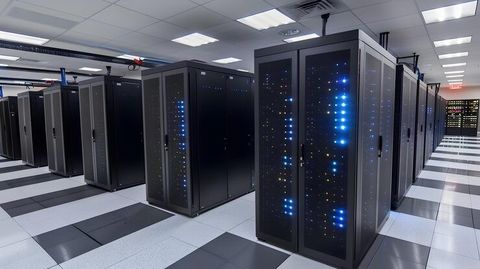
Insights Into Data Center Equipment Rentals and Modern IT Infrastructure Trends
Updated: October 28, 2026
Read More
Discover How Tower Crane Rentals Support Efficient High-Rise Construction Projects
Updated: October 26, 2026
Read More