Insights Into 3D Printing Technology, Material Expenses and Small Business Production
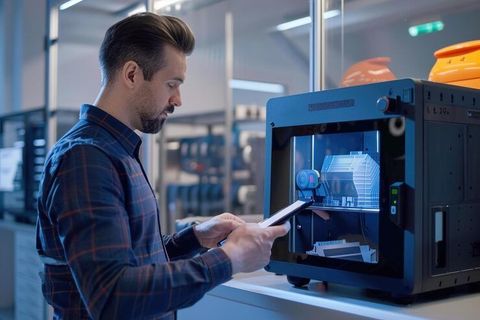
Three-dimensional (3D) printing is a manufacturing process that creates physical objects from digital designs by building material layer by layer. Also known as additive manufacturing, this technology allows small businesses to produce prototypes, customized components, product models, fixtures, and selected finished parts without requiring traditional molds or extensive machining.
The best 3D printer for a small business depends on the intended application, required dimensional accuracy, material compatibility, production volume, and available workspace. A printer suitable for architectural models may not meet the requirements of an engineering workshop producing functional mechanical parts.
Understanding printer specifications, material expenses, production speed, and surface quality helps businesses evaluate their options more effectively.
Main Types of 3D Printers
Different printing technologies produce different results. The three commonly used categories are fused deposition modeling (FDM), stereolithography (SLA), and selective laser sintering (SLS).
FDM printers: Melt thermoplastic filament and deposit it through a heated nozzle. They are widely used for prototypes, fixtures, models, and functional plastic parts.
SLA printers: Use light to cure liquid photopolymer resin. They are suitable for detailed models, intricate shapes, and applications requiring smooth surfaces.
SLS printers: Use a laser to fuse powdered material, commonly nylon-based polymers. They can produce complex components without conventional support structures inside the powder bed.
Each technology involves different equipment requirements, material handling procedures, and finishing methods. Selecting the appropriate technology starts with identifying what the finished component must do.
Examples of Printers Used in Small Business Settings
Several printer families illustrate the range of available equipment.
Bambu Lab P1S: An enclosed FDM printer designed for thermoplastic printing and multi-material workflows when configured with compatible accessories.
Prusa CORE One: An enclosed FDM printer intended for a range of engineering and general-purpose filament applications.
Formlabs Form 4: A resin-based printer designed for detailed parts and repeatable workflows.
UltiMaker S series: Professional FDM printers used for prototyping and functional component production.
Industrial SLS systems: Powder-based platforms suited to complex polymer parts and more specialized production environments.
These examples represent different approaches rather than a universal ranking. Actual performance depends on the model configuration, selected materials, maintenance, and operating conditions.
Material Expenses and Production Quality
Material selection influences the strength, appearance, durability, and overall expense of a printed component. Small businesses should evaluate not only the price per kilogram or litre but also the amount of material required, failed prints, support structures, finishing work, and equipment maintenance.
Common 3D Printing Materials
PLA (polylactic acid): Easy to print and suitable for concept models, decorative objects, and basic prototypes. It has limited heat resistance compared with engineering plastics.
PETG (polyethylene terephthalate glycol): Offers a useful balance of toughness, chemical resistance, and printability for enclosures and functional components.
ABS (acrylonitrile butadiene styrene): Used for durable parts that need greater heat resistance than standard PLA. It generally requires careful temperature control and suitable ventilation.
ASA (acrylonitrile styrene acrylate): Often selected for outdoor components because of its weather and ultraviolet resistance.
Nylon (polyamide): Suitable for selected mechanical components that require toughness and wear resistance. Moisture control is important.
Photopolymer resin: Supports detailed models and smooth surfaces, although parts may require washing, post-curing, and careful chemical handling.
Material suitability varies by formulation. Food-contact applications, medical components, and safety-critical parts require additional validation beyond the printer's basic specifications.
Comparing Material Expenses
The following illustrative figures are planning estimates in US dollars, not live quotations. Actual prices vary by supplier, grade, quantity, location, and material certification.
Material | Illustrative price per kg or litre | Typical applications |
|---|---|---|
PLA filament | $15–$30/kg | Models and prototypes |
PETG filament | $18–$35/kg | Functional parts |
ABS filament | $20–$40/kg | Enclosures and durable parts |
ASA filament | $25–$50/kg | Outdoor components |
Nylon filament | $35–$90/kg | Mechanical parts |
Standard resin | $25–$70/litre | Detailed models |
For example, a part requiring 150 grams of PLA uses 0.15 kg of filament. At an illustrative rate of $24/kg, the material consumed is $3.60 before accounting for supports, failed prints, electricity, labour, and finishing.
A realistic production estimate should include these additional expenses:
Electricity consumption and equipment downtime.
Nozzles, build plates, filters, and other replacement components.
Failed prints and material discarded during setup.
Post-processing, inspection, and packaging.
Software, ventilation, and workspace requirements.
Understanding Production Quality
Production quality includes more than visual appearance. Businesses should assess dimensional accuracy, repeatability, layer adhesion, surface finish, mechanical strength, and the ability to produce consistent parts over multiple print runs.
Key quality measurements
Dimensional accuracy
Compare the finished component with its intended measurements using calibrated measuring instruments.
Layer consistency
Examine surface defects, layer bonding, warping, and visible differences between production batches.
Mechanical performance
Test strength, flexibility, temperature resistance, and durability against the component's intended use.
FDM printers are often practical for general prototypes and functional plastic components. Resin printers can provide finer details, while SLS systems can support complex geometries and functional polymer parts. The best choice depends on the performance requirements rather than resolution alone.
Recent Developments in 3D Printing
Developments during 2025 and 2026 have focused on expanding material choices, improving production workflows, and making industrial additive manufacturing suitable for a broader range of applications.
New Industrial Printing Platforms
On November 18, 2025, HP announced an industrial filament printing portfolio intended for high-temperature and engineering materials. The development highlighted applications requiring stronger performance than ordinary desktop printing can provide.
On April 14, 2026, HP announced its Multi Jet Fusion 1200 system, a compact platform intended to bring industrial polymer printing capabilities to smaller production environments. The company also announced productivity and material developments for its existing industrial systems.
These announcements illustrate the direction of the industry, but availability, supported materials, and performance specifications should be checked for the particular model and region.
Software and Workflow Improvements
Modern 3D printing software increasingly supports automated model preparation, build planning, print monitoring, and production tracking. Some systems also provide tools for identifying print failures and managing multiple machines.
Other important trends include:
Greater use of engineering-grade thermoplastics.
Improved calibration and automated print preparation.
Digital inventories of spare parts and manufacturing files.
Better integration between computer-aided design and production workflows.
Increased attention to material reuse and waste reduction.
These developments may improve manufacturing consistency, but businesses should validate performance through representative test prints before committing to regular production.
Laws and Policies Affecting 3D Printing in India
Small businesses using 3D printers in India should consider electrical and machinery safety, workplace health, intellectual property, product quality, and environmental regulations. The applicable requirements depend on the equipment, materials, products, and intended use.
Machinery and Electrical Safety
India's Machinery and Electrical Equipment Safety (Omnibus Technical Regulation) Order, 2024, was amended in August 2025. The amended timeline established September 1, 2026, as the implementation date for equipment covered by the order's first schedule, subject to applicable provisions and exemptions.
Businesses importing or operating industrial 3D printing equipment should determine whether their particular machinery falls within the scope of the order and which Indian Standards apply. Not every desktop printer is automatically subject to identical certification requirements.
Workplace Health and Environmental Protection
3D printing may generate ultrafine particles, fumes, or chemical vapours, depending on the printing technology and material. Resin handling and powder-based processes may introduce additional exposure risks.
Practical precautions include:
Providing suitable ventilation and, where necessary, local exhaust extraction.
Following material safety data sheets and handling instructions.
Using appropriate protective equipment when handling resins, powders, and cleaning chemicals.
Storing materials safely and managing waste according to applicable rules.
Maintaining electrical equipment and following manufacturer safety procedures.
The ISO/ASTM 52933:2024 standard addresses testing for hazardous substances emitted by material-extrusion printers used in non-industrial environments.
Product Safety and Intellectual Property
Businesses producing components for medical, automotive, aerospace, food-contact, or other regulated applications may need to meet additional product-specific standards and testing requirements.
Digital design files can also be protected by copyright, patents, or other intellectual property rights. Businesses should ensure they have the necessary permissions to reproduce protected designs and should maintain suitable controls over confidential manufacturing files.
Tools and Resources for 3D Printing Businesses
The right software and measurement tools can help small businesses estimate material requirements, improve print quality, and maintain repeatable production.
Design and Slicing Software
Autodesk Fusion: Used for computer-aided design, mechanical modelling, and engineering workflows.
FreeCAD: An open-source application for parametric 3D design and technical modelling.
Ultimaker Cura: Converts compatible 3D models into printer instructions and allows users to adjust print settings.
PrusaSlicer: Supports model preparation, material settings, support generation, and slicing for compatible printers.
Meshmixer: Useful for selected mesh editing, model repair, and geometry preparation tasks.
Compatibility and available features vary by printer, software version, and operating system.
Production Planning Tools
Businesses can use a spreadsheet to record material consumption, print duration, failed prints, energy use, maintenance, and finished-part measurements.
A basic material planning formula is:
Material expense = Material used in kilograms × Price per kilogram
For a more complete estimate, include failed prints, support material, electricity, labour, finishing, and equipment depreciation.
Other useful resources include digital calipers, weighing scales, temperature measurement tools, material drying equipment, and dimensional inspection templates.
Frequently Asked Questions
Which 3D printer is suitable for a small business?
An FDM printer is often a practical starting point for general prototypes, fixtures, and functional plastic parts. A resin printer may be more appropriate for highly detailed models, while an SLS system is suited to more specialized polymer production. The decision should reflect application requirements and expected production volume.
Which 3D printing material is the most economical?
PLA is often among the less expensive commonly used filament materials. However, the most economical material for a particular application depends on durability, heat resistance, print success, finishing requirements, and the amount of material consumed.
How can a business improve 3D printing quality?
Businesses can improve quality by calibrating equipment, maintaining consistent material conditions, selecting appropriate print settings, inspecting finished parts, and documenting successful production profiles. Test prints help identify problems before larger production runs.
Is 3D printing suitable for small-batch manufacturing?
Yes. It can be useful for customized components, prototypes, fixtures, replacement parts, and limited production runs. Its suitability depends on production speed, part requirements, material performance, and the total resources required for each finished component.
What should businesses consider before choosing a 3D printer?
Important factors include build volume, supported materials, dimensional accuracy, print speed, repeatability, maintenance requirements, software compatibility, ventilation, and total operating expenses. Testing a representative part can help determine whether a printer meets the intended requirements.
Conclusion
Choosing the best 3D printer for a small business requires balancing material expenses, production quality, equipment capabilities, and operational requirements. FDM printers are suitable for many everyday manufacturing applications, resin systems support detailed components, and SLS platforms address more complex polymer production needs.
Material selection also plays a major role. PLA may suit basic prototypes, PETG can support many functional applications, and nylon may be appropriate for selected mechanical components. Each material has specific limitations that should be evaluated before production.
Developments in industrial printing platforms, engineering materials, and manufacturing software are expanding the potential applications of additive manufacturing. By comparing technical specifications, testing sample parts, tracking material consumption, and following relevant safety and regulatory requirements, small businesses can make informed decisions about incorporating 3D printing into their operations.

Related Post...

MIG Welding Machines Guide: Understanding Processes, Equipment, and Key Components
Updated: October 26, 2026
Read More
Insights Into Tyre Building Machines and Innovations in Industrial Manufacturing
Updated: October 28, 2026
Read More
CNC Cutting Tables Tips for Understanding Precision, Speed, and Cutting Efficiency
Updated: October 27, 2026
Read More