Industrial Separation Technologies: Essential Facts, Efficiency Strategies, and Industry Trends
Industrial separation technologies are processes and equipment used to divide mixtures into their individual components. These technologies are essential in many industries because raw materials, liquids, gases, and solids often need to be purified, concentrated, filtered, or sorted before they can be used in production. From food processing and pharmaceuticals to mining, chemicals, and water treatment, separation methods help industries achieve consistent product quality and operational efficiency.
The development of industrial separation technologies began alongside the growth of manufacturing and chemical processing. Early methods relied on simple physical techniques such as settling, screening, and filtration. Over time, advances in engineering led to more sophisticated equipment capable of handling large production volumes and complex materials.
Today, industrial separation equipment manufacturers develop systems that use mechanical, thermal, chemical, and membrane-based methods to separate substances. These technologies are often integrated into broader production systems designed by industrial separation system integrators and engineering teams.
What Is Separation Technology?
Separation technology refers to any process that isolates one substance from another within a mixture. The method chosen depends on the physical or chemical properties of the materials involved.
Common separation objectives include:
- Removing impurities
- Recovering valuable materials
- Purifying products
- Treating wastewater
- Processing raw materials
- Improving production efficiency
Different industries require different approaches depending on the characteristics of the substances being separated.
Common Types of Separation Processes
Several methods are widely used in industrial environments.
| Separation Method | Primary Purpose |
|---|---|
| Filtration | Removing suspended solids from liquids or gases |
| Centrifugation | Separating materials by density |
| Sedimentation | Settling heavier particles |
| Distillation | Separating liquids based on boiling points |
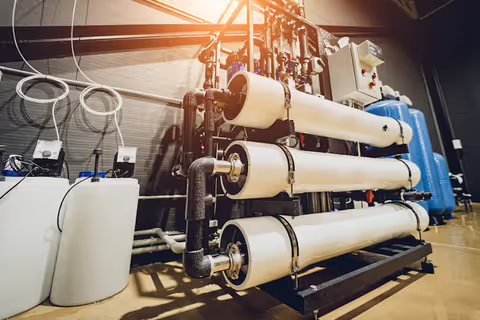
| Membrane Separation | Removing contaminants through selective barriers |
| Magnetic Separation | Extracting magnetic materials from mixtures |
These technologies may operate independently or as part of integrated processing systems.
Importance
Supporting Manufacturing Processes
Many manufacturing operations require highly controlled materials. Industrial separation technologies help remove unwanted particles, contaminants, and impurities that could affect product quality.
Without effective separation processes, many products would not meet industry standards or performance requirements.
Improving Resource Efficiency
Industries increasingly focus on maximizing the use of raw materials. Separation systems allow valuable substances to be recovered and reused rather than discarded.
Examples include:
- Metal recovery from mining operations
- Solvent recovery in chemical processing
- Water reuse in manufacturing facilities
- Product purification in food production
This improves resource utilization while reducing waste.
Protecting Environmental Quality
Environmental regulations often require industries to treat wastewater, emissions, and process residues before release.
Industrial filtration and separation systems play a major role in removing pollutants and supporting environmental compliance efforts.
Enhancing Product Quality
Many consumer and industrial products depend on high-purity ingredients and materials.
Industries that benefit from separation technologies include:
- Food and beverage production
- Pharmaceutical manufacturing
- Biotechnology
- Petrochemicals
- Electronics manufacturing
Separation processes help ensure consistency and reliability throughout production.
Supporting Circular Economy Practices
Modern industries are increasingly adopting circular economy principles that emphasize resource recovery and waste reduction.
Industrial separation technologies support these goals by helping organizations recover useful materials from waste streams and production residues.
Recent Updates
Growth of Advanced Membrane Technologies
Recent developments have expanded the use of membrane-based separation systems. These technologies can remove contaminants while using less energy than some traditional methods.
Membrane systems are increasingly used in water treatment, food processing, and pharmaceutical applications.
Increased Automation
Automation has become a major trend across industrial processing facilities. Modern separation equipment often includes digital monitoring and automated control systems.
These technologies can monitor:
- Flow rates
- Pressure levels
- Product quality
- Equipment performance
- Operational efficiency
Automation helps improve consistency and operational oversight.
Expansion of Sustainable Processing
Environmental goals are influencing how separation systems are designed and operated.
Many separation technology solutions providers are focusing on:
- Water conservation
- Energy efficiency
- Material recovery
- Waste reduction
- Emissions management
These priorities reflect broader sustainability initiatives across industries.
Growth of Centrifugal Separation Applications
Centrifugal separation equipment suppliers continue to develop systems capable of handling increasingly complex industrial applications.
Centrifugal separation is being used in areas such as:
- Wastewater treatment
- Biotechnology
- Food processing
- Chemical manufacturing
- Resource recovery
The technology remains one of the most versatile separation methods available.
Digital Integration
Industrial separation system integrators increasingly connect separation equipment with plant-wide monitoring platforms.
Digital integration allows operators to view system performance in real time and make informed operational decisions.
Laws or Policies
Environmental Protection Regulations
Many industrial sectors must comply with environmental regulations related to emissions, wastewater discharge, and waste management.
Industrial filtration and separation systems often play a central role in meeting these requirements.
Common regulatory areas include:
- Water quality protection
- Air pollution control
- Hazardous waste management
- Resource conservation
Compliance helps reduce environmental impacts.
Product Quality Standards
Industries such as food production, pharmaceuticals, and healthcare operate under strict quality requirements.
Separation technologies help facilities meet standards related to:
- Purity
- Safety
- Consistency
- Contaminant control
These standards protect consumers and support product reliability.
Occupational Safety Requirements
Industrial equipment must comply with workplace safety regulations designed to protect employees and facilities.
Safety requirements may address:
- Equipment operation
- Pressure systems
- Hazardous materials
- Emergency procedures
- Maintenance protocols
Properly designed separation systems contribute to safer working environments.
Resource Management Policies
Many governments encourage efficient use of water, energy, and raw materials.
The following table highlights common policy objectives:
| Policy Area | Purpose |
|---|---|
| Water Conservation | Reduce freshwater consumption |
| Waste Reduction | Encourage resource recovery |
| Air Quality Protection | Limit emissions |
| Energy Efficiency | Improve industrial performance |
| Sustainable Manufacturing | Support responsible production |
These policies often influence investments in modern separation technologies.
Tools and Resources
Process Simulation Software
Engineers frequently use simulation software to evaluate separation processes before implementation.
These tools can help analyze:
- Material flows
- Process efficiency
- Equipment selection
- Operational scenarios
Simulation supports planning and optimization efforts.
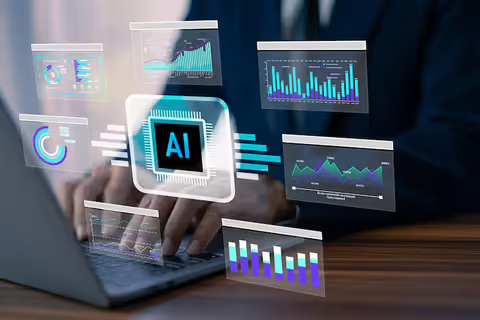
Digital Monitoring Platforms
Modern separation systems often include monitoring software that tracks equipment performance.
Common functions include:
- Real-time data visualization
- Operational alerts
- Performance reporting
- Process analysis
These tools help operators maintain efficient system performance.
Industry Standards Organizations
Professional engineering organizations publish standards and technical guidance related to separation processes.
These documents provide information about:
- Equipment design
- Safety practices
- Process management
- Performance evaluation
Environmental Guidance Resources
Government agencies and environmental organizations publish information related to wastewater treatment, emissions control, and resource management.
These resources help facilities understand regulatory expectations.
Technical Training Materials
Many educational institutions and engineering associations provide training materials related to industrial separation technologies and process engineering.
These resources support knowledge development and professional learning.
FAQs
What are industrial separation technologies?
Industrial separation technologies are processes and equipment used to divide mixtures into individual components. They are widely used in manufacturing, water treatment, mining, food processing, and chemical production.
What do industrial separation equipment manufacturers produce?
Industrial separation equipment manufacturers develop machinery and systems used for filtration, centrifugation, membrane separation, sedimentation, and other industrial separation processes.
How do industrial filtration and separation systems support environmental protection?
Industrial filtration and separation systems help remove contaminants from water, air, and industrial process streams. This supports pollution control and environmental compliance efforts.
What role do centrifugal separation equipment suppliers play?
Centrifugal separation equipment suppliers provide technologies that separate substances based on differences in density. These systems are commonly used in wastewater treatment, food production, and chemical processing.
What are turnkey separation technology solutions?
Turnkey separation technology solutions generally refer to integrated systems that combine multiple separation processes into a coordinated operational framework designed for specific industrial applications.
Conclusion
Industrial separation technologies are essential components of modern manufacturing, environmental management, and resource recovery. They help industries improve product quality, recover valuable materials, and manage waste streams more effectively. Advances in automation, digital monitoring, membrane technologies, and sustainable processing continue to shape the future of separation systems. As industries pursue greater efficiency and environmental responsibility, separation technologies remain an important part of industrial infrastructure.

Related Post...
Industrial Process Automation Systems: An Informative Guide to Types and Functions
Updated: September 08, 2026
Read More
AI Document Processing: A Guide to Intelligent Document Automation
Updated: September 03, 2026
Read More
Recycling Machines: A Comprehensive Guide to Sustainable Waste Management
Updated: October 09, 2026
Read More