Industrial Robots Explained: How They Power Modern Factories
Industrial robots are programmable machines that handle repetitive or precise tasks in manufacturing settings.
These automated systems help factories produce goods more consistently while reducing physical strain on workers. From car assembly lines to electronics plants, industrial robots have become a familiar part of everyday production.
What Are Industrial Robots
An industrial robot is an automatically controlled, reprogrammable multipurpose manipulator that moves materials, tools, or parts through programmed motions. According to the International Organization for Standardization, these machines operate on three or more axes and are designed for industrial environments.
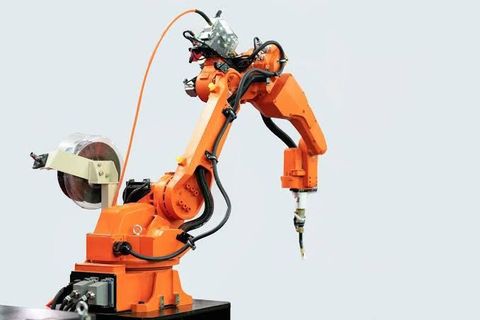
Most industrial robots feature a mechanical arm, sensors, a controller, and an end effector such as a gripper or welding tool. They excel at tasks that require high speed, accuracy, and repetition without fatigue. Unlike fixed machines, they can be reprogrammed for different jobs, offering flexibility on the factory floor.
A Brief Look at Their History
The modern era of industrial robots began in the early 1960s. Inventor George Devol developed the first programmable robot arm, Unimate, which General Motors installed in 1961 to handle hot metal parts. This marked a shift from purely human labor to automated assistance in dangerous or monotonous work.
Over the following decades, industrial robots spread from automotive plants into electronics, food processing, and other sectors. Advances in sensors, computing power, and software improved their precision and ease of use. Collaborative robots, or cobots, later emerged to work safely alongside people in shared spaces.
Main Types of Industrial Robots
Industrial robots come in several mechanical designs, each suited to specific movements and tasks.
Articulated robots resemble a human arm with multiple rotary joints, usually four to six axes. They offer a wide range of motion and are common for welding, painting, and assembly.
SCARA robots (Selective Compliance Assembly Robot Arm) move primarily in a horizontal plane with vertical capability. They perform well in fast pick-and-place and assembly work, especially in electronics.
Cartesian robots, also called gantry or linear robots, travel along straight X, Y, and Z axes. Their simple design delivers high precision for machine loading, packaging, and inspection.
Delta or parallel robots use three arms connected to a fixed base for rapid, light-payload operations such as sorting and packaging small items.
Cylindrical robots combine rotary and linear movements to form a cylindrical workspace, useful for certain material-handling jobs.
Here is a simple comparison of common types:
| Type | Key Movement Style | Typical Uses |
|---|---|---|
| Articulated | Multi-joint rotary arm | Welding, painting, assembly |
| SCARA | Horizontal with vertical | Electronics assembly, pick-place |
| Cartesian | Straight-line axes | Loading, packaging, inspection |
| Delta | Parallel arms from above | High-speed sorting, packaging |
How Industrial Robots Are Used
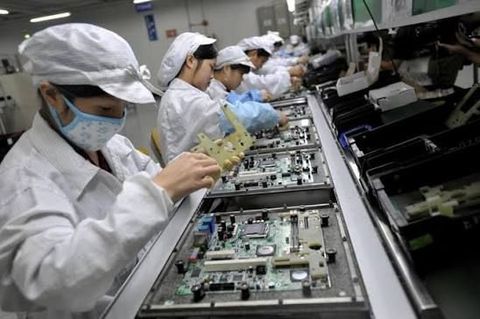
Industrial robots support many stages of production. In automotive plants they perform spot welding, painting, and part handling. Electronics manufacturers rely on them for precise circuit-board assembly and component placement.
Material handling includes picking items from conveyors, palletizing finished goods, and loading machines. Packaging lines use robots for sorting, boxing, and stacking. Inspection systems equipped with cameras check product quality at high speed.
Other applications appear in food processing, pharmaceuticals, metal fabrication, and plastics. The machines often work inside safety zones or, in the case of cobots, share space with human operators under controlled conditions.
Benefits and Practical Considerations
Factories adopt industrial robots for several practical reasons. They deliver consistent quality because every programmed motion is repeated the same way. They can operate continuously, supporting higher output with the same equipment. By taking on heavy lifting, high-heat, or repetitive motions, they help reduce workplace injuries.
Flexibility is another advantage. Reprogramming allows the same robot to handle different products or batch sizes. Over time, many companies find that productivity gains offset initial investment.
Challenges remain. Upfront costs for the robot, tooling, safety systems, and integration can be significant, especially for smaller operations. Skilled technicians are needed for programming, maintenance, and troubleshooting. Integration with existing production lines requires careful planning. Workforce concerns about changing job roles also arise, though many facilities retrain employees for higher-skill positions that oversee the automated systems.
Frequently Asked Questions
What makes an industrial robot different from other machines?
Industrial robots are reprogrammable and multipurpose. They can change tasks through software rather than mechanical redesign, unlike single-purpose automated equipment.
Are industrial robots only used in large factories?
While large manufacturers were early adopters, smaller and mid-sized companies increasingly use them, especially more affordable collaborative models.
Do industrial robots replace all human workers?
They typically handle repetitive or hazardous tasks. People remain essential for programming, supervision, quality decisions, maintenance, and creative problem-solving.
How accurate are industrial robots?
Many models achieve high repeatability, often within fractions of a millimeter, depending on the design and application.
What is the difference between traditional industrial robots and cobots?
Traditional models often work behind safety barriers at high speeds. Cobots include sensors that allow safer close interaction with people at reduced speeds.
Looking Ahead
Industrial robots continue to evolve with better sensors, easier programming interfaces, and greater connectivity to other factory systems. Their role remains practical: supporting consistent production, improving workplace safety for certain tasks, and helping manufacturers respond to changing demand.
Understanding industrial robots helps everyday readers see how everyday products—from cars to smartphones—reach the market. These machines are tools that extend human capability rather than mysterious technology. As factories adapt, the combination of skilled people and reliable automation shapes modern manufacturing.

Related Post...
Vision Sensors: Applications in Industrial Automation and Quality Inspection
Updated: October 20, 2026
Read More
Submersible Pump Manufacturing: Insights Into Modern Production and Reliability
Updated: September 30, 2026
Read More