Industrial Motors: Types, Uses, Technology and Regulations in India
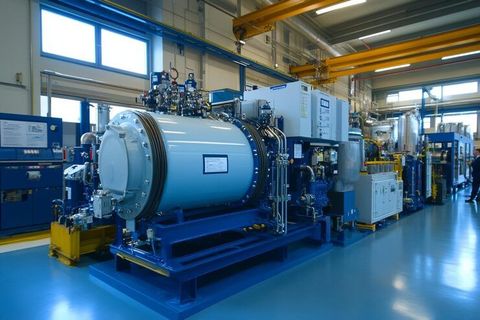
Industrial motors are essential electrical machines that convert electrical energy into mechanical energy. They are widely used in factories, manufacturing plants, processing facilities, warehouses, agricultural operations, and other industrial environments.
These machines help operate equipment that requires continuous or controlled movement, including pumps, compressors, conveyors, fans, mixers, and production machinery.
Industrial motors exist because modern industries depend on reliable mechanical movement to perform repetitive and demanding operations. Before electric motors became widely available, many industrial processes relied on manual labour, steam engines, and mechanical transmission systems. Electric motor technology introduced a more flexible and controllable approach to industrial operations.
Today, industrial motors are available in different sizes, designs, power ratings, and efficiency levels. Their selection depends on the machinery, operating conditions, electrical supply, speed requirements, and workload.
How Industrial Motors Work
An electric motor generally operates through the interaction of magnetic fields. When electrical current passes through motor windings, it produces a magnetic field. This field interacts with another magnetic field to create rotational force, known as torque.
The rotating component, called the rotor, transfers mechanical energy to connected equipment through a shaft.
Most industrial motors contain several important components:
Stator: The stationary section that produces a magnetic field.
Rotor: The rotating component that generates mechanical movement.
Windings: Conductive coils that carry electrical current.
Shaft: Transfers rotational movement to connected machinery.
Bearings: Support the rotating shaft and reduce friction.
Cooling system: Helps control operating temperature.
Motor housing: Protects internal components from environmental conditions.
The combination of these components allows motors to operate in different industrial environments.
Why Industrial Motors Matter Today
Industrial motors play an important role in modern economic and manufacturing activities. They support production processes across industries and help maintain consistent equipment operation.
Their importance has increased as manufacturers focus on automation, energy efficiency, production reliability, and environmental responsibility.
Industries That Depend on Industrial Motors
Several industries use electric motors as essential parts of their operations.
Manufacturing: Motors operate assembly lines, cutting machines, packaging equipment, and automated production systems.
Automotive: They support material handling, robotic equipment, machine tools, and vehicle production processes.
Agriculture: Motors operate irrigation pumps, grain processing equipment, and agricultural machinery.
Chemical and pharmaceutical: They power mixers, compressors, pumps, and ventilation equipment.
Food processing: Motors operate conveyors, refrigeration systems, mixers, and packaging machinery.
Mining: Heavy-duty motors operate crushers, ventilation systems, conveyors, and material transportation equipment.
Water management: Electric motors operate water pumps, wastewater treatment equipment, and filtration systems.
Problems Solved by Industrial Motors
Industrial motors address several operational challenges.
Mechanical movement: They provide the rotational force required by industrial machinery.
Automation: They allow machines to perform repetitive operations with controlled movement.
Energy management: High-efficiency motor designs help reduce electrical losses.
Production consistency: Properly selected motors support stable machinery operation.
Operational control: Modern motor systems allow adjustments to speed and torque according to application requirements.
Energy Efficiency and Industrial Electricity Consumption
Electric motors account for a substantial share of industrial electricity consumption worldwide. Therefore, even relatively small improvements in motor efficiency can contribute to meaningful energy savings across large industrial facilities.
The following table explains common international motor efficiency classifications.
Efficiency class
General classification
IE1
Standard efficiency
IE2
High efficiency
IE3
Premium efficiency
IE4
Super premium efficiency
IE5
Ultra-premium efficiency
These classifications indicate different levels of motor efficiency. Actual efficiency depends on motor size, design, operating conditions, and applicable testing standards.
Higher-efficiency motors generally reduce electrical losses, although the appropriate classification depends on the application and operating requirements.
Recent Updates and Developments in Industrial Motor Technology
Industrial motor technology continues to develop through improvements in electrical engineering, digital monitoring, materials, and energy management.
Developments during 2025 and 2026 demonstrate growing attention to efficient motor systems and industrial energy consumption.
Introduction of IE5 Motor Technology in India
On September 25, 2025, ABB India announced the introduction of an IE5 ultra-premium efficiency motor range based on induction motor technology.
The announced range covered power ratings from 45 kW to 1,000 kW. The announcement also included an investment exceeding ₹140 crore to expand and modernise its low-voltage motor manufacturing capacity in India.
The development highlighted the increasing attention given to advanced motor efficiency and industrial electricity consumption.
+1Development of Indian Motor Standards
In 2026, the Bureau of Indian Standards continued technical discussions and updates related to electric motor specifications.
On May 26, 2026, BIS organised a technical discussion in Coimbatore concerning IS 996:2025, the fourth revision of the standard for single-phase AC induction motors for general purposes.
This development reflected continued attention to motor performance, standardisation, and quality requirements.
Updated Three-Phase Motor Standard
Another important development concerns IS 12615:2026, covering line-operated three-phase AC motors and their efficiency classifications.
BIS laboratory information published in October 2026 included testing facilities for motors under the revised 2026 standard.
Manufacturers and industrial users should therefore consider the applicable edition of the standard when evaluating motor specifications and compliance requirements.
+1Growth of Variable Frequency Drives
Variable Frequency Drives (VFDs) are becoming increasingly important in industrial motor applications.
A VFD controls the frequency and voltage supplied to an AC motor, allowing its operating speed to be adjusted.
Common applications include:
Water pumping systems.
Industrial ventilation.
Conveyor operations.
Air compressors.
Production machinery.
Industrial cooling systems.
VFD technology is particularly useful where equipment does not need to operate continuously at maximum speed.
Industrial Digitalisation and Smart Monitoring
Modern industrial facilities are increasingly adopting digital monitoring technologies.
Sensors and connected monitoring systems can track:
Motor temperature.
Vibration levels.
Electrical current.
Voltage fluctuations.
Operating speed.
Bearing conditions.
Energy consumption.
These measurements help maintenance teams identify unusual operating conditions and plan inspections before equipment problems interrupt production.
Laws and Policies Affecting Industrial Motors in India
Industrial motors in India are influenced by electrical safety requirements, Indian Standards, energy conservation policies, and industrial environmental regulations.
Understanding these requirements is important for manufacturers, facility operators, engineers, and industrial equipment users.
Bureau of Indian Standards
The Bureau of Indian Standards (BIS) develops Indian Standards covering the design, performance, testing, and safety of electrical equipment.
Two relevant standards include:
IS 12615: Covers efficiency classes and performance specifications for line-operated three-phase AC motors.
IS 996: Covers single-phase AC induction motors for general purposes.
The applicable standard depends on the motor category and its technical characteristics.
The Energy Conservation Building Code also contains provisions concerning energy-efficient motors. Its requirements distinguish between ECBC, ECBC+, and Super ECBC building categories, with progressively higher motor efficiency expectations.
+1Energy Conservation Act, 2001
The Energy Conservation Act, 2001 provides an important legal framework for improving energy efficiency in India.
The Bureau of Energy Efficiency operates under the Ministry of Power and supports national energy conservation initiatives.
The Act provides the foundation for programmes addressing industrial electricity consumption, energy management, and efficiency improvements.
Perform, Achieve and Trade Programme
The Perform, Achieve and Trade (PAT) programme encourages energy efficiency improvements in designated energy-intensive industries.
Its framework includes:
Energy consumption targets.
Regular energy audits.
Appointment of energy managers.
Monitoring and verification of energy consumption.
Energy Savings Certificates for qualifying achievements.
The programme can encourage industries to examine motor efficiency, pumping systems, compressed air systems, and other major electricity-consuming equipment.
+1ADEETIE Scheme
On July 15, 2025, the Government of India launched the Assistance in Deploying Energy Efficient Technologies in Industries and Establishments (ADEETIE) scheme.
The initiative has a stated allocation of ₹1,000 crore and focuses on improving energy efficiency in micro, small, and medium-sized enterprises.
Implemented through the Bureau of Energy Efficiency, the programme includes technical guidance and financial support mechanisms for eligible industrial energy-efficiency projects.
Its relevance extends to facilities considering efficient motors, upgraded machinery, and other energy-saving technologies.
+1Machinery Safety Regulation Update
An important regulatory clarification occurred in January 2026.
The Ministry of Heavy Industries rescinded the Machinery and Electrical Equipment Safety (Omnibus Technical Regulation) Order, 2024 through notification S.O. 239(E), published on January 16, 2026.
Consequently, the previously announced September 1, 2026 implementation date under that order should not be treated as an active requirement.
Industrial manufacturers should check subsequent government notifications and applicable BIS requirements before making compliance decisions.
+1Tools and Resources for Industrial Motors
Different technical resources help engineers, maintenance professionals, facility managers, and students understand motor performance and operating requirements.
The following tools and resources are useful for industrial motor evaluation and energy management.
1. Motor Efficiency Calculators
Motor efficiency calculators estimate how effectively electrical input is converted into mechanical output.
The basic formula is:
For example, if a motor receives 10 kW of electrical power and produces 9 kW of mechanical output, its efficiency is 90%.
2. Electrical Power Calculators
Electrical power calculators help estimate motor power requirements.
For a balanced three-phase electrical system:
Where:
P = Electrical input power in watts.
V = Line voltage in volts.
I = Line current in amperes.
PF = Power factor.
3. Variable Frequency Drive Calculators
VFD calculators help engineers understand motor speed, operating frequency, and electrical requirements.
They are useful when evaluating speed-controlled pumping, ventilation, and conveyor applications.
4. Computer-Aided Design Software
Engineering applications such as AutoCAD and SolidWorks help create industrial equipment layouts, motor mounting arrangements, mechanical drawings, and equipment integration plans.
5. Energy Monitoring Platforms
Energy monitoring systems collect information about electrical consumption, operating conditions, and equipment performance.
These platforms help facility managers identify unusual consumption patterns and evaluate energy efficiency improvements.
6. Government and Technical Resources
The following organisations provide relevant technical information:
Organisation or resource
Main purpose
Bureau of Indian Standards
Indian technical standards
Bureau of Energy Efficiency
Energy efficiency programmes
Ministry of Power
National electricity policies
Ministry of Heavy Industries
Industrial regulations
Electrical Research and Development Association
Electrical testing and research
These resources help users understand motor specifications, regulatory developments, testing procedures, and energy management practices.
Frequently Asked Questions About Industrial Motors
1. What is an industrial motor?
An industrial motor is an electrical machine that converts electrical energy into mechanical energy. It provides rotational movement for equipment such as pumps, compressors, conveyors, fans, mixers, and manufacturing machinery.
Industrial motors are designed in different power ratings and configurations to meet specific operating requirements.
2. What are the main types of industrial motors?
The main types include:
AC induction motors.
Synchronous motors.
DC motors.
Brushless DC motors.
Servo motors.
Stepper motors.
Each type has different operating characteristics. AC induction motors are widely used in general industrial applications, while servo motors are commonly used where precise movement and positioning are required.
3. What is the difference between IE3 and IE4 motors?
IE3 represents premium efficiency, while IE4 represents super premium efficiency under the international motor efficiency classification system.
IE4 motors generally have lower electrical losses than comparable IE3 motors when evaluated under the same applicable testing conditions.
However, actual energy consumption depends on operating load, running hours, motor design, and application requirements.
4. What is the purpose of a Variable Frequency Drive?
A Variable Frequency Drive controls the frequency and voltage supplied to an AC motor.
It allows motor speed to change according to operational requirements. This is particularly useful for pumps, fans, conveyors, and other equipment where continuous maximum-speed operation is unnecessary.
5. How can industrial motor efficiency be improved?
Industrial motor efficiency can be improved through several practices:
Selecting an appropriately rated motor.
Using suitable high-efficiency motor designs.
Avoiding unnecessary operation at low or excessive loads.
Maintaining proper alignment.
Inspecting bearings regularly.
Monitoring operating temperature and vibration.
Using VFDs where variable-speed operation is appropriate.
Conducting periodic energy audits.
These practices help reduce avoidable electrical losses and support reliable industrial operations.
Conclusion
Industrial motors are a fundamental part of modern manufacturing, infrastructure, agriculture, and industrial automation. They provide the mechanical movement required by countless machines and production processes.
As industries become more focused on energy efficiency and digitalisation, motor technology is developing through improved efficiency classifications, variable frequency drives, advanced monitoring systems, and updated technical standards.
In India, initiatives led by the Bureau of Energy Efficiency, the Ministry of Power, and the Bureau of Indian Standards contribute to the development of more efficient and technically consistent industrial practices.
Understanding motor types, working principles, efficiency ratings, operating requirements, and applicable regulations helps engineers and industrial organisations make informed technical decisions.
The continued development of industrial motor technology will remain important for improving energy management, supporting manufacturing activities, and strengthening industrial productivity.

Related Post...


Industrial Plastic Molding: Processes, Applications & Technology
Updated: November 26, 2026
Read More
Industrial Chemical Storage Tanks: Types, Safety, Uses and Regulations in India
Updated: November 26, 2026
Read More