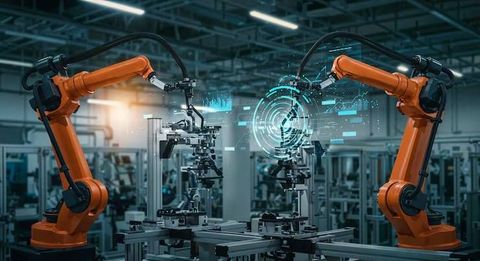
Industrial Control Technology Insights for Modern Manufacturing and Smart Factories
Industrial control technology plays an important role in modern manufacturing by helping machines, production lines, and industrial processes operate safely and consistently.
It combines automation systems, sensors, software, and communication networks to monitor equipment, manage operations, and support accurate production decisions.
As manufacturing environments become more connected, industrial control technology is increasingly associated with smart factories, industrial Internet of Things (IIoT), robotics, and data-driven operations. Understanding these technologies helps manufacturers, engineers, students, and technical managers learn how industrial systems work and how they are evolving.
Context
Industrial control technology refers to the hardware and software used to monitor, regulate, and automate industrial processes. These systems are common in manufacturing plants, power generation facilities, water treatment plants, food processing operations, and other industrial environments.
Traditional industrial control systems relied heavily on manual operations and individual mechanical controls. Over time, programmable electronics, digital communication, and computer-based monitoring made it possible to manage complex processes with greater consistency.
Modern industrial control environments often combine several technologies, including:
Programmable logic controllers (PLCs) for executing automated control instructions.
Supervisory control and data acquisition (SCADA) systems for monitoring processes across equipment and facilities.
Distributed control systems (DCSs) for coordinating complex, continuous industrial operations.
Human-machine interfaces (HMIs) for displaying equipment information and allowing authorized operators to interact with machines.
Industrial sensors and actuators for measuring physical conditions and controlling equipment.
These components work together to collect information, evaluate operating conditions, and perform actions based on defined instructions. For example, a temperature sensor can detect a change in an industrial oven, while a controller adjusts the heating system to maintain the required temperature.
The purpose is not simply to reduce manual work. Industrial control technology also supports process consistency, equipment monitoring, operational visibility, and safety management.
Importance
Industrial control technology matters because modern production environments depend on reliable equipment, predictable processes, and timely decisions. A small process variation can affect product quality, energy consumption, or the operation of an entire production line.
Automation can help organizations maintain consistent operating conditions and identify abnormal behavior before it develops into a larger operational problem. However, the results depend on appropriate system design, maintenance, staff training, and accurate configuration.
Different groups benefit from understanding industrial control systems.
Manufacturing engineers use control technology to configure production sequences and maintain process parameters. Plant operators rely on control interfaces to observe equipment conditions and respond to alarms. Maintenance teams use system data to investigate faults and plan inspections. Technical managers evaluate operational performance, equipment reliability, and technology requirements.
Industrial control systems can support several important objectives:
Improving consistency across repeated manufacturing operations.
Monitoring machine performance and identifying unusual conditions.
Supporting preventive and predictive maintenance practices.
Coordinating equipment across connected production lines.
Improving visibility into energy use, production status, and process interruptions.
Supporting safety functions when properly designed and implemented.
The relationship between automation and human oversight remains important. Operators need clear procedures, suitable training, and reliable information to respond effectively when equipment behaves unexpectedly.
Recent Updates
Industrial control technology continues to develop as manufacturers adopt connected devices, modern computing systems, and advanced analytical tools. These developments can improve operational awareness, but they also introduce new integration and cybersecurity considerations.
Smart factories and connected equipment
Smart factories connect machines, sensors, controllers, and production software to create a more complete view of manufacturing operations. Industrial IoT devices can collect information such as vibration, temperature, pressure, machine speed, and energy consumption.
When this information is analyzed over time, maintenance teams may identify patterns associated with equipment deterioration. Predictive maintenance models can help estimate when inspection may be appropriate, although their accuracy depends on data quality and the specific equipment involved.
Edge computing is another important development. It allows selected data processing to occur close to industrial equipment instead of relying entirely on remote computing infrastructure. This can reduce communication delays and support applications that require timely responses.
Artificial intelligence and industrial cybersecurity
Artificial intelligence and machine learning are being explored for fault detection, process optimization, visual inspection, and production forecasting. These technologies can assist with identifying patterns, but their outputs require validation before they influence important industrial decisions.
Cybersecurity has also become a central consideration as operational technology becomes more connected to business networks and remote monitoring systems.
Common protective measures include network segmentation, controlled remote access, secure configuration, system backups, software updates, and continuous monitoring. Legacy equipment may require additional safeguards because it was not always designed for modern network environments.
The following table summarizes selected developments.
Technology | Main purpose | Important consideration |
|---|---|---|
Industrial IoT | Collects equipment and process data | Device security and data quality |
Edge computing | Processes data near equipment | Computing capacity and reliability |
AI-based analytics | Identifies patterns and possible faults | Model validation and accuracy |
Digital twins | Represents physical assets or processes digitally | Model accuracy and maintenance |
Industrial robotics | Automates defined physical tasks | Safety controls and integration |
Modern SCADA platforms | Supports process monitoring and supervision | Access control and system resilience |
These developments do not eliminate the need for established control engineering principles. Reliable sensors, tested control logic, appropriate safety measures, and clear operating procedures remain essential.
Laws or Policies
Industrial control technology may be affected by different regulations and technical standards depending on the country, industry, equipment, and application. Manufacturers should distinguish between legally binding requirements, voluntary standards, and technical guidance.
In the United States, the Occupational Safety and Health Administration (OSHA) establishes workplace safety requirements that may apply to machinery, electrical systems, hazardous energy, and industrial operations. For example, hazardous-energy control requirements are relevant when equipment is maintained or serviced.
The National Institute of Standards and Technology (NIST) publishes guidance for operational technology security. Its Special Publication 800-82 provides information about protecting industrial control systems while considering their unique performance, reliability, and safety requirements.
International standards are also relevant:
IEC 62443 addresses cybersecurity for industrial automation and control systems.
IEC 61508 provides a framework for the functional safety of electrical, electronic, and programmable electronic safety-related systems.
ISO 13849 addresses safety-related parts of machinery control systems.
In the European Union, applicable machinery legislation and cybersecurity requirements may affect the design, deployment, and operation of industrial equipment. The relevant requirements depend on the equipment category and applicable implementation dates.
In India, industrial facilities may need to consider the Factories Act, 1948, applicable state factory rules, electrical safety requirements, environmental regulations, and other laws relevant to their operations. The applicable legal framework should be checked against current legislation and any changes in force.
Compliance requires more than installing appropriate equipment. Organizations should document risk assessments, maintain technical records, train personnel, and review relevant requirements when systems change.
Tools and Resources
A combination of engineering tools, technical documentation, and cybersecurity guidance can help people understand and manage industrial control environments.
Useful resources include:
NIST publications for operational technology security guidance.
International Electrotechnical Commission (IEC) standards for automation, industrial cybersecurity, and functional safety.
International Organization for Standardization (ISO) publications covering machinery safety and related management practices.
Manufacturer manuals for PLCs, SCADA platforms, sensors, industrial drives, and communication equipment.
Engineering simulation software for testing control logic and process behavior before deployment.
Maintenance management systems for recording inspections, equipment faults, and maintenance activities.
The choice of tools depends on the facility's requirements, existing infrastructure, technical skills, and applicable safety obligations.
Tool or resource | Typical application |
|---|---|
PLC programming software | Developing and testing machine control logic |
SCADA software | Monitoring processes and reviewing alarms |
HMI design tools | Creating operator screens and equipment displays |
Network monitoring tools | Observing industrial network activity |
Simulation platforms | Evaluating process behavior and control sequences |
Maintenance records | Tracking inspections, faults, and corrective actions |
Before introducing new software or equipment, organizations should assess compatibility with existing systems. Testing in a controlled environment can help identify configuration errors before changes affect live production.
FAQs
What is industrial control technology?
Industrial control technology includes the hardware and software used to monitor and regulate industrial equipment and processes. Examples include PLCs, SCADA systems, sensors, HMIs, and industrial communication networks.
How does industrial control technology support smart factories?
It connects equipment, sensors, and control systems so that production conditions can be monitored and analyzed. This information can help improve process visibility, identify faults, and coordinate manufacturing activities.
What is the difference between PLC and SCADA systems?
A PLC typically executes control instructions for specific machines or processes. SCADA software provides supervisory monitoring, data collection, and control capabilities across equipment or larger industrial operations.
Why is cybersecurity important for industrial control systems?
Cybersecurity helps protect equipment, production information, and essential operations from unauthorized access and disruption. Industrial environments require safeguards that account for operational reliability and physical safety.
What skills are useful for learning industrial control technology?
Useful foundations include electrical engineering, instrumentation, automation principles, programming logic, industrial networking, troubleshooting, and cybersecurity awareness. Practical training should include applicable safety procedures.
Conclusion
Industrial control technology is a fundamental part of modern manufacturing and smart factory development. By combining controllers, sensors, monitoring platforms, and connected equipment, it helps organizations manage processes, maintain operational visibility, and identify opportunities for improvement.
Its continued development is bringing greater use of industrial IoT, edge computing, robotics, and AI-based analytics. Successful implementation still depends on sound engineering, appropriate safety measures, cybersecurity protections, and trained personnel.
For students and professionals, learning the fundamentals of industrial control systems provides a useful starting point for understanding automated production environments. Reviewing technical standards, studying practical examples, and following developments in industrial automation can build a clearer understanding of how these systems support modern industry.

Related Post...
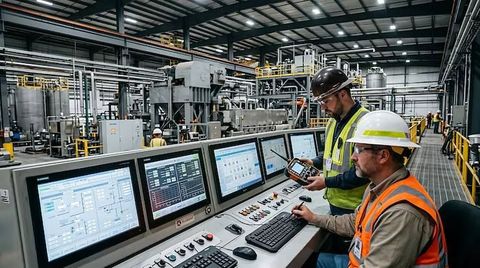
Industrial Control Technology Insights for Modern Manufacturing and Smart Factories
Updated: October 26, 2026
Read More
Optical Sensors Explore Guide to Technology, Applications, and Industrial Uses
Updated: October 20, 2026
Read More