Industrial Automation Insights: How Robotics Are Transforming Modern Factories
Industrial Automation refers to the use of advanced machines, robotics, computer systems, sensors, and software to perform manufacturing activities with limited manual involvement. It helps industries manage repetitive operations, monitor production processes, maintain product consistency, and coordinate different stages of manufacturing.
The development of industrial automation began with mechanical equipment designed to reduce physical effort in factories. Over time, electrical controls, programmable logic controllers (PLCs), computer-based monitoring, and industrial robots introduced new ways to manage production. Today, connected technologies are bringing these systems together through digital networks and intelligent software.
Traditional factories often depend on separate machines and manually coordinated production activities. Modern manufacturing environments increasingly use connected equipment that can exchange information, identify operating conditions, and respond to changes in production requirements.
Three major developments are shaping this transformation:
Industrial Robotics: Robots perform repetitive, physically demanding, or highly precise activities, including welding, material handling, assembly, and packaging.
Smart Factories: Digital systems connect machines, production lines, sensors, and management platforms to provide a clearer view of factory operations.
Connected Manufacturing: Equipment and software exchange production information, helping different departments coordinate activities and identify operational problems.
These technologies are becoming relevant across automotive production, electronics, pharmaceuticals, food processing, textiles, aerospace, and other manufacturing industries. Their development reflects the growing importance of digital information, production flexibility, and equipment coordination.
Importance
Why Industrial Automation Matters Today
Manufacturing industries face several challenges, including changing customer requirements, production delays, equipment failures, material shortages, and workplace safety concerns. Industrial automation helps address some of these difficulties by making production activities more consistent and easier to monitor.
Automated systems can perform repetitive operations according to programmed instructions. This reduces dependence on manual handling for certain activities and allows employees to concentrate on supervision, technical problem-solving, quality checks, and production planning.
Automation also supports production monitoring. Sensors installed on machinery can collect information about temperature, vibration, pressure, speed, and operating conditions. This information helps operators understand how equipment is performing and identify unusual changes.
Benefits for Workers and Businesses
The effects of automation extend beyond factory production. Manufacturers, employees, equipment suppliers, transportation networks, and consumers can all experience changes as production systems become more connected.
Important areas include:
Production consistency: Automated equipment follows defined operating instructions, helping maintain similar production conditions across repeated tasks.
Workplace safety: Robots can handle certain dangerous activities, such as working near extreme temperatures, heavy materials, or hazardous industrial environments.
Equipment monitoring: Sensors and monitoring platforms help identify unusual machine behaviour before it causes larger interruptions.
Production flexibility: Programmable systems can support changes in product designs, production sequences, and manufacturing requirements.
Resource management: Digital monitoring can help identify unnecessary energy consumption, material waste, and inefficient machine operations.
Challenges Associated With Automation
Despite its advantages, automation introduces several practical challenges. Installing advanced equipment requires planning, technical knowledge, employee training, and adjustments to existing production processes.
Cybersecurity is another important concern. Connected machinery may become exposed to digital threats if networks, software, or access controls are not properly maintained.
Smaller manufacturers may also experience difficulties when modernising older equipment. Compatibility between different machines, software platforms, and communication systems can make integration complicated.
Employee responsibilities can change as automated processes become more common. Workers may need additional knowledge of robotics, equipment monitoring, digital systems, and industrial safety procedures.
Recent Updates
Artificial Intelligence in Manufacturing
Artificial intelligence (AI) is becoming an important part of industrial automation. Manufacturing systems increasingly use AI-based software to examine production information, detect unusual patterns, identify equipment problems, and support operational decisions.
AI applications include:
Predictive maintenance that identifies signs of possible equipment failure.
Automated visual inspection that detects defects in manufactured products.
Production planning systems that analyse operating information and production requirements.
Intelligent robots that recognise objects and adjust certain movements according to their surroundings.
A notable development during 2026 is the growing focus on combining AI with physical manufacturing equipment. The National Institute of Standards and Technology (NIST) published a roadmap addressing AI and machine learning in smart manufacturing, including robotics, digital twins, industrial data, and autonomous systems.
Collaborative and Mobile Robotics
Industrial robots are moving beyond traditional applications where machines operate inside fixed, separated work areas. Collaborative robots, commonly called cobots, are designed to work alongside people in suitable environments with appropriate safety measures.
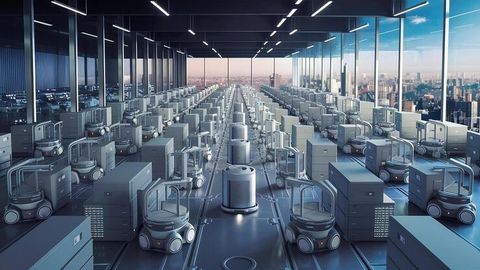
Mobile robots are also becoming more common in manufacturing facilities. Autonomous mobile robots (AMRs) can transport materials, components, and equipment between designated areas using sensors and navigation systems.
These developments are changing how factories organise material movement, assembly operations, and human-machine cooperation.
Digital Twins and Connected Production
A digital twin is a virtual representation of a physical machine, production line, or manufacturing facility. It uses information from real equipment to represent operating conditions and examine possible changes.
Manufacturers can use digital twins to study production layouts, simulate machine behaviour, and identify potential operational difficulties before changing physical equipment.
Connected manufacturing is also expanding through industrial Internet of Things (IIoT) technology. Sensors, controllers, machines, and software platforms exchange information through industrial networks, creating a more coordinated production environment.
Important Manufacturing Technology Developments
Technology | Main function | Industrial application |
|---|---|---|
Industrial AI | Analyses production information | Quality monitoring |
Collaborative robots | Work alongside people | Assembly operations |
Autonomous mobile robots | Move materials | Factory logistics |
Digital twins | Represent physical systems digitally | Production simulation |
IIoT sensors | Collect machine information | Equipment monitoring |
Cloud manufacturing | Connect production information across platforms | Factory coordination |
The broader direction is toward factories where machines, software, and employees work together through connected systems. However, the level of adoption varies according to industry, technical infrastructure, workforce capabilities, and production requirements.
Laws or Policies
Industrial Machinery and Workplace Safety
Industrial automation is influenced by regulations covering machinery safety, electrical systems, workplace conditions, employee protection, and digital security. Requirements differ between countries, and manufacturers must consider the rules applicable to the locations where equipment is designed, installed, and operated.
In the European Union, Regulation (EU) 2023/1230 establishes machinery safety requirements. It addresses machinery design, construction, conformity assessment, and related safety responsibilities. The regulation is scheduled to apply generally from January 2027, replacing the previous Machinery Directive framework.
Artificial Intelligence Regulations
AI-based manufacturing systems may also fall under regulations governing automated decision-making, data protection, and AI safety.
The European Union's AI Act follows a risk-based approach. Its requirements are being introduced in stages, with major provisions becoming applicable during 2025 and 2026. Additional requirements for certain high-risk AI systems are scheduled for later implementation.
These requirements are relevant when AI is incorporated into industrial equipment or used in applications that could affect worker safety and other important interests.
Manufacturing Policies in Different Countries
Government programmes also influence the development of industrial automation. Their objectives commonly include manufacturing modernisation, technical research, digital infrastructure, workforce development, and industrial productivity.
Examples include:
India: Manufacturing modernisation initiatives, industrial safety requirements, applicable BIS standards, and the National Manufacturing Mission framework support discussions around industrial development and technology adoption.
United States: NIST develops technical guidance and research related to smart manufacturing, industrial cybersecurity, measurement systems, and advanced production technologies.
European Union: Machinery safety legislation, AI regulation, and industrial digitalisation programmes influence how connected manufacturing technologies are developed and implemented.
Manufacturers must also consider electrical safety standards, occupational health requirements, machine guarding, emergency procedures, and cybersecurity practices. The exact obligations depend on the country, equipment category, and intended industrial application.
Tools and Resources
Industrial Automation Software
Several software categories help manufacturers plan, monitor, and manage automated production environments. These platforms support communication between machines, production teams, and management systems.
Commonly used tools include:
Programmable Logic Controllers (PLCs): Control industrial machines and automated production sequences through programmed instructions.
Supervisory Control and Data Acquisition (SCADA): Monitor industrial equipment, collect operational information, and display production conditions.
Manufacturing Execution Systems (MES): Coordinate production activities, track manufacturing progress, and record quality information.
Computer-Aided Design (CAD): Help engineers create and modify digital designs of machinery, components, and production layouts.
Computer-Aided Manufacturing (CAM): Convert product designs into manufacturing instructions for compatible machinery.
Enterprise Resource Planning (ERP): Connect manufacturing information with inventory, procurement, production planning, and business operations.
Learning and Research Resources
People interested in understanding industrial automation can explore technical publications, educational platforms, and industry standards.
Some useful resources include:
NIST: Research publications covering smart manufacturing, industrial measurement, and advanced production technologies.
International Federation of Robotics (IFR): Industry information about industrial robots, robotics applications, and global adoption trends.
International Organization for Standardization (ISO): Standards covering machinery safety, quality management, robotics, and industrial processes.
ISA (International Society of Automation): Technical educational materials covering industrial control systems, automation engineering, and manufacturing technology.
These resources help students, manufacturing professionals, engineers, and general readers understand how automated production systems operate and how industrial technologies are evolving.
FAQs
What Is Industrial Automation?
Industrial automation involves using machines, robotics, sensors, controllers, and software to perform or manage manufacturing activities. It helps industries monitor production, control equipment, and maintain consistent operating processes.
How Do Robots Support Industrial Automation?
Robots perform activities such as welding, assembly, packaging, painting, and material handling. They can handle repetitive or physically demanding operations while employees supervise processes and manage technical responsibilities.
What Is a Smart Factory in Industrial Automation?
A smart factory uses connected machines, sensors, software, and digital systems to monitor and coordinate production activities. It allows equipment and manufacturing platforms to exchange information and respond to changing operating conditions.
What Is the Difference Between Traditional and Connected Manufacturing?
Traditional manufacturing often relies on separate machines and manually coordinated processes. Connected manufacturing uses digital networks to exchange information between equipment, production systems, and departments.
Will Industrial Automation Change Manufacturing Employment?
Industrial automation can change the types of tasks performed by manufacturing employees. Some repetitive activities may become automated, while responsibilities involving robotics, equipment maintenance, programming, monitoring, and technical supervision may become more important.
Conclusion
Industrial automation is transforming manufacturing through robotics, artificial intelligence, smart factories, and connected production systems. These technologies support equipment monitoring, production coordination, workplace safety, and manufacturing consistency. However, their implementation also introduces challenges involving cybersecurity, technical integration, employee training, and regulatory compliance. The future of manufacturing will increasingly involve cooperation between human workers, intelligent machines, and connected digital systems.

Related Post...
Understanding Physical AI: An Overview of the Next Industrial Robotics Revolution
Updated: November 26, 2026
Read More
Key Insights Into Precision Engineering and Advanced Machine Tool Technology
Updated: November 26, 2026
Read More
Autonomous Warehouse Robots: An Overview of Business Uses and Operational Benefits
Updated: November 26, 2026
Read More