How Heavy Mining Excavators Power Large-Scale Mining Operations
Heavy excavators play an essential role in mining operations.
Heavy Mining Excavators
These machines remove overburden, extract materials, and load minerals onto transportation equipment. Their performance depends on several interconnected systems, including hydraulic excavator parts, engines, tracks, and structural components. Understanding excavator parts and functions helps explain how mining equipment handles demanding working conditions while maintaining operational efficiency.
Understanding Heavy Mining Excavators
Heavy mining excavators are large construction machines designed to move substantial quantities of earth, rock, and other materials. They are commonly used in open-pit mines, quarries, and large infrastructure projects.
Unlike a compact excavator, which is generally used in smaller construction areas, mining excavators are designed for heavier workloads and larger excavation requirements. Their size, operating weight, bucket capacity, and engine power vary according to the machine model and intended application.
How Mining Excavators Support Operations
Mining operations involve several stages where excavators perform important tasks. Their primary responsibilities include:
Overburden removal: Removing soil and rock covering mineral deposits.
Material excavation: Digging and collecting minerals or other extracted materials.
Loading operations: Transferring excavated materials into haul trucks.
Site preparation: Clearing and shaping areas for mining activities.
Stockpile management: Moving materials between designated storage locations.
These activities help maintain the movement of materials between excavation areas, processing facilities, and transportation routes.
Important Excavator Parts and Functions
A mining excavator contains several mechanical, hydraulic, and structural systems. Each component performs a specific function, and the systems work together to support machine movement and excavation.
Main Hydraulic Excavator Parts
Hydraulic systems generate and control the force required for digging, lifting, and moving materials. Hydraulic excavator parts are particularly important because they allow operators to control the boom, arm, and bucket.
Major components include:
Hydraulic pump: Moves hydraulic fluid through the system.
Hydraulic cylinders: Convert hydraulic pressure into mechanical movement.
Control valves: Direct fluid toward different hydraulic components.
Hydraulic hoses: Carry fluid between system components.
Hydraulic motor: Converts hydraulic energy into rotational movement.
Hydraulic reservoir: Stores hydraulic fluid for system operation.
Regular inspection of these components helps identify leaks, damaged connections, and unusual operating conditions.
Engine, Boom, Arm, and Bucket
The engine supplies power to the machine's operating systems. The boom supports the arm and provides reach, while the arm connects the boom to the bucket.
The bucket performs the actual digging and material collection. Its design and capacity depend on the material being handled and the machine's operating requirements.
Other important excavator parts include the operator cabin, counterweight, swing mechanism, cooling system, and electrical controls.
Role of the Excavator Undercarriage
The excavator undercarriage supports the machine's weight and allows it to travel across uneven mining surfaces. It is especially important in large mining environments where machines operate on rough, rocky, or loose ground.
Main Undercarriage Components
The undercarriage consists of several interconnected parts that support movement and distribute machine weight.
Component | Main Function |
|---|---|
Track shoes | Provide ground contact and traction |
Track chains | Connect individual track links |
Track rollers | Support and guide the track |
Carrier rollers | Support the upper track section |
Idlers | Guide the track around the undercarriage |
Sprockets | Engage with track links to drive movement |
Understanding Excavator Sprocket Wear
An excavator sprocket transfers driving force to the track chain. Over time, repeated contact between the sprocket teeth and track links causes wear.
Common signs of sprocket wear include:
Teeth becoming pointed or uneven.
Changes in tooth shape.
Irregular contact with track links.
Unusual movement or noise during operation.
Sprocket wear can affect track performance and may increase wear on connected undercarriage components. Inspection helps determine whether adjustment, repair, or replacement is necessary.
Development of Machine Control Hydraulic Excavators
Machine control technology has changed how excavator operators approach excavation tasks. Modern systems can combine positioning information, sensors, and digital displays to help operators understand bucket position and working depth.
Development of PC210LCi-10 and PC200i-10
The development of PC210LCi-10 and PC200i-10 machine control hydraulic excavators reflects the application of integrated machine guidance technology in construction equipment.
These systems are associated with intelligent machine control approaches. Depending on the configuration, they can use positioning data and machine sensors to provide information about the excavator's working position.
Such technology can help operators follow planned excavation dimensions and reduce reliance on repeated manual measurements. However, actual capabilities depend on the machine version, available equipment, site conditions, and system configuration.
Excavator Maintenance and Inspection
Mining excavators operate in environments where dust, vibration, heavy loads, and abrasive materials can affect component condition. Regular maintenance helps identify developing problems and supports consistent equipment operation.
Excavator Track Inspection Process
The excavator track inspection process focuses on checking the condition of the undercarriage and identifying abnormal wear.
A general inspection may include:
Checking track tension according to manufacturer specifications.
Examining track shoes for cracks or damage.
Inspecting rollers and idlers for leakage or unusual wear.
Checking sprocket teeth for uneven wear.
Looking for loose, damaged, or missing track components.
Removing accumulated mud, rocks, and debris where appropriate.
Inspections should be performed according to equipment instructions and site safety procedures.
Excavator Maintenance Schedule
An excavator maintenance schedule organizes inspections and servicing activities at appropriate intervals. The exact schedule varies according to machine model, working hours, environmental conditions, and manufacturer recommendations.
A general preventive maintenance schedule may look like this:
Maintenance Interval | Typical Activities |
|---|---|
Daily | Visual inspection, fluid checks, track condition |
Weekly | Inspect hoses, connections, and undercarriage |
Monthly | Review component wear and inspect major systems |
Scheduled service | Replace filters and fluids as specified |
Periodic inspection | Assess structural components and overall machine condition |
A preventive maintenance schedule should always follow the manufacturer's maintenance manual. Severe operating conditions may require more frequent inspections.
Factors Affecting Excavator Costs
The question of how much is excavator depends on several factors. There is no single price applicable to every machine because excavators differ considerably in size, capacity, technology, and intended use.
What Determines Excavator Prices?
Important cost factors include:
Machine size: Heavy mining excavators generally have different costs from compact excavators.
Brand and model: Manufacturer specifications and equipment configurations influence pricing.
Operating capacity: Bucket size, engine power, and operating weight affect machine selection.
Technology: Positioning systems and machine control features may influence the overall cost.
Condition: New and used equipment have different pricing considerations.
Maintenance history: Previous servicing and component condition are important when evaluating used machines.
Additional expenses may include transportation, fuel, operator training, replacement components, and routine servicing.
FAQs About Heavy Mining Excavators
What Are the Main Excavator Parts?
The main parts include the engine, boom, arm, bucket, hydraulic system, operator cabin, swing mechanism, and undercarriage.
Why Is Excavator Undercarriage Maintenance Important?
The undercarriage supports machine movement and weight distribution. Regular inspection helps identify worn tracks, rollers, idlers, and sprockets.
What Causes Excavator Sprocket Wear?
Repeated contact with track links, abrasive ground conditions, incorrect track tension, and prolonged operation can contribute to sprocket wear.
How Often Should an Excavator Be Serviced?
Service intervals depend on manufacturer recommendations, operating hours, and working conditions. Daily inspections and scheduled servicing are both important.
Are Compact Excavators Used in Mining?
Compact excavators may support smaller site tasks, maintenance work, and restricted-area operations. Heavy mining activities generally require larger machines with suitable operating capacities.
Conclusion
Heavy mining excavators support large-scale operations through excavation, loading, and material handling. Their performance depends on hydraulic systems, structural components, and a properly maintained undercarriage.

Related Post...
How Industrial Equipment Drives Modern Manufacturing Efficiency
Updated: November 25, 2026
Read More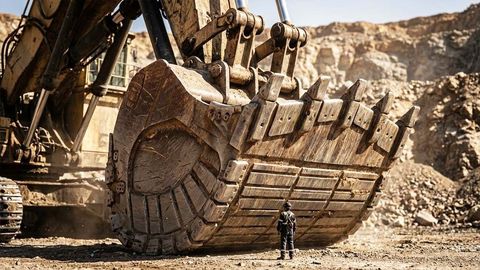
How Heavy Mining Excavators Power Large-Scale Mining Operations
Updated: November 25, 2026
Read More