How Electronic Component Counters Improve SMT Inventory Control
Managing electronic components accurately is essential for surface mount technology.
Electronic Component Counters
An electronic component counter helps manufacturers measure the quantities of small electronic parts stored on reels, making inventory tracking easier and more consistent. It can also support purchasing decisions, production planning, and stock verification.
In traditional inventory management, workers may count components manually or estimate quantities based on reel weight. These methods can require additional time and may introduce counting differences. An automatic component counter provides a more structured approach to identifying available quantities and maintaining inventory records.
What Is an Electronic Component Counter?
An electronic component counter is a machine designed to determine the quantity of electronic components, particularly small surface-mount devices stored on reels. Depending on its design, the machine may use optical sensors, image processing, or other counting technologies to identify individual components.
An SMT component counting machine is commonly used in electronics manufacturing facilities where thousands of components may be stored and issued for production. Its purpose is to support accurate stock information and reduce the effort associated with manual counting.
Why SMT Inventory Accuracy Matters
SMT production depends on the availability of different components, including resistors, capacitors, integrated circuits, and other small electronic parts. Missing or incorrectly recorded quantities can interrupt production schedules and create difficulties during material preparation.
Accurate inventory information helps manufacturers understand which components are available, which require replenishment, and how much material is needed for upcoming production orders.
Importance of Electronic Component Counters for Inventory Control
Inventory control involves recording, monitoring, storing, and distributing materials according to production requirements. Electronic component counters contribute to this process by providing more consistent quantity information for reel-based components.
When manufacturers have reliable stock records, they can reduce unnecessary inventory checks and make more informed purchasing decisions. This is particularly useful for facilities handling multiple production lines and large component inventories.
Reducing Manual Counting Work
Small electronic components are difficult to count individually because of their size and packaging arrangements. Manual counting can become time-consuming when employees need to check multiple reels during receiving, storage, or production preparation.
An automatic SMD counter can simplify this activity by identifying and counting components through its measurement system. Employees can spend less time on repetitive counting tasks and more time on inventory verification and material handling.
Improving Inventory Record Accuracy
Incorrect quantities can create differences between physical stock and inventory management records. These differences may lead to unnecessary purchases, delayed production, or confusion during material allocation.
A PCB component counting machine helps establish more consistent quantity records. When counting results are recorded properly, inventory teams can compare physical stock with system information and investigate discrepancies.
Supporting Production Planning
Production planning requires accurate information about available materials. If component quantities are unclear, manufacturers may face difficulties determining whether existing stock is sufficient for scheduled orders.
Reliable counting information helps production teams identify potential shortages earlier. It also supports better coordination between purchasing, warehouse operations, and SMT production departments.
How an SMT Component Counting Machine Works
Electronic component counters use different technologies depending on their design and intended applications. Although operating procedures vary, most machines follow a structured process to determine component quantities.
Loading and Positioning the Reel
The operator places the component reel onto the machine according to the manufacturer's instructions. Correct positioning is important because the equipment must properly access the component tape or reel arrangement.
Some machines support different reel sizes and component packaging formats. Operators should check equipment compatibility before starting the counting process.
Detecting and Counting Components
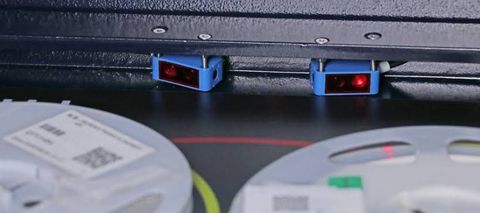
The machine uses its counting technology to identify individual components. Optical systems may detect component positions, while other designs use image recognition or measurement-based methods.
The system then calculates the estimated or detected quantity and displays the result. Counting accuracy depends on equipment design, component characteristics, operating conditions, and correct setup.
Recording the Counting Results
After counting, the operator can record the quantity in an inventory system. Some electronic component counting machines support data transfer, barcode identification, or integration with inventory software.
These features help connect physical component verification with digital stock records. However, available functions differ between equipment models.
Comparing Electronic Component Counting Equipment
Different counting solutions are available for SMT manufacturing environments. The appropriate option depends on inventory volume, component types, counting requirements, and available integration features.
| Equipment type | Main function | Common application |
|---|---|---|
| Manual counting tools | Support basic quantity checks | Small inventory operations |
| Electronic reel counter | Counts components on reels | SMT material verification |
| Automatic optical counter | Uses optical detection | High-volume reel counting |
| Vision-based counter | Uses image processing | Component identification and counting |
| Integrated inventory system | Connects counting with stock records | Warehouse and production control |
An electronic reel counter may be suitable for routine stock verification, while an integrated solution may be more useful when manufacturers need connections with existing inventory systems.
Factors to Consider Before Buying an Electronic Component Counter
Selecting suitable SMT inventory control equipment requires evaluating operational requirements rather than focusing only on the purchase price. Different machines offer different counting methods, compatibility levels, and data management functions.
Component and Reel Compatibility
Manufacturers should check whether the equipment supports their commonly used component sizes, reel dimensions, and tape formats. Compatibility is important because SMT inventories may contain several types of electronic components.
A machine that cannot handle frequently used reel formats may require additional manual processes.
Counting Accuracy and Operating Speed
Counting accuracy is an important consideration when comparing an automatic component counter. Buyers should review the manufacturer's specifications and understand the conditions under which stated accuracy levels apply.
Operating speed also matters, particularly when inventory teams process large numbers of reels. Testing equipment with representative components can help assess its practical performance.
Software and Data Integration
Some machines offer barcode scanning, data storage, communication interfaces, or inventory software integration. These features may help reduce repeated data entry and improve stock traceability.
Before purchasing, manufacturers should check compatibility with their existing warehouse management or manufacturing systems.
Component Counting Machine Price
The component counting machine price can vary depending on technology, automation level, supported reel sizes, software features, and manufacturer specifications.
Buyers should compare the total cost of ownership, including maintenance, operator training, software requirements, and technical support. A lower initial price does not necessarily mean lower long-term operating costs.
Frequently Asked Questions
What Is an Electronic Component Counter Used For?
An electronic component counter determines the quantity of small electronic components, particularly those stored on SMT reels. It helps manufacturers verify stock and maintain more consistent inventory records.
How Does an Automatic Component Counter Improve SMT Inventory Control?
It reduces repetitive manual counting and provides structured quantity information. This helps inventory teams verify stock, identify shortages, and support production planning.
Is an SMT Reel Counter Suitable for All Components?
Not necessarily. Compatibility depends on reel dimensions, tape formats, component sizes, and the machine's counting technology. Manufacturers should review specifications before purchasing.
What Affects the Price of an Electronic Component Counting Machine?
Price depends on counting technology, automation features, software integration, reel compatibility, and technical support requirements.
Can Component Counters Connect With Inventory Software?
Some models support barcode scanning, data transfer, or software integration. Buyers should confirm supported interfaces and compatibility with their existing systems.
Conclusion
Electronic component counters support SMT inventory control by making component quantity verification more structured and consistent. They can reduce manual counting work, improve stock records, and provide useful information for production planning.
Before buying an SMT component counting machine, manufacturers should evaluate compatibility, counting accuracy, operating speed, software integration, and overall cost. Selecting equipment according to actual inventory requirements can support more organized warehouse and production operations.

Related Post...
How Electronic Component Counters Improve SMT Inventory Control
Updated: November 25, 2026
Read More