High-Pressure Triplex & Quintuplex Plunger Pumps Overview
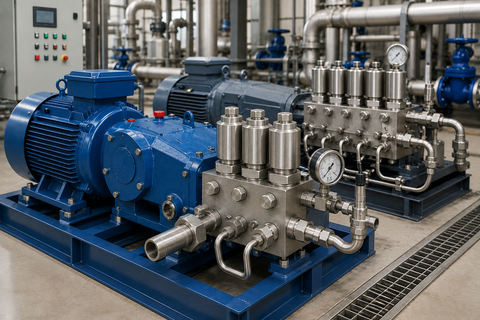
High-pressure triplex and quintuplex plunger pumps are specialized positive displacement pumps designed to generate extremely high fluid pressures while maintaining reliable flow rates.
These pumps play a critical role in industries that require precision fluid delivery, pressure-intensive operations, and continuous performance under demanding conditions.
From industrial cleaning and hydrostatic testing to oil and gas operations, mining, manufacturing, and water treatment, these pumps support a wide range of applications where conventional pumping systems may not deliver the required pressure levels.
As industries increasingly focus on efficiency, durability, and operational reliability, understanding the capabilities and applications of high-pressure plunger pumps has become increasingly important for engineers, operators, and facility managers.
Quick Overview
| Feature | Description |
|---|---|
| Pump Type | Positive Displacement Pump |
| Main Variants | Triplex and Quintuplex |
| Pressure Capability | High-pressure fluid transfer |
| Fluid Handling | Water, chemicals, slurries, and industrial fluids |
| Key Industries | Oil & Gas, Manufacturing, Mining, Water Treatment |
| Main Advantage | Consistent high-pressure output |
| Drive Mechanism | Crankshaft and plunger assembly |
| Typical Operation | Continuous-duty industrial applications |
Key Benefits
- High-pressure generation
- Stable flow delivery
- Durable construction
- Long operational life
- Suitable for demanding industrial environments
- Efficient energy utilization
Industry Overview
High-pressure pumping systems have become essential across numerous industrial sectors. Modern manufacturing, infrastructure maintenance, energy production, and industrial processing frequently depend on controlled high-pressure fluid delivery.
Triplex and quintuplex plunger pumps are widely adopted because they combine reliability with the ability to operate under extreme pressure conditions. Their design allows industries to perform tasks such as surface preparation, pipeline testing, fluid injection, descaling, and industrial cleaning with greater precision and consistency.
As industrial processes become more automated and performance-driven, these pumps continue to serve as foundational equipment in many critical operations.
How High-Pressure Plunger Pumps Work
These pumps operate using a reciprocating motion that moves plungers back and forth within cylinders.
Step 1: Power Transmission
A motor or engine drives a crankshaft.
Step 2: Plunger Movement
The crankshaft converts rotary motion into reciprocating movement.
Step 3: Suction Phase
As the plunger retracts, fluid enters the pump chamber through the inlet valve.
Step 4: Compression Phase
The plunger moves forward, compressing the fluid inside the chamber.
Step 5: Discharge Phase
Pressurized fluid exits through the discharge valve.
Step 6: Continuous Operation
Multiple plungers operate in sequence to maintain smooth fluid flow.
This design minimizes pulsation while producing extremely high pressures.
Main Types of High-Pressure Plunger Pumps
Triplex Plunger Pumps
Triplex pumps use three plungers operating in synchronized motion.
Features
- Three-cylinder design
- Compact construction
- Lower pulsation than duplex pumps
- Common industrial configuration
Applications
- Pressure washing
- Water jetting
- Pipeline testing
- Chemical injection
Advantages
- Reliable operation
- Efficient performance
- Easier maintenance
- Lower operating costs
Limitations
- Higher pulsation than quintuplex models
- May require pulsation dampeners
Quintuplex Plunger Pumps
Quintuplex pumps use five plungers.
Features
- Five-cylinder arrangement
- Smoother fluid delivery
- Reduced pressure fluctuations
- Suitable for continuous-duty operations
Applications
- Oilfield operations
- Industrial processing
- Large-scale water transfer
- High-volume pressure systems
Advantages
- Lower pulsation
- Improved efficiency
- Extended component life
- Enhanced flow stability
Limitations
- Larger footprint
- More complex maintenance
- Higher initial equipment investment
Core Components
Crankshaft
Converts rotational energy into reciprocating motion.
Plungers
Generate pressure through forward and backward movement.
Pump Head
Contains fluid chambers and valve assemblies.
Suction Valves
Control fluid entry into the cylinders.
Discharge Valves
Allow pressurized fluid to exit the system.
Seals and Packing
Prevent leakage and maintain pressure integrity.
Bearings
Support moving components and reduce friction.
Lubrication System
Ensures smooth mechanical operation.
Comparison Table
Triplex vs Quintuplex Plunger Pumps
| Feature | Triplex Pump | Quintuplex Pump |
| Number of Plungers | 3 | 5 |
| Flow Smoothness | Good | Excellent |
| Pulsation Level | Moderate | Lower |
| Maintenance Complexity | Lower | Higher |
| Equipment Size | Compact | Larger |
| Pressure Capability | High | High |
| Continuous Operation | Suitable | Highly Suitable |
| Component Wear | Moderate | Reduced |
| Industrial Usage | General Applications | Heavy-Duty Applications |
Real-World Applications
Oil and Gas Industry
These pumps are frequently used for:
- Well servicing
- Pressure testing
- Fluid injection
- Pipeline maintenance
Manufacturing Industry
Manufacturing facilities use them for:
- Surface preparation
- Industrial cleaning
- Descaling operations
- Process fluid handling
Water Treatment Facilities
Applications include:
- Membrane cleaning
- High-pressure filtration
- Reverse osmosis support
- System testing
Mining Operations
Mining facilities utilize these pumps for:
- Dust suppression
- Equipment cleaning
- Slurry transfer support
- Process water management
Infrastructure Maintenance
Used in:
- Bridge maintenance
- Concrete hydrodemolition
- Surface cleaning
- Structural restoration
Marine Industry
Applications include:
- Hull cleaning
- Corrosion removal
- Equipment maintenance
- Seawater processing systems
Real-World Examples
Pipeline Hydrostatic Testing
Energy companies use triplex pumps to test pipeline integrity by applying controlled high-pressure water.
Industrial Surface Preparation
Manufacturers employ quintuplex pumps for removing coatings, contaminants, and deposits from equipment surfaces.
Reverse Osmosis Facilities
Water treatment plants rely on high-pressure pumps to force water through membrane filtration systems.
Mining Equipment Cleaning
Mining operators use high-pressure pumping systems to remove accumulated debris from heavy machinery.
Key Features
High Pressure Capability
Designed for demanding pressure requirements.
Continuous Duty Operation
Capable of extended operation in industrial environments.
Precision Flow Control
Delivers controlled fluid volumes.
Heavy-Duty Construction
Built using durable materials for long service life.
Reduced Pulsation
Multiple plungers improve flow consistency.
Broad Fluid Compatibility
Suitable for various industrial fluids.
Benefits
Operational Benefits
- Reliable performance
- Consistent pressure output
- Reduced downtime
Performance Benefits
- Enhanced process efficiency
- Improved cleaning effectiveness
- Better pressure control
Efficiency Benefits
- Optimized energy use
- Stable operating conditions
- Lower performance losses
User Benefits
- Easier monitoring
- Predictable operation
- Improved productivity
Long-Term Advantages
- Extended equipment life
- Lower maintenance frequency
- Improved operational reliability
Challenges and Limitations
Wear of Seals and Packing
High-pressure operation can accelerate component wear.
Maintenance Requirements
Regular inspection is necessary to maintain performance.
Pulsation Concerns
Some systems require pulsation dampening equipment.
Fluid Compatibility Issues
Certain fluids may require specialized materials.
Initial Infrastructure Requirements
Supporting systems must be designed for high-pressure operation.
Operator Training
Personnel must understand safe handling procedures.
Selection Factors
Before selecting a high-pressure plunger pump, evaluate:
- Required operating pressure
- Desired flow rate
- Fluid characteristics
- Duty cycle requirements
- Installation environment
- Material compatibility
- Maintenance accessibility
- Energy requirements
- Safety considerations
- Future expansion needs
Standards, Regulations, and Best Practices
Many industrial applications follow established standards for safety and performance.
Common Considerations
- Pressure equipment safety guidelines
- Industrial fluid handling requirements
- Mechanical integrity inspections
- Preventive maintenance procedures
- Operator safety protocols
- Equipment documentation practices
Best Practices
- Perform routine inspections
- Monitor pressure levels continuously
- Replace worn components promptly
- Follow manufacturer recommendations
- Maintain proper lubrication schedules
Maintenance, Management, and Optimization
Routine Maintenance
- Inspect valves regularly
- Check seal condition
- Monitor lubrication systems
- Verify pressure performance
Performance Monitoring
Track:
- Pressure consistency
- Flow stability
- Vibration levels
- Operating temperature
Optimization Strategies
- Use appropriate operating pressures
- Schedule preventive maintenance
- Maintain clean fluid supply
- Monitor component wear trends
Emerging Technologies and Innovations
Smart Monitoring Systems
Sensors increasingly provide real-time operational data.
Predictive Maintenance
Analytics help identify maintenance needs before failures occur.
Automation Integration
Modern pumps can connect with automated control systems.
Digital Diagnostics
Advanced monitoring platforms improve troubleshooting and maintenance planning.
Advanced Materials
Improved coatings and wear-resistant materials enhance durability.
Future Trends
Increased Automation
Industrial facilities continue adopting automated pumping systems.
Enhanced Monitoring Capabilities
More systems are incorporating intelligent sensors and data analytics.
Greater Energy Efficiency
Manufacturers are focusing on reducing energy consumption.
Improved Materials Engineering
Advanced materials are expected to extend service life.
Digital Asset Management
Integration with industrial monitoring platforms will continue expanding.
Sustainability Initiatives
Industries are pursuing more efficient fluid handling technologies to reduce resource consumption.
Expert Insights
High-pressure triplex and quintuplex plunger pumps remain fundamental components in modern industrial operations. Their ability to generate reliable pressure while maintaining controlled flow makes them valuable across energy, manufacturing, water treatment, mining, and infrastructure sectors.
The transition toward digital monitoring, predictive maintenance, and automated process control is enhancing pump reliability and operational visibility. Organizations that prioritize proper equipment selection, maintenance, and monitoring can achieve improved efficiency and longer equipment life while supporting increasingly complex industrial processes.
Frequently Asked Questions
1. What is a triplex plunger pump?
A triplex plunger pump is a positive displacement pump that uses three plungers to generate high-pressure fluid flow.
2. What is a quintuplex plunger pump?
A quintuplex plunger pump uses five plungers, producing smoother flow and lower pulsation than triplex designs.
3. Why are plunger pumps used for high-pressure applications?
Their reciprocating design enables them to generate very high pressures while maintaining accurate flow control.
4. What industries commonly use these pumps?
Oil and gas, manufacturing, mining, water treatment, marine operations, and infrastructure maintenance.
5. What fluids can they handle?
Water, industrial chemicals, process fluids, and other compatible liquids depending on construction materials.
6. How are triplex and quintuplex pumps different?
The primary difference is the number of plungers, which affects flow smoothness and pulsation levels.
7. Are these pumps suitable for continuous operation?
Yes. Many industrial models are designed for continuous-duty operation.
8. What causes pump seal wear?
High pressure, abrasive fluids, improper lubrication, and extended operating periods can contribute to wear.
9. How often should maintenance be performed?
Maintenance schedules vary by application, operating conditions, and manufacturer recommendations.
10. What is pulsation in a plunger pump?
Pulsation refers to fluctuations in flow or pressure caused by reciprocating pump action.
11. Can these pumps be automated?
Yes. Modern systems often integrate with automated monitoring and control platforms.
12. What materials are commonly used in construction?
Stainless steel, alloy steel, ceramics, and specialized wear-resistant materials.
13. How do operators improve pump lifespan?
Regular maintenance, proper lubrication, clean fluids, and operating within design specifications.
14. Are these pumps energy efficient?
They can be highly efficient when properly sized and operated within intended conditions.
15. Why is flow smoothness important?
Smoother flow reduces vibration, minimizes component stress, and improves system performance.
Key Takeaways
- High-pressure plunger pumps are positive displacement pumping systems.
- Triplex pumps use three plungers, while quintuplex pumps use five.
- These pumps support demanding industrial pressure applications.
- Reduced pulsation improves operational stability.
- Oil and gas industries are major users of these systems.
- Preventive maintenance is critical for long-term reliability.
- Smart monitoring technologies are becoming increasingly common.
- Material selection affects durability and fluid compatibility.
- Proper sizing improves efficiency and performance.
- Automation and predictive maintenance are shaping future developments.
- Quintuplex designs provide smoother flow characteristics.
- These pumps remain essential for modern industrial operations.
Conclusion
High-pressure triplex and quintuplex plunger pumps are essential technologies for industries that depend on reliable high-pressure fluid delivery. Their robust construction, precision operation, and adaptability make them valuable assets in applications ranging from industrial cleaning and water treatment to energy production and infrastructure maintenance.
While both pump types provide dependable performance, their differences in flow characteristics, pulsation levels, and operational requirements allow organizations to select solutions that align with specific process needs. As automation, advanced materials, and digital monitoring technologies continue to evolve, high-pressure plunger pumps are expected to remain a critical part of industrial fluid handling systems for years to come.

Related Post...
Industrial 3D Printing Materials: Selection Guide and Properties
Updated: October 24, 2026
Read More