Home Jewellery Machine Business Auto Blog Furniture Education Fashion Tech Finance Health Software Real Estate Travel

Hearing Test Procedure Explained: Everything You Need to Know

Hearing plays an essential role in communication, learning, workplace productivity, and overall quality of life. When hearing changes occur, healthcare professionals may recommend a hearing evaluation to understand how well a person hears different sounds and speech frequencies. Hearing tests are non-invasive assessments performed by trained audiologists or healthcare professionals using specialized diagnostic equipment.

Modern hearing assessments combine traditional audiology techniques with advanced digital technology, computerized testing systems, and artificial intelligence (AI)-assisted analysis to provide accurate hearing evaluations. These tests help identify the type and degree of hearing loss while supporting appropriate treatment planning and long-term hearing care.

This guide explains hearing test procedures, common test types, preparation, diagnostic equipment, result interpretation, and emerging technologies from an educational perspective. It does not provide medical, diagnostic, or professional healthcare advice.

What Is a Hearing Test?

A hearing test is a series of assessments designed to evaluate how well a person hears different sound frequencies, volumes, and speech. The results help healthcare professionals understand hearing ability and identify potential hearing-related conditions.

Hearing evaluations may be recommended for:

  • Routine hearing screening
  • Age-related hearing assessment
  • Difficulty understanding speech
  • Persistent ringing in the ears (tinnitus)
  • Occupational hearing monitoring
  • School hearing programs
  • Follow-up after ear conditions
  • Hearing aid evaluations

The specific tests performed depend on individual circumstances and clinical findings.

Why Hearing Tests Are Important

Regular hearing assessments help detect hearing changes early.

Potential benefits include:

  • Early identification of hearing loss
  • Monitoring hearing over time
  • Supporting communication needs
  • Evaluating hearing aid suitability
  • Identifying ear-related conditions
  • Supporting workplace hearing programs
  • Monitoring children's hearing development
  • Improving overall hearing health awareness

Early assessment allows healthcare professionals to recommend appropriate next steps when needed.

Signs You May Need a Hearing Test

Some common signs include:

  • Frequently asking people to repeat themselves
  • Difficulty following conversations
  • Increasing television or music volume
  • Trouble hearing in noisy environments
  • Ringing or buzzing sounds in the ears
  • Difficulty hearing high-pitched sounds
  • Feeling that others are mumbling
  • Reduced hearing in one or both ears

These symptoms do not necessarily indicate hearing loss but should be discussed with a qualified healthcare professional.

Preparing for a Hearing Test

Most hearing tests require little preparation.

General recommendations include:

  • Arrive on time for the appointment
  • Inform the clinician about ear discomfort or infections
  • Bring previous hearing test reports if available
  • Mention current medications if relevant
  • Avoid excessive noise exposure before testing when possible
  • Remove hearing aids if instructed
  • Follow any clinic-specific guidance

Preparation instructions may vary depending on the type of assessment.

What Happens During a Hearing Test?

A typical hearing evaluation may include several stages:

  1. Medical and hearing history discussion.
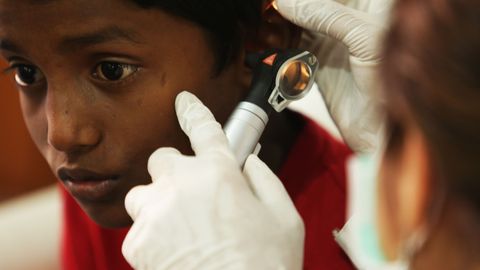
  2. Visual examination of the ears.
  3. Hearing assessments using specialized equipment.
  4. Speech recognition testing.
  5. Review of results.
  6. Discussion of possible recommendations.

The complete evaluation often takes between 30 and 60 minutes, depending on the tests performed.

Common Types of Hearing Tests

Pure Tone Audiometry

This is one of the most common hearing assessments.

During the test:

  • Headphones are placed over the ears.
  • Sounds of different pitches and volumes are played.
  • The patient indicates when a sound is heard.
  • Hearing thresholds are recorded.

The results are plotted on an audiogram.

Speech Audiometry

Speech testing evaluates how clearly a person hears and understands spoken words.

It may assess:

  • Speech recognition
  • Word understanding
  • Listening ability at different sound levels

Tympanometry

This test evaluates how well the eardrum and middle ear are functioning by measuring movement in response to changes in air pressure.

Otoacoustic Emissions (OAE)

OAE testing measures sounds produced by the inner ear in response to stimulation.

It is commonly used for:

  • Newborn hearing screening
  • Children
  • Adults requiring additional hearing assessment

Auditory Brainstem Response (ABR)

ABR testing measures how the hearing nerve and brain respond to sound using small sensors placed on the head.

This assessment may be used when detailed evaluation of the auditory pathway is required.

Equipment Used During Hearing Tests

Modern hearing assessments commonly use:

  • Clinical audiometers
  • Soundproof testing booths
  • Headphones
  • Bone conduction devices
  • Tympanometers
  • OAE equipment
  • ABR systems
  • Computerized diagnostic software

The equipment selected depends on the individual's age and clinical needs.

Understanding Hearing Test Results

Results are interpreted by qualified hearing professionals.

They may help identify:

  • Normal hearing
  • Mild hearing loss
  • Moderate hearing loss
  • Moderately severe hearing loss
  • Severe hearing loss
  • Profound hearing loss

Results also help determine whether hearing changes involve the outer, middle, or inner ear, or the auditory nerve.

Types of Hearing Loss

Healthcare professionals generally classify hearing loss into several categories.

Conductive Hearing Loss

Occurs when sound cannot efficiently travel through the outer or middle ear.

Sensorineural Hearing Loss

Results from changes affecting the inner ear or auditory nerve.

Mixed Hearing Loss

A combination of conductive and sensorineural hearing loss.

Only qualified healthcare professionals can diagnose the specific type of hearing loss.

Artificial Intelligence in Audiology

AI is becoming increasingly useful in hearing healthcare.

Applications include:

  • Hearing test analysis
  • Automated screening support
  • Hearing aid programming assistance
  • Pattern recognition
  • Clinical workflow optimization
  • Predictive hearing monitoring

AI supports audiologists but does not replace professional clinical evaluation.

Hearing Health Tips

General practices that may help support hearing health include:

  • Use hearing protection in loud environments
  • Limit prolonged exposure to high noise levels
  • Keep personal listening devices at safe volumes
  • Attend routine hearing evaluations when recommended
  • Seek medical advice for persistent hearing changes
  • Avoid inserting objects into the ear canal
  • Follow treatment recommendations from healthcare professionals
  • Maintain overall health and wellness

Emerging Trends in 2026

Audiology continues advancing through new technologies.

Current developments include:

  • AI-assisted hearing assessments
  • Remote hearing evaluations
  • Smartphone-connected diagnostic systems
  • Digital hearing health platforms
  • Cloud-based audiology records
  • Advanced hearing aid programming
  • Portable screening devices
  • Tele-audiology services

These innovations continue improving accessibility and diagnostic accuracy.

Frequently Asked Questions

Is a hearing test painful?

No. Most hearing tests are non-invasive and painless. They typically involve listening to sounds, responding to speech, or having gentle air pressure applied during certain assessments.

How long does a hearing test take?

A comprehensive hearing evaluation generally takes between 30 and 60 minutes, although the duration varies depending on the tests performed.

Do I need to prepare before a hearing test?

Most hearing tests require minimal preparation. Following the clinic's instructions and informing the healthcare professional about any ear symptoms is usually sufficient.

Can children have hearing tests?

Yes. Hearing assessments are available for newborns, children, adolescents, and adults using age-appropriate testing methods.

Who performs hearing tests?

Hearing evaluations are typically performed by audiologists or other qualified healthcare professionals trained in hearing assessment.

Conclusion

Hearing tests are valuable diagnostic tools that help evaluate hearing ability, identify potential hearing changes, and support appropriate hearing healthcare. Through modern audiology equipment, digital technology, and AI-assisted analysis, hearing professionals can assess hearing function with greater accuracy and efficiency than ever before.

Understanding the different hearing test procedures, preparation steps, equipment, and result interpretation helps individuals approach hearing evaluations with greater confidence. Anyone experiencing ongoing hearing difficulties should seek assessment from a qualified healthcare professional for personalized evaluation and guidance.

Disclaimer

This article is intended solely for informational and educational purposes. It does not provide medical, audiological, diagnostic, therapeutic, or professional healthcare advice. It does not endorse, recommend, compare, rank, review, market, or promote any hearing test provider, audiology clinic, hearing aid manufacturer, medical device company, or healthcare organization. Hearing assessments, diagnostic procedures, treatment options, technologies, and clinical recommendations vary according to individual health conditions and professional evaluation. Readers should consult qualified healthcare professionals for diagnosis, hearing assessments, treatment decisions, and personalized hearing care.


author-image

Ravi Shankar Maurya

We create purposeful content that speaks, resonates, and drives action.

July 27, 2026 . 10 min read

Business

Hearing Test Procedure Explained: Everything You Need to Know

Hearing Test Procedure Explained: Everything You Need to Know

By: Ravi Shankar Maurya

Updated: July 27, 2026

Read More