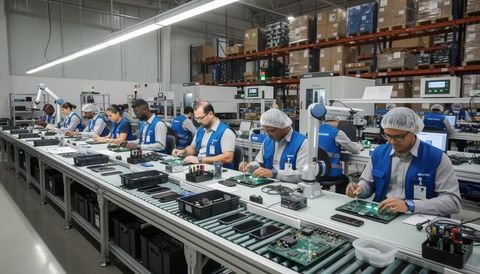
Guide to Next-Gen Electronics Manufacturing Equipment: Technologies, Processes, and Industry Applications
Electronics manufacturing is changing rapidly as demand for smaller, faster, and more efficient electronic products continues to grow. From smartphones and computers to electric vehicles, medical devices, industrial automation systems, and communication equipment, modern electronics depend on advanced manufacturing processes. Behind these products is a wide range of specialised equipment designed to assemble, inspect, test, and package electronic components with high accuracy. Next-generation electronics manufacturing equipment is helping manufacturers improve production speed, reduce material waste, maintain product quality, and manage increasingly complex designs. Technologies such as artificial intelligence (AI), robotics, machine vision, automated inspection, and smart production systems are becoming important parts of modern manufacturing facilities.
What Is Next-Generation Electronics Manufacturing Equipment?
Next-generation electronics manufacturing equipment refers to advanced machinery, tools, and automated systems used to produce electronic components and finished electronic products. These systems are designed to handle complex manufacturing requirements while improving accuracy, consistency, and operational efficiency.
Traditional electronics manufacturing relied heavily on manual assembly, basic inspection tools, and separate production machines. Although these methods are still used in certain applications, modern facilities increasingly depend on connected equipment that can communicate, share production data, and automatically adjust manufacturing processes.
Some important characteristics of next-generation equipment include:
High-precision operation: Machines can position and assemble very small electronic components with accurate placement.
Automation: Robotic systems and automated machinery reduce repetitive manual work.
Real-time monitoring: Sensors collect information about machine performance and production conditions.
Artificial intelligence integration: AI-based systems can identify defects, analyse production patterns, and support process optimisation.
Flexible production: Modern equipment can support different product designs and manufacturing requirements.
Improved energy efficiency: Newer systems aim to reduce electricity consumption, material waste, and unnecessary machine operations.
These capabilities are particularly important as electronic products become smaller and circuit designs become more complicated.
Key Types of Modern Electronics Manufacturing Equipment
Electronics production involves several stages, beginning with circuit board fabrication and component preparation and continuing through assembly, inspection, testing, and packaging. Each stage requires specialised equipment.
1. Surface Mount Technology (SMT) Equipment
Surface Mount Technology is one of the most widely used methods for assembling electronic components onto printed circuit boards (PCBs).
Unlike traditional through-hole assembly, SMT places components directly onto the surface of a circuit board. This method supports compact designs and allows manufacturers to assemble a large number of components efficiently.
Important SMT equipment includes:
Solder Paste Printers: These machines apply solder paste to specific areas of a PCB using a stencil. Accurate paste application is important because incorrect amounts can lead to weak connections or soldering defects.
Pick-and-Place Machines: These automated systems position electronic components onto the printed circuit board. Modern machines use cameras and precision positioning systems to identify components and place them in the correct locations.
Reflow Soldering Ovens: After component placement, the PCB moves through a controlled heating process. The solder paste melts and forms electrical connections between the components and the board.
SMT Inspection Systems: These systems examine solder paste deposits and component placement to identify problems before the board moves to later production stages.
Advanced SMT lines combine these machines into connected production systems, allowing manufacturers to monitor operations and maintain consistent assembly quality.
2. Automated Optical Inspection (AOI) Systems
Automated Optical Inspection systems use cameras, lighting, and image-processing software to examine electronic assemblies.
They are designed to detect visible defects that may affect the performance or reliability of a circuit board.
Common defects identified through AOI include:
Missing electronic components.
Incorrect component positioning.
Misaligned parts.
Solder bridging.
Incorrect component orientation.
Visible soldering defects.
Traditional manual inspection requires trained workers to examine boards individually. AOI equipment can inspect products at production speed and provide consistent results.
Newer systems increasingly use machine learning and advanced image recognition to improve defect classification. Some systems can also compare inspection results with previous production data to identify recurring manufacturing problems.
However, AOI mainly identifies defects that are visible to its cameras. It cannot detect every internal or hidden connection problem, which is why manufacturers may also use X-ray inspection and electrical testing.
3. X-Ray Inspection Equipment
Modern electronic products often contain components with connections that cannot be examined using ordinary optical cameras.
Ball Grid Array (BGA) components, for example, use small solder balls underneath the component body. Their connections are hidden after assembly.
X-ray inspection equipment helps manufacturers examine these internal solder joints without physically removing components.
It can identify issues such as:
Internal solder voids.
Insufficient solder connections.
Bridging between hidden connections.
Misaligned internal components.
Defects in complex electronic assemblies.
Three-dimensional X-ray inspection systems provide additional information about internal structures and solder connections.
This equipment is especially useful in industries where electronic reliability is important, including automotive manufacturing, aerospace, medical equipment, and industrial electronics.
4. PCB Manufacturing and Laser Processing Equipment
Printed circuit boards provide the electrical and mechanical foundation for most electronic devices. Their manufacturing requires several specialised processes.
Modern PCB production equipment includes drilling machines, laser processing systems, imaging equipment, plating systems, and automated testing machinery.
Laser drilling is particularly important for advanced PCB designs. It allows manufacturers to create very small holes and microvias that connect different conductive layers of a circuit board.
Laser processing can also support:
Precision cutting.
Surface modification.
Material removal.
Circuit pattern processing.
Microvia formation.
As electronic devices become thinner and more compact, manufacturers increasingly require equipment capable of producing smaller features with accurate positioning.
Advanced PCB manufacturing systems help support high-density interconnect (HDI) boards, which are used in smartphones, networking equipment, medical devices, and other compact electronics.
5. Robotic Assembly and Automated Handling Systems
Robotics is becoming increasingly important in electronics manufacturing because many production activities involve repetitive and precision-based movements.
Industrial robots can handle materials, transfer circuit boards, assemble components, and move products between manufacturing stations.
Collaborative robots, commonly known as cobots, are designed to work alongside human operators in suitable industrial environments.
Common applications include:
PCB loading and unloading.
Component handling.
Product assembly.
Screw fastening.
Material transportation.
Packaging and sorting.
Robotic systems can help reduce repetitive manual activities and improve production consistency.
Modern facilities may also use autonomous mobile robots (AMRs) to transport materials between storage areas and production lines. These systems use sensors and navigation software to move through designated industrial spaces.
The level of automation depends on production volume, product complexity, safety requirements, and investment capacity.
Emerging Technologies Transforming Electronics Manufacturing
Next-generation manufacturing equipment is not defined only by faster machines. It also includes intelligent technologies that help equipment communicate, analyse information, and respond to changing production conditions.
Artificial Intelligence and Machine Learning
Artificial intelligence is becoming an important tool for improving manufacturing operations.
AI-based systems can analyse production data, identify unusual machine behaviour, and recognise patterns associated with product defects.
For example, an AI-powered inspection system can examine thousands of circuit board images and learn to distinguish between acceptable variations and possible manufacturing defects.
Machine learning can also support predictive maintenance. By analysing temperature, vibration, operating hours, and other machine information, these systems may identify warning signs before equipment failure occurs.
This allows maintenance teams to plan servicing activities and reduce unexpected production interruptions.
However, AI performance depends on the quality of available data, proper system configuration, and regular validation.
Internet of Things (IoT) and Smart Manufacturing
The Industrial Internet of Things (IIoT) connects machines, sensors, software platforms, and production systems through communication networks.
In an electronics manufacturing facility, connected equipment can share information about:
Machine operating conditions.
Production output.
Temperature and humidity.
Energy consumption.
Equipment downtime.
Inspection results.
Maintenance requirements.
Manufacturers can use this information to monitor production from central dashboards and identify operational problems more quickly.
Connected equipment also supports better coordination between different production stages. For example, information from an inspection machine may help identify a recurring problem with a solder paste printer.
Digital Twin Technology
A digital twin is a virtual representation of a physical machine, production line, or manufacturing process.
It uses operational data and computer-based models to represent how a real system behaves.
Manufacturers can use digital twins to study production changes, simulate different operating conditions, and understand how equipment may perform under specific circumstances.
Potential applications include:
Production line planning.
Equipment performance analysis.
Process optimisation.
Maintenance planning.
Factory layout evaluation.
Digital twins can help businesses evaluate changes before applying them to physical production systems. However, accurate results require reliable data and appropriate modelling.
Advanced Machine Vision
Machine vision combines cameras, lighting, image processing, and software to help equipment identify and examine physical objects.
In electronics manufacturing, machine vision can support component identification, positioning, inspection, and quality control.
Advanced vision systems can recognise small components, examine printed markings, detect alignment problems, and verify assembly conditions.
When combined with robotics, machine vision also helps automated equipment locate components and perform precision-based tasks.
The Role of Semiconductor Manufacturing Equipment
Semiconductor manufacturing is one of the most technically demanding areas of electronics production.
Semiconductors are used in processors, memory devices, sensors, communication equipment, automotive systems, and many other electronic applications.
Producing semiconductor devices requires specialised machinery and highly controlled manufacturing environments.
Some important equipment categories include:
Lithography Systems: These machines transfer extremely small circuit patterns onto semiconductor wafers using light-sensitive materials. Advanced lithography technologies are important for producing increasingly complex chips.
Deposition Equipment: These systems apply thin layers of materials onto wafer surfaces. Common processes include chemical vapour deposition (CVD) and physical vapour deposition (PVD).
Etching Equipment: Etching systems remove selected material from wafer surfaces to create specific circuit patterns.
Wafer Inspection Systems: These machines examine wafers for defects, contamination, and pattern irregularities.
Wafer Testing Equipment: Electrical testing systems evaluate semiconductor devices at different manufacturing stages to identify performance problems.
As semiconductor designs become more advanced, manufacturers require equipment with greater precision, process control, and environmental stability.
Quality Control and Testing in Modern Electronics Production
Quality control is a critical part of electronics manufacturing. Even a small defect can affect the performance, safety, or lifespan of an electronic product.
Modern production facilities use several testing methods to evaluate product quality.
In-Circuit Testing
In-circuit testing checks the electrical characteristics of individual components and connections on a printed circuit board.
It can help identify problems such as short circuits, open connections, incorrect component values, and assembly errors.
Functional Testing
Functional testing evaluates whether an electronic product performs according to its intended design.
For example, a manufactured control board may be tested to confirm that its sensors, communication interfaces, and output connections operate correctly.
Environmental Testing
Some electronic products must operate under changing environmental conditions.
Environmental testing equipment can expose products to controlled temperature, humidity, vibration, or other conditions.
These tests help manufacturers understand how products may perform in different operating environments.
Automated Test Equipment (ATE)
Automated Test Equipment is used to evaluate electronic components and systems through programmed testing procedures.
ATE is particularly important in semiconductor manufacturing, where chips need to be tested for electrical performance, functionality, and reliability.
Automated testing helps manufacturers process large product volumes while maintaining repeatable testing procedures.
Applications Across Different Industries
Next-generation electronics manufacturing equipment supports a wide range of industries. Each sector has different production requirements, quality standards, and equipment needs.
Industry | Common Equipment Applications |
|---|---|
Automotive | PCB assembly, battery electronics testing, sensors, and control systems |
Consumer Electronics | SMT assembly, automated inspection, and component placement |
Medical Devices | Precision assembly, functional testing, and quality inspection |
Aerospace | Advanced PCB testing, X-ray inspection, and reliability assessment |
Telecommunications | Semiconductor manufacturing, optical inspection, and high-density PCB production |
Industrial Automation | Robotic assembly, sensor integration, and automated testing |
Automotive Electronics
Modern vehicles contain electronic control units, sensors, communication modules, and power management systems.
Electric vehicles also require specialised electronic components for battery management, charging systems, and motor control.
Manufacturing equipment used in this sector must support reliable assembly and detailed testing because electronic failures can affect vehicle operation and safety.
Medical Electronics
Medical devices often contain sensitive electronic systems used for monitoring, diagnosis, imaging, and treatment.
Manufacturers require precise assembly processes and strict quality control procedures to support product reliability.
Inspection and testing equipment helps identify manufacturing problems before products enter clinical environments.
Consumer Electronics
Smartphones, laptops, wearable devices, televisions, and home appliances depend on increasingly compact electronic assemblies.
High-speed SMT machines, precision inspection systems, and automated testing equipment help manufacturers produce these devices at scale.
Benefits of Investing in Next-Generation Manufacturing Equipment
Upgrading manufacturing equipment can provide several operational benefits, although the results depend on the technology selected and how effectively it is integrated.
1. Improved Production Efficiency
Automated machines can perform repetitive tasks at consistent speeds. This helps manufacturers increase production capacity and reduce certain manual processing requirements.
2. Better Product Quality
Precision assembly and automated inspection can reduce the likelihood of defects and identify production problems earlier.
3. Reduced Material Waste
Accurate solder paste application, component placement, and automated process monitoring can help reduce material losses.
4. Improved Equipment Monitoring
Connected sensors and manufacturing software provide information about equipment conditions, helping operators identify operational issues.
5. Greater Production Flexibility
Modern production systems can support different product designs and manufacturing configurations, depending on machine capabilities and changeover requirements.
6. Support for Complex Designs
Advanced equipment allows manufacturers to work with smaller components, higher-density circuit boards, and more complicated electronic assemblies.
Challenges in Adopting Advanced Electronics Manufacturing Equipment
Although modern equipment provides several advantages, adopting these technologies can involve considerable planning and investment.
High Initial Investment
Advanced SMT lines, semiconductor manufacturing systems, robotic equipment, and inspection machines can require significant capital expenditure.
Businesses need to evaluate equipment costs against expected production volumes, operational savings, and long-term manufacturing requirements.
Skilled Workforce Requirements
Modern manufacturing systems require employees who understand automation, electronics, software, machine operation, and maintenance.
Companies may need to invest in technical training and specialised recruitment to operate advanced production facilities effectively.
Integration with Existing Systems
New machinery may need to communicate with older production equipment, enterprise software, and manufacturing execution systems.
Compatibility issues can increase installation time and integration costs.
Maintenance and Downtime
Advanced machinery requires regular servicing, calibration, software updates, and replacement parts.
Unexpected failures can interrupt production, making maintenance planning an important part of equipment management.
Cybersecurity Risks
Connected manufacturing equipment can create additional cybersecurity concerns.
Unauthorised access, insecure networks, and software vulnerabilities may affect production systems and sensitive manufacturing information.
Businesses should consider access controls, network security, software updates, and regular system monitoring when implementing connected equipment.
How to Select the Right Electronics Manufacturing Equipment
Choosing suitable equipment requires an understanding of production goals, technical requirements, and available resources.
Manufacturers can consider the following factors before making an investment:
1. Production Capacity: Determine the number of components, circuit boards, or finished products that need to be manufactured within a specific period.
2. Product Complexity: Evaluate component sizes, PCB designs, material requirements, and assembly tolerances.
3. Automation Requirements: Decide which processes should be automated and where manual operations may still be practical.
4. Equipment Compatibility: Check whether new machinery can integrate with existing production lines and software platforms.
5. Quality Standards: Identify the inspection, testing, and traceability requirements relevant to the industry.
6. Operating Costs: Consider electricity consumption, maintenance, consumables, spare parts, and workforce training.
7. Supplier Support: Review installation services, technical assistance, equipment warranties, training programmes, and spare-part availability.
A detailed evaluation of these factors can help manufacturers avoid unnecessary purchases and select equipment that supports their long-term production strategy.
Future Trends in Electronics Manufacturing Equipment
The electronics manufacturing industry is expected to continue evolving as demand for advanced chips, connected devices, electric vehicles, and intelligent industrial systems increases.
Several technology trends are likely to influence future equipment development.
Greater Automation: Manufacturing facilities are expected to use more robotic systems for assembly, material handling, inspection, and packaging.
AI-Based Process Control: AI tools may increasingly support machine adjustments, defect analysis, production forecasting, and predictive maintenance.
Advanced Semiconductor Processing: New chip architectures and smaller manufacturing features will require increasingly sophisticated fabrication, inspection, and measurement equipment.
Flexible Manufacturing Lines: Modular equipment and software-controlled production systems may help manufacturers switch between different products more efficiently.
Sustainable Manufacturing: Energy-efficient machinery, improved material utilisation, and better waste management are becoming important considerations in equipment development.
Advanced Packaging Technologies: Semiconductor packaging methods such as chiplets, 2.5D integration, and 3D packaging are creating new requirements for precision assembly and inspection equipment.
These developments indicate that future manufacturing facilities will depend not only on individual machines but also on how effectively equipment, software, and production data work together.
Conclusion
Next-generation electronics manufacturing equipment is playing an important role in transforming how electronic products are designed, assembled, inspected, and tested. From high-speed SMT machines and robotic assembly systems to AI-powered inspection tools and advanced semiconductor fabrication equipment, modern technologies are helping manufacturers address increasingly complex production requirements.
The benefits extend across several industries, including automotive, healthcare, telecommunications, aerospace, and consumer electronics. However, successful adoption requires careful consideration of investment costs, workforce capabilities, equipment compatibility, maintenance, and production objectives.