Guide to Extrusion Machines: Analysis, Research, and Emerging Technology Trends
Extrusion machines are industrial systems that shape materials by forcing them through a specially designed opening called a die. The process creates continuous products with consistent forms, including pipes, sheets, films, cables, profiles, and packaging materials.
Discussions involving extrusion machine manufacturers often focus on production efficiency, material compatibility, and technological innovation.
Industrial extrusion machines play an important role in modern manufacturing. They support sectors such as construction, packaging, transportation, electronics, agriculture, and consumer goods production.
Plastic extrusion equipment suppliers contribute to a wide range of industries by providing machinery capable of processing polymers into usable products. Although plastics represent a major application, extrusion methods are also used for metals, food products, ceramics, and composite materials.
Historical Development of Extrusion Technology
The basic principles of extrusion originated from metalworking techniques developed during the nineteenth century. As synthetic materials became more common, manufacturers adapted these methods to accommodate polymers and other modern materials.
Advances in automation, precision engineering, and computer control transformed extrusion into one of the most widely used manufacturing processes. Today, advanced extrusion manufacturing technologies incorporate digital monitoring and automated process management.
How the Extrusion Process Works
The process typically involves several stages:
- Raw material preparation.
- Heating and melting.
- Material movement through rotating screws.
- Shaping through a die.
- Cooling and solidification.
- Cutting, winding, or stacking.
Sheet extrusion production lines use these principles to produce continuous sheets for packaging, construction materials, and industrial applications.
Importance
Supporting Everyday Products
Many products people encounter daily depend on extrusion technology. Packaging films, water pipes, electrical insulation, window frames, and household containers are common examples.
Industrial extrusion machines enable consistent production of these materials at large scales. This capability supports reliable supply chains across multiple sectors.
Importance in Construction and Infrastructure
Extruded materials play a major role in infrastructure development. Pipes, insulation materials, cable coverings, and structural components often originate from extrusion processes.
Construction projects rely on products manufactured through sheet extrusion production lines and related systems. These materials contribute to water distribution, telecommunications, transportation, and building construction.
Role in Packaging Industries
Packaging represents another important application area. Plastic extrusion equipment suppliers support production of films, containers, and flexible packaging materials used throughout food and consumer goods industries.
Extruded materials help protect products during storage and transportation while supporting efficient distribution networks.
Manufacturing Efficiency
One advantage of extrusion lies in continuous production capability. Instead of creating individual items separately, materials move through the system in an ongoing process.
Turnkey extrusion plant solutions frequently integrate multiple production stages, allowing manufacturers to coordinate material preparation, extrusion, cooling, and finishing within unified operations.
Diverse Material Applications
Although plastic processing remains common, extrusion methods extend to many materials, including:
- Thermoplastics.
- Aluminum and other metals.
- Food ingredients.
- Rubber compounds.
- Ceramic materials.
- Composite products.
This versatility contributes to the widespread use of extrusion technologies across industries.
Major Types of Extrusion Machines
Plastic Extrusion Systems
Plastic extrusion equipment suppliers provide machinery designed to process various polymers into finished products.
Common outputs include:
- Pipes and tubing.
- Packaging films.
- Sheets and panels.
- Wire insulation.
- Structural profiles.
These applications support construction, healthcare, transportation, and consumer industries.
Sheet Extrusion Production Lines
Sheet extrusion production lines create flat materials used in packaging, signage, automotive components, and building products.
The process involves precise control over thickness, cooling rates, and material consistency.
Profile Extrusion Equipment
Profile extrusion systems manufacture products with specialized cross-sectional shapes. Window frames, decorative trims, and structural components often originate from this process.
Industrial extrusion machines designed for profile production require accurate die engineering and process control.
Food Extrusion Applications
Food industries also employ extrusion technologies to produce cereals, snacks, pet foods, and pasta products.
Although the materials differ from industrial polymers, the underlying process principles remain similar.
Metal Extrusion Processes
Metal extrusion involves forcing heated metal through dies to create rods, tubes, and structural sections.
These products support transportation, aerospace, construction, and manufacturing sectors.
Common Extrusion Applications
| Extrusion Product | Industry | Typical Material |
|---|---|---|
| Water pipes | Construction | Thermoplastics |
| Packaging film | Consumer goods | Polyethylene |
| Cable insulation | Electronics | PVC compounds |
| Window profiles | Building materials | Polymer blends |
| Aluminum sections | Transportation | Aluminum alloys |
| Flat sheets | Industrial manufacturing | Various polymers |
Recent Updates
Industry 4.0 Extrusion Technologies
Between 2024 and 2026, Industry 4.0 extrusion technologies have gained increasing attention. Digital systems now monitor temperatures, pressures, screw performance, and material flow in real time.
Connected manufacturing environments help operators understand process behavior and support informed maintenance planning.
Artificial Intelligence Applications
Advanced extrusion manufacturing technologies increasingly incorporate artificial intelligence tools for process optimization.
These systems analyze operational patterns and identify conditions that may influence product consistency. Data-driven insights contribute to improved manufacturing stability.
Energy Efficiency Developments
Industrial extrusion machines continue evolving toward greater energy efficiency. New motor systems, heating controls, and process management techniques help reduce energy consumption during production activities.
Environmental considerations influence equipment design across many industrial sectors.
Flexible Manufacturing Approaches
Manufacturers increasingly seek systems capable of processing multiple materials and product formats.
Turnkey extrusion plant solutions now often emphasize adaptability, allowing production facilities to respond to changing market requirements without extensive infrastructure modifications.
Digital Maintenance Practices
Predictive maintenance technologies continue expanding within extrusion facilities. Sensors monitor vibration, temperature, and mechanical performance to identify potential concerns before significant disruptions occur.
Plastic extrusion equipment suppliers frequently incorporate these capabilities into modern equipment platforms.
Laws or Policies
Industrial Safety Regulations
Extrusion facilities operate under workplace safety regulations addressing machine guarding, emergency controls, and operator protection.
Industrial extrusion machines typically include safety mechanisms designed to reduce risks associated with moving components and elevated temperatures.
Environmental Policies
Environmental regulations influence material selection, emissions management, and recycling practices within extrusion industries.
Manufacturers increasingly explore recycled feedstocks and resource-efficient production approaches to align with changing policy expectations.
Product Standards
Many extruded products must satisfy technical standards related to dimensions, durability, and performance characteristics.
Examples include standards for:
- Water pipes.
- Electrical insulation materials.
- Construction components.
- Food packaging applications.
These frameworks help ensure consistency across industries.
Waste Management Requirements
Material recovery and waste reduction have become important policy considerations.
Extrusion processes often incorporate systems that reuse production scrap, supporting broader sustainability objectives.
Tools and Resources
Process Monitoring Software
Digital platforms help manufacturers track temperature profiles, pressure conditions, and production performance.
These systems support efficient operation of industrial extrusion machines and integrated manufacturing facilities.
Computer-Aided Engineering Tools
Engineering software assists in die design, material flow analysis, and process simulation.
These resources contribute to more accurate planning before equipment enters operation.
Industry Standards Organizations
Technical organizations publish guidance related to materials, machinery, and manufacturing procedures.
These publications support consistent industrial practices across geographic regions.
Maintenance Management Platforms
Maintenance systems record operating hours, inspection schedules, and component histories.
Such tools help organizations manage equipment reliability over extended periods.
Educational and Research Institutions
Universities and research centers continue studying polymer science, manufacturing methods, and advanced extrusion manufacturing technologies.
Research findings contribute to ongoing improvements in equipment design and operational practices.
FAQs
What do extrusion machine manufacturers typically produce?
Extrusion machine manufacturers develop equipment that shapes materials into continuous products such as pipes, sheets, films, profiles, and cable insulation components.
How do industrial extrusion machines support manufacturing?
Industrial extrusion machines enable continuous production processes that create consistent products for construction, packaging, transportation, and consumer industries.
What are sheet extrusion production lines used for?
Sheet extrusion production lines manufacture flat materials used in packaging, automotive components, building products, and industrial applications.
What role do plastic extrusion equipment suppliers play?
Plastic extrusion equipment suppliers provide machinery that processes polymers into finished goods used across numerous sectors, including infrastructure and consumer products.
How are Industry 4.0 extrusion technologies changing production?
Industry 4.0 extrusion technologies integrate digital monitoring, connected sensors, and data analysis tools to improve process visibility and support efficient equipment management.
Conclusion
Extrusion machines remain fundamental to modern manufacturing because they support continuous production of many everyday products. Industrial extrusion machines and sheet extrusion production lines contribute to construction, packaging, electronics, and transportation sectors. Recent advances in Industry 4.0 extrusion technologies and digital monitoring continue influencing equipment development and operational practices. Understanding extrusion processes provides valuable insight into how raw materials become essential products used throughout society.

Related Post...
Core Making Machines: A Complete Guide to Foundry Sand Core Production
Updated: September 10, 2026
Read More
PPR Pipe Machine Information: Explore Types, Applications, and Process Details
Updated: September 07, 2026
Read More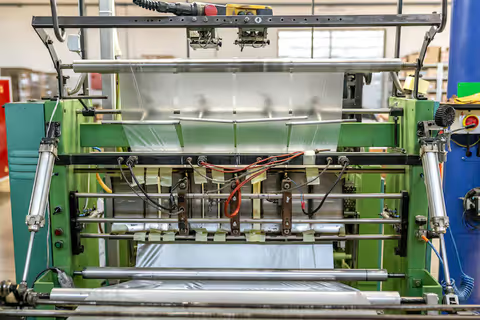
Plastic Extrusion Machines: Learn About Types, Functions and Industrial Uses
Updated: September 17, 2026
Read More