Glass Tempering Machines: Explore Overview, Basics, Explanation, Knowledge, and Key Details
A glass tempering machine is an industrial system used to strengthen glass through controlled heating and rapid cooling. The process is known as thermal tempering or glass toughening.
During tempering, glass is heated to a high temperature and then rapidly cooled using air. This creates compressive stress on the glass surfaces and tensile stress in the central portion. The resulting material is stronger than ordinary annealed glass and generally breaks into smaller fragments when fractured.
Glass tempering machines are widely used in architectural glazing, automotive glass, furniture, shower enclosures, electronic appliances, and other flat-glass applications.
Overview of Glass Tempering Machines
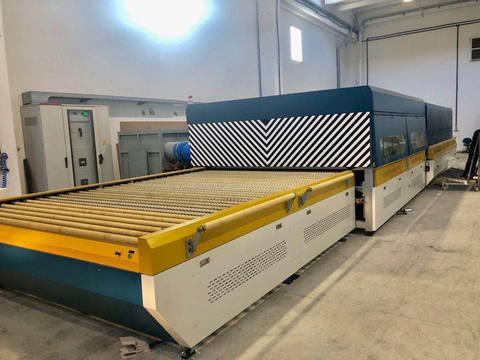
A glass tempering machine usually consists of a heating furnace, glass conveying system, quenching section, cooling equipment, and an electrical control system.
The machine processes glass sheets that have already been cut, shaped, drilled, and edge-finished. After tempering, the glass cannot normally be cut or drilled without causing breakage.
The main purpose of a glass tempering machine is to produce glass with the required strength, safety characteristics, optical quality, and dimensional consistency.
Basics of Glass Tempering
What Is Glass Tempering?
Glass tempering is a heat-treatment process that changes the stress distribution inside glass.
The glass is heated to a temperature near its softening range, commonly around 600–650°C for typical soda-lime glass, depending on its composition and thickness. It is then rapidly cooled using high-volume air.
The surfaces cool faster than the centre. As the interior cools and contracts, it creates a stress pattern that leaves the outer surfaces in compression and the inner region in tension.
This stress distribution improves the glass’s resistance to impact and thermal stress compared with ordinary annealed glass.
Difference Between Annealed and Tempered Glass
| Feature | Annealed Glass | Tempered Glass |
|---|---|---|
| Heat treatment | Not fully tempered | Heated and rapidly cooled |
| Strength | Lower | Higher |
| Breakage pattern | Large, sharp pieces | Usually smaller fragments |
| Cutting after processing | Possible with suitable methods | Not normally possible |
| Typical use | General glazing | Safety and strength-related applications |
Tempered glass is not unbreakable. Its performance depends on glass quality, processing conditions, thickness, installation, and the type of impact.
Types of Glass Tempering Machines
Flat Glass Tempering Machine
A flat glass tempering machine is designed to process flat glass sheets used in buildings, furniture, appliances, and other products.
It typically uses ceramic rollers to move glass through the heating chamber. The glass is heated evenly and then transferred into a quenching section for rapid cooling.
Flat glass tempering machines are available in different sizes and configurations depending on the maximum glass dimensions, thickness range, production volume, and required product quality.
Horizontal Glass Tempering Furnace
A horizontal glass tempering furnace processes glass in a horizontal position.
The glass moves through the furnace on ceramic rollers. In many systems, the glass oscillates back and forth during heating to improve temperature uniformity and reduce the risk of local overheating.
The main components generally include:
Loading section
Heating chamber
Ceramic roller conveyor
Quenching section
Air blower system
Unloading section
Control panel
Horizontal furnaces are widely used for architectural glass and other flat-glass products. They can process different glass sizes and are suitable for both batch-style and continuous production arrangements.
Vertical Glass Tempering Furnace
A vertical glass tempering furnace holds glass in a vertical position using clamps or suspension systems.
The glass is heated and then moved into a cooling section where air is applied to produce the required stress pattern.
Vertical furnaces have historically been used for certain glass products and processing arrangements. They can reduce the floor area needed for some installations, but clamp marks and limitations in handling large or complex sheets may affect their suitability.
Horizontal furnaces are more common in modern flat-glass processing operations, while vertical systems may be selected for specific production needs.
Automatic Glass Tempering Machine
An automatic glass tempering machine uses automated controls to manage glass movement, heating settings, quenching, and process monitoring.
Automation may include:
Programmable heating profiles
Automatic conveyor speed control
Temperature monitoring
Recipe storage for different glass thicknesses
Automated loading and unloading
Alarm and fault detection
Production data recording
Automation helps improve repeatability and reduce manual adjustments. However, final quality still depends on correct process settings, glass preparation, furnace condition, and inspection.
Working Process of a Glass Tempering Machine
The glass tempering process generally follows these steps.
1. Glass Cutting and Preparation
The glass is cut to the required dimensions before tempering. Holes, notches, edge grinding, polishing, and other machining operations are also completed at this stage.
This preparation is important because cutting or drilling tempered glass can cause it to break.
2. Washing and Inspection
The glass is washed to remove dust, oil, and other contaminants. Operators inspect the surface and edges for defects that could affect the final product.
3. Heating
The glass enters the furnace and is heated gradually to the required temperature.
The heating time depends on factors such as:
Glass thickness
Glass composition
Coating type
Sheet dimensions
Furnace design
Loading arrangement
Uniform heating is important because uneven temperatures can cause distortion or inconsistent tempering.
4. Quenching
After heating, the glass moves rapidly into the quenching section.
High-volume air is blown onto both surfaces through specially arranged nozzles. This rapid cooling creates the compressive surface stress and tensile core stress needed for tempering.
5. Cooling and Unloading
The glass is cooled to a safe handling temperature and then unloaded.
Operators inspect the finished glass for visual defects, dimensions, breakage characteristics, and other requirements specified for the product.
Technologies Used in Glass Heat Treatment
Convection Heating
Convection heating uses heated air to transfer energy to the glass surface. It is particularly useful when processing coated glass that may reflect some radiant heat.
Infrared Heating
Infrared elements transfer heat through radiation. They are commonly used in combination with other heating methods to achieve the required temperature profile.
Temperature Monitoring
Temperature sensors and thermal imaging systems can help monitor glass temperature and identify uneven heating.
Quenching Control
The quenching system controls air pressure, airflow distribution, and cooling intensity. Balanced cooling across the glass sheet is important for achieving consistent stress and reducing distortion.
Glass Tempering Machine Features
Important machine features may include:
Ceramic roller conveyor
Insulated heating chamber
Convection and infrared heating systems
Adjustable quenching nozzles
High-capacity air blowers
PLC-based control system
Touchscreen operator interface
Temperature and pressure monitoring
Automatic fault alarms
Energy-management functions
The exact features depend on the furnace model, production requirements, and the type of glass being processed.
Applications of Tempered Glass
Tempered glass produced by a glass heat treatment machine is used in several industries.
Architectural Glass
Applications include building windows, glass doors, partitions, façades, balustrades, and shower enclosures.
Automotive Glass
Tempered glass is used in certain vehicle windows and other applications where safety glazing requirements apply. Automotive glass must meet the relevant vehicle-glazing standards.
Furniture and Interior Products
Tempered glass is used in tabletops, shelves, cabinet doors, and decorative interior components.
Appliances
Glass panels for ovens, refrigerators, washing machines, and other appliances may use heat-treated glass according to the product’s design and safety requirements.
Quality Control and Best Practices
Consistent glass tempering requires careful control of the entire process.
Use glass that meets the required quality and thickness specifications.
Complete cutting, drilling, and edge finishing before tempering.
Keep glass clean before it enters the furnace.
Use suitable heating recipes for each glass type and thickness.
Monitor temperature uniformity across the sheet.
Inspect ceramic rollers for wear or contamination.
Maintain balanced airflow in the quenching section.
Check the finished glass for optical distortion and surface defects.
Carry out required safety and fragmentation tests.
Record production settings and inspection results.
Roller wave, edge deformation, anisotropy, and uneven stress may occur when heating or cooling is not properly controlled. Process optimisation should consider both product quality and production output.
India: Standards and Compliance
In India, safety glass for architectural, building, and general use is covered by IS 2553 (Part 1): 2018, including applicable amendments. Safety glass for road transport is addressed under IS 2553 (Part 2): 2019.
Testing of processed glass is covered by IS 17004:2018. Heat-strengthened glass is addressed separately under IS 16982:2018.
The Bureau of Indian Standards maintains product certification requirements and relevant Quality Control Orders for specified glass products. Manufacturers and processors should check the latest applicable standard, amendments, certification scope, and product requirements with BIS before production or distribution.
Useful Resources
The following resources can help readers understand glass tempering and processed-glass requirements:
Bureau of Indian Standards (BIS) for Indian standards and certification information
Glazing Society of India for glass standards and technical information
Glass industry technical papers for heat-treatment principles
Furnace manufacturer manuals for operating and maintenance instructions
Glass processing technical resources for temperature monitoring and quality control
Frequently Asked Questions
1. What is a glass tempering machine used for?
It is used to heat and rapidly cool glass to improve its strength and safety characteristics.
2. What is the difference between a horizontal and vertical glass tempering furnace?
A horizontal furnace processes glass on rollers in a horizontal position. A vertical furnace holds glass upright using clamps or suspension systems.
3. What temperature is used in a glass tempering furnace?
Typical soda-lime glass is often heated within approximately 600–650°C, but the exact temperature and heating time depend on the glass and furnace.
4. Can tempered glass be cut after processing?
No. Cutting, drilling, or significant edge machining after tempering can cause the glass to break. These operations are normally completed before heat treatment.
5. What affects the quality of tempered glass?
Important factors include glass preparation, thickness, heating uniformity, furnace settings, quenching airflow, roller condition, and final inspection.
Conclusion
Glass tempering machines play an important role in modern glass processing by improving the strength and safety characteristics of flat glass. Horizontal furnaces, vertical systems, and automatic glass tempering machines serve different production needs.
A well-controlled glass heat treatment process requires suitable equipment, accurate temperature control, balanced quenching, careful glass preparation, and consistent quality inspection. Understanding these fundamentals helps manufacturers and readers evaluate glass tempering technology and its applications.
Disclaimer: This article is intended for general informational purposes only. Machine designs, process settings, standards, and product requirements may vary. Always consult the equipment manual, applicable standards, and qualified technical personnel before operating industrial machinery. This content is not intended to promote or sell any product, brand, or organisation.

Related Post...
Sheet Metal Laser Cutting Machines: Explore Overview, Basics, Explanation, Knowledge, and Key Details
Updated: November 25, 2026
Read More
Crawler Crane Machines: Complete Guide to Basics, Technologies, Processes, Facts, and Best Practices
Updated: November 24, 2026
Read More