Fiber Laser Cutting Machines: Complete Guide to Basics, Technologies, Processes, Facts, and Best Practices
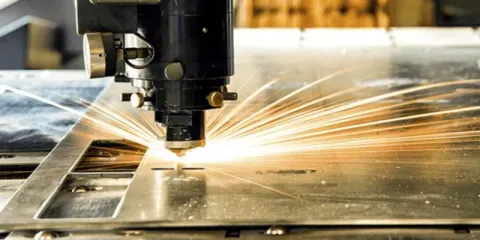
Fiber laser cutting machines are widely used in modern metal fabrication because they can cut sheet metal and metal plates with high precision. They use a concentrated laser beam to melt or vaporise material along a programmed path. An assist gas removes molten metal from the cutting area, helping produce a clean edge.
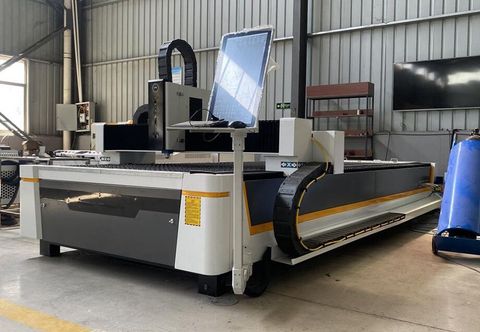
A fiber laser cutting machine combines a laser source, optical delivery system, cutting head, CNC controller and mechanical movement system. Depending on its configuration, it can process stainless steel, mild steel, aluminium, copper, brass and other suitable metals.
An industrial fiber laser cutting machine is commonly used in automotive manufacturing, electrical equipment production, construction, machinery fabrication and metal component manufacturing. CNC control allows operators to prepare cutting patterns digitally and repeat them with consistent positioning.
This guide explains the working principle, main components, machine types, cutting technologies, applications, selection factors and safety practices associated with fiber laser cutting.
1. What Is a Fiber Laser Cutting Machine?
A fiber laser cutting machine is a computer-controlled metal-cutting system that uses laser light generated and amplified through an optical fiber containing a laser-active material, commonly ytterbium-doped fiber.
The generated beam is delivered through a flexible optical fiber to a cutting head. A focusing lens concentrates the beam into a small spot on the workpiece, creating enough energy density to melt or vaporise the metal.
The molten material is removed through a narrow path called the kerf. Assist gas, such as oxygen, nitrogen or compressed air, helps clear the molten material and influences the cutting result.
Key characteristics include:
High precision when correctly configured.
Narrow cutting kerf.
Computer-controlled movement.
Compatibility with several industrial metals.
Contact-free cutting between the tool and workpiece.
Suitability for detailed profiles and repeated patterns.
Fiber laser systems are particularly suitable for metal processing. They are not automatically the best choice for every non-metal material or every thickness; material absorption, thickness and production requirements must be considered.
2. How Does a Fiber Laser Cutting Machine Work?
A CNC fiber laser cutting machine follows a coordinated sequence from digital design to finished metal component.
Typical operating process:
Design preparation: A component drawing is created using CAD software.
Nesting: CAM software arranges multiple component profiles on a metal sheet to plan material utilisation.
Program transfer: Cutting instructions are transferred to the CNC controller.
Material loading: The metal sheet or plate is positioned on the cutting table.
Laser generation: The fiber laser source generates the required beam.
Beam focusing: Optical components inside the cutting head concentrate the beam onto the metal surface.
Assist gas delivery: Gas flows through the nozzle to remove molten material and support the selected cutting process.
CNC movement: The cutting head follows the programmed path across the workpiece.
Part separation: The programmed cutting paths separate the required shapes from the sheet.
Unloading and inspection: Finished components are removed and checked for dimensional accuracy and edge quality.
The result depends on coordinated control of laser power, cutting speed, focal position, nozzle condition, assist gas and material properties.
3. Main Components of a Fiber Laser Cutting Machine
Each component contributes to beam generation, positioning, cutting performance or operational safety.
Component | Main function |
|---|---|
Fiber laser source | Generates the laser beam |
Optical fiber cable | Delivers the beam to the cutting head |
Cutting head | Directs and focuses the beam |
Collimating lens | Converts the delivered beam into a suitable optical path |
Focusing lens | Concentrates the beam onto the material |
Cutting nozzle | Directs assist gas towards the cutting area |
CNC controller | Executes programmed cutting instructions |
Motion system | Moves the cutting head or workpiece along the required axes |
Servo motors | Control accurate mechanical movement |
Cutting table | Supports the metal sheet during processing |
Chiller unit | Maintains suitable operating temperatures for designated components |
Gas supply system | Supplies oxygen, nitrogen or compressed air |
Fume extraction system | Removes smoke, fumes and airborne particles |
Control panel | Allows operators to monitor and adjust machine settings |
Some machines also include automatic focusing, nozzle inspection, protective enclosures, pallet changers and automated loading systems.
4. Types of Fiber Laser Cutting Machines
Fiber laser systems are available in different configurations to suit sheet metal, thick plates, tubes and specialised production requirements.
4.1 Sheet Metal Fiber Laser Cutting Machine
A sheet metal laser cutting machine is designed to process flat metal sheets. It is widely used for producing panels, brackets, enclosures, covers and fabricated components.
Common features include:
Flat cutting tables.
CNC-controlled movement.
Sheet positioning systems.
Automatic nesting support.
Optional exchange tables for continuous production.
4.2 CNC Fiber Laser Cutting Machine
A CNC fiber laser cutting machine uses computer numerical control to coordinate the cutting head, movement axes and laser output.
The operator prepares a digital drawing and converts it into machine-readable instructions. The CNC controller then follows the programmed cutting path.
This configuration is suitable for complex shapes, repeated designs and precision metal components.
4.3 Industrial Fiber Laser Cutting Machine
An industrial fiber laser cutting machine is designed for regular production in fabrication facilities and manufacturing plants. It may include a larger cutting area, enclosed working zone, automatic material handling and integrated monitoring systems.
4.4 High Power Fiber Laser Cutting Machine
A high power fiber laser cutting machine uses a higher-output laser source to process thicker metal sections or increase cutting throughput in suitable applications.
Higher power does not automatically guarantee better results. Material grade, thickness, gas selection, cutting-head configuration, thermal effects and machine rigidity also influence performance.
4.5 Tube and Pipe Fiber Laser Cutting Machine
Tube laser systems are designed to process round, square, rectangular and other hollow metal profiles. They use rotating chucks and controlled feeding arrangements to position the material while the laser cuts the required geometry.
4.6 Combined Sheet and Tube Laser Cutting Machine
Some systems support both flat-sheet and tube processing. These machines are intended for manufacturing environments that work with multiple metal formats and require flexible production arrangements.
5. Laser Cutting Technologies and Assist Gases
Fiber laser cutting uses different process approaches depending on the metal and required edge finish.
Fusion cutting
Fusion cutting melts the material, while an inert gas such as nitrogen helps remove the molten metal. It is commonly used for stainless steel and aluminium when oxidation on the cut edge needs to be limited.
Oxygen-assisted cutting
Oxygen reacts with the heated metal and supports the cutting process through an additional oxidation reaction. It is frequently used for carbon or mild steel.
Compressed-air cutting
Compressed air can be used in selected applications, particularly for thinner materials. Its suitability depends on the material, thickness, desired edge appearance and machine configuration.
Assist gas comparison
Assist gas | Common application | Main consideration |
|---|---|---|
Oxygen | Mild and carbon steel | Supports oxidation-assisted cutting |
Nitrogen | Stainless steel and aluminium | Helps limit oxidation on the cut edge |
Compressed air | Selected thin-sheet applications | Gas quality and edge finish must be evaluated |
Gas selection affects cutting speed, edge appearance, oxidation, dross formation and operating conditions. The correct combination should be established through material-specific trials rather than applying one setting to every metal.
6. Materials Used in Fiber Laser Cutting
A metal fiber laser cutting machine can process several conductive metals, subject to the machine's rated capacity and approved operating parameters.
Material | Common applications |
|---|---|
Mild steel | Frames, brackets and structural components |
Stainless steel | Kitchen equipment, panels and enclosures |
Aluminium | Machine housings, automotive components and panels |
Copper | Electrical components and conductive parts |
Brass | Decorative panels, fittings and precision components |
Galvanised steel | Enclosures, cabinets and sheet-metal assemblies |
Special alloys | Selected industrial and engineering components |
Stainless steel cutting
Stainless steel fiber laser cutting commonly uses nitrogen as an assist gas when a clean, low-oxidation edge is required. The result depends on the grade, sheet thickness, laser power, gas purity, nozzle and focal position.
Aluminium and copper cutting
Aluminium and copper require suitable process settings because their reflective and thermal properties influence how the laser energy interacts with the material. Machine manufacturers should provide approved procedures for these metals.
7. Important Technologies in Modern Fiber Laser Systems
Technology improvements have made laser cutting systems more automated and easier to monitor.
Key technologies include:
Automatic focus control: Adjusts focal position according to the selected material and cutting process.
Servo motion control: Supports accurate movement of the cutting head and machine axes.
Intelligent nesting: Arranges component shapes on a sheet to improve material utilisation.
Automatic nozzle changing: Allows selected machines to change nozzles according to programmed requirements.
Cutting-head sensors: Monitor selected conditions such as height, collision and process interruptions.
Camera-based monitoring: Helps identify certain cutting irregularities and visible defects.
Pallet exchange systems: Allow one sheet to be prepared while another is being processed.
Remote monitoring: Provides production information and selected machine-status data through connected systems.
These technologies can improve process consistency, but their performance depends on correct setup, maintenance and operator knowledge.
8. Applications of Fiber Laser Cutting Machines
Fiber laser cutting is used in a wide range of metal fabrication activities.
Industry | Typical applications |
|---|---|
Automotive | Vehicle brackets, panels and structural parts |
Aerospace | Selected metal components and precision profiles |
Construction | Metal frames, supports and architectural panels |
Electrical manufacturing | Control cabinets, enclosures and mounting plates |
Furniture manufacturing | Metal furniture frames and decorative components |
Heavy engineering | Machine covers, plates and fabricated parts |
Agriculture | Equipment panels, brackets and structural components |
General fabrication | Custom profiles, plates and sheet-metal assemblies |
The technology is especially useful when manufacturers need accurate profiles, repeated component shapes and digitally controlled cutting operations.
9. Factors to Consider When Selecting a Fiber Laser Cutting Machine
Selecting equipment requires more than comparing laser power ratings. The machine must match the actual materials, dimensions and production patterns.
Material type: Identify whether the main materials are mild steel, stainless steel, aluminium, copper or other alloys.
Maximum thickness: Determine the thickest material regularly processed.
Laser power: Select a suitable source based on material, thickness and required output.
Working area: Match the cutting table dimensions to the largest sheet.
Cutting accuracy: Review positioning accuracy, repeatability and dimensional requirements.
CNC system: Check software compatibility, programming features and operator controls.
Assist gas arrangement: Assess gas availability, purity, pressure and consumption requirements.
Cooling system: Confirm that the chiller is suitable for the laser source and operating environment.
Fume extraction: Check the extraction capacity and filtration arrangement.
Automation: Evaluate whether pallet changing, loading and unloading systems are necessary.
Safety features: Check enclosure design, interlocks, emergency stops and warning systems.
Maintenance requirements: Review consumables, optical protection, spare components and maintenance documentation.
Before finalising a configuration, conduct test cuts using the actual material grades and thicknesses. A sample component should be checked for dimensions, edge quality, burr formation and repeatability.
10. Recent Developments and Industry Trends
Fiber laser cutting technology continues to evolve through higher-power sources, improved automation and better process monitoring.
Some important developments include:
Higher-power laser sources: Systems rated at 12 kW, 20 kW and 30 kW are appearing in industrial applications. Their suitability depends on the material thickness, cutting quality and production requirements.
Improved cutting heads: Newer designs include automatic focusing, sensor-based monitoring and better control of the cutting gap.
Automated material handling: Loading systems, unloading equipment and exchange tables help reduce manual handling between production cycles.
Digital manufacturing: CNC software, nesting tools and connected production systems support planning, monitoring and traceability.
Improved process monitoring: Sensors and camera systems help identify cutting interruptions, nozzle problems and certain quality defects.
At IMTEX FORMING 2026, Indian manufacturers demonstrated fiber laser cutting systems with power configurations reaching 30 kW, reflecting growing interest in high-power metal processing.
However, higher laser power is not always the most suitable choice. An American Welding Society technical discussion published in February 2026 noted that cutting performance varies with thickness and process conditions, and that plasma systems can outperform fiber lasers on some thicker metal applications.
11. Safety Requirements and Indian Standards
Fiber laser cutting machines use concentrated laser radiation and involve mechanical movement, electrical equipment, hot metal, fumes and pressurised gases. Appropriate safety controls are essential.
Laser radiation safety
Fiber lasers generally operate around the near-infrared wavelength range, which is not necessarily visible to the human eye. Direct or reflected exposure can cause serious eye and skin injuries.
Important safety measures include:
Use an appropriately designed protective enclosure.
Maintain functional safety interlocks on access doors.
Prevent unauthorised access to the laser operating area.
Use wavelength-appropriate protective eyewear when required by the approved risk assessment and operating procedure.
Restrict maintenance involving exposed laser beams to trained and authorised personnel.
Never bypass protective covers or interlocks.
ISO 11553-1:2020 specifies laser safety requirements for laser processing machines and was confirmed as current following its 2025 review. IEC 60825-1 provides broader requirements for laser product classification and safety.
Machine and workplace safety
The Bureau of Indian Standards safety guidance discusses hazards associated with thermal cutting equipment, including radiation, hot surfaces, noise, fumes and moving machinery. It also references IS 18165, aligned with ISO 17916, for safety requirements and protective measures for laser processing machines.
Manufacturing facilities should also establish:
Suitable fume extraction and filtration.
Fire prevention and housekeeping procedures.
Safe handling of compressed gas cylinders and pipelines.
Emergency stops and machine guarding.
Electrical inspection and maintenance procedures.
Operator training and documented risk assessments.
Indian regulatory position
The Machinery and Electrical Equipment Safety (Omnibus Technical Regulation) Order, 2024 was originally introduced by the Ministry of Heavy Industries and included metal-cutting machinery in its regulatory framework. However, the government rescinded this order through S.O. 239(E), dated 14 January 2026, published in the Gazette on 16 January 2026. Therefore, its proposed mandatory implementation date of 1 September 2026 should not be treated as an active requirement under that order.
Manufacturers and users should verify the current BIS standards, applicable state factory rules, workplace safety requirements and any other product-specific quality-control orders relevant to their equipment.
12. Best Practices for Operating Fiber Laser Cutting Machines
Consistent operating procedures help improve cutting quality, equipment reliability and workplace safety.
Inspect the material: Confirm the metal grade, thickness, surface condition and dimensions before cutting.
Check the optical system: Inspect protective windows, lenses and cutting-head components according to the manufacturer's instructions.
Verify nozzle condition: Use the correct nozzle type and check for contamination or damage.
Select suitable parameters: Set laser power, cutting speed, focal position and assist gas according to approved material-specific settings.
Check the gas supply: Verify gas pressure, purity and pipeline condition.
Maintain the cooling system: Monitor chiller temperature, coolant condition and circulation.
Prepare the CNC program: Review cutting paths, nesting arrangements and material positioning.
Monitor the cutting process: Watch for sparks, abnormal sounds, unstable cutting and excessive dross.
Inspect finished components: Check dimensions, edge quality, burrs and surface condition.
Follow maintenance schedules: Clean and inspect the machine according to its maintenance documentation.
Keep records: Document machine settings, inspections, maintenance activities and production issues.
Follow safety procedures: Keep guards and interlocks operational and use approved isolation procedures before maintenance.
Operators should not change critical machine settings without proper authorisation and should never look directly at an active laser beam.
13. Tools and Resources
The following resources can help manufacturers understand laser technology, machine specifications and safety requirements.
Resource | Purpose |
|---|---|
Bureau of Indian Standards (BIS) | Indian standards and machinery safety information |
International Organization for Standardization (ISO) | Laser processing machine safety standards |
International Electrotechnical Commission (IEC) | Laser equipment safety and classification |
CAD software | Preparation of component drawings |
CAM and nesting software | Cutting-path preparation and sheet utilisation |
CNC controller documentation | Machine programming and operating instructions |
Laser power and gas monitoring equipment | Monitoring selected process conditions |
Fume extraction systems | Removal of airborne cutting contaminants |
14. Frequently Asked Questions
1. What is a fiber laser cutting machine used for?
It is used to cut metal sheets, plates, tubes and profiles into specific shapes. Common materials include mild steel, stainless steel, aluminium, copper and brass.
2. What is the difference between a CNC fiber laser cutting machine and a conventional cutting machine?
A CNC fiber laser cutting machine uses a focused laser beam and computer-controlled movement to follow programmed cutting paths. Conventional cutting equipment may use mechanical tools, plasma arcs or other cutting methods.
3. Which gas is commonly used for stainless steel fiber laser cutting?
Nitrogen is commonly used when a low-oxidation cut edge is required. The appropriate gas and pressure depend on the material grade, thickness and machine configuration.
4. Does higher laser power always provide better cutting performance?
No. Higher power can support thicker-material processing and higher throughput in suitable conditions, but edge quality and productivity also depend on material properties, gas selection, cutting speed and machine design.
5. What safety precautions are important when operating a fiber laser cutting machine?
Important precautions include using a protective enclosure, maintaining interlocks, providing fume extraction, controlling access to the laser area, training operators and following approved maintenance procedures.
Conclusion
Fiber laser cutting machines have become important equipment in metal fabrication because they combine focused laser energy, CNC movement and assist gas technology to produce accurate metal components. Their applications range from sheet-metal panels and automotive parts to electrical enclosures, machinery components and specialised industrial profiles.
The right configuration depends on material type, thickness, working area, laser power, cutting accuracy and production requirements. High-power systems and automated handling can improve throughput in suitable applications, while digital monitoring and inspection support consistent production.
For dependable operation, manufacturers should use suitable cutting parameters, maintain optical and mechanical components, provide effective fume extraction and follow recognised laser safety practices. Careful equipment selection and regular process checks help maintain quality and workplace safety.
Disclaimer: This article is intended for general educational and informational purposes only. Machine specifications, cutting parameters, safety requirements and applicable regulations may vary by equipment, material and location. Consult qualified technical professionals, equipment manufacturers and relevant authorities before making operational or compliance decisions. The information is not intended to provide guarantees or to sell or promote any product, brand or organisation.

Related Post...

PPC Automation Tools: Complete Guide to Basics, Technologies, Strategies, Facts, and Best Practices
Updated: November 23, 2026
Read More
Tower Cranes: Complete Guide to Basics, Technologies, Processes, Facts, and Best Practices
Updated: November 21, 2026
Read More