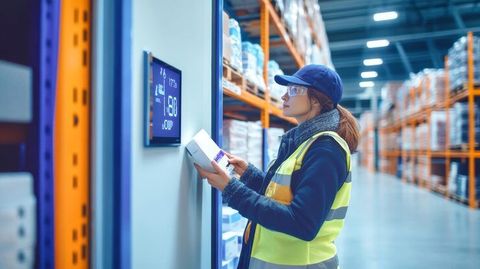
Explore Warehouse Temperature Monitoring Systems, Methods, and Key Technologies
Warehouse temperature monitoring is the process of measuring, recording, and managing temperature conditions inside storage facilities. It helps maintain suitable environmental conditions for products that may be affected by heat, cold, or sudden temperature changes.
Modern warehouses store many different materials, including food products, pharmaceutical ingredients, chemicals, electronics, agricultural products, and industrial components. Each category may have different temperature requirements. For example, frozen food requires consistently low temperatures, while certain medicines must remain within carefully controlled temperature ranges.
Temperature monitoring systems use sensors, data loggers, wireless devices, and centralized software to collect environmental information. These systems help warehouse operators understand whether storage conditions remain within established limits.
How Does Temperature Monitoring Work?
A typical warehouse temperature monitoring arrangement includes several connected components:
Temperature sensors: Measure the temperature at selected locations.
Data loggers: Record temperature readings at scheduled intervals.
Wireless monitoring devices: Transfer readings through Wi-Fi, Bluetooth, or other communication networks.
Central monitoring software: Organizes measurements and displays temperature trends.
Alert systems: Notify responsible personnel when readings move outside predefined limits.
Calibration equipment: Helps verify that measuring instruments provide accurate readings.
Sensors are generally installed in locations where temperature variations are more likely, including storage zones, refrigeration units, loading areas, and spaces near doors.
The collected information provides a clearer picture of warehouse conditions throughout the day.
Why Warehouse Temperature Monitoring Matters
Protecting Stored Products
Temperature changes can affect the quality, stability, and usability of stored materials. Food products may experience spoilage, pharmaceutical products may lose stability, and sensitive electronic components may be exposed to condensation or heat-related damage.
Maintaining suitable environmental conditions helps reduce these risks.
Different industries have different monitoring priorities:
Industry | Temperature monitoring purpose |
|---|---|
Food and beverages | Maintaining food safety and product quality |
Pharmaceuticals | Protecting medicine stability |
Agriculture | Preserving seeds and agricultural products |
Electronics | Reducing heat and moisture-related risks |
Chemicals | Maintaining specified storage conditions |
Cosmetics | Protecting product consistency |
Improving Warehouse Operations
Temperature monitoring also supports everyday warehouse management. Facility managers can identify areas with inconsistent cooling, detect refrigeration problems, and review temperature patterns.
For example, if one storage zone regularly becomes warmer than other areas, operators can investigate possible causes such as blocked ventilation, equipment problems, or frequent door openings.
This information supports better maintenance planning and more consistent storage operations.
Supporting Inventory Management
Temperature records provide useful information when reviewing the condition of stored inventory. Warehouse teams can examine historical readings and identify whether products experienced conditions outside their recommended ranges.
This is particularly important for products with specific storage requirements or limited environmental tolerances.
Other operational advantages include:
Improved visibility into storage conditions.
Earlier identification of refrigeration problems.
More organized temperature documentation.
Better coordination between warehouse teams.
Support for quality assurance procedures.
Reduced risk of preventable product deterioration.
Recent Developments and Technology Trends
Developments During 2025–2026
Warehouse temperature monitoring is becoming more closely connected with digital infrastructure, automated reporting, and data-driven facility management.
Several developments are influencing how organizations manage storage environments.
1. WHO temperature mapping resources – January 2026
On 22 January 2026, the World Health Organization published information on its cold-chain equipment and dry-store temperature mapping tool. The resource supports the assessment of temperature distribution across cold rooms, freezer rooms, refrigerators, and dry storage areas.
Temperature mapping helps identify locations where environmental conditions may differ from the expected range. This is particularly relevant to pharmaceutical warehouses and facilities handling temperature-sensitive products.
2. Greater use of wireless sensors
Wireless temperature sensors are increasingly relevant to warehouse monitoring because they can transmit measurements without requiring extensive physical connections throughout a facility.
Depending on the system, wireless devices may communicate through:
Wi-Fi networks.
Bluetooth connections.
Zigbee technology.
LoRaWAN networks.
Cellular communication.
These technologies allow monitoring across multiple storage zones and can support centralized reporting.
3. Cloud-based temperature monitoring
Cloud-based platforms allow warehouse teams to review temperature readings through centralized dashboards. Historical records can be examined to identify recurring fluctuations and understand environmental patterns.
Some platforms also support automated notifications, digital reports, and remote monitoring.
4. Artificial intelligence and predictive monitoring
Artificial intelligence and data analytics are becoming relevant to warehouse environmental management. These technologies can examine historical temperature readings and identify unusual patterns.
For example, repeated temperature increases around a particular time may indicate refrigeration problems, poor ventilation, or frequent loading-bay activity.
Predictive monitoring can support maintenance planning, although equipment inspections and human oversight remain important.
Comparison of Traditional and Modern Monitoring
Feature | Traditional monitoring | Modern monitoring |
|---|---|---|
Temperature recording | Manual readings | Automated readings |
Data storage | Paper records | Digital databases |
Notifications | Manual communication | Automated alerts |
Reporting | Manual preparation | Digital reports |
Remote access | Limited | Available with connected systems |
Data analysis | Basic comparisons | Historical trend analysis |
The Growing Role of Temperature Mapping
Temperature mapping is an important part of warehouse environmental management. It involves measuring temperatures at different locations over a representative period.
A large storage facility may contain warmer and cooler areas because of ventilation patterns, insulation, equipment placement, and external weather conditions.
Mapping helps determine where permanent sensors should be positioned. It is particularly important when a warehouse is first established or when significant changes are made to its refrigeration or ventilation systems.
Laws, Regulations and Industry Policies
Regulatory Requirements Depend on the Country
Warehouse temperature monitoring is influenced by the type of products stored, the intended use of the facility, and applicable national regulations.
Food storage, pharmaceutical distribution, and chemical storage may follow different regulatory frameworks. Businesses should identify the rules that apply to their particular operations rather than assuming that one temperature standard covers every industry.
United States: FDA Food Safety Requirements
In the United States, the Food and Drug Administration (FDA) regulates relevant food storage activities under the Food Safety Modernization Act (FSMA).
The Preventive Controls for Human Food regulation, particularly 21 CFR Part 117, establishes requirements for applicable facilities.
Under 21 CFR 117.206, facilities solely engaged in storing certain unexposed packaged refrigerated foods must establish appropriate temperature controls, monitor them adequately, take corrective action when necessary, and maintain relevant records.
The requirements also address checking the accuracy of monitoring equipment and reviewing temperature records.
European Union: Good Distribution Practice
The European Union has Good Distribution Practice (GDP) guidelines for medicinal products intended for human use.
These guidelines address environmental control in pharmaceutical storage facilities.
Important considerations include:
Conducting temperature mapping before using storage areas.
Positioning monitoring devices according to mapping results.
Repeating mapping when justified by risk assessments or significant facility changes.
Maintaining and calibrating monitoring equipment.
Establishing appropriate temperature excursion alarms.
Keeping records of equipment maintenance and calibration.
The guidelines emphasize maintaining storage conditions that are consistent with the stability requirements of medicinal products.
International Guidance and Standards
Organizations may also refer to international technical guidance when developing warehouse monitoring procedures.
Relevant references include:
WHO Good Storage Practices: Guidance concerning appropriate storage conditions for pharmaceutical products.
WHO temperature mapping resources: Technical guidance for assessing temperature distribution in warehouses and cold-chain equipment.
ISO standards: Relevant measurement, calibration, and quality management standards.
Good Manufacturing Practice (GMP): Requirements and guidance concerning controlled environments in pharmaceutical manufacturing and storage.
These references do not automatically replace national laws. Their applicability depends on the industry, product category, and regulatory jurisdiction.
Important Compliance Practices
Warehouse operators should establish documented procedures covering:
Required storage temperature ranges.
Sensor calibration and maintenance schedules.
Temperature monitoring frequency.
Alarm notification responsibilities.
Procedures for temperature excursions.
Product assessment following environmental deviations.
Record retention and internal reviews.
Staff training and equipment inspections.
A documented approach helps organizations demonstrate that environmental controls are being managed consistently.
Tools and Resources for Warehouse Temperature Monitoring
Temperature Monitoring Devices
Different monitoring devices are available depending on warehouse size, product requirements, and environmental conditions.
1. Digital Temperature Sensors
Digital sensors measure temperature continuously or at predefined intervals. They are commonly used in refrigerated warehouses, cold rooms, and general storage facilities.
2. Wireless Data Loggers
Wireless data loggers collect temperature readings and transfer information to connected monitoring platforms. They help reduce the need for manual data collection.
3. Infrared Thermometers
Infrared thermometers measure surface temperatures without direct contact. They can help with quick equipment inspections but do not replace continuous ambient temperature monitoring.
4. Temperature and Humidity Sensors
Combined sensors measure both temperature and relative humidity. They are useful for warehouses storing products that are sensitive to moisture and environmental changes.
Software and Digital Resources
The following resources support temperature monitoring, mapping, and documentation.
Tool or resource | Main purpose |
|---|---|
WHO Temperature Mapping Tool | Mapping temperature distribution in storage areas |
LogTag Analyzer | Reviewing compatible data logger readings |
ELPRO Viewer | Analyzing compatible temperature monitoring records |
Microsoft Excel | Maintaining temperature logs and inspection records |
Cloud monitoring dashboards | Viewing readings and environmental trends |
Digital alarm systems | Notifying personnel about temperature deviations |
Example of a Warehouse Temperature Log
A structured temperature log helps warehouse personnel maintain organized records.
Date | Storage zone | Recorded temperature | Status |
|---|---|---|---|
01 November | Cold Room A | 4°C | Within range* |
01 November | Cold Room B | 3°C | Within range* |
01 November | Dry Storage A | 23°C | Within range* |
02 November | Cold Room A | 7°C | Review required* |
Best Practices for Choosing Monitoring Resources
When evaluating temperature monitoring equipment, consider:
Measurement accuracy and calibration requirements.
Sensor placement and monitoring coverage.
Battery life and communication reliability.
Data storage and reporting capabilities.
Alarm configuration and notification methods.
Compatibility with existing warehouse systems.
Record accessibility for quality inspections.
Frequently Asked Questions
1. What Is the Main Purpose of Warehouse Temperature Monitoring?
Its main purpose is to measure and record storage temperatures to ensure that products remain within their specified environmental conditions. It also helps identify equipment problems and unexpected temperature changes.
2. How Often Should Warehouse Temperature Be Monitored?
Monitoring frequency depends on the product category, facility design, and applicable regulations. Temperature-sensitive pharmaceutical and food storage environments may require continuous monitoring, while other facilities may follow documented periodic monitoring procedures.
3. What Is Temperature Mapping in Warehouses?
Temperature mapping is the process of measuring temperatures at different locations within a storage facility. It identifies warmer and cooler areas and helps determine appropriate positions for permanent monitoring sensors.
4. Why Is Sensor Calibration Important?
Calibration helps verify that temperature monitoring devices provide reliable measurements. Inaccurate sensors may report incorrect environmental conditions, making it difficult to identify potential storage problems.
5. What Happens When Warehouse Temperature Exceeds Its Recommended Range?
Warehouse personnel should follow documented temperature excursion procedures. These generally include investigating the cause, reviewing temperature records, assessing affected inventory, documenting corrective actions, and determining whether products remain suitable for their intended use.
Conclusion
Warehouse temperature monitoring plays an important role in maintaining suitable storage environments across food processing, pharmaceutical distribution, agriculture, electronics, and industrial operations. Temperature sensors, wireless data loggers, cloud-based dashboards, and automated alerts provide better visibility into changing environmental conditions.
Recent developments in digital monitoring and temperature mapping are also influencing warehouse management practices. At the same time, regulatory frameworks emphasize appropriate storage conditions, equipment calibration, documentation, and corrective procedures.
Organizations can strengthen their warehouse management processes by selecting suitable monitoring equipment, establishing clear temperature limits, conducting regular inspections, and maintaining accurate records. A structured monitoring approach supports product quality, operational consistency, and responsible storage management.

Related Post...

IT Governance Consulting Services Insights on IT Strategy and Business Alignment
Updated: October 29, 2026
Read More
Explore Smart Irrigation System Setup for Gardens, Farms, and Modern Landscapes
Updated: October 29, 2026
Read More
IT Governance Consulting Services: Insights Into Risk Management and Compliance
Updated: November 04, 2026
Read More